Pearson Edexcel · A-Level · English Literature
Course version: 9ET0 · Version from Sept 2015
Poetry – Section B: Specified Poetry Pre- or Post-1900 – Post-1900 – The…
Full specification wording
Component 3: Poetry – Section B: Specified Poetry Pre- or Post-1900 – Post-1900 – The Movement – The Oxford Book of Twentieth Century English Verse, editor Philip Larkin with foreword by Andrew Motion (OUP, 1973): Au Jardin des Plantes
John Wain’s ‘Au Jardin des Plantes’ uses the observation of a captive gorilla in a Parisian zoo to explore themes of existential isolation and the loss of natural vitality.
Checked against the Pearson Edexcel 9ET0 specification (opens in a new tab) on .
- Point 7 of 18
- 4 key terms
Study notes
From the checked teaching notes for this specification point.
The idea
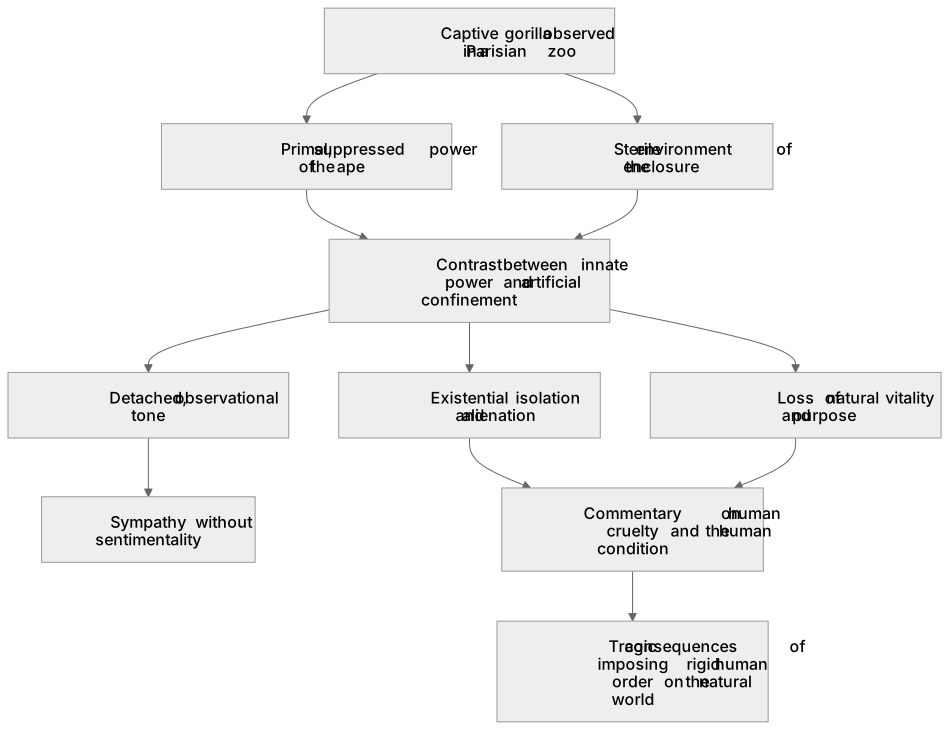
John Wain’s ‘Au Jardin des Plantes’ uses the observation of a captive gorilla in a Parisian zoo to explore themes of existential isolation and the loss of natural vitality. The poem contrasts the primal, suppressed power of the ape with the sterile environment of its enclosure. By examining specific descriptions of the gorilla’s physical stillness and quiet dignity, learners can evaluate the poem’s broader commentary on alienation, human cruelty, and the tragic consequences of imposing rigid human order upon the natural world.
What earns the marks
- Analyse the contrast between the gorilla's innate power and its restricted, artificial environment.
- Evaluate Wain's use of a detached, observational tone to convey empathy without romantic sentimentality.
- Explore the existential themes of isolation, alienation, and the loss of purpose depicted through the captive animal.
- Connect the poem's precise, unadorned imagery to the stylistic principles of The Movement.
Common mistakes and how to put them right
Reading the poem purely as an animal rights protest.
Put it right: Broaden the analysis to include the existential and metaphorical implications of the gorilla's isolation for the human condition.
Misinterpreting the detached tone as a lack of sympathy.
Put it right: Explain how the restrained, objective description actually heightens the pathos of the gorilla's situation.
Overlooking the significance of the setting.
Put it right: Discuss how the specific location of a formal botanical garden emphasises the unnatural imposition of human order on nature.
Exam tips
- Contrast the physical description of the gorilla with the abstract philosophical themes it represents to secure higher marks for AO2.
- Link the poem's themes of alienation and confinement to the post-war context and the sceptical worldview of The Movement.
- Pay close attention to the ending of the poem, analysing how the final image solidifies the sense of tragic permanence.
Try the lesson
The start of the Component 3: Poetry – Section B: Specified Poetry Pre- or Post-1900 – Post-1900 – The Movement – The Oxford Book of Twentieth Century English Verse, editor Philip Larkin with foreword by Andrew Motion (OUP, 1973): Au Jardin des Plantes lesson, made from checked teaching notes for this specification point.
Have a go first
What is the primary subject observed by the speaker in John Wain's poem 'Au Jardin des Plantes'?
Listen
John Wain’s ‘Au Jardin des Plantes’ uses the observation of a captive gorilla in a Parisian zoo to explore themes of existential isolation and the loss of natural vitality. The poem contrasts the primal, suppressed power of the ape with the sterile environment of its enclosure. By examining specific descriptions of the gorilla’s physical stillness and quiet dignity, learners can evaluate the poem’s broader commentary on alienation, human cruelty, and the tragic consequences of imposing rigid human order upon the natural world. A strong answer earns marks for these points. Analyse the contrast between the gorilla's innate power and its restricted, artificial environment. Evaluate Wain's use of a detached, observational tone to convey empathy without romantic sentimentality. Explore the existential themes of isolation, alienation, and the loss of purpose depicted through the captive animal. Connect the poem's precise, unadorned imagery to the stylistic principles of The Movement. A common slip: Reading the poem purely as an animal rights protest. Instead, Broaden the analysis to include the existential and metaphorical implications of the gorilla's isolation for the human condition. Exam tip: Contrast the physical description of the gorilla with the abstract philosophical themes it represents to secure higher marks for AO2.
See it
Key words
Say what each word means before you turn the card.
Confinement and captivity
Try answering aloud or in your head before turning the card.
Existential isolation
Try answering aloud or in your head before turning the card.
Nature versus human order
Try answering aloud or in your head before turning the card.
Empathy and observation
Try answering aloud or in your head before turning the card.
See every definition
- Confinement and captivity
- The state of the gorilla, whose primal, suppressed power is contrasted with the sterile environment of its enclosure.
- Existential isolation
- A theme explored through the observation of a captive gorilla, concerning alienation and the loss of purpose.
- Nature versus human order
- The contrast between the natural world and the tragic consequences of imposing rigid human order upon it.
- Empathy and observation
- A detached, observational tone that evokes sympathy without sentimentality through precise, unromanticised imagery.
Label the diagram
Some boxes have lost their names. Pick the right name for each number.
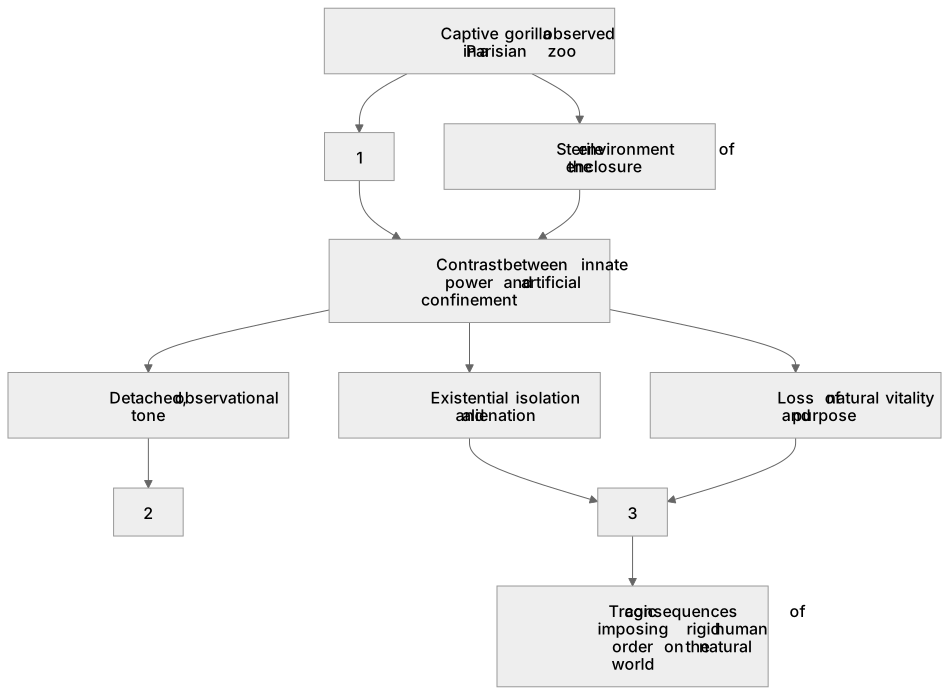
1Box 1
2Box 2
3Box 3
There is more to this lesson
The full lesson goes on to check your understanding and help you earn the marks. Create a free account to carry on, with your progress saved.
A week of Premium from your first lesson · Then the free plan continues · No card, no charge
Test your understanding of Component 3: Poetry – Section B: Specified Poetry Pre- or Post-1900 – Post-1900 – The Movement – The Oxford Book of Twentieth Century English Verse, editor Philip Larkin with foreword by Andrew Motion (OUP, 1973): Au Jardin des Plantes
Active recall beats re-reading. Take an instant quiz now to test what you’ve learned and lock it into long-term memory.
A week of Premium from your first lesson · Then the free plan continues · No card, no charge