Pearson Edexcel · A-Level · English Literature
Course version: 9ET0 · Version from Sept 2015
Poetry – Section B: Specified Poetry Pre- or Post-1900 – Post-1900 – The…
Full specification wording
Component 3: Poetry – Section B: Specified Poetry Pre- or Post-1900 – Post-1900 – The Movement – The Oxford Book of Twentieth Century English Verse, editor Philip Larkin with foreword by Andrew Motion (OUP, 1973): Nothing to be Said
Philip Larkin’s 'Nothing to be Said' explores the universal inevitability of death and the different ways people respond to that knowledge.
Checked against the Pearson Edexcel 9ET0 specification (opens in a new tab) on .
- Point 6 of 18
- 4 key terms
Study notes
From the checked teaching notes for this specification point.
The idea
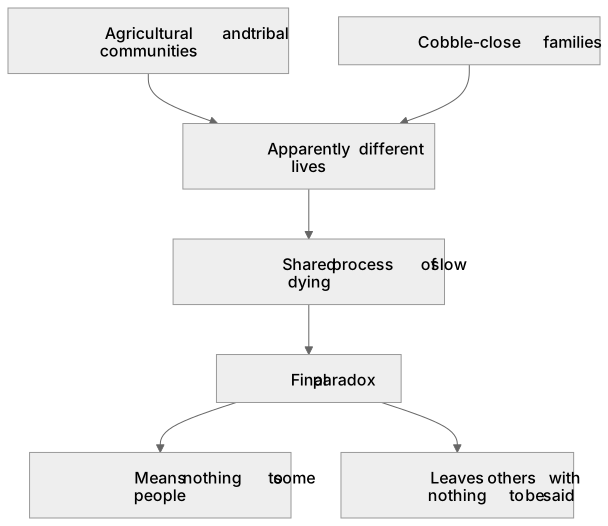
Philip Larkin’s 'Nothing to be Said' explores the universal inevitability of death and the different ways people respond to that knowledge. The poem moves from agricultural and tribal communities to "cobble-close families", insisting that apparently different lives share the process of "slow dying". Its three six-line stanzas are unrhymed, with mainly iambic trimeter varied by shorter lines and disrupted syntax; this compact, uneven movement resists consoling musical closure. The final paradox—saying that life is slow dying means nothing to some people but leaves others with "nothing to be said"—distinguishes emotional responses instead of simply declaring every life futile.
What earns the marks
- Analyse the use of structural repetition, particularly the title phrase, to emphasise the inescapable nature of death.
- Evaluate how Larkin contrasts different societal structures to highlight the universality of mortality.
- Explore how the unrhymed sextets, mainly trimeter movement and strategically shortened lines shape the poem's compressed meditation.
- Connect the poem's bleak, unsentimental tone to the broader characteristics of 'The Movement' poetry.
Common mistakes and how to put them right
Assuming the poem is solely about the working class.
Put it right: Recognise that the poem encompasses all of humanity, contrasting different global lifestyles to prove mortality's universality.
Claiming that the poem uses a regular rhyme scheme.
Put it right: It is unrhymed; analyse instead its three sextets, short lines, syntax and rhythmic variation.
Treating the poem as a celebration of diversity.
Put it right: Understand that the diverse lifestyles are presented only to be dismissed as equally futile in the face of death.
Exam tips
- Compare the nihilistic tone of 'Nothing to be Said' with other Movement poems that strip away romantic illusions.
- Focus on the transition between the specific imagery of human life and the abstract, absolute finality of the conclusion.
- Use the phrase 'cobble-close families' to discuss Larkin's characteristic observation of mundane, everyday existence.
Try the lesson
The start of the Component 3: Poetry – Section B: Specified Poetry Pre- or Post-1900 – Post-1900 – The Movement – The Oxford Book of Twentieth Century English Verse, editor Philip Larkin with foreword by Andrew Motion (OUP, 1973): Nothing to be Said lesson, made from checked teaching notes for this specification point.
Have a go first
In Philip Larkin's poem 'Nothing to be Said', what is the central assertion made about all human existence, regardless of culture or lifestyle?
Listen
Philip Larkin’s 'Nothing to be Said' explores the universal inevitability of death and the different ways people respond to that knowledge. The poem moves from agricultural and tribal communities to "cobble-close families", insisting that apparently different lives share the process of "slow dying". Its three six-line stanzas are unrhymed, with mainly iambic trimeter varied by shorter lines and disrupted syntax; this compact, uneven movement resists consoling musical closure. The final paradox—saying that life is slow dying means nothing to some people but leaves others with "nothing to be said"—distinguishes emotional responses instead of simply declaring every life futile. A strong answer earns marks for these points. Analyse the use of structural repetition, particularly the title phrase, to emphasise the inescapable nature of death. Evaluate how Larkin contrasts different societal structures to highlight the universality of mortality. Explore how the unrhymed sextets, mainly trimeter movement and strategically shortened lines shape the poem's compressed meditation. Connect the poem's bleak, unsentimental tone to the broader characteristics of 'The Movement' poetry. A common slip: Assuming the poem is solely about the working class. Instead, Recognise that the poem encompasses all of humanity, contrasting different global lifestyles to prove mortality's universality. Exam tip: Compare the nihilistic tone of 'Nothing to be Said' with other Movement poems that strip away romantic illusions.
See it
Key words
Say what each word means before you turn the card.
Mortality and Death
Try answering aloud or in your head before turning the card.
Universality of the Human Condition
Try answering aloud or in your head before turning the card.
Time and Inevitability
Try answering aloud or in your head before turning the card.
The Movement
Try answering aloud or in your head before turning the card.
See every definition
- Mortality and Death
- The universal inevitability of death that the poem explores, and the different ways people respond to that knowledge.
- Universality of the Human Condition
- The idea that apparently different lives, from agricultural and tribal communities to cobble-close families, all share the process of slow dying.
- Time and Inevitability
- The inescapable nature of death, emphasised through structural repetition, particularly the title phrase.
- The Movement
- A body of poetry whose broader characteristics include a bleak, unsentimental tone and the stripping away of romantic illusions.
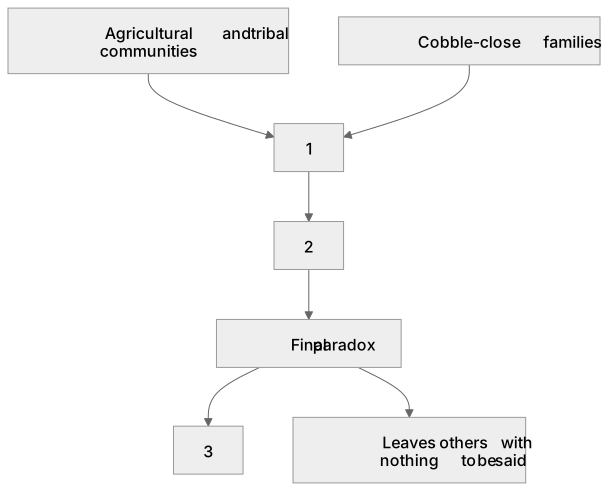
Label the diagram
Some boxes have lost their names. Pick the right name for each number.
1Box 1
2Box 2
3Box 3
There is more to this lesson
The full lesson goes on to check your understanding and help you earn the marks. Create a free account to carry on, with your progress saved.
A week of Premium from your first lesson · Then the free plan continues · No card, no charge
Test your understanding of Component 3: Poetry – Section B: Specified Poetry Pre- or Post-1900 – Post-1900 – The Movement – The Oxford Book of Twentieth Century English Verse, editor Philip Larkin with foreword by Andrew Motion (OUP, 1973): Nothing to be Said
Active recall beats re-reading. Take an instant quiz now to test what you’ve learned and lock it into long-term memory.
A week of Premium from your first lesson · Then the free plan continues · No card, no charge