Pearson Edexcel · A-Level · English Literature
Course version: 9ET0 · Version from Sept 2015
Poetry – Section B: Specified Poetry Pre- or Post-1900 – Pre-1900 – The…
Full specification wording
Component 3: Poetry – Section B: Specified Poetry Pre- or Post-1900 – Pre-1900 – The Romantic Period – English Romantic Verse, editor David Wright (Penguin Classics, 1973): Sonnet on the Sea
Keats's Petrarchan sonnet explores the restorative power and dual nature of the ocean.
Checked against the Pearson Edexcel 9ET0 specification (opens in a new tab) on .
- Point 16 of 16
- 4 key terms
Study notes
From the checked teaching notes for this specification point.
The idea
Keats's Petrarchan sonnet explores the restorative power and dual nature of the ocean. The octave describes the sea's immense, untamed power and its gentle, subtle movements, contrasting its ability to swell with the moon's influence against its delicate touch that barely moves a shell. The sestet shifts to address the reader directly, urging those exhausted by the noise and visual strain of urban life to seek solace by the shore. By listening to the sea's ancient, eternal voice, individuals can find spiritual and mental rejuvenation. The poem employs sibilance and enjambment to mimic the rhythmic, continuous motion of the tides, presenting nature as a sublime antidote to human weariness.
What earns the marks
- Analyse the use of the Petrarchan sonnet form, specifically how the volta bridges the description of the sea in the octave with the prescriptive advice to humanity in the sestet.
- Evaluate the auditory imagery and sibilance used to replicate the sound of the ocean, such as 'eternal whisperings' and 'gluts twice ten thousand Caverns'.
- Discuss the contrast between the overwhelming power of the sea (associated with Hecate) and its gentle capacity to leave a 'very smallest shell' undisturbed.
- Explore the Romantic theme of nature as a healing force for those suffering from the sensory overload of modern, urban existence.
Common mistakes and how to put them right
Confusing the sonnet form with a Shakespearean structure.
Put it right: Identify the poem as a Petrarchan sonnet and analyse the specific function of the octave and sestet in developing the argument.
Overlooking the mythological allusion to Hecate.
Put it right: Explain how the reference to Hecate connects the sea's tidal power to lunar cycles and ancient, mystical forces.
Treating the poem merely as a descriptive nature piece.
Put it right: Emphasise the psychological dimension in the sestet, where the sea is presented as a cure for human exhaustion and sensory fatigue.
Exam tips
- Link the poem's auditory imagery to its thematic focus on listening and sensory healing, quoting phrases like 'Sea-Nymphs quired'.
- Compare the portrayal of the sea's sublime power with other Romantic depictions of nature's dual capacity for gentleness and destruction.
- Examine the enjambment across lines to demonstrate how the poem's structure mirrors the continuous, unceasing movement of the tides.
Try the lesson
The start of the Component 3: Poetry – Section B: Specified Poetry Pre- or Post-1900 – Pre-1900 – The Romantic Period – English Romantic Verse, editor David Wright (Penguin Classics, 1973): Sonnet on the Sea lesson, made from checked teaching notes for this specification point.
Have a go first
In the octave of Keats's 'Sonnet on the Sea', which two contrasting states of the ocean are primarily depicted?
Listen
Keats's Petrarchan sonnet explores the restorative power and dual nature of the ocean. The octave describes the sea's immense, untamed power and its gentle, subtle movements, contrasting its ability to swell with the moon's influence against its delicate touch that barely moves a shell. The sestet shifts to address the reader directly, urging those exhausted by the noise and visual strain of urban life to seek solace by the shore. By listening to the sea's ancient, eternal voice, individuals can find spiritual and mental rejuvenation. The poem employs sibilance and enjambment to mimic the rhythmic, continuous motion of the tides, presenting nature as a sublime antidote to human weariness. A strong answer earns marks for these points. Analyse the use of the Petrarchan sonnet form, specifically how the volta bridges the description of the sea in the octave with the prescriptive advice to humanity in the sestet. Evaluate the auditory imagery and sibilance used to replicate the sound of the ocean, such as 'eternal whisperings' and 'gluts twice ten thousand Caverns'. Discuss the contrast between the overwhelming power of the sea (associated with Hecate) and its gentle capacity to leave a 'very smallest shell' undisturbed. Explore the Romantic theme of nature as a healing force for those suffering from the sensory overload of modern, urban existence. A common slip: Confusing the sonnet form with a Shakespearean structure. Instead, Identify the poem as a Petrarchan sonnet and analyse the specific function of the octave and sestet in developing the argument. Exam tip: Link the poem's auditory imagery to its thematic focus on listening and sensory healing, quoting phrases like 'Sea-Nymphs quired'.
See it
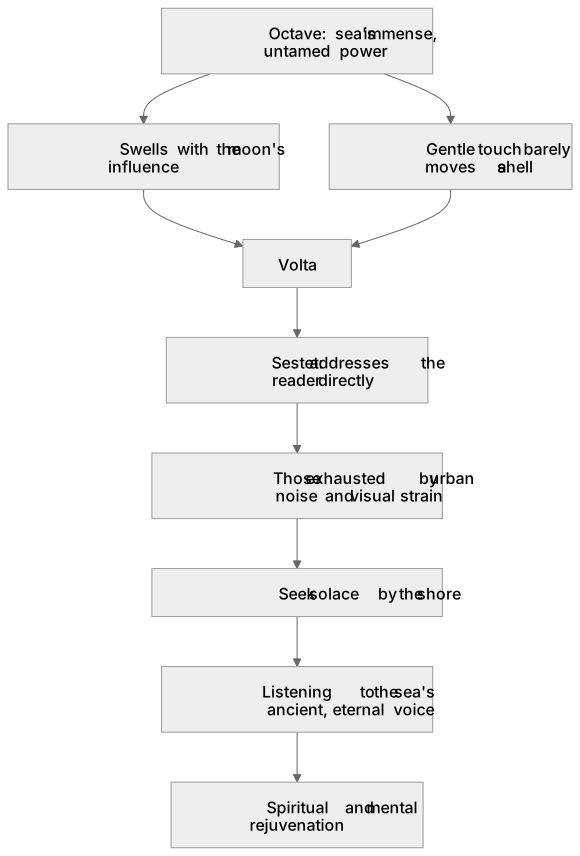
Key words
Say what each word means before you turn the card.
The sublime power of nature
Try answering aloud or in your head before turning the card.
Spiritual and mental restoration
Try answering aloud or in your head before turning the card.
The contrast between urban life and the natural world
Try answering aloud or in your head before turning the card.
The duality of gentleness and immense strength
Try answering aloud or in your head before turning the card.
See every definition
- The sublime power of nature
- The sea's immense, untamed power, presented in the poem as a sublime antidote to human weariness.
- Spiritual and mental restoration
- The spiritual and mental rejuvenation individuals can find by listening to the sea's ancient, eternal voice.
- The contrast between urban life and the natural world
- The contrast between the noise and visual strain of urban life and the solace to be found by the shore.
- The duality of gentleness and immense strength
- The sea's dual nature, shown in its immense, untamed power and its gentle, subtle movements that barely move a shell.
Label the diagram
Some boxes have lost their names. Pick the right name for each number.
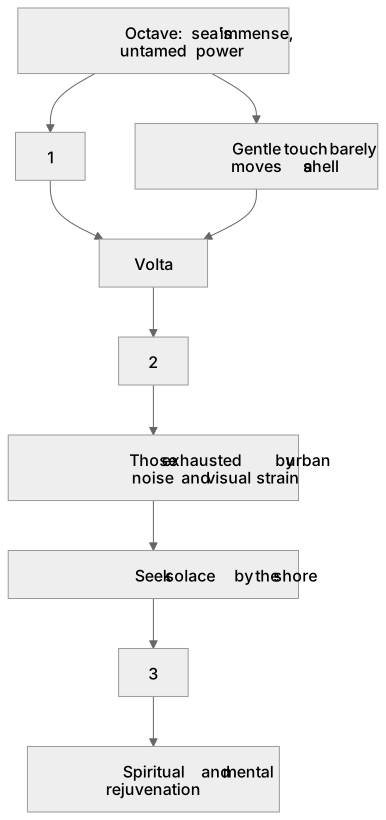
1Box 1
2Box 2
3Box 3
There is more to this lesson
The full lesson goes on to check your understanding and help you earn the marks. Create a free account to carry on, with your progress saved.
A week of Premium from your first lesson · Then the free plan continues · No card, no charge
Test your understanding of Component 3: Poetry – Section B: Specified Poetry Pre- or Post-1900 – Pre-1900 – The Romantic Period – English Romantic Verse, editor David Wright (Penguin Classics, 1973): Sonnet on the Sea
Active recall beats re-reading. Take an instant quiz now to test what you’ve learned and lock it into long-term memory.
A week of Premium from your first lesson · Then the free plan continues · No card, no charge