OCR · GCSE · Food Preparation and Nutrition
Food labelling regulations
Food labelling regulations are the legal backbone of consumer safety and informed choice in the UK food industry. Governed by the Food Information Regulations 2014, this topic is essential for OCR GCSE Food Preparation and Nutrition candidates, testing your ability to distinguish mandatory from voluntary labelling, identify the 14 allergens, and apply nutritional data to real-world health scenarios. Examiners reward precision, so master the thresholds, terminology, and legal requirements to maximise your marks."
- 58 min read
- 1 worked example
Study Notes
Overview
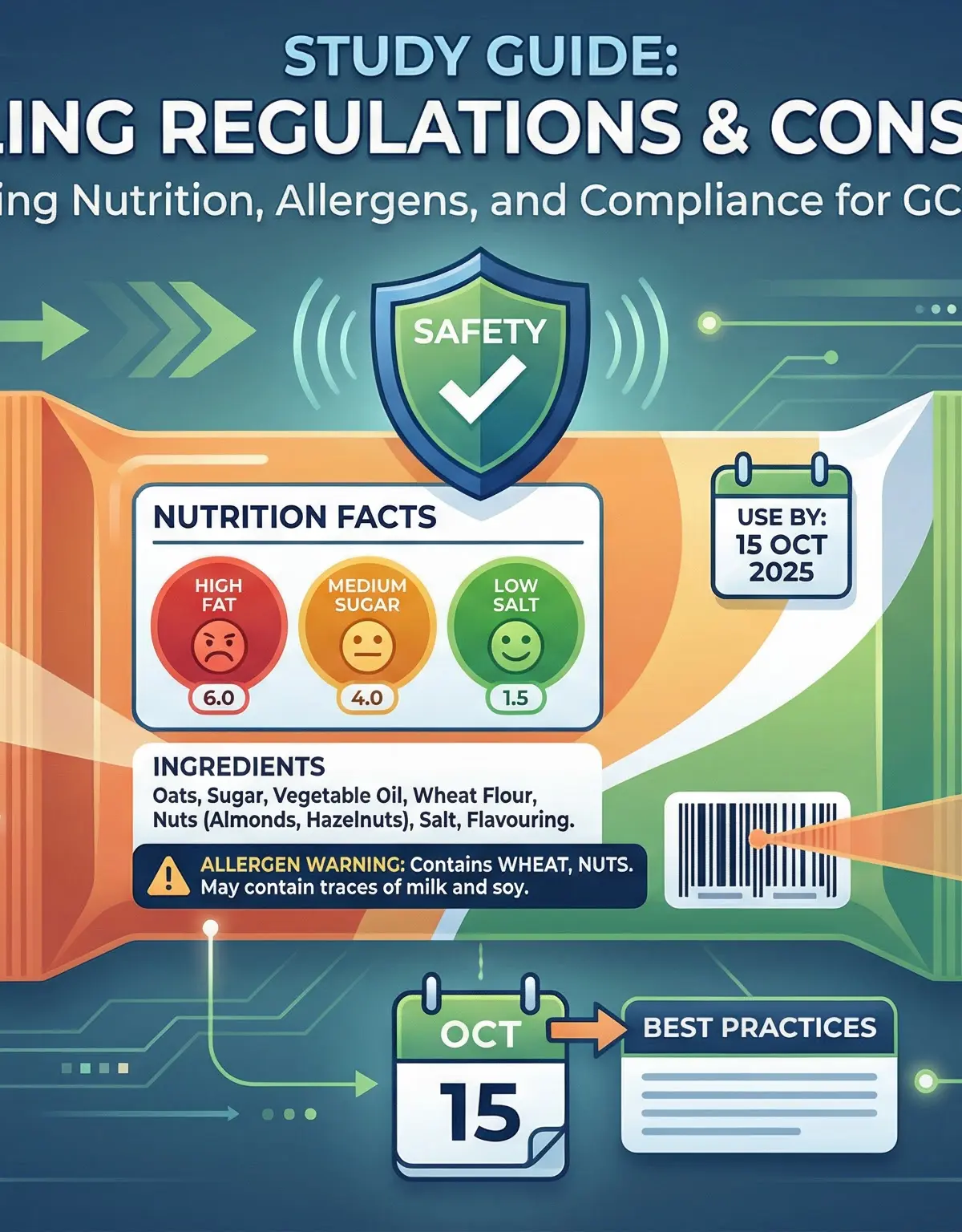
Food labelling regulations form a critical component of the OCR J309 GCSE Food Preparation and Nutrition specification, bridging consumer rights, public health, and legal compliance. The Food Information Regulations 2014 (FIR) mandate what information must appear on food packaging to protect consumers from allergens, enable informed dietary choices, and prevent misleading marketing. Examiners expect candidates to demonstrate precise knowledge of mandatory versus voluntary labelling, apply nutritional data to health contexts, and critically evaluate labels for safety and quality indicators. This topic appears across written exam questions and the Non-Exam Assessment (NEA), making it indispensable for achieving top grades. Understanding the legal distinction between safety markers such as 'Use by' dates and quality indicators like 'Best before' dates is fundamental, as is the ability to identify and emphasise the 14 mandatory allergens. Candidates must also interpret nutritional declarations and traffic light systems, linking data to conditions such as cardiovascular disease, obesity, and type 2 diabetes. This guide provides the detailed knowledge, worked examples, and exam strategies required to excel.
Key Regulatory Framework
The Food Information Regulations 2014 (FIR)
Legal Basis: The FIR transposed EU Regulation 1169/2011 into UK law, establishing comprehensive requirements for food labelling, presentation, and advertising. These regulations exist to ensure consumer safety, enable informed choice, and support public health objectives.
Why it matters: Examiners test whether candidates understand the purpose of labelling regulations, not just the content. You must be able to explain that mandatory labelling protects consumers from allergens and foodborne illness, while voluntary labelling (such as traffic lights) supports healthier choices. Credit is awarded for linking regulatory requirements to real-world impacts, such as reducing hospital admissions for anaphylaxis or lowering population-level salt intake to combat hypertension.
Specific Knowledge: The FIR applies to all pre-packed foods sold in the UK. It does not apply to non-pre-packed foods sold loose, although allergen information must still be provided verbally or in writing. Candidates should know that the FIR distinguishes between mandatory information (legally required) and voluntary information (optional but regulated if used).
Mandatory Labelling Requirements
1. Name of the Food
The name must be precise, legally defined, and not misleading. For example, "strawberry yoghurt" can only be used if the product contains real strawberries, not just strawberry flavouring. If only flavouring is present, the label must state "strawberry-flavoured yoghurt." This prevents consumer deception and ensures transparency.
2. Ingredients List
Descending Order of Weight: Ingredients must be listed in descending order of weight at the time of preparation. This means the first ingredient listed is present in the largest quantity. Examiners frequently test this: if sugar is the first ingredient in a cereal, candidates should identify this as indicating high sugar content and link it to health risks such as dental caries or obesity.
Compound Ingredients: If an ingredient itself contains multiple components (e.g., chocolate contains cocoa, sugar, milk), these sub-ingredients must also be listed if the compound ingredient exceeds 2% of the final product.
Additives: All additives must be listed by their category (e.g., preservative, colour) and either their name or E-number. For example, "preservative (E211)" or "preservative (sodium benzoate)."
3. Allergen Information
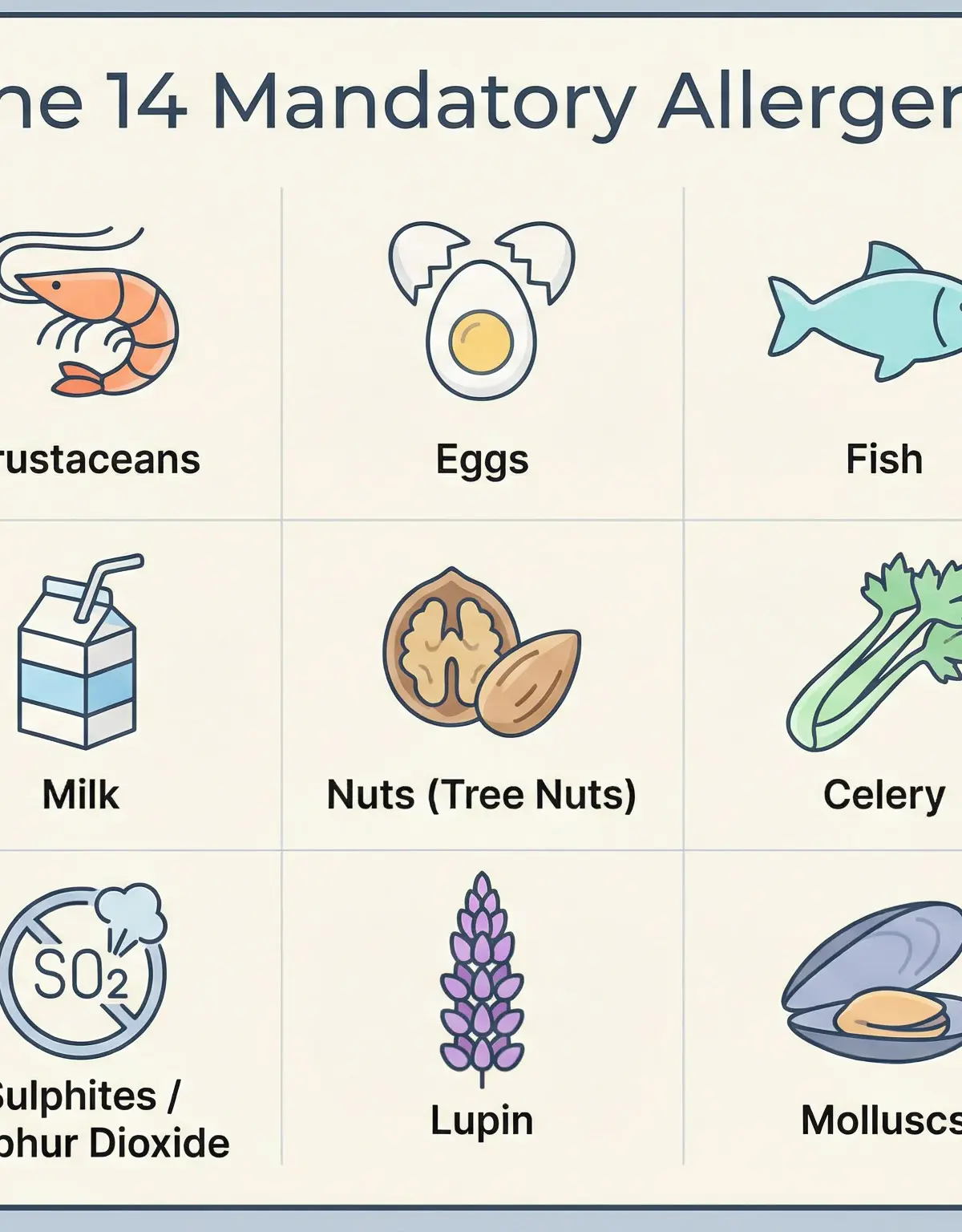
There are 14 mandatory allergens that must be emphasised (bold, italics, underlined, or highlighted) within the ingredients list. These are:
- Cereals containing gluten (wheat, rye, barley, oats, spelt, kamut)
- Crustaceans (prawns, crabs, lobsters, crayfish)
- Eggs
- Fish
- Peanuts
- Soybeans
- Milk (including lactose)
- Nuts (almonds, hazelnuts, walnuts, cashews, pecans, Brazil nuts, pistachios, macadamia nuts)
- Celery (including celeriac)
- Mustard
- Sesame seeds
- Sulphites/Sulphur dioxide (if concentration exceeds 10mg/kg or 10mg/litre)
- Lupin (a legume used in some flours)
- Molluscs (mussels, oysters, squid, snails)
Exam Application: Candidates must be specific. Writing "contains allergens" earns no marks. Writing "contains milk and cereals containing gluten" demonstrates precise knowledge. Examiners award marks for identifying allergens correctly and explaining their emphasis requirement under FIR.
Cross-Contamination: Labels may include voluntary precautionary statements such as "may contain traces of nuts" if cross-contamination is possible during manufacturing. This is not mandatory but is considered good practice.
4. Date Marking
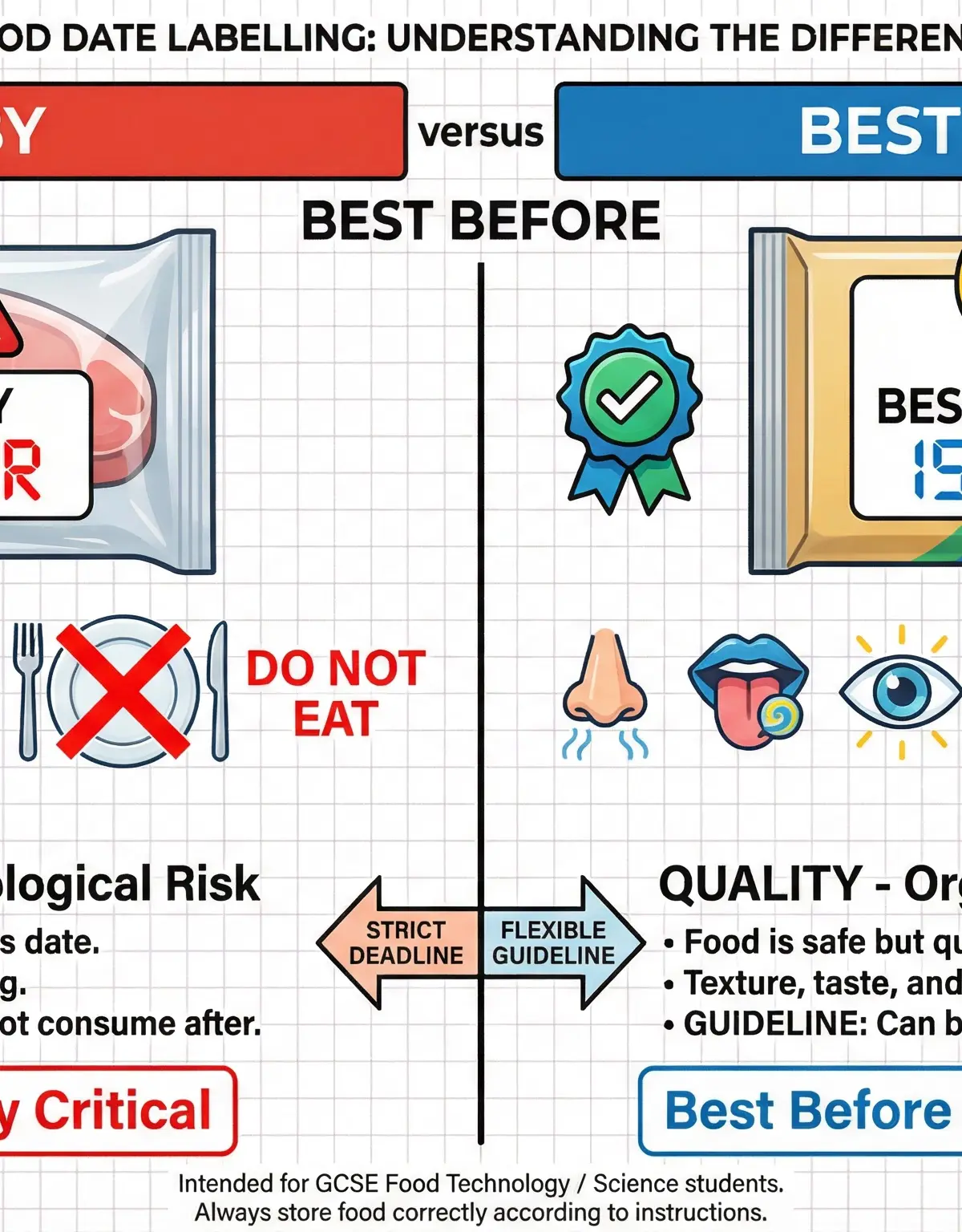
Date marking is one of the most commonly confused areas in the exam. There are two types of dates, and they are not interchangeable.
Use By Date
Purpose: Indicates microbiological safety. After the 'Use by' date, harmful bacteria and pathogens (such as Salmonella, Listeria, Campylobacter) can multiply to dangerous levels, increasing the risk of food poisoning.
Application: Appears on highly perishable foods such as fresh meat, poultry, fish, dairy products, and ready-to-eat salads.
Legal Status: It is illegal to sell food past its 'Use by' date. Consumers are advised not to consume food after this date, even if it looks and smells fine.
Exam Link: If asked about 'Use by', candidates should reference pathogen growth, microbiological safety, and food poisoning risk. For example: "The 'Use by' date of 15th March indicates that after this date, pathogenic bacteria such as Salmonella may multiply to levels that cause food poisoning, making the product unsafe to consume."
Best Before Date
Purpose: Indicates quality, not safety. After the 'Best before' date, the food is still safe to eat, but its organoleptic properties (taste, texture, appearance, aroma) may decline.
Application: Appears on foods with longer shelf lives, such as biscuits, canned goods, dried pasta, cereals, and frozen foods.
Legal Status: It is not illegal to sell food past its 'Best before' date, and consumers can still eat it safely. However, quality may be reduced (e.g., biscuits may become soft, flavours may fade).
Exam Link: If asked about 'Best before', candidates should reference organoleptic changes and quality decline, not safety. For example: "The 'Best before' date of 15th June indicates that after this date, the biscuits may lose their crispness and flavour may diminish, but they remain safe to eat."
5. Nutritional Declaration
Mandatory nutritional information must appear on the back of pack and include the following per 100g or 100ml:
- Energy (in both kilojoules/kJ and kilocalories/kcal)
- Fat (total fat in grams)
- Saturates (saturated fat in grams)
- Carbohydrates (total carbohydrates in grams)
- Sugars (total sugars in grams)
- Protein (in grams)
- Salt (in grams, not sodium)
Why per 100g/100ml? This standardisation allows consumers to compare products directly. For example, comparing two breakfast cereals becomes straightforward when both display sugar content per 100g.
Exam Application: Examiners expect candidates to use the data. If a label shows 25g of sugar per 100g, candidates should identify this as high in sugar (exceeding the 22.5g red threshold) and link it to health risks such as obesity, type 2 diabetes, and dental caries. Vague statements like "it's unhealthy" earn no marks; specific data-driven analysis earns full credit.
Energy Calculations: Candidates may be asked to calculate energy content. The formula is:
- Fat: 1g = 9 kcal
- Protein: 1g = 4 kcal
- Carbohydrates: 1g = 4 kcal
For example, a product with 10g fat, 5g protein, and 20g carbohydrates contains: (10 × 9) + (5 × 4) + (20 × 4) = 90 + 20 + 80 = 190 kcal per 100g.
6. Other Mandatory Information
- Net Quantity: The weight or volume of the product (e.g., 500g, 1 litre).
- Country of Origin: Required for certain foods, particularly meat.
- Manufacturer/Packer Details: Name and address of the food business operator.
- Storage Instructions: How to store the product safely (e.g., "Keep refrigerated below 5°C").
- Preparation Instructions: If the food requires cooking or preparation for safe consumption.
- Lot Number: For traceability in case of recalls.
Voluntary Labelling Schemes
Traffic Light Nutritional Labelling
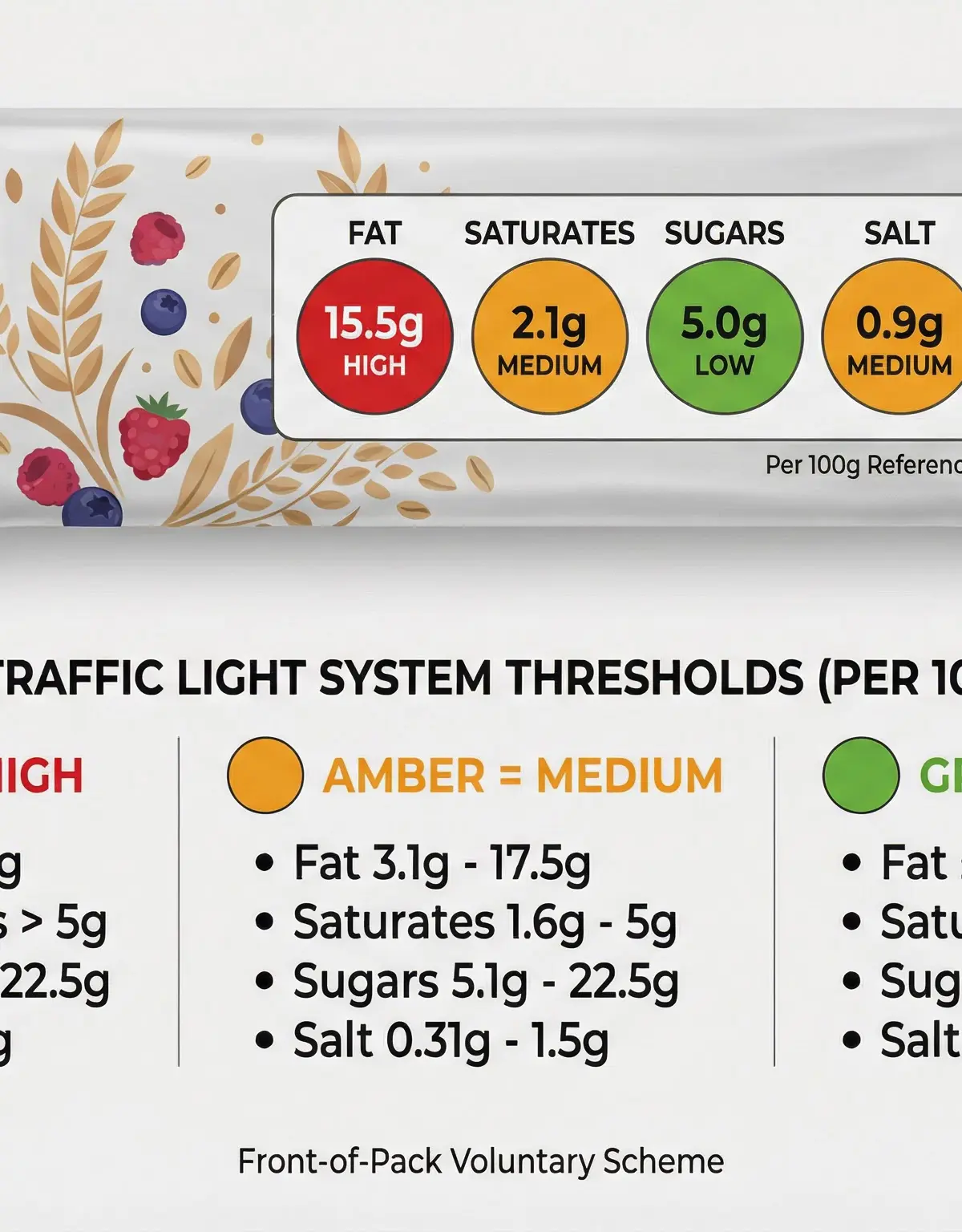
The traffic light system is a voluntary front-of-pack labelling scheme that uses colour coding (red, amber, green) to indicate whether a product is high, medium, or low in fat, saturates, sugars, and salt. It is designed to help consumers make healthier choices at a glance.
Thresholds per 100g:
| Nutrient | RED (High) | AMBER (Medium) | GREEN (Low) |
|---|---|---|---|
| Fat | > 17.5g | 3.1g – 17.5g | ≤ 3.0g |
| Saturates | > 5g | 1.6g – 5g | ≤ 1.5g |
| Sugars | > 22.5g | 5.1g – 22.5g | ≤ 5.0g |
| Salt | > 1.5g | 0.31g – 1.5g | ≤ 0.3g |
Exam Application: Examiners test whether candidates can apply these thresholds. For example, if a product contains 18g of sugar per 100g, candidates should identify this as AMBER (medium) and explain that while not in the red zone, regular consumption could still contribute to excessive sugar intake. Candidates should also link high red values to specific health conditions: high salt to hypertension and cardiovascular disease, high saturates to raised LDL cholesterol and coronary heart disease, high sugars to obesity and type 2 diabetes.
Critical Evaluation: Candidates earning top marks will evaluate the effectiveness of traffic lights. Strengths include simplicity and visual impact. Limitations include the fact that the scheme is voluntary, so not all products display it, and some consumers may not understand the thresholds or may ignore red lights if the product is appealing.
Marketing and Nutrition Claims
Marketing claims such as "low fat," "high in fibre," or "source of protein" are regulated but voluntary. If a manufacturer chooses to make a claim, it must meet specific legal criteria:
- Low fat: ≤ 3g fat per 100g (solids) or 1.5g per 100ml (liquids)
- Low saturates: ≤ 1.5g saturates per 100g (solids) or 0.75g per 100ml (liquids)
- Low sugar: ≤ 5g sugar per 100g (solids) or 2.5g per 100ml (liquids)
- High fibre: ≥ 6g fibre per 100g
- Source of protein: ≥ 12% of energy from protein
Exam Application: Candidates can demonstrate critical thinking by cross-referencing claims with the mandatory nutritional declaration. For example, if a product claims "low fat" but the back-of-pack data shows 4g fat per 100g, the claim is misleading and non-compliant. Examiners reward this analytical approach.
Linking Labelling to Health and Dietary Needs
Examiners expect candidates to apply labelling knowledge to specific dietary needs and health conditions. This is where AO2 (application) and AO4 (evaluation) marks are earned.
Example Applications:
Cardiovascular Disease (CVD): Individuals at risk of CVD should choose products low in saturates and salt. A product with a red traffic light for saturates (e.g., 6g per 100g) should be avoided, as high saturated fat raises LDL cholesterol, increasing the risk of atherosclerosis and heart attacks.
Type 2 Diabetes: Individuals managing blood glucose should select products low in sugars. A product with 30g sugar per 100g (red, high) would cause rapid blood glucose spikes, making it unsuitable.
Coeliac Disease: Individuals with coeliac disease must avoid gluten. They should check the ingredients list for cereals containing gluten (emphasised) and look for "gluten-free" certification.
Lactose Intolerance: Individuals with lactose intolerance should check for milk (emphasised) in the ingredients list and choose lactose-free alternatives.
Hypertension: Individuals with high blood pressure should avoid products high in salt. A product with 2g salt per 100g (red, high) would exacerbate hypertension and increase stroke risk.
Worked Examples
Worked Example 1: Analysing a Food Label
Question: Study the food label below. Evaluate how useful this label is for a consumer trying to reduce their risk of cardiovascular disease. (8 marks)
Label Data:
- Ingredients: Wheat flour, vegetable oil, sugar, salt, raising agents (E500, E503), flavouring.
- Nutritional Information per 100g: Energy 2100kJ/500kcal, Fat 25g, Saturates 12g, Carbohydrates 60g, Sugars 20g, Protein 6g, Salt 1.8g.
- Traffic Lights: Fat RED, Saturates RED, Sugars AMBER, Salt RED.
Solution:
Introduction: This label provides both mandatory nutritional information and voluntary traffic light labelling, which can be evaluated for its usefulness to a consumer aiming to reduce cardiovascular disease (CVD) risk.
Paragraph 1 – Saturated Fat Analysis:
The product contains 12g of saturated fat per 100g, which significantly exceeds the red threshold of 5g per 100g, as indicated by the red traffic light. High saturated fat intake raises low-density lipoprotein (LDL) cholesterol levels in the bloodstream, which is a major risk factor for atherosclerosis, coronary heart disease, and myocardial infarction. For a consumer with CVD risk, this product is unsuitable and should be avoided. The label is therefore highly useful in clearly signalling this risk through the red traffic light.
Paragraph 2 – Salt Analysis:
The product contains 1.8g of salt per 100g, exceeding the red threshold of 1.5g per 100g. High salt intake is directly linked to hypertension (high blood pressure), which increases the risk of stroke and heart failure. The red traffic light for salt makes this information immediately visible, enabling the consumer to make an informed decision to avoid the product. This demonstrates the label's usefulness in supporting CVD risk reduction.
Paragraph 3 – Limitations:
While the traffic light system is helpful, the label does not provide portion size information, which could mislead consumers. If a typical portion is only 25g, the actual intake of saturates and salt would be lower than the per 100g values suggest. Additionally, the label does not indicate whether the vegetable oil used is high in unsaturated fats (beneficial) or trans fats (harmful). This lack of detail limits the label's usefulness for fully informed decision-making.
Conclusion:
Overall, the label is moderately to highly useful for a consumer reducing CVD risk, as the red traffic lights for saturates and salt clearly signal danger. However, the absence of portion-specific data and detailed fat composition reduces its effectiveness. The consumer should avoid this product based on the high saturates and salt content.
Examiner Commentary: This answer reaches the top level because it: provides specific data (12g saturates, 1.8g salt); explains the health impact (LDL cholesterol, hypertension, atherosclerosis); evaluates both strengths (clear traffic lights) and limitations (no portion size, unclear fat type); and reaches a clear, justified conclusion. The use of technical terminology (LDL, atherosclerosis, hypertension) and precise thresholds demonstrates strong AO1 knowledge, while the evaluation demonstrates AO4 skills.
Worked Example 2: Distinguishing Use By and Best Before
Question: Explain the difference between 'Use by' and 'Best before' dates, and give an example of a food product that would carry each type of date. (6 marks)
Solution:
Paragraph 1 – Use By Date:
A 'Use by' date is a safety indicator that appears on highly perishable foods. It indicates the date by which the food must be consumed to avoid microbiological risk. After the 'Use by' date, pathogenic bacteria such as Salmonella, Listeria monocytogenes, and Campylobacter can multiply to dangerous levels, increasing the risk of food poisoning. It is illegal to sell food past its 'Use by' date, and consumers are strongly advised not to eat it, even if it appears and smells normal. An example of a food carrying a 'Use by' date is fresh chicken breast, which is highly perishable and poses a significant food safety risk if consumed after the date.
Paragraph 2 – Best Before Date:
A 'Best before' date is a quality indicator that appears on foods with longer shelf lives. It indicates the date by which the food is expected to retain its optimal organoleptic properties (taste, texture, appearance, aroma). After the 'Best before' date, the food remains safe to eat, but its quality may decline. For example, biscuits may lose their crispness, or dried herbs may lose their flavour intensity. It is not illegal to sell or consume food past its 'Best before' date. An example of a food carrying a 'Best before' date is dried pasta, which has a long shelf life and does not pose a microbiological safety risk.
Conclusion:
In summary, 'Use by' relates to safety and pathogens, while 'Best before' relates to quality and organoleptic changes. Understanding this distinction is critical for consumer safety and reducing food waste.
Examiner Commentary: This answer earns full marks because it: clearly defines both date types; explains the underlying reason (pathogens vs. organoleptic changes); provides specific examples (fresh chicken, dried pasta); and uses technical terminology (microbiological risk, organoleptic properties, pathogens). The structure is clear and the distinction is unambiguous.
Worked Example 3: Applying Traffic Light Thresholds
Question: A breakfast cereal contains the following per 100g: Fat 2.5g, Saturates 0.8g, Sugars 18g, Salt 0.5g. Determine the traffic light colour for each nutrient and evaluate whether this cereal is suitable for a child at risk of obesity. (10 marks)
Solution:
Introduction: To evaluate the suitability of this cereal for a child at risk of obesity, I will apply the traffic light thresholds to each nutrient and assess the health implications.
Paragraph 1 – Fat:
The cereal contains 2.5g of fat per 100g. According to the traffic light system, fat ≤ 3.0g per 100g is classified as GREEN (low). This is positive, as low fat content reduces overall energy density and supports weight management.
Paragraph 2 – Saturates:
The cereal contains 0.8g of saturates per 100g. Saturates ≤ 1.5g per 100g are classified as GREEN (low). Low saturated fat is beneficial for cardiovascular health and does not contribute to obesity-related complications such as raised LDL cholesterol.
Paragraph 3 – Sugars:
The cereal contains 18g of sugars per 100g. Sugars between 5.1g and 22.5g per 100g are classified as AMBER (medium). While not in the red zone, 18g of sugar is relatively high and could contribute to excessive energy intake, rapid blood glucose spikes, and increased risk of dental caries. For a child at risk of obesity, regular consumption of a product with 18g sugar per 100g is a concern, as it may lead to habitual overconsumption of sugars and contribute to weight gain.
Paragraph 4 – Salt:
The cereal contains 0.5g of salt per 100g. Salt between 0.31g and 1.5g per 100g is classified as AMBER (medium). While not high, moderate salt intake should still be monitored in children to prevent the development of hypertension in later life.
Paragraph 5 – Overall Evaluation:
The cereal has two green lights (fat and saturates) and two amber lights (sugars and salt). While it is not high in fat, the amber sugar content of 18g per 100g is a significant concern for a child at risk of obesity. Consuming a typical 30g portion would provide 5.4g of sugar, which is over one sugar cube. If consumed daily with added milk (which contains lactose, a natural sugar), the total sugar intake increases further. The child would be better served by a cereal with ≤ 5g sugar per 100g (green) to minimise obesity risk.
Conclusion:
This cereal is moderately suitable but not ideal for a child at risk of obesity due to the amber sugar content. A lower-sugar alternative should be prioritised, and portion sizes should be controlled. The traffic light system is useful in highlighting this concern, but parents must understand that "amber" still requires caution.
Examiner Commentary: This answer achieves top marks because it: applies all four traffic light thresholds correctly; provides specific data and classifications; explains the health implications of each nutrient (energy density, blood glucose, dental caries, hypertension); evaluates suitability with a clear, evidence-based judgement; and considers portion size and cumulative sugar intake. The answer demonstrates strong AO2 (application) and AO4 (evaluation) skills.
Memory Hooks
1. The 14 Allergens Mnemonic: "Can Cats Eat Fresh Peanuts? Some Might Not Cause Suffering, Licking Milk"
- Cereals containing gluten
- Crustaceans
- Eggs
- Fish
- Peanuts
- Soybeans
- Milk
- Nuts (tree nuts)
- Celery
- Sesame seeds
- Sulphites
- Lupin
- Molluscs
Explanation: This mnemonic helps you recall all 14 allergens in sequence. Practise it until it becomes automatic.
Type: acronym
2. Use By vs Best Before: "USE = Unsafe, BEST = Better quality"
Explanation: "USE by" relates to safety (Unsafe after this date due to pathogens). "BEST before" relates to quality (Better quality before this date, but still safe after). This simple rhyme prevents the most common mistake in the exam.
Type: rhyme
3. Traffic Light Thresholds for Sugar: "5 is fine, 22 is too, anything between is amber view"
Explanation: Sugar ≤ 5g per 100g is GREEN (fine). Sugar > 22.5g per 100g is RED (too much). Anything between 5.1g and 22.5g is AMBER. This rhyme helps you remember the thresholds quickly.
Type: rhyme
4. Ingredients List Rule: "Heaviest First, Lightest Last"
Explanation: Ingredients must be listed in descending order of weight. The first ingredient is present in the largest amount, the last in the smallest. This simple phrase ensures you never forget the rule.
Type: rhyme
5. Mandatory vs Voluntary: "Must by Law, May by Choice"
Explanation: Mandatory labelling is required by law (e.g., ingredients list, allergens, nutritional declaration). Voluntary labelling is a choice by the manufacturer (e.g., traffic lights, marketing claims). This distinction is critical for evaluation questions.
Type: rhyme
6. Energy Calculation: "Fat 9, Protein and Carbs 4"
Explanation: Fat provides 9 kcal per gram. Protein and carbohydrates each provide 4 kcal per gram. Memorise this for energy calculation questions.
Type: acronym
Key Definitions
1. Food Information Regulations 2014 (FIR)
Definition: UK legislation that mandates what information must appear on food packaging to protect consumer safety, enable informed choice, and prevent misleading marketing.
Context: Examiners expect candidates to reference the FIR when discussing mandatory labelling requirements. For example: "Under the Food Information Regulations 2014, allergens must be emphasised in the ingredients list."
2. Allergen
Definition: A substance that can trigger an allergic reaction, ranging from mild symptoms (rash, itching) to severe anaphylaxis (life-threatening).
Context: Candidates must know the 14 mandatory allergens and explain why they must be emphasised. For example: "Milk is a mandatory allergen under FIR and must be emphasised in bold to alert consumers with lactose intolerance or milk protein allergy."
3. Use By Date
Definition: A mandatory date mark indicating the last date on which a highly perishable food is safe to consume. After this date, pathogenic bacteria may multiply to dangerous levels.
Context: Link 'Use by' to microbiological safety and food poisoning risk. For example: "The 'Use by' date on fresh salmon indicates that after 12th March, pathogenic bacteria such as Listeria may grow to levels that cause food poisoning."
4. Best Before Date
Definition: A date mark indicating the date by which a food is expected to retain its optimal quality (taste, texture, appearance). After this date, the food is still safe but quality may decline.
Context: Link 'Best before' to organoleptic changes, not safety. For example: "The 'Best before' date on biscuits indicates that after 15th June, they may lose crispness, but they remain safe to eat."
5. Organoleptic Properties
Definition: The sensory characteristics of food, including taste, texture, appearance, and aroma.
Context: Use this term when discussing 'Best before' dates. For example: "After the 'Best before' date, the organoleptic properties of the product may decline, with texture becoming softer and flavour fading."
6. Traffic Light System
Definition: A voluntary front-of-pack labelling scheme using red, amber, and green colour coding to indicate whether a product is high, medium, or low in fat, saturates, sugars, and salt per 100g.
Context: Examiners test whether candidates can apply the thresholds and evaluate effectiveness. For example: "The traffic light system is useful for quick visual comparison, but it is voluntary, so not all products display it, limiting its effectiveness."
7. Reference Intakes (RI)
Definition: Guidelines indicating the approximate amount of energy and nutrients an average adult should consume per day. For example, the RI for energy is 2000 kcal for women and 2500 kcal for men.
Context: Candidates can use RI to evaluate nutritional data. For example: "This product provides 500 kcal per 100g, which is 25% of the RI for an average woman, indicating high energy density."
8. Mandatory Labelling
Definition: Information that must legally appear on food packaging under the Food Information Regulations 2014, including the name of the food, ingredients list, allergens, date marking, and nutritional declaration.
Context: Distinguish from voluntary labelling in evaluation questions. For example: "The ingredients list is mandatory, whereas the traffic light system is voluntary."
9. Voluntary Labelling
Definition: Information that manufacturers choose to include on packaging but is not legally required, such as traffic lights, marketing claims ("low fat"), and origin labelling beyond legal requirements.
Context: Evaluate the benefits and limitations. For example: "Voluntary traffic light labelling aids consumer choice, but its optional nature means not all products are comparable."
10. Pathogen
Definition: A microorganism (bacteria, virus, parasite) that causes disease. Common foodborne pathogens include Salmonella, Campylobacter, Listeria monocytogenes, and E. coli.
Context: Link to 'Use by' dates and food safety. For example: "After the 'Use by' date, pathogens such as Salmonella can multiply to levels that cause food poisoning."
Exam Technique
Time Per Mark
Approximately 1 minute per mark, plus planning time for longer questions. For an 8-mark question, spend 1-2 minutes planning and 8 minutes writing. For a 12-mark question, spend 2-3 minutes planning and 12 minutes writing.
Question Approach
OCR questions use specific command words that signal what is required:
- Describe: Provide factual information without explanation. For example, "Describe two mandatory pieces of information on a food label" requires you to state "ingredients list" and "nutritional declaration" with brief supporting detail.
- Explain: Provide reasons and causes. For example, "Explain why allergens must be emphasised" requires you to state that emphasis (bold, italics, underlined) makes allergens immediately visible to consumers with allergies, reducing the risk of accidental consumption and anaphylaxis.
- Analyse: Break down information and examine relationships. For example, "Analyse the nutritional data on this label" requires you to identify specific values (e.g., 25g sugar per 100g), compare to thresholds (red, > 22.5g), and explain health implications (obesity, type 2 diabetes).
- Evaluate: Weigh up strengths and limitations and reach a judgement. For example, "Evaluate the usefulness of traffic light labelling" requires you to discuss benefits (visual, quick comparison) and limitations (voluntary, not all products, some consumers ignore) before concluding with a clear judgement.
- Discuss: Present multiple viewpoints and reach a balanced conclusion. Similar to evaluate but with more emphasis on different perspectives.
Answer Structure
For "Explain" Questions (6-8 marks):
Use PEEL structure:
- Point: State your main idea.
- Evidence: Provide specific knowledge (dates, names, data, thresholds).
- Explanation: Explain how the evidence supports the point.
- Link: Link back to the question or to the next point.
Repeat for multiple points (usually 2-3 for 6-8 marks).
For "Analyse" Questions (8-10 marks):
- Introduction: Briefly frame the question.
- Paragraph 1: Identify and analyse the first element (e.g., sugar content).
- Paragraph 2: Identify and analyse the second element (e.g., salt content).
- Paragraph 3: Identify and analyse the third element (e.g., saturates).
- Conclusion: Synthesise findings and link to the question.
For "Evaluate" Questions (10-12 marks):
- Introduction: State what you are evaluating.
- Strengths: Discuss 2-3 strengths with evidence.
- Limitations: Discuss 2-3 limitations with evidence.
- Judgement: Reach a clear, justified conclusion (e.g., "Overall, traffic light labelling is moderately effective but could be improved by making it mandatory").
Common Pitfalls
- Mixing up 'Use by' and 'Best before': This is the single most common mistake. Always link 'Use by' to safety and pathogens, and 'Best before' to quality and organoleptic changes.
- Being vague: "It contains allergens" earns no marks. "It contains milk and cereals containing gluten" earns marks.
- Not quoting data: "It's unhealthy" earns no marks. "It contains 25g sugar per 100g, exceeding the red threshold of 22.5g, increasing obesity risk" earns marks.
- Forgetting descending order of weight: If analysing an ingredients list, always mention that ingredients are listed in descending order of weight.
- Confusing mandatory and voluntary labelling: Nutritional declaration (back of pack) is mandatory. Traffic lights (front of pack) are voluntary.
- Not linking to health conditions: Examiners want you to connect nutritional data to specific conditions (CVD, obesity, type 2 diabetes, hypertension, dental caries).
Command Word Strategies
| Command Word | What to Do | Example |
|---|---|---|
| Describe | State facts with supporting detail | "The ingredients list must display all ingredients in descending order of weight, with the heaviest ingredient first." |
| Explain | Give reasons and causes | "Allergens must be emphasised because consumers with allergies need to identify them quickly to avoid anaphylaxis." |
| Analyse | Break down and examine | "The product contains 25g sugar per 100g, which exceeds the red threshold of 22.5g, indicating high sugar content that increases obesity risk." |
| Evaluate | Weigh strengths and limitations, reach judgement | "Traffic lights are useful for quick comparison but are voluntary, so not all products display them. Overall, they are moderately effective but could be improved by making them mandatory." |
| Discuss | Present multiple viewpoints, balanced conclusion | "Some argue traffic lights oversimplify nutrition, while others believe they empower consumers. On balance, they are beneficial but should be supplemented with education." |
Practice Questions
Practice Question 1
Question: A food label states "low fat" on the front of pack. The nutritional declaration shows 4g of fat per 100g. Evaluate whether this claim is accurate and discuss the implications for consumer trust. (10 marks)
Marks: 10
Difficulty: standard
Hint: Check the legal definition of "low fat" (≤ 3g per 100g for solids) and consider the impact of inaccurate claims on consumer trust and regulatory compliance.
Model Answer:
Introduction: To evaluate the accuracy of the "low fat" claim, I will compare the nutritional data to the legal definition and assess the implications for consumer trust.
Paragraph 1 – Legal Definition: Under UK regulations, a "low fat" claim can only be made if the product contains ≤ 3g of fat per 100g for solid foods or ≤ 1.5g per 100ml for liquids. This product contains 4g of fat per 100g, which exceeds the legal threshold by 1g. Therefore, the claim is inaccurate and non-compliant with regulations.
Paragraph 2 – Consumer Trust: Inaccurate claims undermine consumer trust in food labelling and manufacturers. Consumers who rely on "low fat" claims to manage weight or reduce cardiovascular disease risk may be misled into purchasing a product that does not meet their dietary needs. This could contribute to health issues such as obesity or raised cholesterol if consumed regularly, as the consumer believes they are making a healthier choice when they are not.
Paragraph 3 – Regulatory Implications: The manufacturer could face enforcement action from local Trading Standards or the Food Standards Agency (FSA), including fines, product recalls, and reputational damage. Repeated non-compliance could lead to prosecution. This highlights the importance of accurate labelling for both consumer protection and business integrity.
Paragraph 4 – Evaluation of Severity: While the excess is only 1g per 100g, which may seem minor, the principle of accurate labelling is critical. If consumers cannot trust front-of-pack claims, they may lose confidence in all labelling, including mandatory information such as allergen warnings. This erosion of trust is a serious public health concern.
Conclusion: The "low fat" claim is inaccurate and misleading. The product should either reformulate to meet the ≤ 3g threshold or remove the claim. Accurate labelling is essential for consumer trust, regulatory compliance, and public health. The implications extend beyond this single product to the credibility of the entire food labelling system.
Mark Scheme Breakdown:
- Level 1 (1-3 marks): Simple statements such as "the claim is wrong" without evidence or explanation.
- Level 2 (4-6 marks): Identifies the legal threshold and states the claim is inaccurate, with some explanation of consumer impact.
- Level 3 (7-10 marks): Detailed analysis comparing data to legal definition, evaluates implications for consumer trust and regulatory compliance, reaches a clear, justified conclusion with consideration of broader public health impact.
Common Wrong Answers:
- "The claim is close enough, so it's fine." (No – regulations are strict, and 4g exceeds 3g.)
- "It's only 1g over, so it doesn't matter." (No – accuracy is critical for consumer trust and legal compliance.)
- "The consumer can check the back of pack." (No – consumers rely on front-of-pack claims for quick decisions, and misleading claims are illegal.)
Practice Question 2
Question: Explain why the 14 allergens must be emphasised in the ingredients list. (6 marks)
Marks: 6
Difficulty: standard
Hint: Focus on consumer safety, legal requirements, and the risk of anaphylaxis.
Model Answer:
Paragraph 1 – Legal Requirement: Under the Food Information Regulations 2014, the 14 mandatory allergens must be emphasised in the ingredients list using bold, italics, underlining, or highlighting. This legal requirement ensures that allergen information is immediately visible to consumers, reducing the risk of accidental consumption by individuals with food allergies.
Paragraph 2 – Consumer Safety: Emphasising allergens is critical for consumer safety because allergic reactions can range from mild symptoms such as skin rashes and itching to severe anaphylaxis, which is life-threatening and requires immediate medical intervention with an adrenaline auto-injector (EpiPen). For example, a consumer with a peanut allergy who accidentally consumes a product containing peanuts could experience anaphylactic shock, leading to difficulty breathing, loss of consciousness, and potentially death if untreated. Emphasis ensures that allergens are not overlooked when consumers scan the ingredients list quickly.
Paragraph 3 – Informed Choice: Emphasis also supports informed choice for individuals managing allergies or intolerances. For example, a consumer with lactose intolerance can quickly identify products containing milk and choose lactose-free alternatives. This empowers consumers to make safe dietary decisions without needing to read every ingredient in detail, which is particularly important in busy shopping environments.
Conclusion: Emphasising the 14 allergens is essential for legal compliance, consumer safety, and informed choice. It reduces the risk of life-threatening allergic reactions and supports public health.
Mark Scheme Breakdown:
- Level 1 (1-2 marks): Simple statement such as "so people with allergies can see them."
- Level 2 (3-4 marks): Explains that emphasis makes allergens visible and mentions safety or legal requirement.
- Level 3 (5-6 marks): Detailed explanation of legal requirement (FIR 2014), consumer safety (anaphylaxis risk), and informed choice, with specific examples (e.g., peanut allergy, milk intolerance).
Common Wrong Answers:
- "So people know what's in the food." (Too vague – be specific about allergens and safety.)
- "Because it's the law." (True, but you must explain why the law exists – to prevent anaphylaxis and support informed choice.)
Practice Question 3
Question: A ready meal contains 2.2g of salt per 100g. Using the traffic light system, determine the colour for salt and discuss whether this product is suitable for someone with hypertension. (8 marks)
Marks: 8
Difficulty: standard
Hint: Apply the traffic light threshold for salt and link to hypertension and cardiovascular disease.
Model Answer:
Paragraph 1 – Traffic Light Classification: According to the traffic light system, salt content is classified as follows: RED (high) if > 1.5g per 100g, AMBER (medium) if 0.31g – 1.5g per 100g, and GREEN (low) if ≤ 0.3g per 100g. This ready meal contains 2.2g of salt per 100g, which exceeds the red threshold of 1.5g per 100g. Therefore, the traffic light colour for salt is RED (high).
Paragraph 2 – Health Implications for Hypertension: High salt intake is directly linked to hypertension (high blood pressure) because excess sodium causes the body to retain water, increasing blood volume and pressure on artery walls. For someone with hypertension, consuming a product with 2.2g of salt per 100g is unsuitable, as it would exacerbate their condition and increase the risk of serious complications such as stroke, heart attack, and kidney damage. The NHS recommends that adults consume no more than 6g of salt per day, and a single 100g portion of this ready meal provides over one-third of the daily limit.
Paragraph 3 – Portion Size Consideration: If a typical portion of this ready meal is 300g, the total salt intake would be 6.6g, which exceeds the entire daily recommended limit in a single meal. This makes the product highly unsuitable for someone with hypertension, as regular consumption would significantly elevate their blood pressure and cardiovascular disease risk.
Conclusion: The traffic light colour for salt is RED (high), and this product is not suitable for someone with hypertension. They should choose a ready meal with ≤ 0.3g salt per 100g (green) to manage their condition effectively. The red traffic light is highly useful in signalling this risk.
Mark Scheme Breakdown:
- Level 1 (1-3 marks): States the colour is red but provides little or no explanation.
- Level 2 (4-6 marks): Correctly identifies red, explains that high salt is linked to hypertension, and mentions unsuitability.
- Level 3 (7-8 marks): Detailed analysis including threshold comparison (2.2g > 1.5g), health implications (hypertension, stroke, heart attack), portion size calculation (6.6g total), and clear conclusion on unsuitability.
Common Wrong Answers:
- "It's amber because it's not too high." (No – 2.2g exceeds 1.5g, so it's red.)
- "It's fine because it's only 2.2g." (No – 2.2g per 100g is high, and a full portion would exceed the daily limit.)
Practice Question 4
Question: Discuss the advantages and disadvantages of making the traffic light labelling system mandatory for all pre-packed foods. (12 marks)
Marks: 12
Difficulty: challenging
Hint: Consider consumer benefits, industry costs, public health impact, and potential limitations.
Model Answer:
Introduction: The traffic light labelling system is currently voluntary in the UK. Making it mandatory would have significant implications for consumers, manufacturers, and public health. This discussion will evaluate the advantages and disadvantages of such a policy.
Paragraph 1 – Advantage: Improved Consumer Choice: Making traffic lights mandatory would ensure that all pre-packed foods display consistent, comparable nutritional information at the point of purchase. Currently, only some products display traffic lights, making it difficult for consumers to compare across brands or product categories. Mandatory traffic lights would empower consumers to make healthier choices quickly, particularly those with limited nutritional knowledge or time constraints. Research suggests that traffic light labelling can reduce purchases of high-fat, high-sugar, and high-salt products, supporting public health objectives such as reducing obesity and cardiovascular disease.
Paragraph 2 – Advantage: Public Health Impact: Mandatory traffic lights could contribute to population-level health improvements by encouraging manufacturers to reformulate products to achieve green or amber ratings, thereby reducing the prevalence of red lights. For example, if a cereal manufacturer knows that a red sugar rating will deter purchases, they may reduce sugar content to achieve an amber or green rating. This "nudge" effect could lead to healthier food environments and reduced incidence of diet-related diseases such as type 2 diabetes, hypertension, and coronary heart disease, ultimately reducing NHS costs.
Paragraph 3 – Advantage: Transparency and Trust: Mandatory traffic lights would increase transparency and rebuild consumer trust in food labelling. Currently, some manufacturers avoid displaying traffic lights if their products would receive multiple red ratings, which could be seen as deliberately withholding information. Mandatory labelling would eliminate this selective disclosure and ensure that all consumers have access to the same information, promoting fairness and informed choice.
Paragraph 4 – Disadvantage: Industry Costs: Implementing mandatory traffic lights would impose costs on food manufacturers, particularly small and medium-sized enterprises (SMEs). Redesigning packaging, recalculating nutritional data, and updating printing processes require investment. For SMEs with limited budgets, these costs could be prohibitive, potentially leading to reduced product ranges or increased prices passed on to consumers. This could disadvantage smaller producers and reduce market diversity.
Paragraph 5 – Disadvantage: Oversimplification: The traffic light system simplifies complex nutritional information into three colours, which may oversimplify and mislead. For example, a product high in fat may receive a red light even if the fat is predominantly unsaturated (beneficial for heart health), such as in nuts or oily fish. Consumers may avoid these nutritious foods based on a red light, which would be counterproductive. The system does not account for portion sizes, overall dietary context, or the nutritional value of whole foods versus processed foods.
Paragraph 6 – Disadvantage: Consumer Behaviour: Mandatory traffic lights assume that consumers will use the information to make healthier choices, but evidence suggests that behaviour change is complex. Some consumers may ignore traffic lights due to taste preferences, price sensitivity, or lack of nutritional understanding. Additionally, "warning fatigue" may occur if consumers become desensitised to red lights, reducing the system's effectiveness over time. Education campaigns would be needed to maximise impact, adding further costs.
Conclusion: Making traffic light labelling mandatory has significant advantages, including improved consumer choice, public health benefits, and increased transparency. However, it also presents challenges, including industry costs, oversimplification of nutrition, and uncertain behaviour change. On balance, the public health benefits likely outweigh the disadvantages, particularly if implementation is phased to support SMEs and accompanied by consumer education. A mandatory system would create a fairer, more transparent food environment and support the UK's public health objectives.
Mark Scheme Breakdown:
- Level 1 (1-4 marks): Simple statements such as "it would be good because people could see what's healthy" without detailed explanation or balance.
- Level 2 (5-8 marks): Identifies some advantages and disadvantages with basic explanation, but lacks depth, specific examples, or clear judgement.
- Level 3 (9-12 marks): Detailed, balanced discussion with multiple advantages (consumer choice, public health, transparency) and disadvantages (industry costs, oversimplification, behaviour change), supported by specific examples and evidence. Reaches a clear, justified conclusion that weighs the arguments.
Common Wrong Answers:
- "It's a good idea because it's healthy." (Too vague – you must explain how it supports health and consider disadvantages.)
- "It's bad because it costs money." (True, but you must balance this against public health benefits and reach a nuanced conclusion.)
Practice Question 5
Question: A consumer is shopping for a breakfast cereal for their child who has coeliac disease. Explain how food labelling regulations help this consumer make a safe choice. (6 marks)
Marks: 6
Difficulty: standard
Hint: Focus on allergen emphasis, ingredients list, and gluten-free certification.
Model Answer:
Paragraph 1 – Allergen Emphasis: Under the Food Information Regulations 2014, cereals containing gluten (wheat, rye, barley, oats, spelt, kamut) are one of the 14 mandatory allergens and must be emphasised in the ingredients list using bold, italics, or underlining. This makes it immediately visible to the consumer whether the cereal contains gluten. For a child with coeliac disease, consuming gluten triggers an autoimmune response that damages the lining of the small intestine, leading to malabsorption, abdominal pain, diarrhoea, and long-term complications such as osteoporosis and increased cancer risk. The emphasis requirement ensures the consumer can quickly identify and avoid products containing gluten.
Paragraph 2 – Ingredients List: The mandatory ingredients list, displayed in descending order of weight, allows the consumer to check for any gluten-containing ingredients. For example, if the ingredients list shows "wheat flour" emphasised in bold, the consumer knows the product is unsuitable. Conversely, if the list shows "rice flour, sugar, salt" with no emphasised gluten-containing cereals, the product is likely safe. This transparency is critical for managing coeliac disease effectively.
Paragraph 3 – Gluten-Free Certification: Many products carry voluntary "gluten-free" certification, which indicates that the product contains less than 20 parts per million (ppm) of gluten, the safe threshold for individuals with coeliac disease. While this is voluntary, it provides additional reassurance beyond the mandatory allergen emphasis. The consumer can look for the Crossed Grain symbol (the international gluten-free logo) to quickly identify safe products.
Conclusion: Food labelling regulations, particularly allergen emphasis and the ingredients list, are essential for helping consumers with coeliac disease make safe choices. These requirements reduce the risk of accidental gluten consumption and support effective disease management.
Mark Scheme Breakdown:
- Level 1 (1-2 marks): Simple statement such as "the label shows if it has gluten."
- Level 2 (3-4 marks): Explains that allergens are emphasised and mentions the ingredients list, with some reference to coeliac disease.
- Level 3 (5-6 marks): Detailed explanation of allergen emphasis (FIR 2014, cereals containing gluten), ingredients list (descending order), and gluten-free certification, with clear link to coeliac disease (autoimmune response, intestinal damage) and consumer safety.
Common Wrong Answers:
- "The label says if it's gluten-free." (Partially correct, but you must explain how – through allergen emphasis and ingredients list.)
- "They can just avoid wheat." (Incomplete – coeliac disease requires avoiding all gluten-containing cereals, not just wheat.)
Quick Summary
- The Food Information Regulations 2014 (FIR) govern mandatory and voluntary labelling in the UK.
- Mandatory labelling includes: name of food, ingredients list (descending order of weight), 14 allergens (emphasised), date marking (Use by or Best before), nutritional declaration (per 100g/100ml), net quantity, storage instructions, and manufacturer details.
- 'Use by' = safety (microbiological risk, pathogens, food poisoning). Illegal to sell after this date.
- 'Best before' = quality (organoleptic changes, texture, taste, appearance). Safe to eat after this date.
- The 14 allergens must be emphasised: cereals containing gluten, crustaceans, eggs, fish, peanuts, soybeans, milk, nuts, celery, mustard, sesame, sulphites, lupin, molluscs.
- Traffic light system (voluntary): RED (high), AMBER (medium), GREEN (low). Thresholds per 100g: Fat (3g/17.5g), Saturates (1.5g/5g), Sugars (5g/22.5g), Salt (0.3g/1.5g).
- Energy calculations: Fat = 9 kcal/g, Protein = 4 kcal/g, Carbohydrates = 4 kcal/g.
- Exam technique: Quote data, use technical terms (pathogens, organoleptic, LDL cholesterol, hypertension), structure answers (PEEL, strengths/limitations/judgement), link to health conditions (CVD, obesity, type 2 diabetes).
- Common mistakes: Mixing up Use by/Best before, being vague, not quoting data, forgetting descending order of weight, confusing mandatory/voluntary labelling.
Listen to the 10-minute podcast above for a comprehensive audio summary of food labelling regulations, exam tips, and quick-fire recall questions.
Retrieval Cues
Retrieval Cue 1
Prompt: Without looking, list all 14 mandatory allergens in any order. Then check your answer.
Difficulty: standard
Expected Answer Points: ["Cereals containing gluten", "Crustaceans", "Eggs", "Fish", "Peanuts", "Soybeans", "Milk", "Nuts (tree nuts)", "Celery", "Mustard", "Sesame seeds", "Sulphites/Sulphur dioxide", "Lupin", "Molluscs"]
Retrieval Cue 2
Prompt: Cover this page. Explain the difference between 'Use by' and 'Best before' dates in two sentences. Then check your answer.
Difficulty: standard
Expected Answer Points: ["'Use by' indicates microbiological safety and the date after which pathogens may grow to dangerous levels, making the food unsafe to eat", "'Best before' indicates quality and the date after which organoleptic properties (taste, texture, appearance) may decline, but the food remains safe to eat"]
Retrieval Cue 3
Prompt: A product contains 20g of sugar per 100g. Without looking, determine the traffic light colour and explain whether this is suitable for someone at risk of type 2 diabetes. Then check your answer.
Difficulty: standard
Expected Answer Points: ["AMBER (medium), because 20g is between 5.1g and 22.5g per 100g", "Moderately suitable but not ideal, as 20g is relatively high and could contribute to blood glucose spikes and increased diabetes risk", "A product with ≤ 5g sugar per 100g (green) would be better"]
Retrieval Cue 4
Prompt: Cover this page. State the rule for the order in which ingredients must be listed. Then check your answer.
Difficulty: easy
Expected Answer Points: ["Ingredients must be listed in descending order of weight", "The first ingredient is present in the largest amount, the last in the smallest amount"]
Retrieval Cue 5
Prompt: Without looking, state the traffic light thresholds for salt per 100g (RED, AMBER, GREEN). Then check your answer.
Difficulty: standard
Expected Answer Points: ["RED (high): > 1.5g per 100g", "AMBER (medium): 0.31g – 1.5g per 100g", "GREEN (low): ≤ 0.3g per 100g"]
Retrieval Cue 6
Prompt: Cover this page. Explain why allergens must be emphasised in the ingredients list, giving at least two reasons. Then check your answer.
Difficulty: standard
Expected Answer Points: ["Legal requirement under Food Information Regulations 2014", "Consumer safety – prevents accidental consumption and reduces risk of anaphylaxis", "Informed choice – allows consumers with allergies or intolerances to identify unsafe products quickly"]
Synoptic Links
Synoptic Link 1
Related Topic: Dietary needs and health conditions (e.g., cardiovascular disease, type 2 diabetes, coeliac disease, lactose intolerance)
Connection: Food labelling regulations enable consumers to make informed choices based on their specific dietary needs. For example, traffic light labelling helps individuals with cardiovascular disease identify products high in saturates and salt, while allergen emphasis supports individuals with coeliac disease in avoiding gluten. Nutritional declarations allow individuals with type 2 diabetes to monitor sugar intake.
Exam Relevance: Examiners frequently set questions that require candidates to apply labelling knowledge to specific health conditions. For example: "Using the label provided, evaluate whether this product is suitable for someone with hypertension." Candidates must identify relevant nutrients (salt), apply thresholds (red > 1.5g per 100g), and link to health impacts (hypertension, stroke risk).
Synoptic Link 2
Related Topic: Food safety and hygiene (e.g., pathogen control, storage, date marking)
Connection: 'Use by' dates are a critical food safety control, indicating the date after which pathogenic bacteria may multiply to dangerous levels. This links to broader food safety principles such as temperature control (storing perishable foods below 5°C), cross-contamination prevention, and safe cooking practices. Understanding 'Use by' dates is essential for preventing foodborne illness.
Exam Relevance: Questions may ask candidates to explain how date marking supports food safety or to evaluate the effectiveness of 'Use by' dates in preventing food poisoning. For example: "Explain why 'Use by' dates are important for consumer safety." Candidates should link to pathogen growth, microbiological risk, and legal requirements.
Synoptic Link 3
Related Topic: Consumer choice and marketing (e.g., advertising, packaging, product development)
Connection: Voluntary labelling such as traffic lights and marketing claims ("low fat," "high fibre") are used by manufacturers to influence consumer choice and differentiate products in a competitive market. However, these claims must comply with legal definitions to prevent misleading marketing. Understanding the distinction between mandatory and voluntary labelling is essential for evaluating how manufacturers communicate with consumers.
Exam Relevance: Examiners may ask candidates to evaluate the effectiveness of voluntary labelling or to assess whether a marketing claim is accurate. For example: "A product claims 'low sugar' but contains 6g sugar per 100g. Evaluate whether this claim is accurate." Candidates must apply the legal definition (low sugar = ≤ 5g per 100g) and conclude that the claim is inaccurate and non-compliant.
Synoptic Link 4
Related Topic: Non-Exam Assessment (NEA) – justifying ingredient choices
Connection: In the NEA, candidates must justify their choice of ingredients and recipes. Food labelling knowledge is essential for this. For example, if creating a dish for someone with coeliac disease, candidates must explain how they checked ingredient labels for gluten-containing cereals and selected gluten-free alternatives. If creating a low-salt dish for someone with hypertension, candidates must reference nutritional declarations and traffic light thresholds.
Exam Relevance: The NEA marking criteria reward candidates who demonstrate understanding of labelling regulations and apply this knowledge to ingredient selection. For example: "I selected gluten-free pasta because the label confirmed no cereals containing gluten were present, making it safe for my target consumer with coeliac disease."
Elaboration Questions
-
Why do you think the Food Information Regulations 2014 distinguish between mandatory and voluntary labelling? What are the advantages and disadvantages of this distinction for consumers and manufacturers?
-
To what extent do you agree that traffic light labelling should be made mandatory for all pre-packed foods? Consider the impact on public health, industry costs, and consumer behaviour.
-
How would the absence of allergen emphasis in the ingredients list affect consumers with severe food allergies? What might be the public health and legal consequences?
-
Why is it important that ingredients are listed in descending order of weight? How does this support informed consumer choice, and what would happen if this requirement did not exist?
-
To what extent can food labelling alone reduce the prevalence of diet-related diseases such as obesity and cardiovascular disease? What other factors must be considered?
-
How might food labelling regulations need to adapt in the future to address emerging issues such as ultra-processed foods, environmental sustainability, or personalised nutrition?
-
Why do you think some manufacturers choose not to display voluntary traffic light labelling? What does this reveal about the relationship between regulation, consumer choice, and commercial interests?
Podcast Script
[INTRO - 1 MINUTE]
Hello and welcome to GCSE Food Prep Essentials! I'm your host, and today we're diving into one of the most practical and exam-critical topics in the OCR J309 specification: food labelling regulations. Whether you're revising for your written exam or preparing for your NEA, understanding the Food Information Regulations 2014 is absolutely essential. So grab your notes, and let's get started!
[CORE CONCEPTS - 5 MINUTES]
Let's begin with the big picture. The Food Information Regulations 2014, often abbreviated as FIR, are the legal framework that governs what must appear on food packaging in the UK. These regulations exist for three key reasons: consumer safety, informed choice, and public health. And here's what examiners love: they want you to distinguish between mandatory information, which is legally required, and voluntary information, which manufacturers choose to include.
So what's mandatory? Let me break this down into categories you need to memorise.
First, the name of the food. This must be precise and not misleading. You can't call something "strawberry yoghurt" if it only contains strawberry flavouring, not real strawberries.
Second, the ingredients list. This is huge for the exam. Ingredients must be listed in descending order of weight. That means the first ingredient is present in the largest amount. If you see sugar listed first in a cereal, that tells you something important about its nutritional value. Examiners will give you a label and ask you to analyse it, so always check that ingredients list carefully.
Now, here's where it gets really important: allergens. There are 14 mandatory allergens that must be emphasised in the ingredients list. That means they need to be in bold, italics, or underlined. Let me list them for you: cereals containing gluten, crustaceans, eggs, fish, peanuts, soybeans, milk, nuts, celery, mustard, sesame seeds, sulphites or sulphur dioxide, lupin, and molluscs. In the exam, if you're asked to identify allergens, you must be specific. Don't just write "allergens present." Write "contains milk" or "contains cereals containing gluten." That specificity earns you marks.
Third, let's talk about date marking. This is one of the most commonly confused areas, and examiners know it. There are two types of dates: "Use by" and "Best before." And they are NOT interchangeable.
"Use by" dates are about safety. They appear on highly perishable foods like fresh meat, fish, and dairy products. After the "use by" date, harmful bacteria and pathogens can grow to dangerous levels, increasing the risk of food poisoning. This is a microbiological safety issue. If the exam asks you about "use by," link it to pathogen growth and consumer safety.
"Best before" dates, on the other hand, are about quality. They appear on foods like biscuits, canned goods, and dried pasta. After the "best before" date, the food is still safe to eat, but its quality may decline. We're talking about organoleptic changes: texture might go soft, flavour might fade, appearance might dull. If the exam asks about "best before," talk about quality, not safety.
Fourth, nutritional information. This is mandatory on the back of pack and must include energy in kilojoules and kilocalories, plus the amounts of fat, saturates, carbohydrates, sugars, protein, and salt per 100 grams or 100 millilitres. This allows consumers to compare products directly. Examiners love to test whether you can use this data. For example, if a label shows 22 grams of sugar per 100 grams, you should be able to say that's high in sugar and link it to health concerns like obesity or type 2 diabetes.
Now, let's talk about voluntary labelling. The most common example is the traffic light system. This is a front-of-pack scheme that uses red, amber, and green colour coding to show whether a product is high, medium, or low in fat, saturates, sugars, and salt. Red means high, amber means medium, green means low. The thresholds are specific: for example, more than 22.5 grams of sugar per 100 grams is red, or high. Between 5 and 22.5 grams is amber, or medium. And 5 grams or less is green, or low. Examiners expect you to know these thresholds and apply them. If you're given a label with 18 grams of sugar per 100 grams, you should identify that as medium, or amber.
Another voluntary element is marketing claims like "low fat" or "high in fibre." These are regulated, but they're not mandatory. If you see "low fat," you can cross-reference the mandatory nutritional declaration to check if it's true. Low fat means no more than 3 grams of fat per 100 grams. That's the kind of critical thinking examiners reward.
[EXAM TIPS & COMMON MISTAKES - 2 MINUTES]
Right, let's talk about how to avoid losing marks. I see the same mistakes again and again, and I want you to avoid them.
Mistake number one: mixing up "use by" and "best before." Remember, "use by" equals safety and pathogens. "Best before" equals quality and organoleptic changes. If you get this wrong, you lose marks immediately.
Mistake number two: being vague. Don't write "it contains allergens." Write "it contains milk and cereals containing gluten." Don't write "it's unhealthy." Write "it contains 25 grams of sugar per 100 grams, which exceeds the red threshold of 22.5 grams, increasing the risk of obesity and type 2 diabetes." Specificity is everything.
Mistake number three: forgetting that ingredients are listed in descending order of weight. If the question asks you to analyse a label and you don't mention this, you're missing easy marks.
Mistake number four: confusing mandatory back-of-pack nutritional labelling with voluntary front-of-pack traffic lights. Know the difference.
Here's a top tip: when you're analysing a label in the exam, always quote the data. If it says 15 grams of fat per 100 grams, write that number in your answer. Examiners want evidence, not assertions.
Another tip: structure your answers using PEE paragraphs. That's Point, Explanation, and link to consumer impact or health. For example: "This product contains 2.1 grams of salt per 100 grams." That's your point. "This exceeds the red threshold of 1.5 grams, meaning it is high in salt." That's your explanation. "High salt intake is linked to hypertension and cardiovascular disease, so consumers with high blood pressure should avoid this product." That's your link to impact. That structure will get you into the higher mark bands every time.
[QUICK-FIRE RECALL QUIZ - 1 MINUTE]
Okay, time for a quick-fire quiz. I'll ask a question, pause, and then give you the answer. Ready?
Question one: What does "use by" indicate? Pause. Answer: Microbiological safety. It's a strict deadline to prevent pathogen growth and food poisoning.
Question two: Name three of the 14 mandatory allergens. Pause. Answer: Any three from this list: cereals containing gluten, crustaceans, eggs, fish, peanuts, soybeans, milk, nuts, celery, mustard, sesame, sulphites, lupin, molluscs.
Question three: What colour is the traffic light if a product contains 20 grams of sugar per 100 grams? Pause. Answer: Amber, or medium, because it's between 5 and 22.5 grams.
Question four: Must ingredients be listed in any particular order? Pause. Answer: Yes, in descending order of weight, with the heaviest ingredient first.
Question five: What is the difference between mandatory and voluntary labelling? Pause. Answer: Mandatory labelling is legally required under the Food Information Regulations 2014, like the ingredients list and nutritional declaration. Voluntary labelling is optional, like traffic lights and marketing claims.
[SUMMARY & SIGN-OFF - 1 MINUTE]
Brilliant work! Let's recap the essentials. Food labelling regulations exist to protect consumers and enable informed choices. You must know the difference between "use by" and "best before." You must memorise the 14 allergens and know they must be emphasised. You must understand that ingredients are listed in descending order of weight. You must be able to interpret nutritional data and traffic light thresholds. And in the exam, always be specific, quote the data, and structure your answers clearly.
This topic links across the specification. You'll see it in questions about dietary needs, consumer choice, food safety, and even in your NEA when you're justifying ingredient choices. So make sure you've got this nailed.
Thanks for listening to GCSE Food Prep Essentials. Keep revising, stay focused, and remember: examiners reward precision and application. Good luck, and see you next time!"
Worked Examples
1 worked example — open one to explore the question and available guidance.
Test your understanding of Food labelling regulations
Active recall beats re-reading. Take an instant quiz now to test what you’ve learned and lock it into long-term memory.
7 days Premium · Then free forever · No card, no charge