OCR · GCSE · Food Preparation and Nutrition
Nutritional needs of different groups
This study guide provides a comprehensive overview of the nutritional needs of different life stages, a core topic for the OCR GCSE Food Preparation and Nutrition exam. It breaks down the specific macro and micronutrient requirements from infancy to old age, focusing on the scientific reasoning that examiners reward."
- 5 min read
- 3 worked examples
- 3 practice questions
Study Notes
Overview
This section of the OCR J309 specification requires candidates to demonstrate a precise understanding of how nutritional requirements change throughout the human lifecycle. It is not enough to state general healthy eating principles; marks are awarded for linking specific nutrients to the physiological demands of each life stage. For example, candidates must be able to explain why an adolescent athlete requires more protein and iron than a sedentary adult, using correct scientific terminology. Examiners expect a clear application of the 'Nutrient-Function-Source' chain. This guide will equip you with the detailed knowledge and exam technique required to achieve high marks in this area, covering infancy, childhood, adolescence, adulthood (including pregnancy), and older age.
Key Life Stages & Nutritional Needs
Infancy (0-1 years)
Key Nutritional Focus: Rapid growth, brain development, and building immunity.
What is required: Breast milk or infant formula provides all the necessary nutrients for the first six months. From six months, weaning begins, and iron-rich foods (like pureed meat and fortified cereals) must be introduced as the infant's natural iron stores deplete. A critical point, often tested, is the need for Vitamin D supplementation from birth, as breast milk is a poor source.
Why it matters: Correct nutrition in infancy is crucial for cognitive development and preventing deficiencies like iron-deficiency anaemia and rickets. Examiners will credit answers that specify the timing of weaning and the introduction of key nutrients.
Childhood (2-11 years)
Key Nutritional Focus: Steady growth, bone development, and providing energy for activity.
What is required: This stage is characterised by the need for adequate protein for tissue growth, and a vital partnership between Calcium and Vitamin D for the development of strong bones and teeth, laying the foundation for peak bone mass. Energy needs are high due to physical activity.
Why it matters: This period determines future health outcomes. A deficiency in Calcium or Vitamin D can lead to rickets, a condition where bones become soft and weak. Examiners look for the link between these nutrients and skeletal development.
Adolescence (12-18 years)
Key Nutritional Focus: Rapid growth spurts, hormonal changes, and achieving peak bone mass.
What is required: This is a period of intense growth, second only to infancy. Protein needs are high to support muscle development. Calcium and Vitamin D are critical for consolidating bone density. A key differentiator, frequently appearing in exam scenarios, is the increased need for Iron in adolescent females following the onset of menstruation to replace monthly losses and prevent iron-deficiency anaemia.
Why it matters: Failing to meet these nutritional demands can stunt growth and compromise bone health. Examiners often create questions around adolescent scenarios (e.g., a vegetarian female athlete) to test a candidate's ability to identify and address multiple nutritional risks.
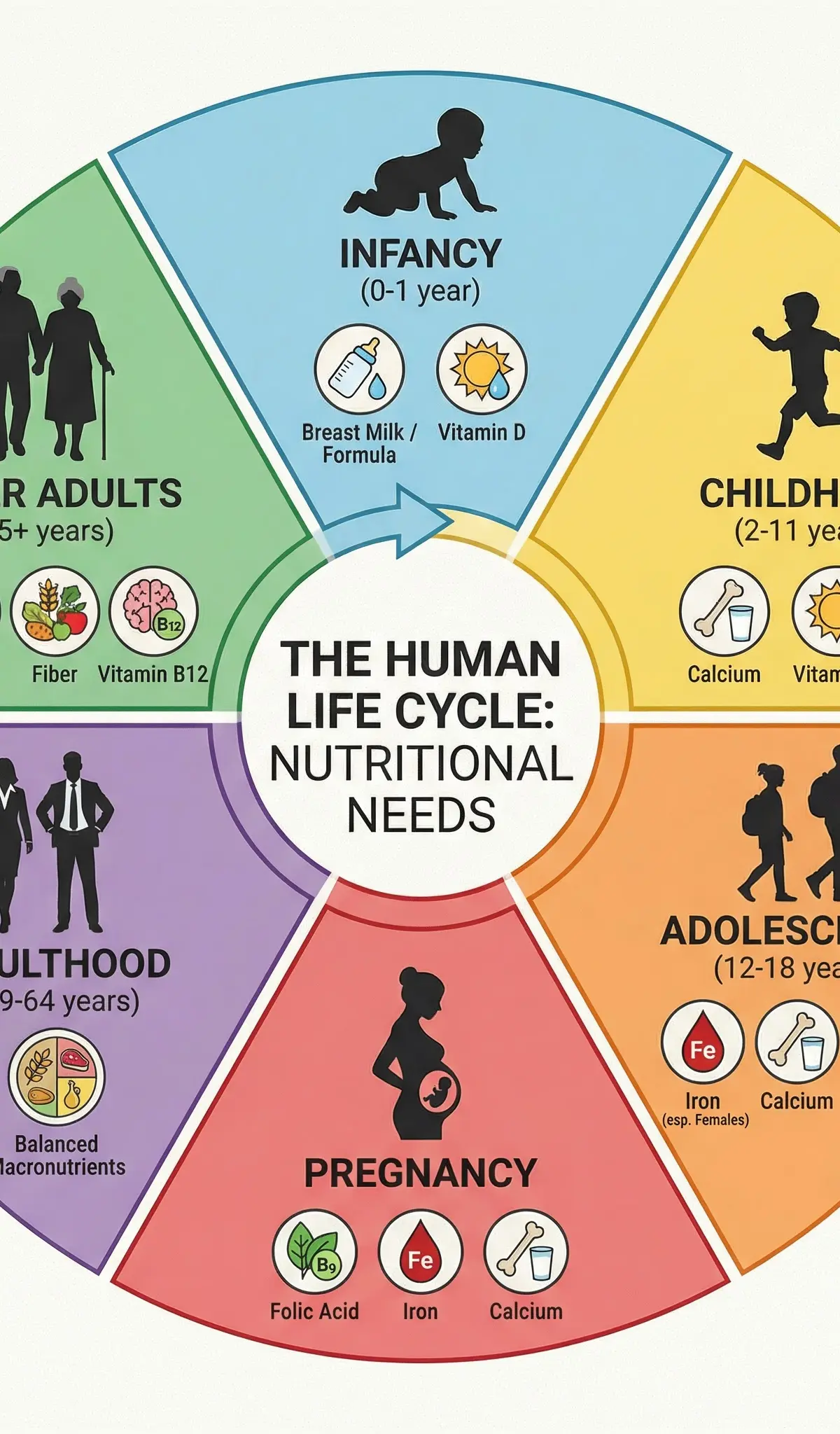
Adulthood (19-64 years)
Key Nutritional Focus: Maintaining health, preventing chronic disease, and meeting the demands of pregnancy.
What is required: For most adults, the focus is on a balanced diet to maintain a healthy weight and prevent diseases like type 2 diabetes and cardiovascular disease. However, pregnancy introduces specific, critical needs:
- Folic Acid: Required before conception and for the first 12 weeks of pregnancy to prevent neural tube defects (e.g., spina bifida) in the developing foetus.
- Iron: To support a 50% increase in the mother's blood volume and for the baby's own blood supply.
- Calcium: For the development of the baby's skeleton. If maternal intake is insufficient, calcium will be drawn from her own bones.
Why it matters: Adult dietary habits have a long-term impact on health. During pregnancy, nutrition directly affects the health of both mother and child. Marks are awarded for knowing the specific timing and function of nutrients like Folic Acid.
Older Adults (65+ years)
Key Nutritional Focus: Maintaining muscle mass, supporting bone health, and ensuring nutrient density.
What is required: A common exam mistake is to simply state that older adults need 'less food'. This is too vague. Candidates must clarify that they need fewer calories (due to a lower metabolic rate and reduced activity) but have the same or even higher needs for certain micronutrients. Key nutrients include:
- Vitamin D & Calcium: To reduce the risk of osteoporosis and fractures.
- Vitamin B12: Absorption can decrease with age.
- Fibre: To prevent constipation.
- Protein: To combat age-related muscle loss (sarcopenia).
Why it matters: Good nutrition in later life is key to maintaining independence, mobility, and quality of life. Examiners reward answers that demonstrate an understanding of 'nutrient density' – the need for more nutrients in fewer calories.
 "
"
Worked Examples
3 worked examples — open one to explore the question and available guidance.
Practice Questions
Test your understanding — click to reveal model answers
Explain why the dietary requirements for calcium and iron change during a person's lifetime. (8 marks)
Hint: Think about two specific life stages for each nutrient where the requirement is high and explain why.
A 35-year-old man is training for a marathon. Describe two macronutrients that would be particularly important in his diet and explain why. (4 marks)
Hint: Think about energy and muscle repair.
Evaluate the suitability of a vegan diet for a toddler (aged 2-4). (12 marks)
Hint: Consider both the challenges and how they can be overcome. Think about key nutrients for growth.
Test your understanding of Nutritional needs of different groups
Active recall beats re-reading. Take an instant quiz now to test what you’ve learned and lock it into long-term memory.
7 days Premium · Then free forever · No card, no charge