OCR · GCSE · Food Preparation and Nutrition
Sensory evaluation
Unlock top marks in your OCR GCSE Food exam by mastering the science of sensory evaluation. This guide demystifies how we perceive food, moving beyond simple 'taste' to explore the crucial interplay of aroma, texture, and appearance that examiners want you to analyse with scientific precision.
- 4 min read
- 3 worked examples
- 5 practice questions
- 6 key terms
Study Notes
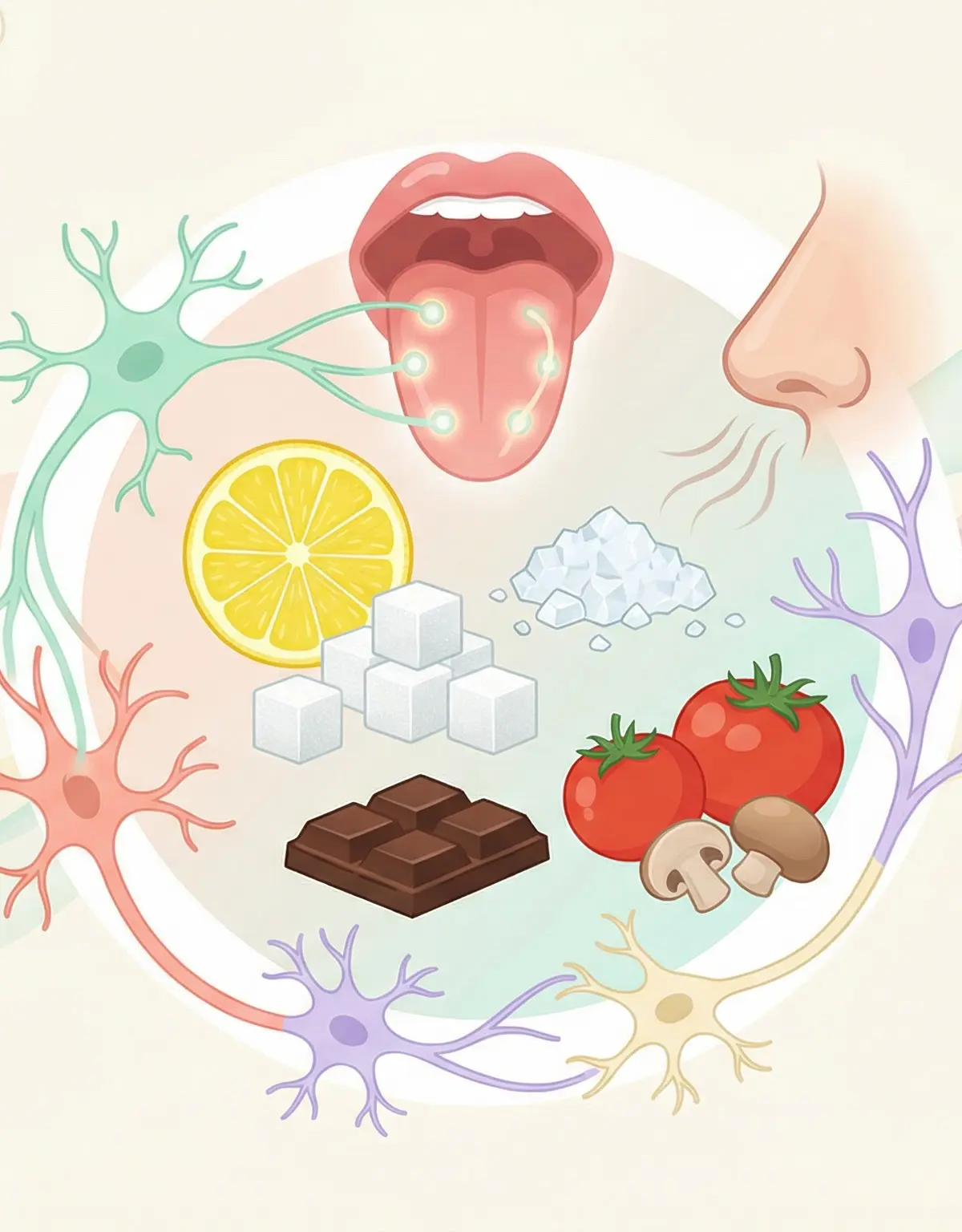
Overview
Sensory evaluation is a scientific discipline used to evoke, measure, analyse, and interpret reactions to those characteristics of foods and materials as they are perceived by the senses of sight, smell, touch, taste, and hearing. For your OCR GCSE, you are required to demonstrate a robust understanding of the difference between taste and flavour, the specific methodologies used in sensory testing, and the critical importance of controlled conditions to ensure fair and reliable results. Examiners award significant credit to candidates who can apply this knowledge to practical scenarios, using precise, technical vocabulary rather than subjective opinion. This section will equip you with the foundational knowledge to confidently tackle questions on sensory analysis, a topic that frequently appears in the exam and separates high-achieving candidates from the rest.
The Science of Perception: Taste vs. Flavour
One of the most common mistakes candidates make is confusing taste with flavour. Securing high marks requires you to distinguish between them clearly.
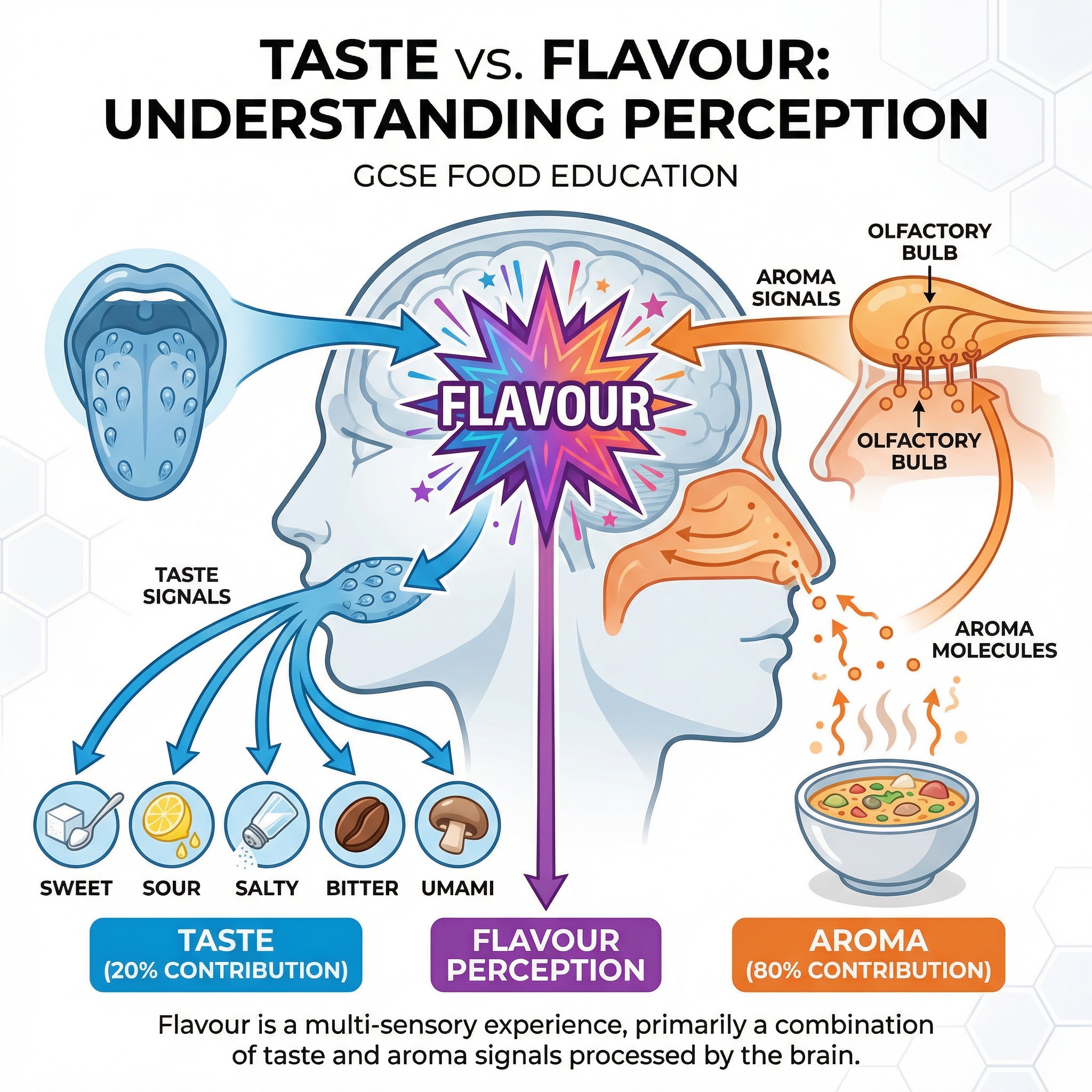
Taste (Gustation): This is what happens exclusively on the tongue. The surface of the tongue is covered in papillae, which house thousands of taste buds. These taste buds can detect five basic tastes. No more, no less. Marks are explicitly awarded for listing these five.
- Sweet: Usually indicates the presence of sugars, a source of energy.
- Sour: Associated with acids, like those in lemons or vinegar.
- Salty: Caused by sodium chloride, essential for bodily functions.
- Bitter: Often a warning sign of toxins in plants.
- Umami: A savoury, meaty taste, often associated with monosodium glutamate (MSG) and fermented foods.
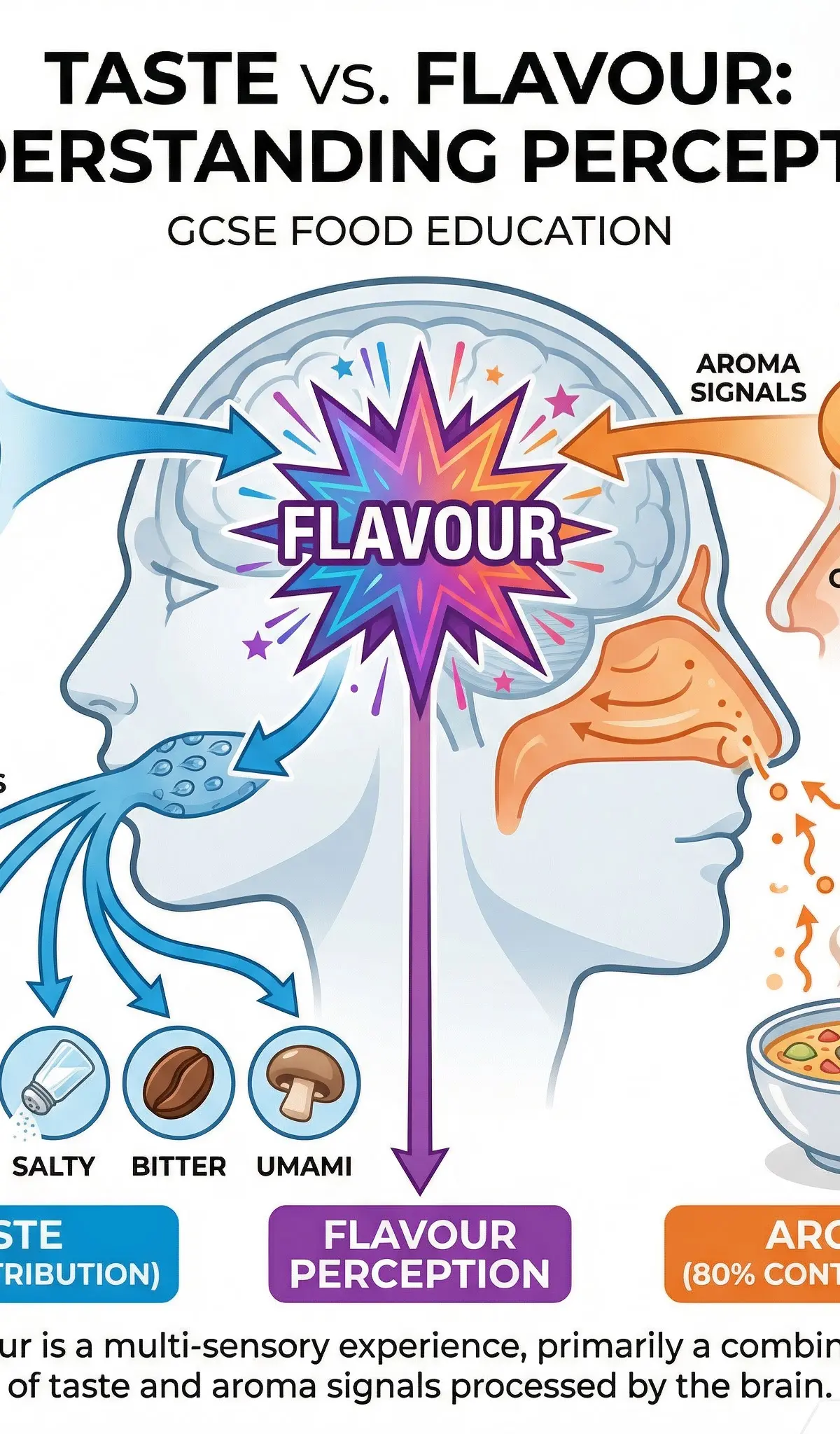
Flavour: This is the holistic sensory impression. It is a complex combination of the five basic tastes from the tongue and, most importantly, the aroma of the food. Aroma is detected by the olfactory system in the nose. It is estimated that 80% of flavour perception is actually due to aroma. This is why food seems bland when you have a cold; your nasal passages are blocked, preventing aroma molecules from reaching the olfactory receptors.
Sensory Testing Methodologies
Food manufacturers use specific tests to gain objective insights into their products. You need to know which test to use for a given scenario.
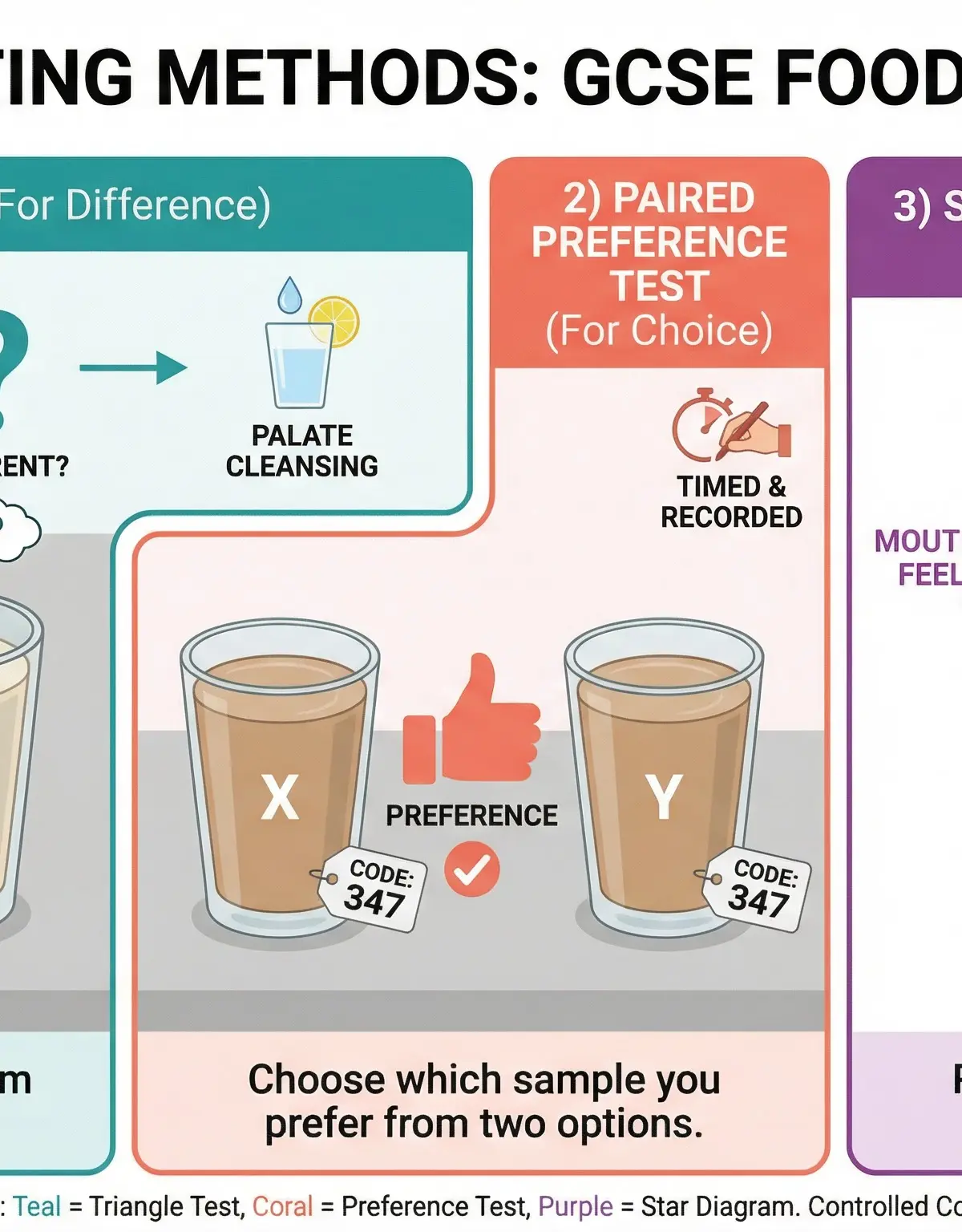
Preference Tests (Hedonic Tests)
These tests are about opinion and liking. They are used to gauge consumer preference.
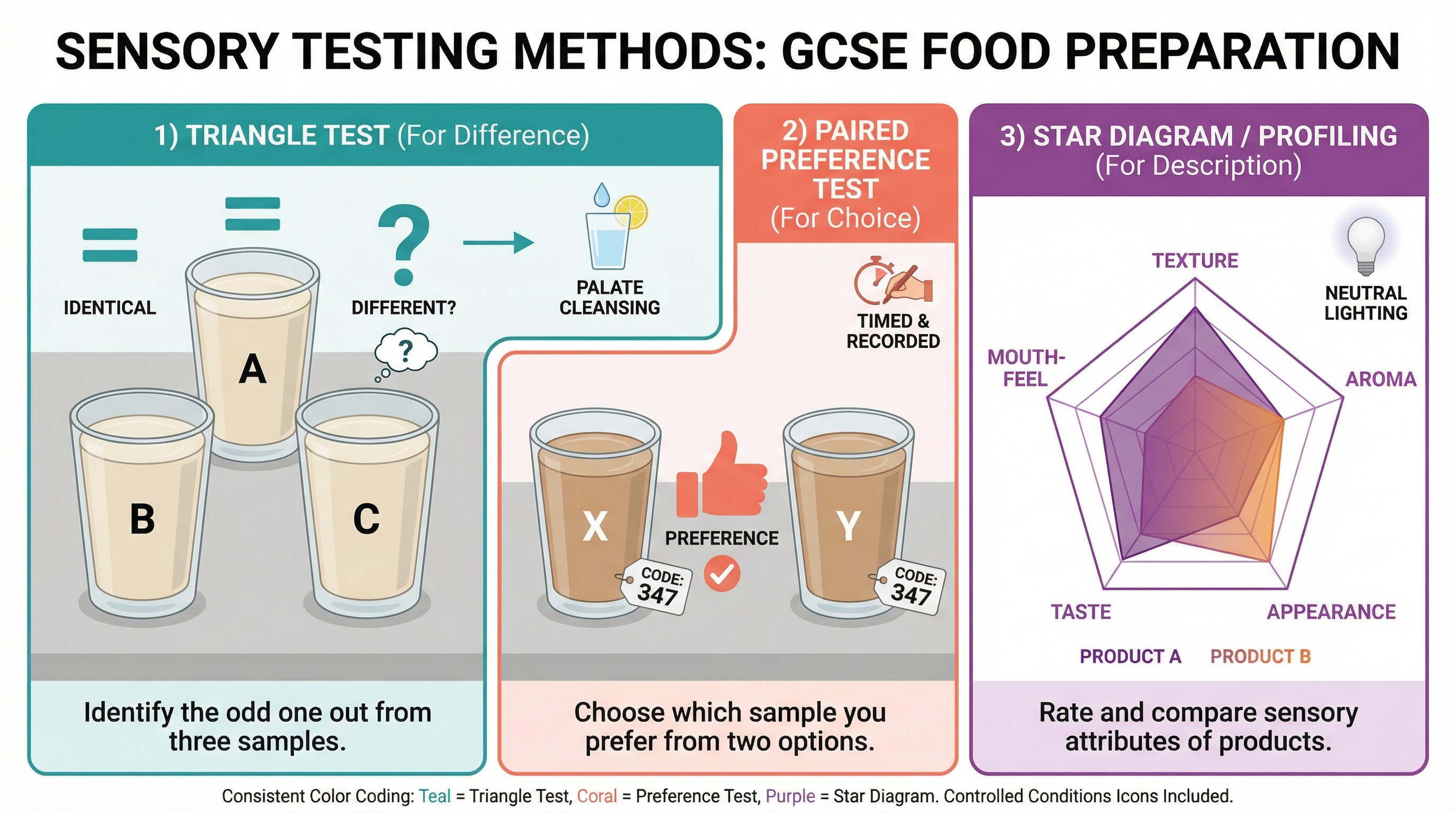
- Paired Preference Test: The simplest form. Tasters are given two samples (e.g., A and B) and asked to state which one they prefer. This is ideal for choosing between two new recipes or comparing a product to a competitor's.
Discriminatory Tests
These tests are about facts and differences. They determine if a sensory difference exists between samples.
- Triangle Test: The classic difference test. Tasters receive three samples, two of which are identical and one is different. They must identify the 'odd one out'. This is highly effective for quality control, such as checking if a change in supplier for an ingredient has altered the final product.
Grading & Profiling Tests
These tests are for detailed description and analysis. They create a full sensory profile of a product.
- Star Diagrams: Tasters rate a product across a range of specific attributes (e.g., bitterness, crispiness, colour intensity) on a numerical scale. The results are plotted on a multi-axis 'star' diagram. By overlaying the star diagrams for two different products, a food technologist can visually compare their sensory profiles. A larger shape indicates a more intense profile.
Visual Resources
2 diagrams and illustrations
Interactive Diagrams
1 interactive diagram to visualise key concepts
Conceptual Flow Outline
Flowchart showing the key stages of planning and conducting a sensory test.
Worked Examples
3 worked examples — open one to explore the question and available guidance.
Practice Questions
Test your understanding — click to reveal model answers
A food company wants to know if their new recipe for tomato soup is significantly different from the old one. Describe a suitable sensory test they could use. (5 marks)
Hint: Think about whether this is a test for preference or difference.
Explain two reasons why it is important to use controlled conditions when carrying out sensory tests. (4 marks)
Hint: Think about fairness, reliability, and bias.
A taster describes a biscuit as having a 'buttery aroma, a crumbly texture, and a golden-brown appearance'. What is the collective term for these properties? (1 mark)
Hint: It's a key piece of technical vocabulary.
Evaluate the use of a star diagram for developing a new food product. (9 marks)
Hint: Think about the strengths (what it shows) and weaknesses (what it doesn't show).
List the five basic tastes. (5 marks)
Hint: Use the BUSSS acronym if you need to!
Test your understanding of Sensory evaluation
Active recall beats re-reading. Take an instant quiz now to test what you’ve learned and lock it into long-term memory.
7 days Premium · Then free forever · No card, no charge