AQA · A-Level · Geography
Course version: 7037 · Version from Sept 2018
Ecosystems and their importance for human populations in the light of…
Full specification wording
Ecosystems and sustainability: Ecosystems and their importance for human populations in the light of continuing population growth and economic development. Human populations in ecosystem development and sustainability.
Ecosystems provide vital provisioning, regulating, cultural, and supporting services essential for human survival and wellbeing.
Checked against the AQA 7037 specification (opens in a new tab) on .
- Point 2 of 2
- 4 key terms
Study notes
From the checked teaching notes for this specification point.
The idea
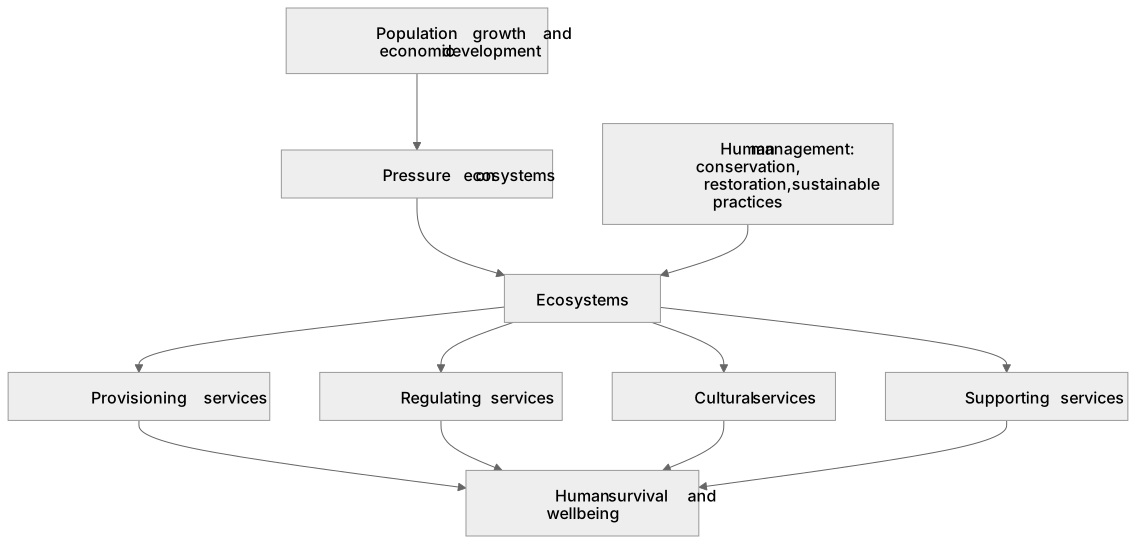
Ecosystems provide vital provisioning, regulating, cultural, and supporting services essential for human survival and wellbeing. As the global population continues to grow and economic development expands, the demand for resources like timber, food, and fresh water intensifies, placing unprecedented pressure on these natural systems. For example, rapid industrialisation often leads to deforestation and habitat degradation. However, human populations also play a crucial role in ecosystem development and sustainability through active management, conservation strategies, and restoration ecology. Sustainable practices, such as agroforestry or the establishment of protected marine reserves, demonstrate how human intervention can balance economic needs with the long-term viability and resilience of ecosystems.
What earns the marks
- Identify specific ecosystem services (provisioning, regulating, cultural, supporting) and link them directly to human wellbeing and survival.
- Explain how exponential population growth increases absolute resource consumption, leading to habitat destruction or overexploitation.
- Evaluate the impact of economic development, such as industrialisation or commercial agriculture, on ecosystem degradation and biodiversity loss.
- Assess the role of human management in promoting ecosystem sustainability through conservation, legislation, or sustainable yield practices.
Common mistakes and how to put them right
Viewing human impacts solely as negative.
Put it right: Acknowledge that human populations can also actively restore and sustainably manage ecosystems.
Confusing economic development with population growth.
Put it right: Treat them as distinct drivers, where development relates to rising affluence and per capita consumption, while population growth relates to absolute demographic numbers.
Using vague terms like 'pollution' without context.
Put it right: Specify the type of pollution (e.g., agricultural runoff causing eutrophication) and its exact impact on ecosystem services.
Exam tips
- Use the Millennium Ecosystem Assessment framework (provisioning, regulating, cultural, supporting) to structure answers on the importance of ecosystems.
- Provide specific, named examples of sustainable management strategies, such as debt-for-nature swaps or ecotourism in Costa Rica.
- When evaluating sustainability, explicitly weigh short-term economic gains against long-term ecological degradation.
Try the lesson
The start of the Ecosystems and sustainability: Ecosystems and their importance for human populations in the light of continuing population growth and economic development. Human populations in ecosystem development and sustainability. lesson, made from checked teaching notes for this specification point.
Have a go first
How does continuing economic development most commonly challenge the sustainability of natural ecosystems?
Listen
Ecosystems provide vital provisioning, regulating, cultural, and supporting services essential for human survival and wellbeing. As the global population continues to grow and economic development expands, the demand for resources like timber, food, and fresh water intensifies, placing unprecedented pressure on these natural systems. For example, rapid industrialisation often leads to deforestation and habitat degradation. However, human populations also play a crucial role in ecosystem development and sustainability through active management, conservation strategies, and restoration ecology. Sustainable practices, such as agroforestry or the establishment of protected marine reserves, demonstrate how human intervention can balance economic needs with the long-term viability and resilience of ecosystems. A strong answer earns marks for these points. Identify specific ecosystem services (provisioning, regulating, cultural, supporting) and link them directly to human wellbeing and survival. Explain how exponential population growth increases absolute resource consumption, leading to habitat destruction or overexploitation. Evaluate the impact of economic development, such as industrialisation or commercial agriculture, on ecosystem degradation and biodiversity loss. Assess the role of human management in promoting ecosystem sustainability through conservation, legislation, or sustainable yield practices. A common slip: Viewing human impacts solely as negative. Instead, acknowledge that human populations can also actively restore and sustainably manage ecosystems. Exam tip: Use the Millennium Ecosystem Assessment framework (provisioning, regulating, cultural, supporting) to structure answers on the importance of ecosystems.
See it
Key words
Say what each word means before you turn the card.
Ecosystem services
Try answering aloud or in your head before turning the card.
Sustainability
Try answering aloud or in your head before turning the card.
Economic development
Try answering aloud or in your head before turning the card.
Population growth
Try answering aloud or in your head before turning the card.
See every definition
- Ecosystem services
- The provisioning, regulating, cultural and supporting services that ecosystems provide and that are essential for human survival and wellbeing.
- Sustainability
- The long-term viability and resilience of ecosystems, which human populations can promote through active management, conservation strategies and restoration ecology.
- Economic development
- A driver that, as it expands, intensifies demand for resources such as timber, food and fresh water, placing pressure on natural systems.
- Population growth
- A continuing increase in human numbers that, together with economic development, intensifies demand for resources and places pressure on ecosystems.
Label the diagram
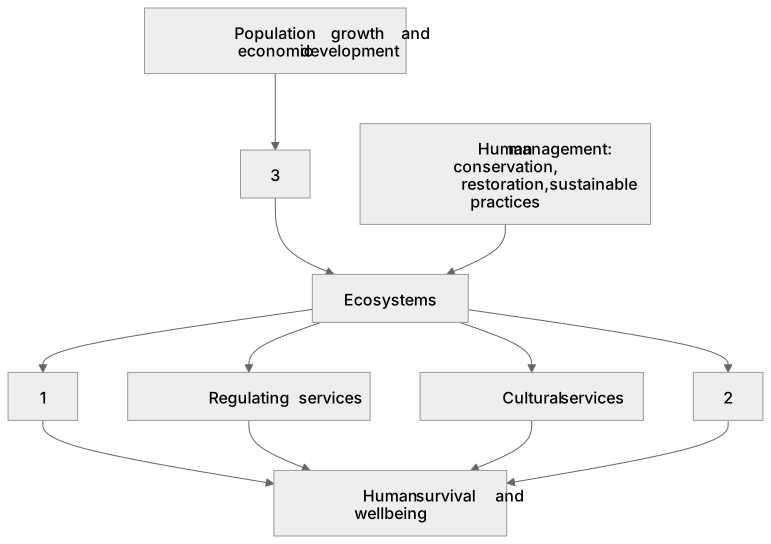
Some boxes have lost their names. Pick the right name for each number.
1Box 1
2Box 2
3Box 3
There is more to this lesson
The full lesson goes on to check your understanding and help you earn the marks. Create a free account to carry on, with your progress saved.
A week of Premium from your first lesson · Then the free plan continues · No card, no charge
Test your understanding of Ecosystems and sustainability: Ecosystems and their importance for human populations in the light of continuing population growth and economic development. Human populations in ecosystem development and sustainability.
Active recall beats re-reading. Take an instant quiz now to test what you’ve learned and lock it into long-term memory.
A week of Premium from your first lesson · Then the free plan continues · No card, no charge