AQA · A-Level · Geography
Course version: 7037 · Version from Sept 2018
The concept of biodiversity. Local and global trends in biodiversity.…
Full specification wording
Ecosystems and sustainability: The concept of biodiversity. Local and global trends in biodiversity. Causes, rates and potential impacts of declining biodiversity.
Biodiversity encompasses the variety of life at genetic, species, and ecosystem levels.
Checked against the AQA 7037 specification (opens in a new tab) on .
- Point 1 of 2
Study notes
From the checked teaching notes for this specification point.
The idea
Biodiversity encompasses the variety of life at genetic, species, and ecosystem levels. You must understand both global trends, such as the rapid decline of tropical biomes, and local trends, like the loss of specific native flora in a UK woodland. The causes of this decline are multifaceted, including habitat destruction, climate change, pollution, and invasive species. You need to quantify the rates of decline, recognising that current extinction rates are estimated to be hundreds of times higher than the natural background rate, indicating a potential sixth mass extinction. Finally, evaluate the impacts of this loss, ranging from the collapse of local food webs and reduced ecosystem resilience to global consequences like compromised food security and the loss of potential medicinal resources.
What earns the marks
- Define biodiversity comprehensively, including genetic, species, and ecosystem diversity.
- Contrast global biodiversity trends, such as widespread tropical deforestation, with local trends, such as changes in a specific nature reserve.
- Identify and explain the primary anthropogenic causes of biodiversity loss, such as land-use change, overexploitation, and climate change.
- Provide evidence for the rates of declining biodiversity, comparing current extinction rates to historical background rates.
- Assess the ecological and human impacts of declining biodiversity, including loss of ecosystem services and reduced ecological resilience.
Common mistakes and how to put them right
Defining biodiversity solely as the number of different species.
Put it right: Broaden the definition to include genetic diversity within species and the variety of ecosystems.
Confusing local and global trends or providing only global examples.
Put it right: Ensure you have distinct examples for both scales, such as global coral reef bleaching versus local hedgerow removal.
Discussing causes of decline without referencing the rate of change.
Put it right: Explicitly mention the accelerated speed of current biodiversity loss compared to natural evolutionary timescales.
Exam tips
- Use specific indices, such as the Living Planet Index, to provide concrete evidence when discussing global rates and trends of biodiversity decline.
- Link the causes of biodiversity loss directly to their impacts; for example, explain how agricultural runoff causes eutrophication, leading to local fish mortality.
- When discussing impacts, categorise them into ecological impacts, like food web collapse, and anthropogenic impacts, like loss of economic resources, to demonstrate breadth of knowledge.
Try the lesson
The start of the Ecosystems and sustainability: The concept of biodiversity. Local and global trends in biodiversity. Causes, rates and potential impacts of declining biodiversity. lesson, made from checked teaching notes for this specification point.
Have a go first
Which of the following best defines the concept of biodiversity within an ecosystem?
Listen
Biodiversity encompasses the variety of life at genetic, species, and ecosystem levels. You must understand both global trends, such as the rapid decline of tropical biomes, and local trends, like the loss of specific native flora in a UK woodland. The causes of this decline are multifaceted, including habitat destruction, climate change, pollution, and invasive species. You need to quantify the rates of decline, recognising that current extinction rates are estimated to be hundreds of times higher than the natural background rate, indicating a potential sixth mass extinction. Finally, evaluate the impacts of this loss, ranging from the collapse of local food webs and reduced ecosystem resilience to global consequences like compromised food security and the loss of potential medicinal resources. A strong answer earns marks for these points. Define biodiversity comprehensively, including genetic, species, and ecosystem diversity. Contrast global biodiversity trends, such as widespread tropical deforestation, with local trends, such as changes in a specific nature reserve. Identify and explain the primary anthropogenic causes of biodiversity loss, such as land-use change, overexploitation, and climate change. Provide evidence for the rates of declining biodiversity, comparing current extinction rates to historical background rates. A common slip: Defining biodiversity solely as the number of different species. Instead, Broaden the definition to include genetic diversity within species and the variety of ecosystems. Exam tip: Use specific indices, such as the Living Planet Index, to provide concrete evidence when discussing global rates and trends of biodiversity decline.
See it
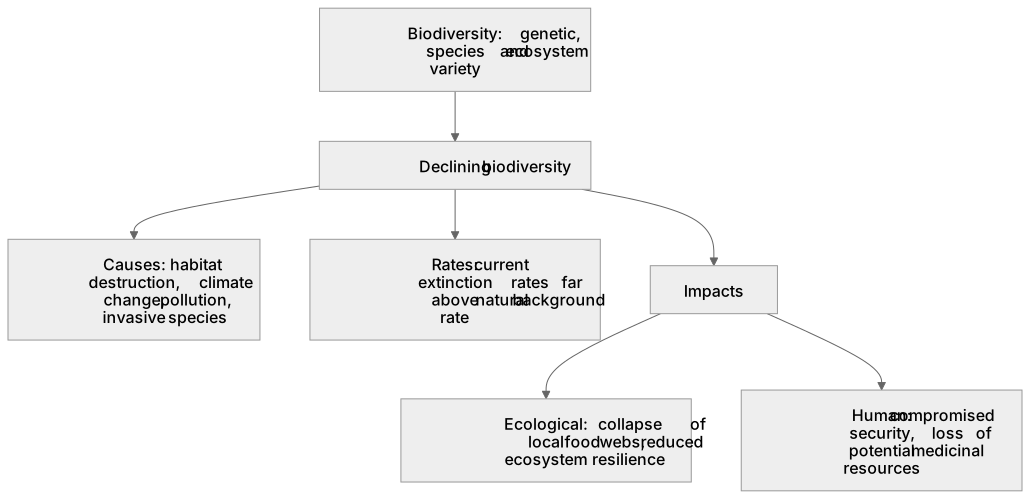
Label the diagram
Some boxes have lost their names. Pick the right name for each number.
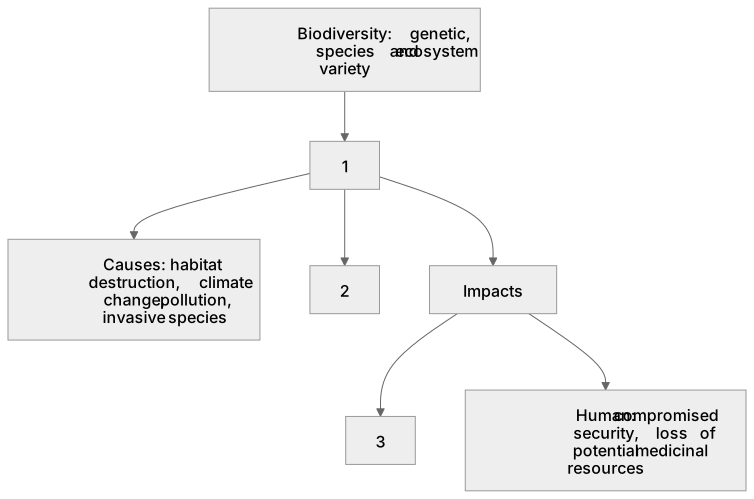
1Box 1
2Box 2
3Box 3
There is more to this lesson
The full lesson goes on to check your understanding and help you earn the marks. Create a free account to carry on, with your progress saved.
A week of Premium from your first lesson · Then the free plan continues · No card, no charge
Test your understanding of Ecosystems and sustainability: The concept of biodiversity. Local and global trends in biodiversity. Causes, rates and potential impacts of declining biodiversity.
Active recall beats re-reading. Take an instant quiz now to test what you’ve learned and lock it into long-term memory.
A week of Premium from your first lesson · Then the free plan continues · No card, no charge