AQA · A-Level · Geography
Course version: 7037 · Version from Sept 2018
Energy supplies in a globalising world: competing national interests and…
Full specification wording
Energy security: Energy supplies in a globalising world: competing national interests and the role of transnational corporations in energy production, processing and distribution.
In a globalising world, energy supplies are heavily contested due to competing national interests, as countries strive for energy security to fuel economic growth.
Checked against the AQA 7037 specification (opens in a new tab) on .
- Point 3 of 7
- 4 key terms
Study notes
From the checked teaching notes for this specification point.
The idea
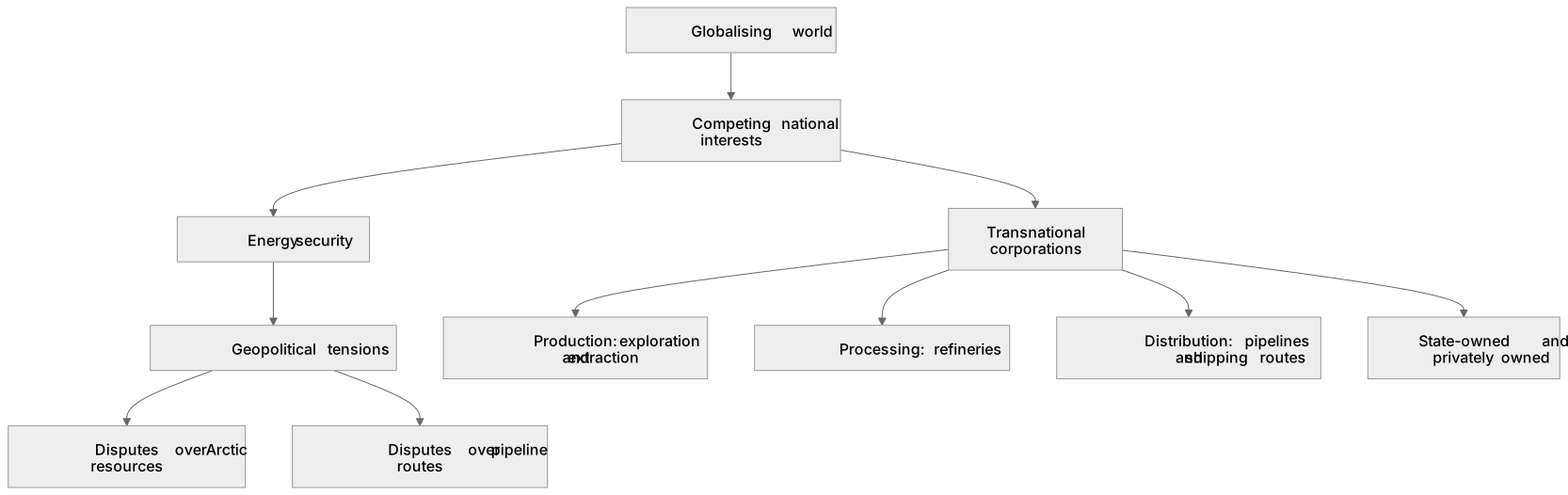
In a globalising world, energy supplies are heavily contested due to competing national interests, as countries strive for energy security to fuel economic growth. This competition often leads to geopolitical tensions, such as disputes over Arctic resources or pipeline routes. Transnational corporations (TNCs), both state-owned (like Gazprom) and privately owned (like BP), play a pivotal role across the entire energy supply chain. They dominate energy production through exploration and extraction, manage processing via massive refineries, and control distribution through complex global networks of pipelines and shipping routes. Understanding the interplay between state agendas and TNC operations is crucial for analysing global energy flows.
What earns the marks
- Explains how globalisation increases energy demand, leading to competing national interests over finite resources.
- Evaluates the geopolitical tensions arising from energy insecurity and the strategic control of energy pathways.
- Assesses the role of TNCs in energy production, including exploration and extraction in challenging environments.
- Analyses the influence of TNCs in the processing (refining) and distribution (pipelines, shipping) of energy globally.
Common mistakes and how to put them right
Confusing state-owned energy companies with private TNCs.
Put it right: Distinguish between state-controlled entities like Saudi Aramco and private TNCs like ExxonMobil.
Focusing only on energy extraction.
Put it right: Ensure answers also address the processing (refining) and distribution (transport) roles of TNCs.
Assuming national interests always align with TNC goals.
Put it right: Recognise that host nations and TNCs often have conflicting priorities regarding profit repatriation and environmental standards.
Exam tips
- Use specific examples of TNCs and detail their involvement in all three stages: production, processing, and distribution.
- Link competing national interests to contemporary geopolitical conflicts, such as pipeline disputes in Eastern Europe or the South China Sea.
- Evaluate the balance of power between host governments and energy TNCs when discussing energy security.
Try the lesson
The start of the Energy security: Energy supplies in a globalising world: competing national interests and the role of transnational corporations in energy production, processing and distribution. lesson, made from checked teaching notes for this specification point.
Have a go first
Which of the following best describes the primary role of transnational corporations (TNCs) in the global energy market?
Listen
In a globalising world, energy supplies are heavily contested due to competing national interests, as countries strive for energy security to fuel economic growth. This competition often leads to geopolitical tensions, such as disputes over Arctic resources or pipeline routes. Transnational corporations (TNCs), both state-owned (like Gazprom) and privately owned (like BP), play a pivotal role across the entire energy supply chain. They dominate energy production through exploration and extraction, manage processing via massive refineries, and control distribution through complex global networks of pipelines and shipping routes. Understanding the interplay between state agendas and TNC operations is crucial for analysing global energy flows. A strong answer earns marks for these points. Explains how globalisation increases energy demand, leading to competing national interests over finite resources. Evaluates the geopolitical tensions arising from energy insecurity and the strategic control of energy pathways. Assesses the role of TNCs in energy production, including exploration and extraction in challenging environments. Analyses the influence of TNCs in the processing (refining) and distribution (pipelines, shipping) of energy globally. A common slip: Confusing state-owned energy companies with private TNCs. Instead, distinguish between state-controlled entities like Saudi Aramco and private TNCs like ExxonMobil. Exam tip: Use specific examples of TNCs and detail their involvement in all three stages: production, processing, and distribution.
See it
Key words
Say what each word means before you turn the card.
Energy security
Try answering aloud or in your head before turning the card.
Competing national interests
Try answering aloud or in your head before turning the card.
Transnational corporations
Try answering aloud or in your head before turning the card.
Geopolitical tensions
Try answering aloud or in your head before turning the card.
See every definition
- Energy security
- The striving of countries to secure energy supplies in a globalising world to fuel economic growth.
- Competing national interests
- The contest between countries over energy supplies as they strive for energy security, often leading to geopolitical tensions.
- Transnational corporations
- Companies, both state-owned and privately owned, that play a pivotal role across the entire energy supply chain.
- Geopolitical tensions
- Disputes arising from energy insecurity and the strategic control of energy pathways, such as over Arctic resources or pipeline routes.
Label the diagram
Some boxes have lost their names. Pick the right name for each number.
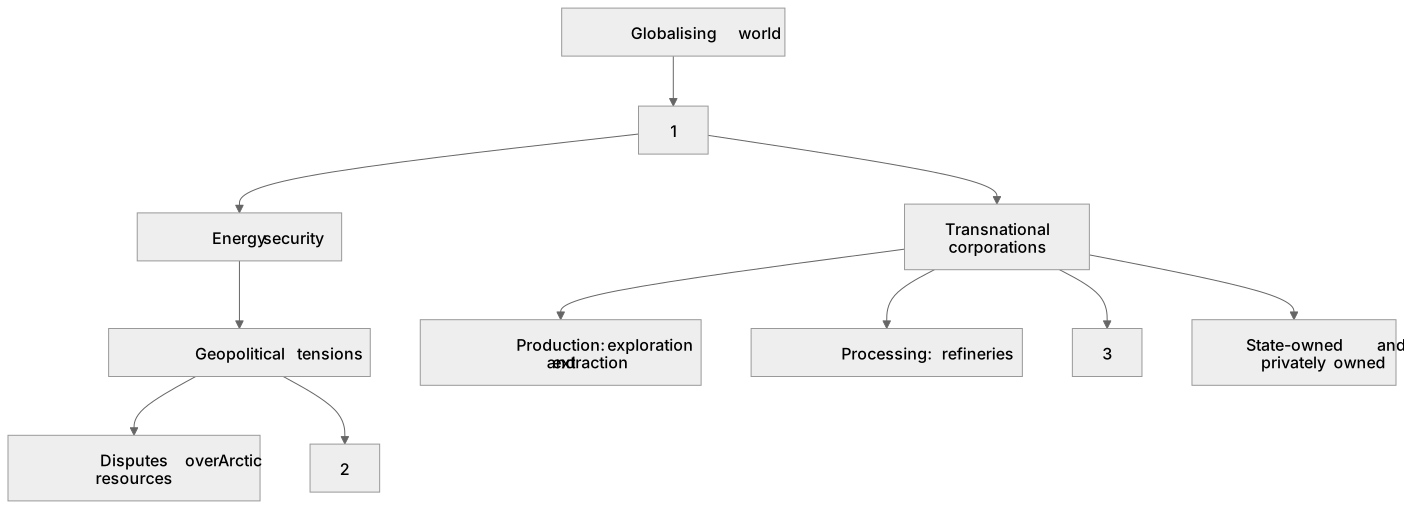
1Box 1
2Box 2
3Box 3
There is more to this lesson
The full lesson goes on to check your understanding and help you earn the marks. Create a free account to carry on, with your progress saved.
A week of Premium from your first lesson · Then the free plan continues · No card, no charge
Test your understanding of Energy security: Energy supplies in a globalising world: competing national interests and the role of transnational corporations in energy production, processing and distribution.
Active recall beats re-reading. Take an instant quiz now to test what you’ve learned and lock it into long-term memory.
A week of Premium from your first lesson · Then the free plan continues · No card, no charge