AQA · A-Level · Geography
Course version: 7037 · Version from Sept 2018
Health impacts of global environmental change: ozone depletion – skin…
Full specification wording
Global population futures: Health impacts of global environmental change: ozone depletion – skin cancer, cataracts; climate change – thermal stress, emergent and changing distribution of vector borne diseases, agricultural productivity and nutritional standards.
Global environmental change significantly impacts human health.
Checked against the AQA 7037 specification (opens in a new tab) on .
- Point 1 of 2
Study notes
From the checked teaching notes for this specification point.
The idea
Global environmental change significantly impacts human health. Stratospheric ozone depletion increases surface exposure to harmful ultraviolet radiation, directly elevating the incidence of skin cancer and cataracts, which impair vision. Concurrently, climate change introduces severe health risks. Rising global temperatures cause direct thermal stress, increasing mortality during heatwaves. Furthermore, shifting climate zones alter the geographical distribution of vector-borne diseases, such as malaria and dengue fever, exposing new populations. Climate change also disrupts agricultural productivity through extreme weather and shifting rainfall, threatening global nutritional standards and increasing malnutrition risks.
What earns the marks
- Explain the link between stratospheric ozone depletion, increased UV radiation, and the rising rates of skin cancer and cataracts.
- Analyse how climate change exacerbates thermal stress, leading to increased cardiovascular and respiratory mortality during extreme heat events.
- Describe how changing temperature and precipitation patterns expand the spatial distribution and seasonality of vector-borne diseases like malaria.
- Evaluate the indirect health impacts of climate change via reduced agricultural yields, leading to compromised nutritional standards and food insecurity.
Common mistakes and how to put them right
Confusing ozone depletion with the enhanced greenhouse effect.
Put it right: Ozone depletion causes increased UV exposure leading to skin cancer, not global warming.
Assuming vector-borne diseases only affect tropical regions.
Put it right: Climate change is allowing vectors like mosquitoes to survive at higher latitudes and altitudes.
Overlooking the indirect health impacts of climate change; students often focus solely on direct impacts like thermal stress while ignoring malnutrition caused by declining agricultural productivity.
Exam tips
- Clearly distinguish between the health impacts of ozone depletion (UV-related) and climate change (temperature and weather-related) to avoid conflating the two environmental issues.
- Use specific examples of vector-borne diseases, such as the spread of the Anopheles mosquito or Zika virus, to illustrate changing disease distributions.
- Link agricultural productivity directly to human health by discussing specific nutritional deficiencies that arise when staple crop yields fail.
Try the lesson
The start of the Global population futures: Health impacts of global environmental change: ozone depletion – skin cancer, cataracts; climate change – thermal stress, emergent and changing distribution of vector borne diseases, agricultural productivity and nutritional standards. lesson, made from checked teaching notes for this specification point.
Have a go first
Which of the following health impacts is most directly associated with the depletion of the stratospheric ozone layer?
Listen
Global environmental change significantly impacts human health. Stratospheric ozone depletion increases surface exposure to harmful ultraviolet radiation, directly elevating the incidence of skin cancer and cataracts, which impair vision. Concurrently, climate change introduces severe health risks. Rising global temperatures cause direct thermal stress, increasing mortality during heatwaves. Furthermore, shifting climate zones alter the geographical distribution of vector-borne diseases, such as malaria and dengue fever, exposing new populations. Climate change also disrupts agricultural productivity through extreme weather and shifting rainfall, threatening global nutritional standards and increasing malnutrition risks. A strong answer earns marks for these points. Explain the link between stratospheric ozone depletion, increased UV radiation, and the rising rates of skin cancer and cataracts. Analyse how climate change exacerbates thermal stress, leading to increased cardiovascular and respiratory mortality during extreme heat events. Describe how changing temperature and precipitation patterns expand the spatial distribution and seasonality of vector-borne diseases like malaria. Evaluate the indirect health impacts of climate change via reduced agricultural yields, leading to compromised nutritional standards and food insecurity. Exam tip: Clearly distinguish between the health impacts of ozone depletion (UV-related) and climate change (temperature and weather-related) to avoid conflating the two environmental issues.
See it
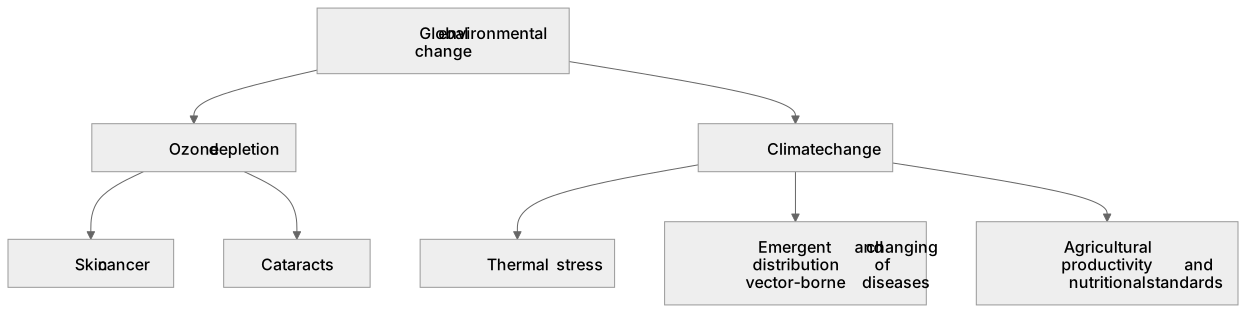
Label the diagram
Some boxes have lost their names. Pick the right name for each number.
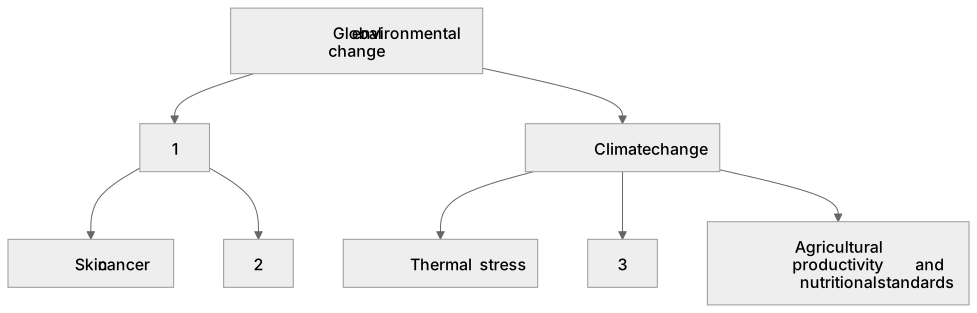
1Box 1
2Box 2
3Box 3
There is more to this lesson
The full lesson goes on to check your understanding and help you earn the marks. Create a free account to carry on, with your progress saved.
A week of Premium from your first lesson · Then the free plan continues · No card, no charge
Test your understanding of Global population futures: Health impacts of global environmental change: ozone depletion – skin cancer, cataracts; climate change – thermal stress, emergent and changing distribution of vector borne diseases, agricultural productivity and nutritional standards.
Active recall beats re-reading. Take an instant quiz now to test what you’ve learned and lock it into long-term memory.
A week of Premium from your first lesson · Then the free plan continues · No card, no charge