AQA · A-Level · Geography
Course version: 7037 · Version from Sept 2018
The impacts of change and measures to manage these impacts. Conservation…
Full specification wording
Local ecosystems: The impacts of change and measures to manage these impacts. Conservation strategies and their implementation in specific settings.
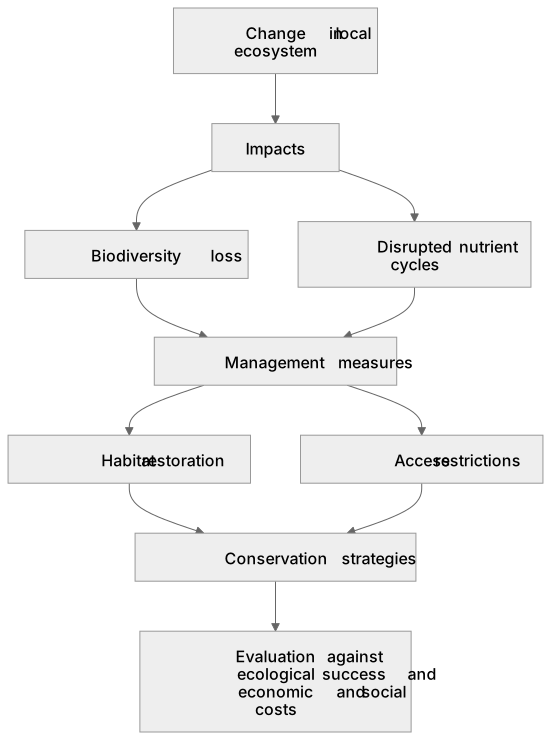
Local ecosystems face changes from natural succession and human activities like deforestation or pollution, leading to impacts such as biodiversity loss and disrupted nutrient cycles.
Checked against the AQA 7037 specification (opens in a new tab) on .
- Point 3 of 3
- 4 key terms
Study notes
From the checked teaching notes for this specification point.
The idea
Local ecosystems face changes from natural succession and human activities like deforestation or pollution, leading to impacts such as biodiversity loss and disrupted nutrient cycles. Managing these impacts requires targeted measures like habitat restoration or access restrictions. Conservation strategies aim to protect and enhance ecosystems while balancing human needs. For example, in a specific setting like a local sand dune ecosystem, implementation might involve boardwalks to prevent trampling, marram grass planting to stabilise dunes, and zoning to protect nesting birds. Evaluating these strategies involves assessing their ecological success against economic and social costs.
What earns the marks
- Identification of specific ecological impacts resulting from environmental or human-induced changes.
- Explanation of management measures designed to mitigate negative impacts on local ecosystems.
- Detailed description of conservation strategies applied within a named local ecosystem setting.
- Evaluation of the success or failure of implemented conservation strategies in balancing ecological and human needs.
Common mistakes and how to put them right
Discussing global biomes instead of local ecosystems.
Put it right: Focus on a specific, small-scale local ecosystem like a named woodland or pond.
Listing conservation strategies without linking them to specific impacts.
Put it right: Explicitly connect the management measure to the ecological change it addresses.
Failing to evaluate the implementation.
Put it right: Assess the effectiveness of the strategy, noting both successes and limitations in the specific setting.
Exam tips
- Always name a specific local ecosystem and use precise locational detail when discussing implementation.
- Use specific ecological terminology, such as climax community or plagioclimax, when describing the impacts of change.
- Prepare to evaluate the sustainability of conservation strategies by considering economic, social, and environmental factors.
Try the lesson
The start of the Local ecosystems: The impacts of change and measures to manage these impacts. Conservation strategies and their implementation in specific settings. lesson, made from checked teaching notes for this specification point.
Have a go first
Which of the following is a direct measure used to manage the impacts of visitor pressure in a local woodland ecosystem?
Listen
Local ecosystems face changes from natural succession and human activities like deforestation or pollution, leading to impacts such as biodiversity loss and disrupted nutrient cycles. Managing these impacts requires targeted measures like habitat restoration or access restrictions. Conservation strategies aim to protect and enhance ecosystems while balancing human needs. For example, in a specific setting like a local sand dune ecosystem, implementation might involve boardwalks to prevent trampling, marram grass planting to stabilise dunes, and zoning to protect nesting birds. Evaluating these strategies involves assessing their ecological success against economic and social costs. A strong answer earns marks for these points. Identification of specific ecological impacts resulting from environmental or human-induced changes. Explanation of management measures designed to mitigate negative impacts on local ecosystems. Detailed description of conservation strategies applied within a named local ecosystem setting. Evaluation of the success or failure of implemented conservation strategies in balancing ecological and human needs. A common slip: Discussing global biomes instead of local ecosystems. Instead, focus on a specific, small-scale local ecosystem like a named woodland or pond. Exam tip: Always name a specific local ecosystem and use precise locational detail when discussing implementation.
See it
Key words
Say what each word means before you turn the card.
Conservation strategies
Try answering aloud or in your head before turning the card.
Management measures
Try answering aloud or in your head before turning the card.
Ecological impacts
Try answering aloud or in your head before turning the card.
Evaluation of strategies
Try answering aloud or in your head before turning the card.
See every definition
- Conservation strategies
- Measures that aim to protect and enhance ecosystems while balancing human needs, and whose implementation can be described in a specific setting.
- Management measures
- Targeted measures, such as habitat restoration or access restrictions, designed to mitigate negative impacts on local ecosystems.
- Ecological impacts
- Effects resulting from environmental or human-induced changes, such as biodiversity loss and disrupted nutrient cycles.
- Evaluation of strategies
- Assessing the ecological success of implemented strategies against economic and social costs, noting both successes and limitations in the specific setting.
Label the diagram
Some boxes have lost their names. Pick the right name for each number.
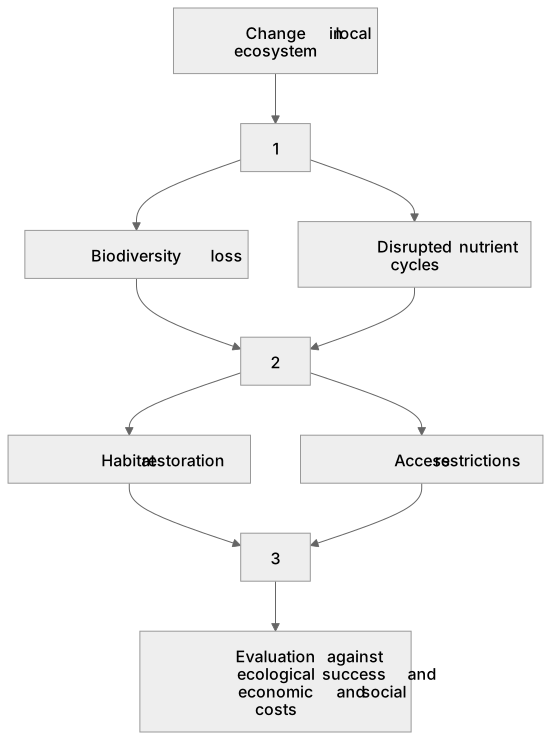
1Box 1
2Box 2
3Box 3
There is more to this lesson
The full lesson goes on to check your understanding and help you earn the marks. Create a free account to carry on, with your progress saved.
A week of Premium from your first lesson · Then the free plan continues · No card, no charge
Test your understanding of Local ecosystems: The impacts of change and measures to manage these impacts. Conservation strategies and their implementation in specific settings.
Active recall beats re-reading. Take an instant quiz now to test what you’ve learned and lock it into long-term memory.
A week of Premium from your first lesson · Then the free plan continues · No card, no charge