AQA · A-Level · Geography
Course version: 7037 · Version from Sept 2018
Local factors in ecological development and change (such as agriculture,…
Full specification wording
Local ecosystems: Local factors in ecological development and change (such as agriculture, urban change, the planned and unplanned introduction of new species).
Local ecosystems are dynamic, with their development heavily influenced by human-driven local factors.
Checked against the AQA 7037 specification (opens in a new tab) on .
- Point 2 of 3
- 2 key terms
Study notes
From the checked teaching notes for this specification point.
The idea
Local ecosystems are dynamic, with their development heavily influenced by human-driven local factors. Agriculture alters ecosystems through monoculture and fertilisers, leading to eutrophication and a loss of native biodiversity. Urban change drives habitat fragmentation, forcing species to adapt or migrate. The planned introduction of new species, such as planting non-native conifers for forestry, deliberately alters the ecological balance and soil chemistry. Meanwhile, the unplanned introduction of invasive species, like the accidental arrival of zebra mussels or the oak processionary moth, often outcompetes native flora and fauna, disrupting established food webs and changing the ecosystem's developmental trajectory.
What earns the marks
- Explain how agricultural practices, such as fertiliser use or hedgerow removal, alter local ecological development.
- Assess the impact of urban change, including habitat fragmentation and pollution, on local biodiversity and ecosystem structure.
- Distinguish between the planned introduction of species for agriculture or landscaping and their subsequent ecological consequences.
- Analyse the disruptive effects of the unplanned introduction of invasive species on native food webs and habitat stability.
Common mistakes and how to put them right
Treating all species introductions as accidental or negative.
Put it right: Distinguish between planned introductions, like agricultural crops or forestry, and unplanned invasive species, noting the specific impacts of each.
Discussing global factors like climate change when the question specifically asks for local factors.
Put it right: Focus strictly on local drivers such as nearby urban expansion, local farming practices, or specific local species introductions.
Failing to explain the mechanism of change, simply stating that agriculture destroys ecosystems.
Put it right: Detail the specific processes, such as how fertiliser runoff causes eutrophication or how monocultures reduce genetic diversity.
Exam tips
- Prepare a detailed case study of a local ecosystem that clearly demonstrates the impacts of agriculture, urbanisation, and species introduction.
- Use specific terminology like 'habitat fragmentation', 'eutrophication', and 'invasive species' to elevate the geographical quality of your answer.
- Compare the relative severity of different local factors, evaluating whether urban change or agricultural expansion has a greater impact on your chosen ecosystem.
Try the lesson
The start of the Local ecosystems: Local factors in ecological development and change (such as agriculture, urban change, the planned and unplanned introduction of new species). lesson, made from checked teaching notes for this specification point.
Have a go first
Which of the following is an example of an unplanned introduction of a new species causing ecological change in a local UK ecosystem?
Listen
Local ecosystems are dynamic, with their development heavily influenced by human-driven local factors. Agriculture alters ecosystems through monoculture and fertilisers, leading to eutrophication and a loss of native biodiversity. Urban change drives habitat fragmentation, forcing species to adapt or migrate. The planned introduction of new species, such as planting non-native conifers for forestry, deliberately alters the ecological balance and soil chemistry. Meanwhile, the unplanned introduction of invasive species, like the accidental arrival of zebra mussels or the oak processionary moth, often outcompetes native flora and fauna, disrupting established food webs and changing the ecosystem's developmental trajectory. A strong answer earns marks for these points. Explain how agricultural practices, such as fertiliser use or hedgerow removal, alter local ecological development. Assess the impact of urban change, including habitat fragmentation and pollution, on local biodiversity and ecosystem structure. Distinguish between the planned introduction of species for agriculture or landscaping and their subsequent ecological consequences. Analyse the disruptive effects of the unplanned introduction of invasive species on native food webs and habitat stability. A common slip: Treating all species introductions as accidental or negative. Instead, Distinguish between planned introductions, like agricultural crops or forestry, and unplanned invasive species, noting the specific impacts of each. Exam tip: Prepare a detailed case study of a local ecosystem that clearly demonstrates the impacts of agriculture, urbanisation, and species introduction.
See it
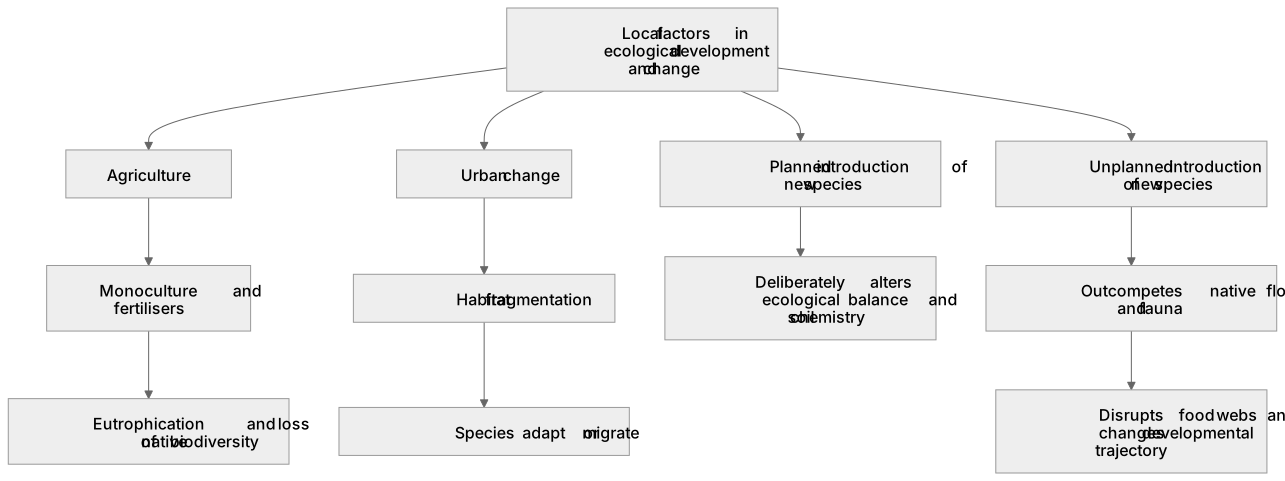
Key words
Say what each word means before you turn the card.
Human impact on the environment
Try answering aloud or in your head before turning the card.
Ecological succession and change
Try answering aloud or in your head before turning the card.
See every definition
- Human impact on the environment
- Human-driven local factors, such as agriculture, urban change and the planned and unplanned introduction of new species, heavily influence the development of local ecosystems.
- Ecological succession and change
- Local ecosystems are dynamic, and human-driven local factors alter their ecological balance and change their developmental trajectory.
Label the diagram
Some boxes have lost their names. Pick the right name for each number.
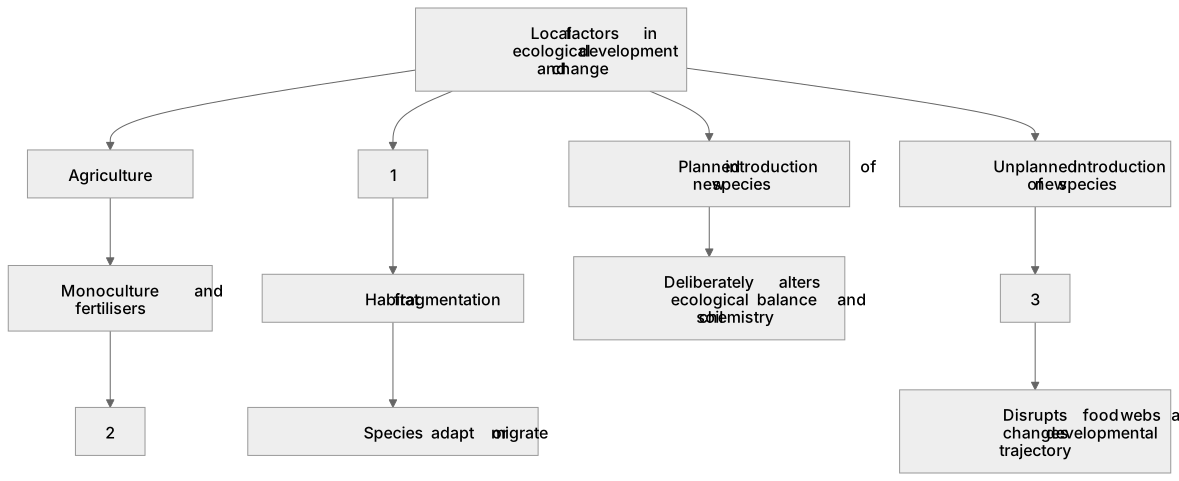
1Box 1
2Box 2
3Box 3
There is more to this lesson
The full lesson goes on to check your understanding and help you earn the marks. Create a free account to carry on, with your progress saved.
A week of Premium from your first lesson · Then the free plan continues · No card, no charge
Test your understanding of Local ecosystems: Local factors in ecological development and change (such as agriculture, urban change, the planned and unplanned introduction of new species).
Active recall beats re-reading. Take an instant quiz now to test what you’ve learned and lock it into long-term memory.
A week of Premium from your first lesson · Then the free plan continues · No card, no charge