AQA · A-Level · Geography
Course version: 7037 · Version from Sept 2018
The main characteristics of a distinctive local ecosystem (such as an area…
Full specification wording
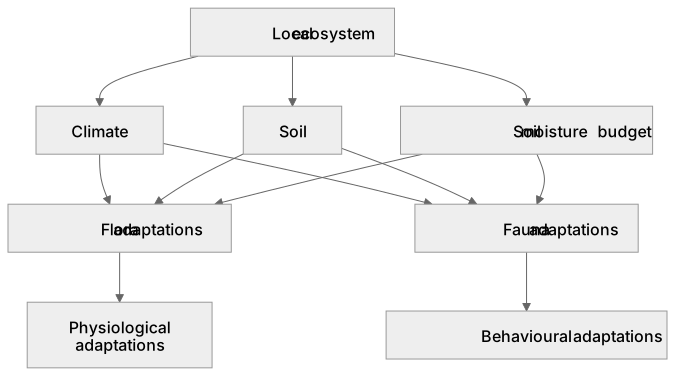
Local ecosystems: The main characteristics of a distinctive local ecosystem (such as an area of heathland, managed parkland, pond, dune system). Ecological responses to the climate, soil and soil moisture budget – adaptations by flora and fauna.
A distinctive local ecosystem possesses unique biotic and abiotic traits.
Checked against the AQA 7037 specification (opens in a new tab) on .
- Point 1 of 3
- 4 key terms
Study notes
From the checked teaching notes for this specification point.
The idea
A distinctive local ecosystem possesses unique biotic and abiotic traits. For example, a dune system features highly permeable soils with a low soil moisture budget, prompting flora like marram grass to develop xerophytic adaptations such as rolled leaves. Conversely, a pond has a permanent water supply, supporting hydrophytic flora and fauna adapted to fluctuating oxygen. Heathlands develop on acidic, nutrient-poor soils under temperate climates, where flora like heather use mycorrhizal fungi to extract scarce nutrients. Managed parklands show how human intervention shapes microclimates, favouring ornamental flora and adaptable fauna like squirrels. In all these systems, the specific climate, soil composition, and soil moisture budget dictate the physiological and behavioural adaptations of the resident flora and fauna.
What earns the marks
- Identify specific abiotic characteristics, including climate, soil pH, and soil moisture budget, of a chosen local ecosystem.
- Explain how flora adapt to the soil moisture budget, such as xerophytic traits in dune systems or hydrophytic traits in ponds.
- Describe faunal adaptations to local climate and soil conditions, such as burrowing behaviours to escape temperature extremes.
- Link the physical characteristics of heathlands or managed parklands to the specific biodiversity and trophic structures found there.
Common mistakes and how to put them right
Confusing the adaptations of flora in different ecosystems, such as attributing hydrophytic adaptations to heathland plants.
Put it right: Ensure adaptations are correctly matched to the specific soil moisture budget, such as xerophytic traits for dry heathlands.
Ignoring the role of the soil moisture budget in favour of only discussing temperature.
Put it right: Explicitly discuss how water availability in the soil drives both floral and faunal adaptations.
Providing generic examples of plants and animals without linking them to the specific local ecosystem studied.
Put it right: Use named examples of flora and fauna specific to a dune, pond, heathland, or parkland.
Exam tips
- Select one local ecosystem, such as a sand dune or pond, and memorise specific examples of how its flora and fauna adapt to its unique soil and climate.
- Use the term 'soil moisture budget' explicitly in your answers to demonstrate an understanding of water inputs and outputs in the ecosystem.
- When discussing managed parklands, ensure you highlight how human management alters the natural climate and soil responses.
Try the lesson
The start of the Local ecosystems: The main characteristics of a distinctive local ecosystem (such as an area of heathland, managed parkland, pond, dune system). Ecological responses to the climate, soil and soil moisture budget – adaptations by flora and fauna. lesson, made from checked teaching notes for this specification point.
Have a go first
In a coastal sand dune ecosystem, how does marram grass primarily adapt to the low soil moisture budget?
Listen
A distinctive local ecosystem possesses unique biotic and abiotic traits. For example, a dune system features highly permeable soils with a low soil moisture budget, prompting flora like marram grass to develop xerophytic adaptations such as rolled leaves. Conversely, a pond has a permanent water supply, supporting hydrophytic flora and fauna adapted to fluctuating oxygen. Heathlands develop on acidic, nutrient-poor soils under temperate climates, where flora like heather use mycorrhizal fungi to extract scarce nutrients. Managed parklands show how human intervention shapes microclimates, favouring ornamental flora and adaptable fauna like squirrels. In all these systems, the specific climate, soil composition, and soil moisture budget dictate the physiological and behavioural adaptations of the resident flora and fauna. A strong answer earns marks for these points. Identify specific abiotic characteristics, including climate, soil pH, and soil moisture budget, of a chosen local ecosystem. Explain how flora adapt to the soil moisture budget, such as xerophytic traits in dune systems or hydrophytic traits in ponds. Describe faunal adaptations to local climate and soil conditions, such as burrowing behaviours to escape temperature extremes. Link the physical characteristics of heathlands or managed parklands to the specific biodiversity and trophic structures found there. A common slip: Confusing the adaptations of flora in different ecosystems, such as attributing hydrophytic adaptations to heathland plants. Instead, Ensure adaptations are correctly matched to the specific soil moisture budget, such as xerophytic traits for dry heathlands. Exam tip: Select one local ecosystem, such as a sand dune or pond, and memorise specific examples of how its flora and fauna adapt to its unique soil and climate.
See it
Key words
Say what each word means before you turn the card.
Soil moisture budget
Try answering aloud or in your head before turning the card.
Xerophytic adaptations
Try answering aloud or in your head before turning the card.
Hydrophytic flora
Try answering aloud or in your head before turning the card.
Mycorrhizal fungi
Try answering aloud or in your head before turning the card.
See every definition
- Soil moisture budget
- The balance of water inputs and outputs in the soil, which drives both floral and faunal adaptations.
- Xerophytic adaptations
- Traits such as rolled leaves developed by flora in dune systems with highly permeable soils and a low soil moisture budget.
- Hydrophytic flora
- Plants supported by a permanent water supply, as in a pond, adapted to fluctuating oxygen.
- Mycorrhizal fungi
- Fungi used by flora like heather on acidic, nutrient-poor soils to extract scarce nutrients.
Label the diagram
Some boxes have lost their names. Pick the right name for each number.
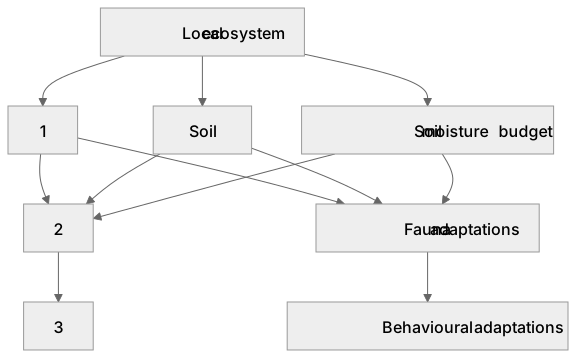
1Box 1
2Box 2
3Box 3
There is more to this lesson
The full lesson goes on to check your understanding and help you earn the marks. Create a free account to carry on, with your progress saved.
A week of Premium from your first lesson · Then the free plan continues · No card, no charge
Test your understanding of Local ecosystems: The main characteristics of a distinctive local ecosystem (such as an area of heathland, managed parkland, pond, dune system). Ecological responses to the climate, soil and soil moisture budget – adaptations by flora and fauna.
Active recall beats re-reading. Take an instant quiz now to test what you’ve learned and lock it into long-term memory.
A week of Premium from your first lesson · Then the free plan continues · No card, no charge