AQA · A-Level · History
Course version: 7042 · Version from Sept 2017
England, 1485–1603 – The triumph of Elizabeth, 1563–1603 (A-level only):…
Full specification wording
1C The Tudors: England, 1485–1603 – The triumph of Elizabeth, 1563–1603 (A-level only): Foreign affairs: issues of succession; Mary, Queen of Scots; relations with Spain
Elizabethan foreign policy was inextricably linked to the unresolved succession, the threat of Mary, Queen of Scots, and deteriorating relations with Spain.
Checked against the AQA 7042 specification (opens in a new tab) on .
- Point 2 of 6
- 4 key terms
Study notes
From the checked teaching notes for this specification point.
The idea
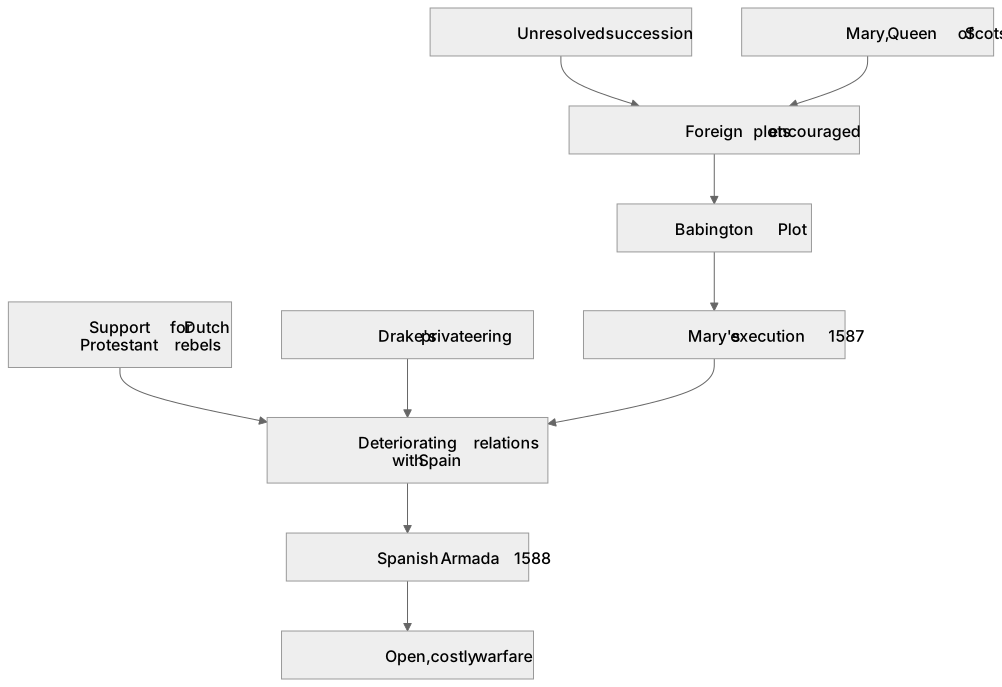
Elizabethan foreign policy was inextricably linked to the unresolved succession, the threat of Mary, Queen of Scots, and deteriorating relations with Spain. As a childless monarch, Elizabeth's lack of an heir invited foreign plots. Mary, a Catholic with a strong claim to the English throne, became the focus of conspiracies like the Babington Plot, culminating in her 1587 execution. This execution, combined with English support for Dutch Protestant rebels and Francis Drake's privateering, irreparably damaged relations with Philip II of Spain. Consequently, Spain launched the Armada in 1588, shifting England from a cautious foreign policy to open, costly warfare that dominated the final years of Elizabeth's reign.
What earns the marks
- Analyse how Elizabeth's refusal to marry or name a successor created diplomatic vulnerabilities and encouraged foreign-backed plots.
- Evaluate the threat posed by Mary, Queen of Scots as a Catholic figurehead for rebellion and assassination conspiracies.
- Assess the causes of the Anglo-Spanish war, including religious differences, privateering, and English intervention in the Netherlands.
- Examine the consequences of the 1588 Spanish Armada and the subsequent prolonged naval and land conflict with Spain.
Common mistakes and how to put them right
Claiming the Spanish Armada was solely caused by the execution of Mary, Queen of Scots.
Put it right: Explain that while Mary's execution was a catalyst, long-term factors like English support for Dutch rebels and privateering were equally crucial.
Assuming Mary, Queen of Scots was actively involved in all plots against Elizabeth.
Put it right: Note that while Mary was the figurehead for many plots, her direct complicity was only definitively proven in the Babington Plot.
Treating the defeat of the 1588 Armada as the end of the war with Spain.
Put it right: Highlight that the Anglo-Spanish war continued until 1604, draining English finances.
Exam tips
- Link domestic religious tensions to foreign policy by showing how Catholic plots involving Mary, Queen of Scots were often sponsored by Spain.
- Use the Treaty of Nonsuch (1585) as a key turning point where Elizabeth openly committed to supporting the Dutch, making war with Spain inevitable.
- Evaluate whether Elizabeth's foreign policy was primarily defensive (protecting national security) or driven by religious ideology.
Try the lesson
The start of the 1C The Tudors: England, 1485–1603 – The triumph of Elizabeth, 1563–1603 (A-level only): Foreign affairs: issues of succession; Mary, Queen of Scots; relations with Spain lesson, made from checked teaching notes for this specification point.
Have a go first
How did the execution of Mary, Queen of Scots in 1587 affect relations between England and Spain?
Listen
Elizabethan foreign policy was inextricably linked to the unresolved succession, the threat of Mary, Queen of Scots, and deteriorating relations with Spain. As a childless monarch, Elizabeth's lack of an heir invited foreign plots. Mary, a Catholic with a strong claim to the English throne, became the focus of conspiracies like the Babington Plot, culminating in her 1587 execution. This execution, combined with English support for Dutch Protestant rebels and Francis Drake's privateering, irreparably damaged relations with Philip II of Spain. Consequently, Spain launched the Armada in 1588, shifting England from a cautious foreign policy to open, costly warfare that dominated the final years of Elizabeth's reign. A strong answer earns marks for these points. Analyse how Elizabeth's refusal to marry or name a successor created diplomatic vulnerabilities and encouraged foreign-backed plots. Evaluate the threat posed by Mary, Queen of Scots as a Catholic figurehead for rebellion and assassination conspiracies. Assess the causes of the Anglo-Spanish war, including religious differences, privateering, and English intervention in the Netherlands. Examine the consequences of the 1588 Spanish Armada and the subsequent prolonged naval and land conflict with Spain. A common slip: Claiming the Spanish Armada was solely caused by the execution of Mary, Queen of Scots. Instead, Explain that while Mary's execution was a catalyst, long-term factors like English support for Dutch rebels and privateering were equally crucial. Exam tip: Link domestic religious tensions to foreign policy by showing how Catholic plots involving Mary, Queen of Scots were often sponsored by Spain.
See it
Key words
Say what each word means before you turn the card.
National security and the succession crisis
Try answering aloud or in your head before turning the card.
The Catholic threat and Mary, Queen of Scots
Try answering aloud or in your head before turning the card.
Religious conflict in foreign policy
Try answering aloud or in your head before turning the card.
Anglo-Spanish rivalry and warfare
Try answering aloud or in your head before turning the card.
See every definition
- National security and the succession crisis
- Elizabeth's refusal to marry or name a successor created diplomatic vulnerabilities and encouraged foreign-backed plots, linking the unresolved succession to foreign affairs.
- The Catholic threat and Mary, Queen of Scots
- Mary, a Catholic with a strong claim to the English throne, became the focus of conspiracies and a Catholic figurehead for rebellion and assassination conspiracies.
- Religious conflict in foreign policy
- English support for Dutch Protestant rebels contributed to the deterioration of relations with Spain and to the outbreak of war.
- Anglo-Spanish rivalry and warfare
- English support for Dutch Protestant rebels and Francis Drake's privateering irreparably damaged relations with Philip II of Spain, leading to the Armada and open, costly warfare.
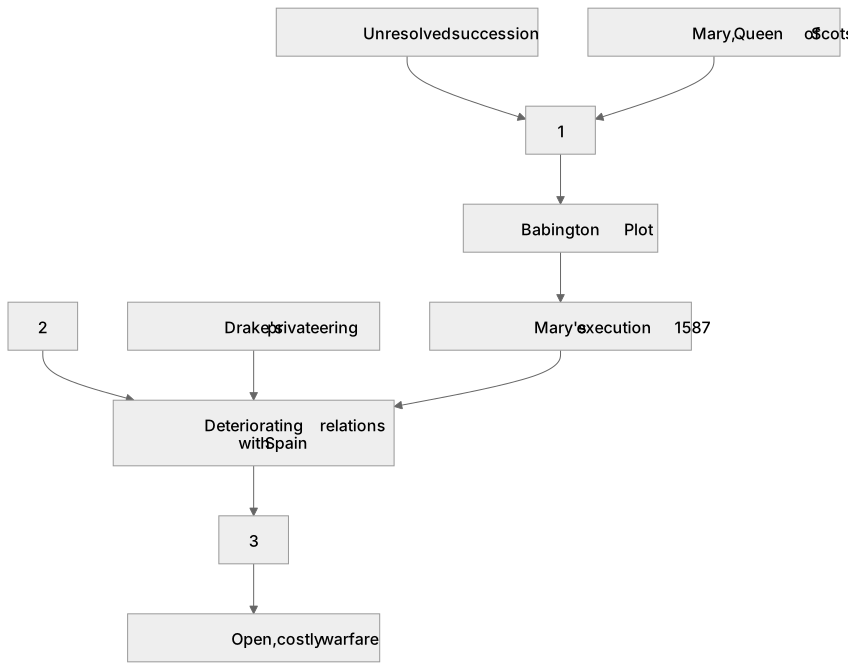
Label the diagram
Some boxes have lost their names. Pick the right name for each number.
1Box 1
2Box 2
3Box 3
There is more to this lesson
The full lesson goes on to check your understanding and help you earn the marks. Create a free account to carry on, with your progress saved.
A week of Premium from your first lesson · Then the free plan continues · No card, no charge
Test your understanding of 1C The Tudors: England, 1485–1603 – The triumph of Elizabeth, 1563–1603 (A-level only): Foreign affairs: issues of succession; Mary, Queen of Scots; relations with Spain
Active recall beats re-reading. Take an instant quiz now to test what you’ve learned and lock it into long-term memory.
A week of Premium from your first lesson · Then the free plan continues · No card, no charge