AQA · A-Level · History
Course version: 7042 · Version from Sept 2017
Foreign affairs and wars: wars with Sweden and Turkey; involvement in…
Full specification wording
1E Russia in the Age of Absolutism and Enlightenment, 1682–1796 (A-level only) – Increasing the glory of Russia, 1707–1725: Foreign affairs and wars: wars with Sweden and Turkey; involvement in European conflicts
Peter the Great’s foreign policy from 1707 was dominated by the Great Northern War against Sweden, aiming to secure Russian access to the Baltic Sea.
Checked against the AQA 7042 specification (opens in a new tab) on .
- Point 6 of 6
- 4 key terms
Study notes
From the checked teaching notes for this specification point.
The idea
Peter the Great’s foreign policy from 1707 was dominated by the Great Northern War against Sweden, aiming to secure Russian access to the Baltic Sea. Following the decisive victory at Poltava in 1709, Russia dismantled the Swedish empire, culminating in the 1721 Treaty of Nystad which established Russia as a major European power. Conversely, the war with Turkey resulted in the disastrous Pruth Campaign of 1711, forcing Peter to surrender Azov and temporarily abandon his Black Sea ambitions. Beyond these primary theatres, Peter increased Russia's involvement in wider European conflicts, utilising dynastic marriages and diplomatic missions to integrate Russia into European alliance systems and project influence into northern Germany.
What earns the marks
- Assess the strategic significance of the Battle of Poltava in 1709 in turning the tide of the Great Northern War against Sweden.
- Evaluate the terms of the Treaty of Nystad in 1721 and its role in confirming Russian dominance in the Baltic region.
- Analyse the causes and consequences of the Pruth Campaign in 1711, noting the loss of Azov and the setback to Peter's southern expansion against Turkey.
- Explain Peter's methods for integrating Russia into European conflicts, including the use of dynastic marriages in German states and naval pressure in the Baltic.
Common mistakes and how to put them right
Stating that Russia gained access to the Black Sea during this period.
Put it right: Specify that while Peter initially took Azov, it was lost back to Turkey in 1711 at the Pruth, meaning Black Sea access was not secured.
Viewing the Great Northern War as a continuous series of Russian victories.
Put it right: Recognise the fluctuating fortunes of the war, noting that victory required extensive military reforms and alliances after early defeats.
Ignoring Russia's diplomatic integration into Europe.
Put it right: Include Peter's use of diplomacy, such as marrying his nieces into German ducal families, to secure influence in European conflicts beyond direct warfare.
Exam tips
- Contrast Peter's overwhelming success in the Baltic against Sweden with his significant strategic failures against Turkey in the south.
- Link foreign policy directly to domestic reforms, demonstrating how the demands of the Great Northern War drove Peter's military and economic changes.
- Use the Treaty of Nystad as a definitive turning point to argue when Russia formally replaced Sweden as the dominant power in northern Europe.
Try the lesson
The start of the 1E Russia in the Age of Absolutism and Enlightenment, 1682–1796 (A-level only) – Increasing the glory of Russia, 1707–1725: Foreign affairs and wars: wars with Sweden and Turkey; involvement in European conflicts lesson, made from checked teaching notes for this specification point.
Have a go first
Which 1721 treaty formally ended the Great Northern War between Russia and Sweden, securing Russian access to the Baltic Sea?
Listen
Peter the Great’s foreign policy from 1707 was dominated by the Great Northern War against Sweden, aiming to secure Russian access to the Baltic Sea. Following the decisive victory at Poltava in 1709, Russia dismantled the Swedish empire, culminating in the 1721 Treaty of Nystad which established Russia as a major European power. Conversely, the war with Turkey resulted in the disastrous Pruth Campaign of 1711, forcing Peter to surrender Azov and temporarily abandon his Black Sea ambitions. Beyond these primary theatres, Peter increased Russia's involvement in wider European conflicts, utilising dynastic marriages and diplomatic missions to integrate Russia into European alliance systems and project influence into northern Germany. A strong answer earns marks for these points. Assess the strategic significance of the Battle of Poltava in 1709 in turning the tide of the Great Northern War against Sweden. Evaluate the terms of the Treaty of Nystad in 1721 and its role in confirming Russian dominance in the Baltic region. Analyse the causes and consequences of the Pruth Campaign in 1711, noting the loss of Azov and the setback to Peter's southern expansion against Turkey. Explain Peter's methods for integrating Russia into European conflicts, including the use of dynastic marriages in German states and naval pressure in the Baltic. A common slip: Stating that Russia gained access to the Black Sea during this period. Instead, Specify that while Peter initially took Azov, it was lost back to Turkey in 1711 at the Pruth, meaning Black Sea access was not secured. Exam tip: Contrast Peter's overwhelming success in the Baltic against Sweden with his significant strategic failures against Turkey in the south.
See it
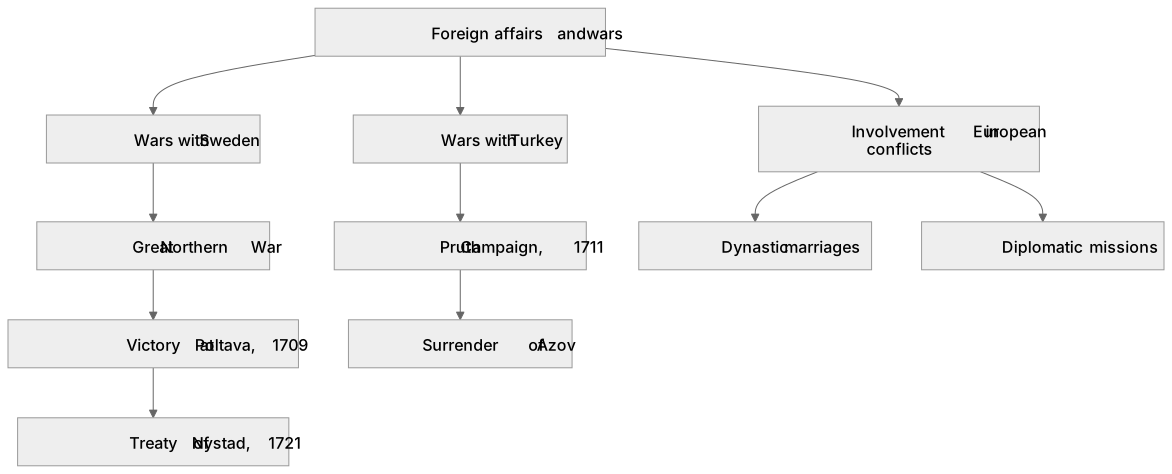
Put the events in order
Put these events in the order they happened, earliest first.
- 1. Battle of Poltava turns the tide against Sweden
- 2. Treaty of Nystad confirms Russian dominance in the Baltic
- 3. Pruth Campaign forces surrender of Azov to Turkey
Key words
Say what each word means before you turn the card.
Diplomacy and Alliances
Try answering aloud or in your head before turning the card.
Geopolitical Shifts in Europe
Try answering aloud or in your head before turning the card.
Military Modernisation
Try answering aloud or in your head before turning the card.
Imperial Expansion
Try answering aloud or in your head before turning the card.
See every definition
- Diplomacy and Alliances
- Peter used dynastic marriages and diplomatic missions to integrate Russia into European alliance systems and project influence into northern Germany.
- Geopolitical Shifts in Europe
- The Treaty of Nystad established Russia as a major European power and confirmed its dominance in the Baltic region.
- Military Modernisation
- Victory in the Great Northern War required extensive military reforms and alliances after early defeats.
- Imperial Expansion
- Peter aimed to secure Russian access to the Baltic Sea, but the Pruth Campaign forced him to abandon his Black Sea ambitions.
Label the diagram
Some boxes have lost their names. Pick the right name for each number.
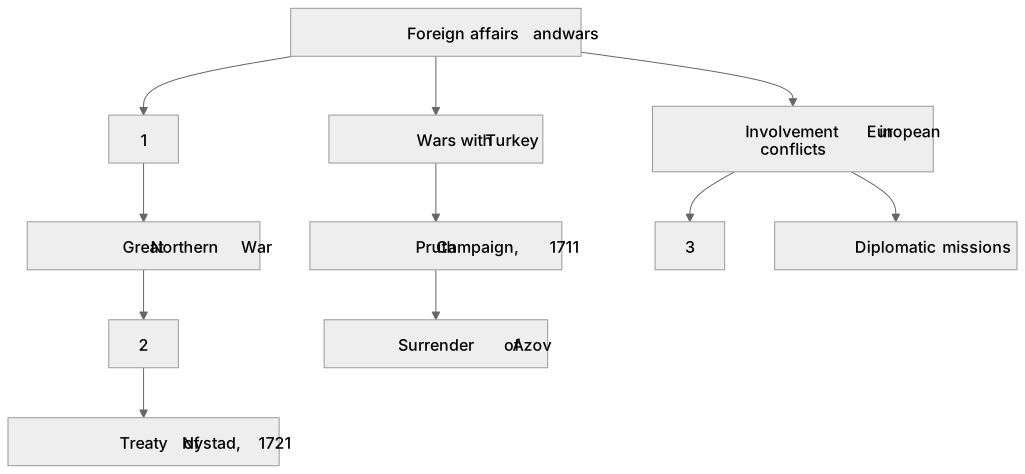
1Box 1
2Box 2
3Box 3
There is more to this lesson
The full lesson goes on to check your understanding and help you earn the marks. Create a free account to carry on, with your progress saved.
A week of Premium from your first lesson · Then the free plan continues · No card, no charge
Test your understanding of 1E Russia in the Age of Absolutism and Enlightenment, 1682–1796 (A-level only) – Increasing the glory of Russia, 1707–1725: Foreign affairs and wars: wars with Sweden and Turkey; involvement in European conflicts
Active recall beats re-reading. Take an instant quiz now to test what you’ve learned and lock it into long-term memory.
A week of Premium from your first lesson · Then the free plan continues · No card, no charge