AQA · A-Level · History
Course version: 7042 · Version from Sept 2017
Relations with France and the conflict between Richard and Philip II;…
Full specification wording
2A Royal Authority and the Angevin Kings, 1154–1216 – only) Richard I, 1189–1199 (A-level only): Relations with France and the conflict between Richard and Philip II; rivalries following the Third Crusade; war from 1194; the truce of 1199
Richard I and Philip II's relationship was defined by intense rivalry, exacerbated during the Third Crusade by disputes over strategy, spoils at Acre, and Richard's broken betrothal to Philip's…
Checked against the AQA 7042 specification (opens in a new tab) on .
- Point 3 of 4
Study notes
From the checked teaching notes for this specification point.
The idea
Richard I and Philip II's relationship was defined by intense rivalry, exacerbated during the Third Crusade by disputes over strategy, spoils at Acre, and Richard's broken betrothal to Philip's sister. Following the Crusade and Richard's captivity, Philip exploited his absence by conspiring with Prince John to seize Angevin territories in Normandy. Upon his release in 1194, Richard launched a relentless military campaign to recover these lands. Utilising formidable strongholds like Château Gaillard, Richard systematically pushed French forces back. This exhausting conflict culminated in the truce of 1199, brokered by a papal legate, which temporarily halted hostilities shortly before Richard's unexpected death, leaving the Angevin Empire intact but financially drained.
What earns the marks
- Assess the origins of the rivalry, including the broken betrothal to Alys and disputes over the Vexin.
- Evaluate the impact of the Third Crusade on Anglo-French relations, specifically the fallout at Messina and Acre.
- Analyse Philip II's opportunism during Richard's captivity, including his alliance with Prince John to capture key Norman castles.
- Examine Richard's military strategy and successes from 1194, highlighting the construction of Château Gaillard and the Battle of Gisors.
- Explain the terms and significance of the 1199 truce, noting papal intervention and the status of the Angevin Empire at Richard's death.
Common mistakes and how to put them right
Claiming the war from 1194 was fought in England.
Put it right: Specify that the conflict between Richard and Philip II was fought entirely on the continent, primarily in Normandy and the Vexin.
Assuming Philip II won the war of 1194-1199.
Put it right: Recognise that Richard was largely successful in recovering his lost territories by the time the truce of 1199 was agreed.
Confusing the causes of the rivalry solely with Crusade disputes.
Put it right: Acknowledge that pre-existing territorial disputes over the Vexin and the dynastic issue of Alys were foundational to their conflict.
Exam tips
- Link Richard's military expenditure in France directly to the financial demands placed on England during his reign.
- Use Château Gaillard as a specific example of Richard's defensive and offensive strategy in Normandy.
- When evaluating Philip II's threat, contrast his actions during Richard's captivity with his defensive posture after Richard's return in 1194.
Try the lesson
The start of the 2A Royal Authority and the Angevin Kings, 1154–1216 – only) Richard I, 1189–1199 (A-level only): Relations with France and the conflict between Richard and Philip II; rivalries following the Third Crusade; war from 1194; the truce of 1199 lesson, made from checked teaching notes for this specification point.
Have a go first
What was the primary reason for the outbreak of war between Richard I and Philip II of France in 1194?
Listen
Richard I and Philip II's relationship was defined by intense rivalry, exacerbated during the Third Crusade by disputes over strategy, spoils at Acre, and Richard's broken betrothal to Philip's sister. Following the Crusade and Richard's captivity, Philip exploited his absence by conspiring with Prince John to seize Angevin territories in Normandy. Upon his release in 1194, Richard launched a relentless military campaign to recover these lands. Utilising formidable strongholds like Château Gaillard, Richard systematically pushed French forces back. This exhausting conflict culminated in the truce of 1199, brokered by a papal legate, which temporarily halted hostilities shortly before Richard's unexpected death, leaving the Angevin Empire intact but financially drained. A strong answer earns marks for these points. Assess the origins of the rivalry, including the broken betrothal to Alys and disputes over the Vexin. Evaluate the impact of the Third Crusade on Anglo-French relations, specifically the fallout at Messina and Acre. Analyse Philip II's opportunism during Richard's captivity, including his alliance with Prince John to capture key Norman castles. Examine Richard's military strategy and successes from 1194, highlighting the construction of Château Gaillard and the Battle of Gisors. A common slip: Claiming the war from 1194 was fought in England. Instead, Specify that the conflict between Richard and Philip II was fought entirely on the continent, primarily in Normandy and the Vexin. Exam tip: Link Richard's military expenditure in France directly to the financial demands placed on England during his reign.
See it
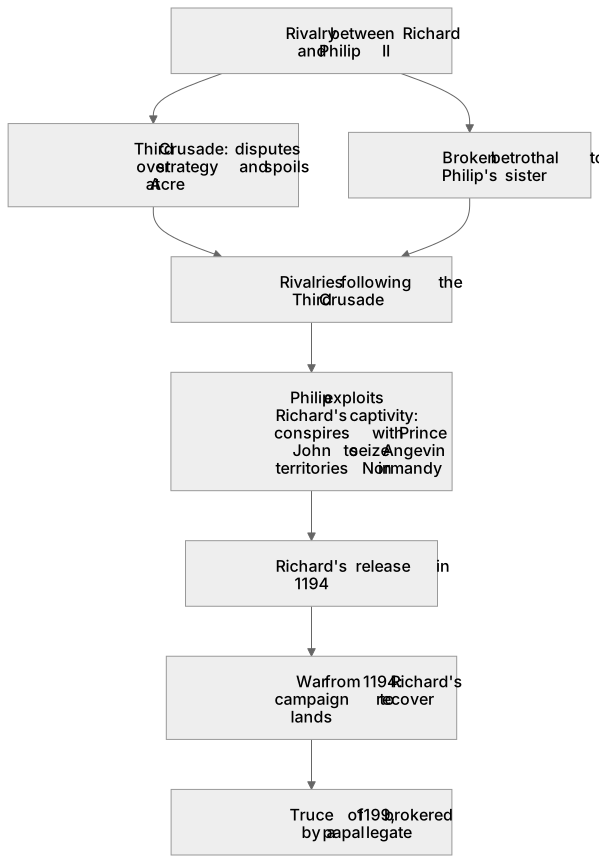
Label the diagram
Some boxes have lost their names. Pick the right name for each number.
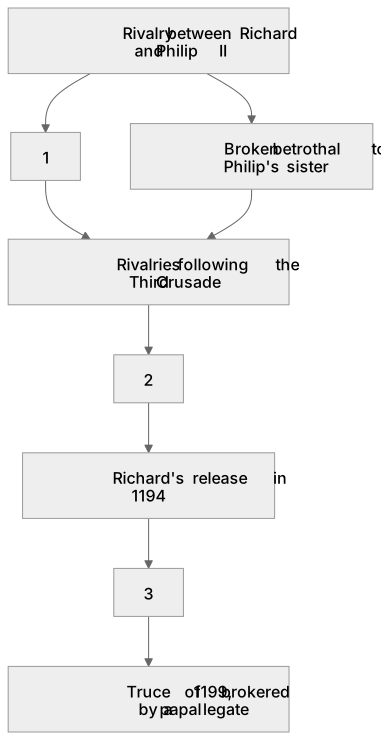
1Box 1
2Box 2
3Box 3
There is more to this lesson
The full lesson goes on to check your understanding and help you earn the marks. Create a free account to carry on, with your progress saved.
A week of Premium from your first lesson · Then the free plan continues · No card, no charge
Test your understanding of 2A Royal Authority and the Angevin Kings, 1154–1216 – only) Richard I, 1189–1199 (A-level only): Relations with France and the conflict between Richard and Philip II; rivalries following the Third Crusade; war from 1194; the truce of 1199
Active recall beats re-reading. Take an instant quiz now to test what you’ve learned and lock it into long-term memory.
A week of Premium from your first lesson · Then the free plan continues · No card, no charge