AQA · A-Level · History
Course version: 7042 · Version from Sept 2017
The origins of the Great Rebellion: dynastic instability and Henry II’s…
Full specification wording
2A Royal Authority and the Angevin Kings, 1154–1216 – The crisis of Royal Authority, 1166–1174: The origins of the Great Rebellion: dynastic instability and Henry II’s relations with the three rebellious sons, Eleanor of Aquitaine and their supporters; the role of Louis VII of France
The Great Rebellion of 1173–1174 originated from profound dynastic instability within the Angevin Empire.
Checked against the AQA 7042 specification (opens in a new tab) on .
- Point 3 of 4
Study notes
From the checked teaching notes for this specification point.
The idea
The Great Rebellion of 1173–1174 originated from profound dynastic instability within the Angevin Empire. Henry II’s refusal to grant real power or independent revenues to his three rebellious sons—Young Henry, Richard, and Geoffrey—fuelled intense resentment. This familial friction was exacerbated by Eleanor of Aquitaine, who actively encouraged her sons to rebel against their father to secure their inheritances. Their supporters included disgruntled barons who had lost castles and privileges under Henry’s centralising reforms. Crucially, King Louis VII of France played a pivotal role by exploiting these familial divisions, offering refuge, military backing, and strategic encouragement to the rebellious sons to destabilise his powerful Angevin rival.
What earns the marks
- Explain how Henry II's policy of crowning Young Henry without granting him actual political power or territory triggered the initial conflict.
- Assess the role of Eleanor of Aquitaine in mobilising the lords of Poitou and Aquitaine to support Richard and Geoffrey against Henry II.
- Analyse the motivations of the rebellious supporters, specifically barons reacting against Henry II's resumption of royal castles and expansion of royal justice.
- Evaluate Louis VII's strategic opportunism in hosting the rebels in Paris and coordinating a multi-front assault on the Angevin territories.
Common mistakes and how to put them right
Claiming John was one of the three rebellious sons in 1173.
Put it right: Specify that the three rebellious sons were Young Henry, Richard, and Geoffrey; John was a young child whose proposed inheritance actually sparked the crisis.
Viewing the rebellion solely as a family dispute.
Put it right: Acknowledge the broader political context, including baronial grievances over lost privileges and the strategic interference of the French Crown.
Stating Eleanor of Aquitaine led armies in the field during the rebellion.
Put it right: Note that while she instigated and organised support in Aquitaine, she was captured by Henry II's forces early in the conflict while trying to reach Paris.
Exam tips
- When evaluating the causes of the rebellion, weigh the personal grievances of the sons against the structural threat posed by Louis VII.
- Use the proposed marriage settlement of John to Alice of Maurienne, which involved giving John castles previously promised to Young Henry, as a concrete trigger for the rebellion.
- Link Henry II's earlier centralising policies, such as the Cartae Baronum and the Inquest of Sheriffs, to the resentment of the baronial supporters.
Try the lesson
The start of the 2A Royal Authority and the Angevin Kings, 1154–1216 – The crisis of Royal Authority, 1166–1174: The origins of the Great Rebellion: dynastic instability and Henry II’s relations with the three rebellious sons, Eleanor of Aquitaine and their supporters; the role of Louis VII of France lesson, made from checked teaching notes for this specification point.
Have a go first
Which of the following was a primary cause of the dynastic instability that led to the Great Rebellion of 1173–1174?
Listen
The Great Rebellion of 1173–1174 originated from profound dynastic instability within the Angevin Empire. Henry II’s refusal to grant real power or independent revenues to his three rebellious sons—Young Henry, Richard, and Geoffrey—fuelled intense resentment. This familial friction was exacerbated by Eleanor of Aquitaine, who actively encouraged her sons to rebel against their father to secure their inheritances. Their supporters included disgruntled barons who had lost castles and privileges under Henry’s centralising reforms. Crucially, King Louis VII of France played a pivotal role by exploiting these familial divisions, offering refuge, military backing, and strategic encouragement to the rebellious sons to destabilise his powerful Angevin rival. A strong answer earns marks for these points. Explain how Henry II's policy of crowning Young Henry without granting him actual political power or territory triggered the initial conflict. Assess the role of Eleanor of Aquitaine in mobilising the lords of Poitou and Aquitaine to support Richard and Geoffrey against Henry II. Analyse the motivations of the rebellious supporters, specifically barons reacting against Henry II's resumption of royal castles and expansion of royal justice. Evaluate Louis VII's strategic opportunism in hosting the rebels in Paris and coordinating a multi-front assault on the Angevin territories. A common slip: Claiming John was one of the three rebellious sons in 1173. Instead, Specify that the three rebellious sons were Young Henry, Richard, and Geoffrey; John was a young child whose proposed inheritance actually sparked the crisis. Exam tip: When evaluating the causes of the rebellion, weigh the personal grievances of the sons against the structural threat posed by Louis VII.
See it
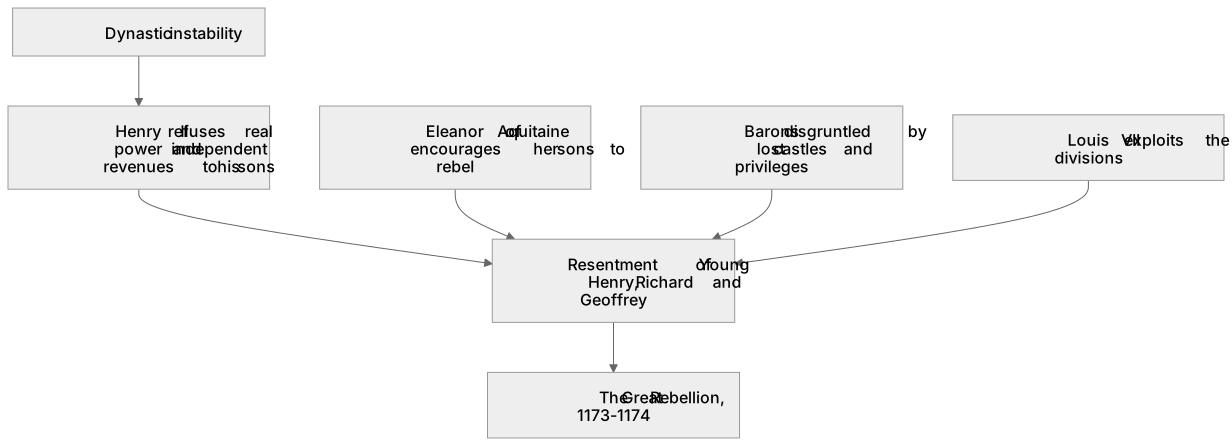
Label the diagram
Some boxes have lost their names. Pick the right name for each number.
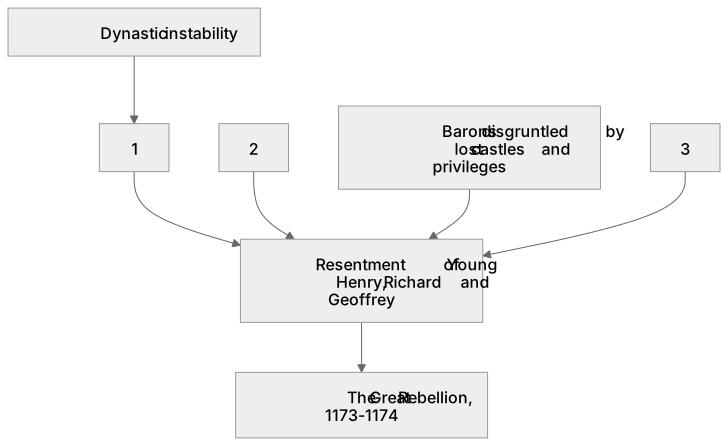
1Box 1
2Box 2
3Box 3
There is more to this lesson
The full lesson goes on to check your understanding and help you earn the marks. Create a free account to carry on, with your progress saved.
A week of Premium from your first lesson · Then the free plan continues · No card, no charge
Test your understanding of 2A Royal Authority and the Angevin Kings, 1154–1216 – The crisis of Royal Authority, 1166–1174: The origins of the Great Rebellion: dynastic instability and Henry II’s relations with the three rebellious sons, Eleanor of Aquitaine and their supporters; the role of Louis VII of France
Active recall beats re-reading. Take an instant quiz now to test what you’ve learned and lock it into long-term memory.
A week of Premium from your first lesson · Then the free plan continues · No card, no charge