AQA · A-Level · History
Course version: 7042 · Version from Sept 2017
Yorkist opposition to Henry VII: the Lovell revolt; defeat of the…
Full specification wording
2B The Wars of the Roses, 1450–1499 – The end of the Yorkist Dynasty, 1486–1499 (A-level only): Yorkist opposition to Henry VII: the Lovell revolt; defeat of the Pretender Lambert Simnel at Stoke; the Yorkshire Uprising
Henry VII faced immediate Yorkist opposition following Bosworth.
Checked against the AQA 7042 specification (opens in a new tab) on .
- Point 1 of 4
- 4 key terms
Study notes
From the checked teaching notes for this specification point.
The idea
Henry VII faced immediate Yorkist opposition following Bosworth. The 1486 Lovell and Stafford revolt was a poorly coordinated attempt by Richard III's loyalists to raise rebellion in Yorkshire and the Midlands, which Henry easily suppressed. A far more severe threat emerged in 1487 with Lambert Simnel, who impersonated the Earl of Warwick. Backed by John de la Pole and foreign mercenaries, this culminated in the Battle of Stoke Field, where Henry's decisive victory secured his throne. In 1489, the Yorkshire Uprising highlighted regional resentment; sparked by taxation for a Breton war, it resulted in the murder of the Earl of Northumberland before being crushed, demonstrating the fragility of Tudor control in the north.
What earns the marks
- Assess the level of threat posed by the Lovell revolt, noting its lack of foreign support and a viable figurehead.
- Evaluate the significance of the Battle of Stoke Field (1487) as the true end of the Wars of the Roses and a major test of Henry VII's military capability.
- Analyse the role of foreign intervention in the Simnel rebellion, specifically the provision of mercenaries by Margaret of Burgundy.
- Explain the economic and regional causes of the Yorkshire Uprising (1489), linking it to resentment over taxation for the Brittany campaign and northern loyalties to the Yorkist cause.
Common mistakes and how to put them right
Confusing Lambert Simnel with Perkin Warbeck.
Put it right: Simnel impersonated the Earl of Warwick, whereas Warbeck impersonated Richard, Duke of York.
Assuming the Yorkshire Uprising was purely a dynastic Yorkist rebellion.
Put it right: It was primarily triggered by economic grievances over taxation, though exacerbated by Yorkist sympathies.
Underestimating the threat of the Simnel rebellion; students often dismiss it because Simnel was a child, ignoring the dangerous backing of John de la Pole and Margaret of Burgundy.
Exam tips
- Compare the different types of threat posed by these rebellions, contrasting dynastic challenges like Simnel with regional and economic grievances like the Yorkshire Uprising.
- Use the Battle of Stoke Field to evaluate Henry VII's consolidation of power, noting how his victory neutralised key Yorkist leaders like the Earl of Lincoln.
- When discussing the Lovell revolt, highlight Henry VII's effective use of intelligence and sanctuary laws to preemptively dismantle the conspiracy.
Try the lesson
The start of the 2B The Wars of the Roses, 1450–1499 – The end of the Yorkist Dynasty, 1486–1499 (A-level only): Yorkist opposition to Henry VII: the Lovell revolt; defeat of the Pretender Lambert Simnel at Stoke; the Yorkshire Uprising lesson, made from checked teaching notes for this specification point.
Have a go first
Which Yorkist figure did the pretender Lambert Simnel claim to be during the rebellion that culminated in the Battle of Stoke Field in 1487?
Listen
Henry VII faced immediate Yorkist opposition following Bosworth. The 1486 Lovell and Stafford revolt was a poorly coordinated attempt by Richard III's loyalists to raise rebellion in Yorkshire and the Midlands, which Henry easily suppressed. A far more severe threat emerged in 1487 with Lambert Simnel, who impersonated the Earl of Warwick. Backed by John de la Pole and foreign mercenaries, this culminated in the Battle of Stoke Field, where Henry's decisive victory secured his throne. In 1489, the Yorkshire Uprising highlighted regional resentment; sparked by taxation for a Breton war, it resulted in the murder of the Earl of Northumberland before being crushed, demonstrating the fragility of Tudor control in the north. A strong answer earns marks for these points. Assess the level of threat posed by the Lovell revolt, noting its lack of foreign support and a viable figurehead. Evaluate the significance of the Battle of Stoke Field (1487) as the true end of the Wars of the Roses and a major test of Henry VII's military capability. Analyse the role of foreign intervention in the Simnel rebellion, specifically the provision of mercenaries by Margaret of Burgundy. Explain the economic and regional causes of the Yorkshire Uprising (1489), linking it to resentment over taxation for the Brittany campaign and northern loyalties to the Yorkist cause. Exam tip: Compare the different types of threat posed by these rebellions, contrasting dynastic challenges like Simnel with regional and economic grievances like the Yorkshire Uprising.
See it
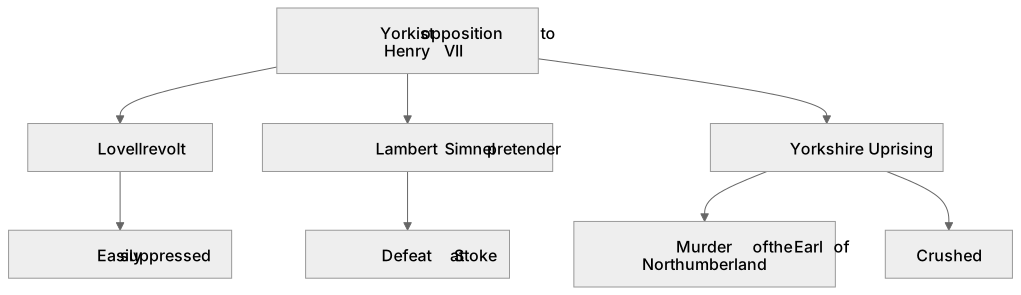
Put the events in order
Put these events in the order they happened, earliest first.
- 1. Lovell and Stafford revolt suppressed by Henry
- 2. Yorkshire Uprising sparked by taxation for Breton war
- 3. Defeat of Lambert Simnel at Stoke Field
Key words
Say what each word means before you turn the card.
Dynastic threat
Try answering aloud or in your head before turning the card.
Regionalism
Try answering aloud or in your head before turning the card.
Consolidation of power
Try answering aloud or in your head before turning the card.
Foreign intervention
Try answering aloud or in your head before turning the card.
See every definition
- Dynastic threat
- A challenge to the throne posed by a rival claimant or figurehead, as with Lambert Simnel impersonating the Earl of Warwick.
- Regionalism
- Resentment and loyalties rooted in a particular area, as shown by the Yorkshire Uprising and the fragility of Tudor control in the north.
- Consolidation of power
- The securing of the throne, which Henry VII achieved through his decisive victory at the Battle of Stoke Field.
- Foreign intervention
- Backing from abroad, specifically the provision of mercenaries by Margaret of Burgundy for the Simnel rebellion.
Label the diagram
Some boxes have lost their names. Pick the right name for each number.
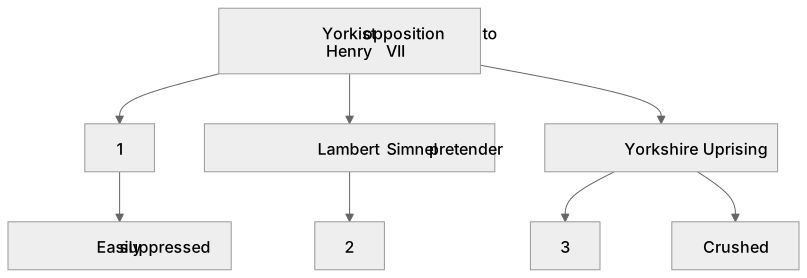
1Box 1
2Box 2
3Box 3
There is more to this lesson
The full lesson goes on to check your understanding and help you earn the marks. Create a free account to carry on, with your progress saved.
A week of Premium from your first lesson · Then the free plan continues · No card, no charge
Test your understanding of 2B The Wars of the Roses, 1450–1499 – The end of the Yorkist Dynasty, 1486–1499 (A-level only): Yorkist opposition to Henry VII: the Lovell revolt; defeat of the Pretender Lambert Simnel at Stoke; the Yorkshire Uprising
Active recall beats re-reading. Take an instant quiz now to test what you’ve learned and lock it into long-term memory.
A week of Premium from your first lesson · Then the free plan continues · No card, no charge