AQA · A-Level · History
Course version: 7042 · Version from Sept 2017
The Church: religious power and influence; Church doctrine, teachings and…
Full specification wording
2C The Reformation in Europe, c1500–1564 (A-level only) – The condition of the Church, c1500–1517: The Church: religious power and influence; Church doctrine, teachings and belief; the sacraments, salvation, the role of the priest and of 'good works'
The pre-Reformation Church held absolute religious power, dictating the path to salvation through strict adherence to Catholic doctrine and teachings.
Checked against the AQA 7042 specification (opens in a new tab) on .
- Point 2 of 4
- 3 key terms
Study notes
From the checked teaching notes for this specification point.
The idea
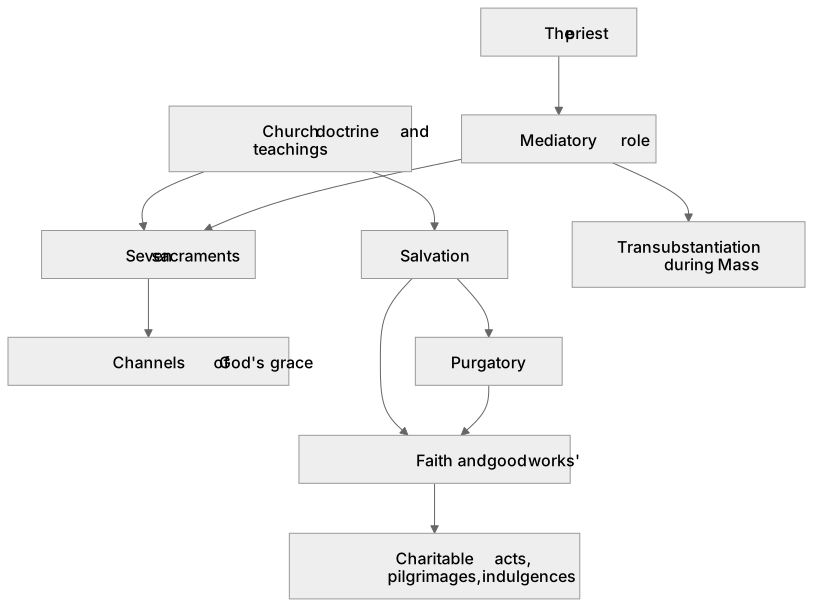
The pre-Reformation Church held absolute religious power, dictating the path to salvation through strict adherence to Catholic doctrine and teachings. Central to this belief system were the seven sacraments, such as baptism and the Eucharist, which were deemed essential channels of God's grace. The priest played an indispensable, mediatory role; only ordained clergy could perform the sacraments, notably the miracle of transubstantiation during Mass. Salvation was not achieved by faith alone but required 'good works', including charitable acts, pilgrimages, and the purchasing of indulgences. This theological framework ensured the Church maintained profound spiritual influence, as the laity relied entirely on the institution and its priests to avoid purgatory and attain eternal life.
What earns the marks
- Explain the Catholic doctrine of salvation, emphasising the necessity of both faith and 'good works' to reduce time in purgatory.
- Detail the seven sacraments and their function as essential conduits of divine grace required for spiritual survival.
- Analyse the unique, mediatory role of the priest, particularly their exclusive authority to administer the sacraments and perform transubstantiation.
- Evaluate how the Church's teachings on purgatory and indulgences reinforced its religious power and financial influence over the laity.
Common mistakes and how to put them right
Claiming that pre-Reformation Catholics believed salvation was achieved through faith alone.
Put it right: State clearly that salvation required a combination of faith and 'good works'.
Misunderstanding the role of the priest.
Put it right: Emphasise that priests were not just preachers, but essential mediators who alone could perform the saving sacraments.
Failing to define 'good works' accurately.
Put it right: Provide specific examples of good works, such as buying indulgences, going on pilgrimage, and funding chantry priests.
Exam tips
- Clearly define transubstantiation when discussing the role of the priest, as this highlights their elevated spiritual status above the laity.
- Connect the doctrine of 'good works' directly to the financial abuses, like the sale of indulgences, that later provoked Martin Luther's criticisms.
- Use the concept of purgatory to explain why the laity were so invested in following Church teachings and performing good works.
Try the lesson
The start of the 2C The Reformation in Europe, c1500–1564 (A-level only) – The condition of the Church, c1500–1517: The Church: religious power and influence; Church doctrine, teachings and belief; the sacraments, salvation, the role of the priest and of 'good works' lesson, made from checked teaching notes for this specification point.
Have a go first
According to Catholic doctrine in the early sixteenth century, what was the primary purpose of the seven sacraments?
Listen
The pre-Reformation Church held absolute religious power, dictating the path to salvation through strict adherence to Catholic doctrine and teachings. Central to this belief system were the seven sacraments, such as baptism and the Eucharist, which were deemed essential channels of God's grace. The priest played an indispensable, mediatory role; only ordained clergy could perform the sacraments, notably the miracle of transubstantiation during Mass. Salvation was not achieved by faith alone but required 'good works', including charitable acts, pilgrimages, and the purchasing of indulgences. This theological framework ensured the Church maintained profound spiritual influence, as the laity relied entirely on the institution and its priests to avoid purgatory and attain eternal life. A strong answer earns marks for these points. Explain the Catholic doctrine of salvation, emphasising the necessity of both faith and 'good works' to reduce time in purgatory. Detail the seven sacraments and their function as essential conduits of divine grace required for spiritual survival. Analyse the unique, mediatory role of the priest, particularly their exclusive authority to administer the sacraments and perform transubstantiation. Evaluate how the Church's teachings on purgatory and indulgences reinforced its religious power and financial influence over the laity. A common slip: Claiming that pre-Reformation Catholics believed salvation was achieved through faith alone. Instead, state clearly that salvation required a combination of faith and 'good works'. Exam tip: Clearly define transubstantiation when discussing the role of the priest, as this highlights their elevated spiritual status above the laity.
See it
Key words
Say what each word means before you turn the card.
Salvation and Grace
Try answering aloud or in your head before turning the card.
Clerical Authority
Try answering aloud or in your head before turning the card.
Theology and Doctrine
Try answering aloud or in your head before turning the card.
See every definition
- Salvation and Grace
- Achieved not by faith alone but through 'good works', with the seven sacraments deemed essential channels of God's grace.
- Clerical Authority
- The priest played an indispensable, mediatory role, as only ordained clergy could perform the sacraments, notably transubstantiation during Mass.
- Theology and Doctrine
- The Church dictated the path to salvation through strict adherence to Catholic doctrine and teachings, maintaining profound spiritual influence over the laity.
Label the diagram
Some boxes have lost their names. Pick the right name for each number.
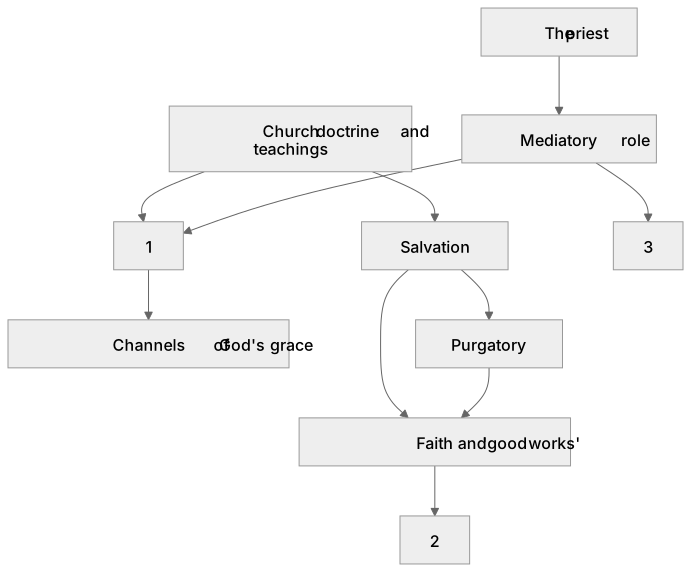
1Box 1
2Box 2
3Box 3
There is more to this lesson
The full lesson goes on to check your understanding and help you earn the marks. Create a free account to carry on, with your progress saved.
A week of Premium from your first lesson · Then the free plan continues · No card, no charge
Test your understanding of 2C The Reformation in Europe, c1500–1564 (A-level only) – The condition of the Church, c1500–1517: The Church: religious power and influence; Church doctrine, teachings and belief; the sacraments, salvation, the role of the priest and of 'good works'
Active recall beats re-reading. Take an instant quiz now to test what you’ve learned and lock it into long-term memory.
A week of Premium from your first lesson · Then the free plan continues · No card, no charge