AQA · A-Level · History
Course version: 7042 · Version from Sept 2017
The spread of Calvinism: France, Scotland, Netherlands, Germany, Poland…
Full specification wording
2C The Reformation in Europe, c1500–1564 (A-level only) – The second wave of Protestant Reform, 1541–1564: The spread of Calvinism: France, Scotland, Netherlands, Germany, Poland and eastern Europe
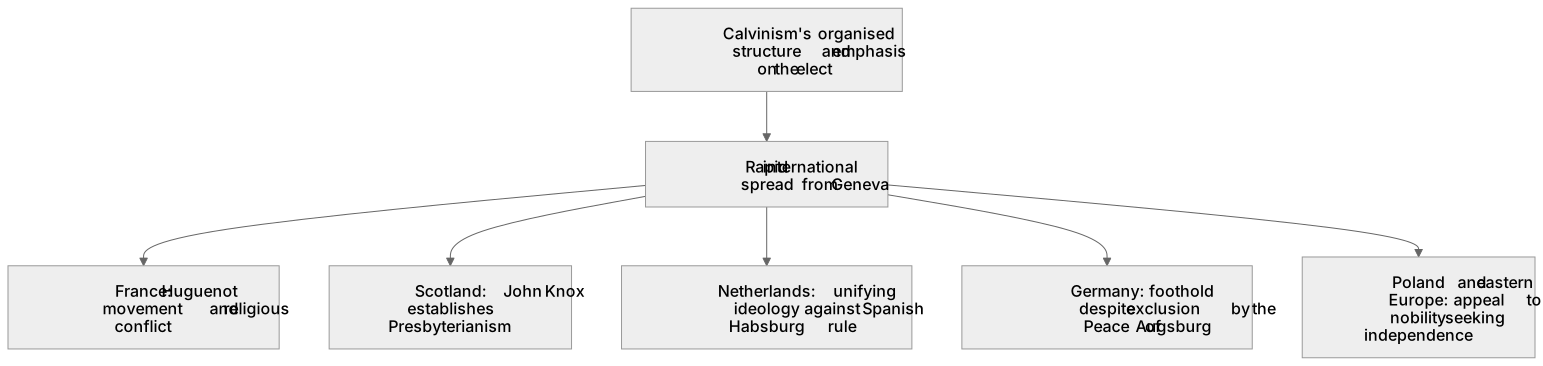
Calvinism’s highly organised structure and emphasis on the elect facilitated its rapid international spread from Geneva.
Checked against the AQA 7042 specification (opens in a new tab) on .
- Point 3 of 4
Study notes
From the checked teaching notes for this specification point.
The idea
Calvinism’s highly organised structure and emphasis on the elect facilitated its rapid international spread from Geneva. In France, it attracted noble factions, creating the Huguenot movement and sparking religious conflict. John Knox successfully established Presbyterianism in Scotland, overthrowing Catholic authority. In the Netherlands, Calvinism became a unifying ideology against Spanish Habsburg rule. Despite the Peace of Augsburg excluding them, Calvinists gained a foothold in Germany, notably in the Palatinate. In Poland and Eastern Europe, particularly Hungary and Transylvania, Calvinism appealed strongly to the nobility seeking independence from Habsburg centralisation and Catholic monarchs, demonstrating its adaptability to diverse political landscapes.
What earns the marks
- Explain the role of the Genevan Academy in training missionaries who exported Calvinism to France and the Netherlands.
- Analyse how Calvinism appealed to the nobility in France, Poland, and Eastern Europe as a tool for political resistance against centralising monarchs.
- Evaluate the impact of John Knox in Scotland, specifically the establishment of the Kirk and the challenge to Mary, Queen of Scots.
- Assess the political implications of Calvinism's spread in Germany, particularly its adoption by Frederick III in the Palatinate, which destabilised the Peace of Augsburg.
Common mistakes and how to put them right
Assuming Calvinism was legally recognised in Germany by 1555.
Put it right by noting the Peace of Augsburg only recognised Lutheranism and Catholicism, leaving Calvinists vulnerable.
Treating the spread of Calvinism as purely theological.
Put it right by emphasising the political motivations of nobles in France, Poland, and Eastern Europe adopting it to resist royal authority.
Confusing the leadership in Scotland.
Put it right by identifying John Knox, not Calvin himself, as the primary architect of the Scottish Reformation.
Exam tips
- Compare the differing reasons for Calvinist success in Western Europe (grassroots and noble support) versus Eastern Europe (primarily noble-driven).
- Use specific examples of Calvinist political resistance, such as the Huguenots in France or the Dutch Sea Beggars, to illustrate its militant nature.
- Link the structural organisation of Calvinism (pastors, elders, synods) to its ability to survive as an underground movement in hostile territories like France.
Try the lesson
The start of the 2C The Reformation in Europe, c1500–1564 (A-level only) – The second wave of Protestant Reform, 1541–1564: The spread of Calvinism: France, Scotland, Netherlands, Germany, Poland and eastern Europe lesson, made from checked teaching notes for this specification point.
Have a go first
Which prominent reformer was primarily responsible for leading the spread and establishment of Calvinism in Scotland during the mid-sixteenth century?
Listen
Calvinism’s highly organised structure and emphasis on the elect facilitated its rapid international spread from Geneva. In France, it attracted noble factions, creating the Huguenot movement and sparking religious conflict. John Knox successfully established Presbyterianism in Scotland, overthrowing Catholic authority. In the Netherlands, Calvinism became a unifying ideology against Spanish Habsburg rule. Despite the Peace of Augsburg excluding them, Calvinists gained a foothold in Germany, notably in the Palatinate. In Poland and Eastern Europe, particularly Hungary and Transylvania, Calvinism appealed strongly to the nobility seeking independence from Habsburg centralisation and Catholic monarchs, demonstrating its adaptability to diverse political landscapes. A strong answer earns marks for these points. Explain the role of the Genevan Academy in training missionaries who exported Calvinism to France and the Netherlands. Analyse how Calvinism appealed to the nobility in France, Poland, and Eastern Europe as a tool for political resistance against centralising monarchs. Evaluate the impact of John Knox in Scotland, specifically the establishment of the Kirk and the challenge to Mary, Queen of Scots. Assess the political implications of Calvinism's spread in Germany, particularly its adoption by Frederick III in the Palatinate, which destabilised the Peace of Augsburg. A common slip: Assuming Calvinism was legally recognised in Germany by 1555. Instead, noting the Peace of Augsburg only recognised Lutheranism and Catholicism, leaving Calvinists vulnerable. Exam tip: Compare the differing reasons for Calvinist success in Western Europe (grassroots and noble support) versus Eastern Europe (primarily noble-driven).
See it
Label the diagram
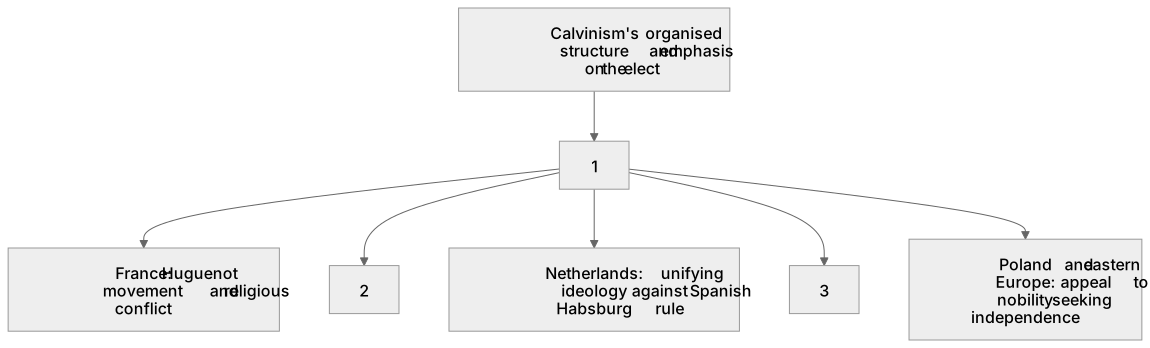
Some boxes have lost their names. Pick the right name for each number.
1Box 1
2Box 2
3Box 3
There is more to this lesson
The full lesson goes on to check your understanding and help you earn the marks. Create a free account to carry on, with your progress saved.
A week of Premium from your first lesson · Then the free plan continues · No card, no charge
Test your understanding of 2C The Reformation in Europe, c1500–1564 (A-level only) – The second wave of Protestant Reform, 1541–1564: The spread of Calvinism: France, Scotland, Netherlands, Germany, Poland and eastern Europe
Active recall beats re-reading. Take an instant quiz now to test what you’ve learned and lock it into long-term memory.
A week of Premium from your first lesson · Then the free plan continues · No card, no charge