AQA · A-Level · History
Course version: 7042 · Version from Sept 2017
The King’s ‘Great Matter’; Henry VIII, his religious beliefs and concern…
Full specification wording
2D Religious conflict and the Church in England, c1529– c1570 – The break from Rome, c1529–1536: The King’s ‘Great Matter’; Henry VIII, his religious beliefs and concern over the succession; the position and roles of Catherine of Aragon and her national and international supporters; the roles of Wolsey, Anne Boleyn and her supporters
Henry VIII’s ‘Great Matter’—his quest to annul his marriage to Catherine of Aragon—was driven by his concern over the succession, compounded by his religious beliefs that his lack of sons was…
Checked against the AQA 7042 specification (opens in a new tab) on .
- Point 1 of 4
Study notes
From the checked teaching notes for this specification point.
The idea
Henry VIII’s ‘Great Matter’—his quest to annul his marriage to Catherine of Aragon—was driven by his concern over the succession, compounded by his religious beliefs that his lack of sons was divine punishment. Catherine fiercely defended her position, leveraging her international supporter, Emperor Charles V, whose control over Pope Clement VII thwarted the annulment. Domestically, Catherine garnered support from figures like Bishop Fisher. Thomas Wolsey, tasked with securing a papal annulment, failed due to this international pressure and fell from power. Meanwhile, Anne Boleyn and her reformist supporters exploited Wolsey's failure, pushing Henry towards a radical break with Rome to achieve the annulment.
What earns the marks
- Explain Henry VIII's dual motivations for the 'Great Matter': dynastic concern over the succession and religious beliefs based on Leviticus 20:21.
- Evaluate the position and roles of Catherine of Aragon and her supporters, noting her appeal to Rome and the crucial international backing of Charles V.
- Assess the role of Wolsey and his diplomatic strategies, such as the Blackfriars court, and how his inability to secure a papal annulment led to his downfall.
- Analyse the roles of Anne Boleyn and her supporters in introducing Henry to reformist ideas to justify bypassing papal authority.
Common mistakes and how to put them right
Claiming Henry wanted a divorce.
Put it right: He actually sought an annulment, arguing the marriage was never valid in the eyes of God.
Stating Wolsey was tasked with securing a papal dispensation.
Put it right: The dispensation from Julius II already existed; Wolsey's role was to secure a papal annulment or declaration of nullity.
Overlooking Catherine's national supporters; students often focus solely on Charles V, ignoring English sympathisers like Bishop John Fisher and Thomas More.
Exam tips
- Link Henry's religious beliefs directly to his concern over the succession to demonstrate a nuanced understanding of his motivations.
- Contrast Wolsey's traditional diplomatic approach with the radical legislative solutions eventually proposed by Anne Boleyn's supporters.
- Use the Sack of Rome (1527) as a pivotal turning point to explain why the Papacy could not grant Henry's request for an annulment.
Try the lesson
The start of the 2D Religious conflict and the Church in England, c1529– c1570 – The break from Rome, c1529–1536: The King’s ‘Great Matter’; Henry VIII, his religious beliefs and concern over the succession; the position and roles of Catherine of Aragon and her national and international supporters; the roles of Wolsey, Anne Boleyn and her supporters lesson, made from checked teaching notes for this specification point.
Have a go first
Which of the following best describes Henry VIII's primary religious justification for seeking an annulment of his marriage to Catherine of Aragon?
Listen
Henry VIII’s ‘Great Matter’—his quest to annul his marriage to Catherine of Aragon—was driven by his concern over the succession, compounded by his religious beliefs that his lack of sons was divine punishment. Catherine fiercely defended her position, leveraging her international supporter, Emperor Charles V, whose control over Pope Clement VII thwarted the annulment. Domestically, Catherine garnered support from figures like Bishop Fisher. Thomas Wolsey, tasked with securing a papal annulment, failed due to this international pressure and fell from power. Meanwhile, Anne Boleyn and her reformist supporters exploited Wolsey's failure, pushing Henry towards a radical break with Rome to achieve the annulment. A strong answer earns marks for these points. Explain Henry VIII's dual motivations for the 'Great Matter': dynastic concern over the succession and religious beliefs based on Leviticus 20:21. Evaluate the position and roles of Catherine of Aragon and her supporters, noting her appeal to Rome and the crucial international backing of Charles V. Assess the role of Wolsey and his diplomatic strategies, such as the Blackfriars court, and how his inability to secure a papal annulment led to his downfall. Analyse the roles of Anne Boleyn and her supporters in introducing Henry to reformist ideas to justify bypassing papal authority. A common slip: Stating Wolsey was tasked with securing a papal dispensation. Instead, The dispensation from Julius II already existed; Wolsey's role was to secure a papal annulment or declaration of nullity. Exam tip: Link Henry's religious beliefs directly to his concern over the succession to demonstrate a nuanced understanding of his motivations.
See it
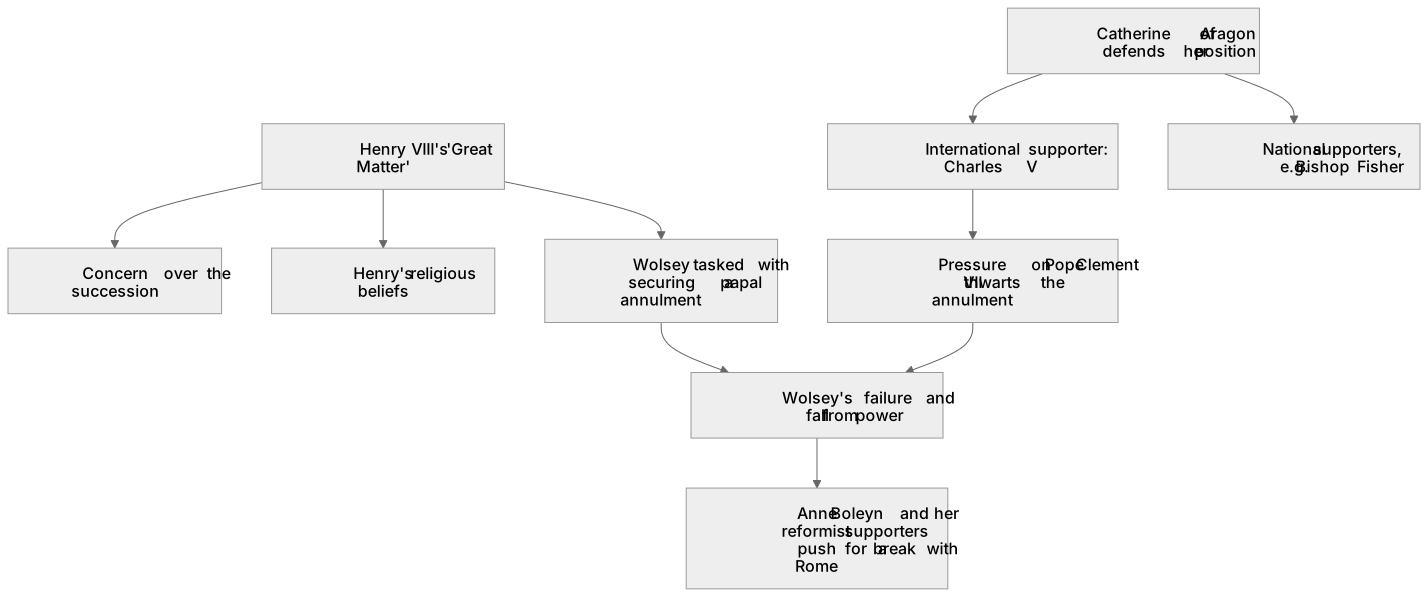
Label the diagram
Some boxes have lost their names. Pick the right name for each number.
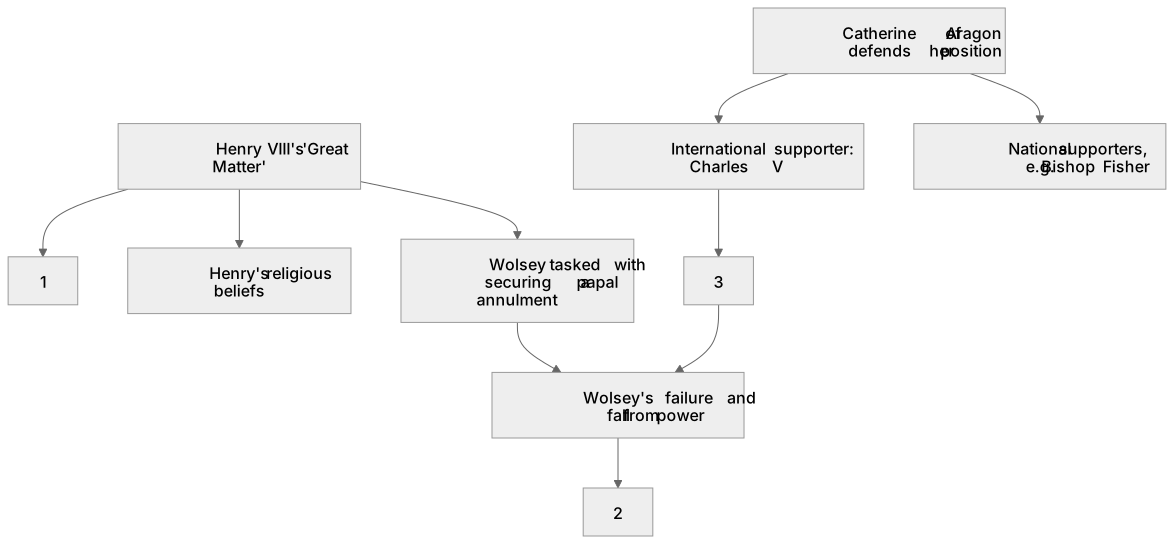
1Box 1
2Box 2
3Box 3
There is more to this lesson
The full lesson goes on to check your understanding and help you earn the marks. Create a free account to carry on, with your progress saved.
A week of Premium from your first lesson · Then the free plan continues · No card, no charge
Test your understanding of 2D Religious conflict and the Church in England, c1529– c1570 – The break from Rome, c1529–1536: The King’s ‘Great Matter’; Henry VIII, his religious beliefs and concern over the succession; the position and roles of Catherine of Aragon and her national and international supporters; the roles of Wolsey, Anne Boleyn and her supporters
Active recall beats re-reading. Take an instant quiz now to test what you’ve learned and lock it into long-term memory.
A week of Premium from your first lesson · Then the free plan continues · No card, no charge