AQA · A-Level · History
Course version: 7042 · Version from Sept 2017
Making the Constitution: the Philadelphia Convention and the…
Full specification wording
2G The Birth of the USA, 1760–1801 – Founding the Republic, 1776–1789 (A-level only): Making the Constitution: the Philadelphia Convention and the constitutional debates between federalists and anti-federalists, the personalities and policies of the ‘Founding Fathers’
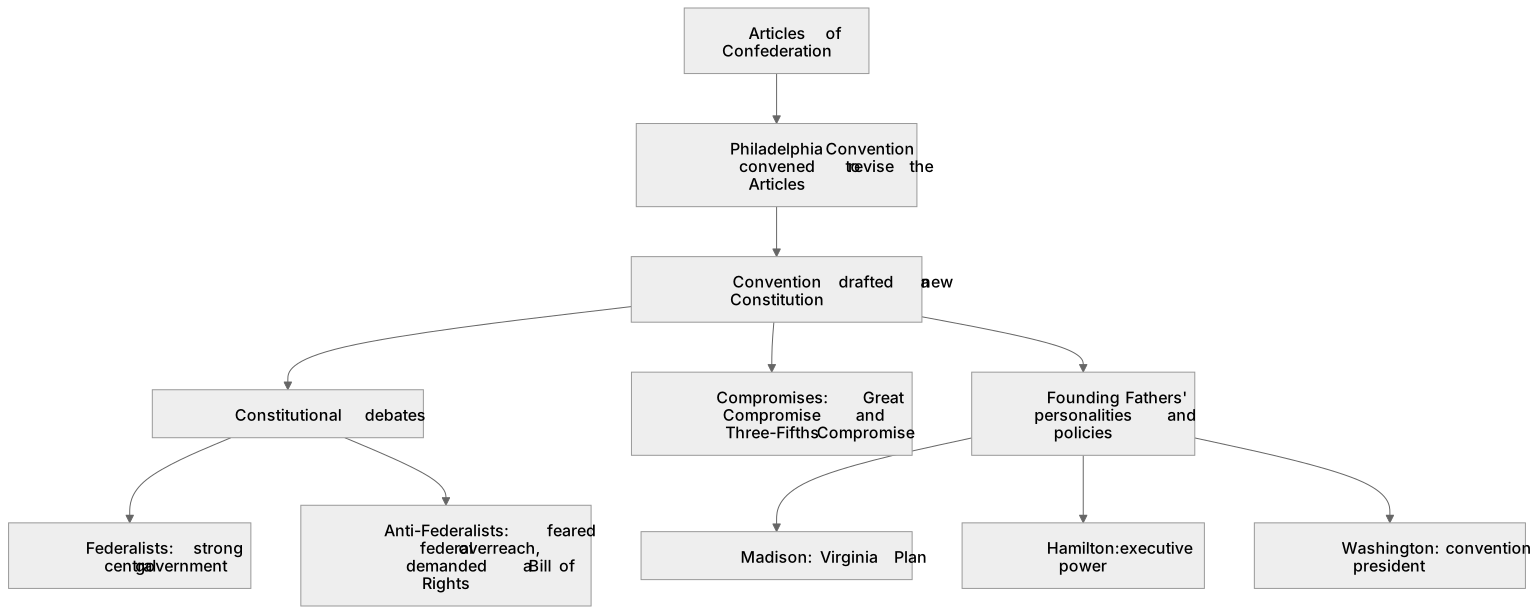
The 1787 Philadelphia Convention was convened to revise the Articles of Confederation but ultimately drafted a new Constitution.
Checked against the AQA 7042 specification (opens in a new tab) on .
- Point 3 of 4
- 4 key terms
Study notes
From the checked teaching notes for this specification point.
The idea
The 1787 Philadelphia Convention was convened to revise the Articles of Confederation but ultimately drafted a new Constitution. Key compromises, such as the Great Compromise and the Three-Fifths Compromise, were essential. The personalities and policies of the 'Founding Fathers' are crucial; for example, James Madison's intellectual leadership in drafting the Virginia Plan, Alexander Hamilton's push for executive power, and George Washington's unifying presence as convention president shaped the final document.
What earns the marks
- Identify the primary reasons for calling the Philadelphia Convention, notably the weaknesses of the Articles of Confederation highlighted by Shays' Rebellion.
- Analyse the ideological divide between Federalists advocating for strong national government and Anti-Federalists advocating for state sovereignty and individual liberties.
- Evaluate the specific contributions and policies of key Founding Fathers, such as Madison's Virginia Plan and Hamilton's advocacy for a strong executive.
- Explain the significance of major compromises reached during the convention, including the Great Compromise on representation and the Three-Fifths Compromise on slavery.
Common mistakes and how to put them right
Confusing the Declaration of Independence with the Constitution.
Put it right by remembering the Constitution was drafted in 1787 to establish the government framework, not to declare independence.
Assuming all Founding Fathers agreed on the Constitution.
Put it right by highlighting the fierce opposition from Anti-Federalists like Patrick Henry and George Mason.
Stating that the Bill of Rights was part of the original 1787 Constitution.
Put it right by noting it was promised during the debates but added later as the first ten amendments to secure ratification.
Exam tips
- Use specific examples of Founding Fathers' policies, such as Madison's role in the Virginia Plan, to support arguments about constitutional development.
- When discussing the Federalist and Anti-Federalist debates, explicitly link their arguments to their respective fears of anarchy versus tyranny.
- Evaluate how compromises at the Philadelphia Convention reflected the diverse economic and regional interests of the delegates.
Try the lesson
The start of the 2G The Birth of the USA, 1760–1801 – Founding the Republic, 1776–1789 (A-level only): Making the Constitution: the Philadelphia Convention and the constitutional debates between federalists and anti-federalists, the personalities and policies of the ‘Founding Fathers’ lesson, made from checked teaching notes for this specification point.
Have a go first
What was the original stated purpose of the Philadelphia Convention when it convened in May 1787?
Listen
The 1787 Philadelphia Convention was convened to revise the Articles of Confederation but ultimately drafted a new Constitution. Key compromises, such as the Great Compromise and the Three-Fifths Compromise, were essential. The personalities and policies of the 'Founding Fathers' are crucial; for example, James Madison's intellectual leadership in drafting the Virginia Plan, Alexander Hamilton's push for executive power, and George Washington's unifying presence as convention president shaped the final document. A strong answer earns marks for these points. Identify the primary reasons for calling the Philadelphia Convention, notably the weaknesses of the Articles of Confederation highlighted by Shays' Rebellion. Analyse the ideological divide between Federalists advocating for strong national government and Anti-Federalists advocating for state sovereignty and individual liberties. Evaluate the specific contributions and policies of key Founding Fathers, such as Madison's Virginia Plan and Hamilton's advocacy for a strong executive. Explain the significance of major compromises reached during the convention, including the Great Compromise on representation and the Three-Fifths Compromise on slavery. A common slip: Confusing the Declaration of Independence with the Constitution. Instead, remembering the Constitution was drafted in 1787 to establish the government framework, not to declare independence. Exam tip: Use specific examples of Founding Fathers' policies, such as Madison's role in the Virginia Plan, to support arguments about constitutional development.
See it
Key words
Say what each word means before you turn the card.
Federalists
Try answering aloud or in your head before turning the card.
Anti-Federalists
Try answering aloud or in your head before turning the card.
Great Compromise
Try answering aloud or in your head before turning the card.
Three-Fifths Compromise
Try answering aloud or in your head before turning the card.
See every definition
- Federalists
- Those who advocated for a strong central government during the constitutional debates.
- Anti-Federalists
- Those who feared federal overreach and demanded a Bill of Rights during the constitutional debates.
- Great Compromise
- A key compromise on representation reached during the convention.
- Three-Fifths Compromise
- A key compromise on slavery reached during the convention.
Label the diagram
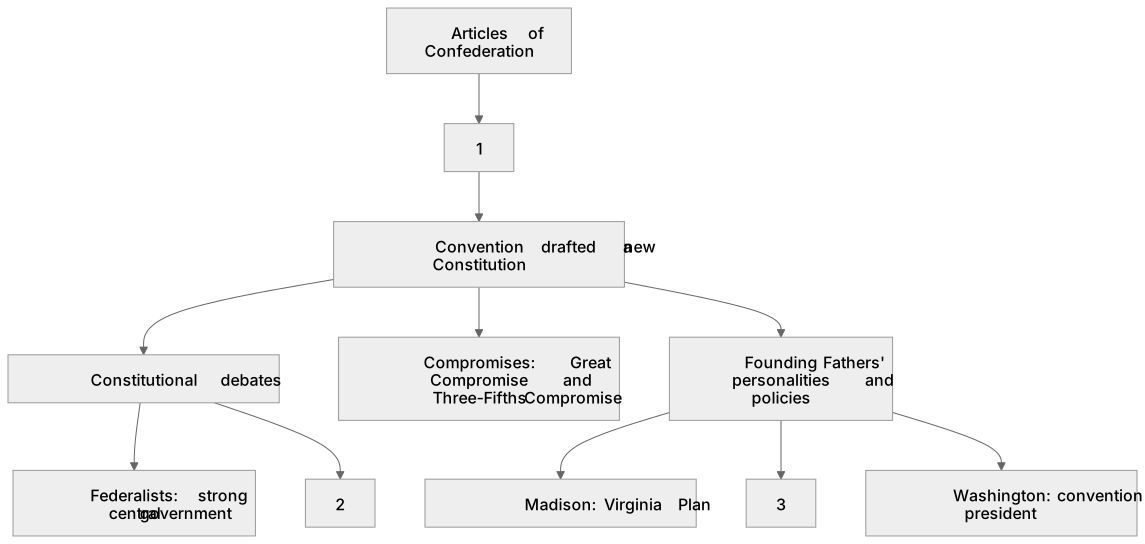
Some boxes have lost their names. Pick the right name for each number.
1Box 1
2Box 2
3Box 3
There is more to this lesson
The full lesson goes on to check your understanding and help you earn the marks. Create a free account to carry on, with your progress saved.
A week of Premium from your first lesson · Then the free plan continues · No card, no charge
Test your understanding of 2G The Birth of the USA, 1760–1801 – Founding the Republic, 1776–1789 (A-level only): Making the Constitution: the Philadelphia Convention and the constitutional debates between federalists and anti-federalists, the personalities and policies of the ‘Founding Fathers’
Active recall beats re-reading. Take an instant quiz now to test what you’ve learned and lock it into long-term memory.
A week of Premium from your first lesson · Then the free plan continues · No card, no charge