AQA · A-Level · History
Course version: 7042 · Version from Sept 2017
A Nation Divided, c1845–1877 – Radical Reconstruction, 1867–1877 (A-level…
Full specification wording
2J America: A Nation Divided, c1845–1877 – Radical Reconstruction, 1867–1877 (A-level only): The end of Radical Reconstruction: the position of African-Americans in North and South by 1877
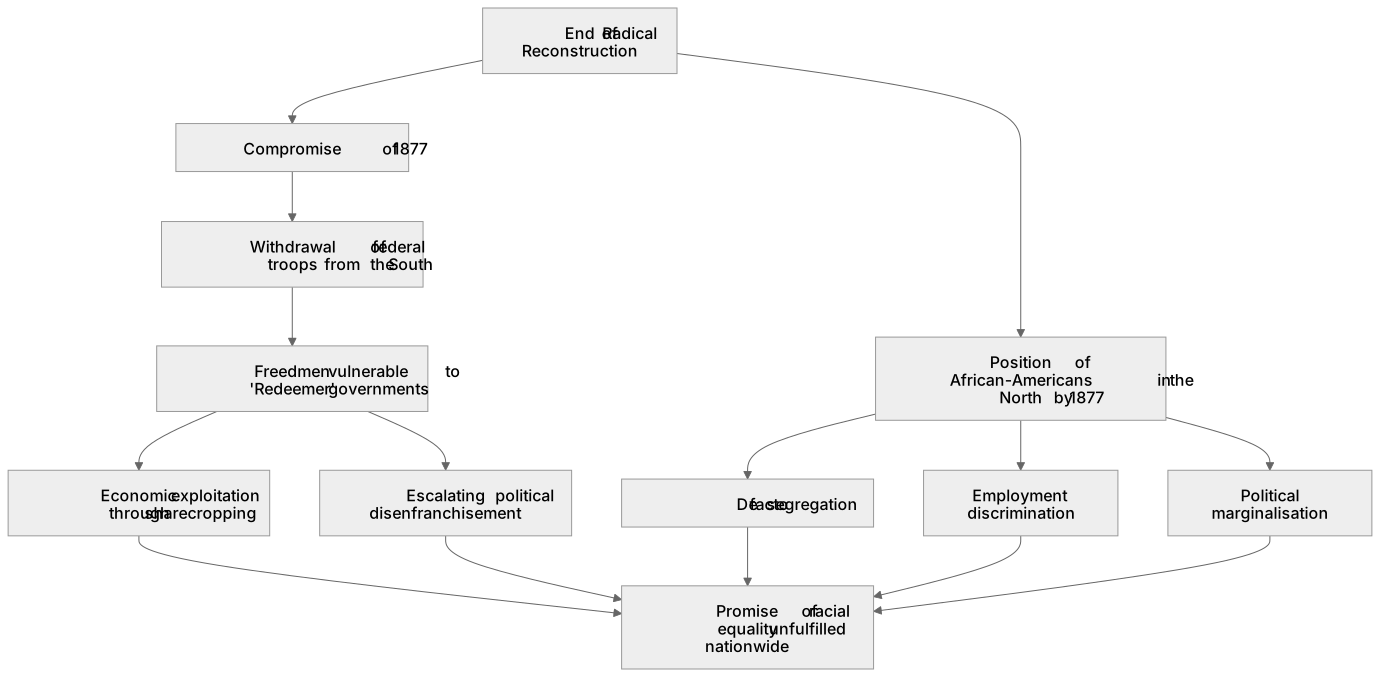
The end of Radical Reconstruction, cemented by the Compromise of 1877, marked a profound turning point for African-Americans.
Checked against the AQA 7042 specification (opens in a new tab) on .
- Point 4 of 4
Study notes
From the checked teaching notes for this specification point.
The idea
The end of Radical Reconstruction, cemented by the Compromise of 1877, marked a profound turning point for African-Americans. In the South, the withdrawal of federal troops left freedmen vulnerable to 'Redeemer' governments. While slavery remained abolished, southern African-Americans faced severe economic exploitation through sharecropping and escalating political disenfranchisement. Conversely, in the North, African-Americans experienced a different reality by 1877. Although free from institutionalised southern violence, northern African-Americans still confronted widespread de facto segregation, employment discrimination, and political marginalisation, demonstrating that the end of Reconstruction left the promise of racial equality unfulfilled nationwide.
What earns the marks
- Analyse the political and economic factors that led to the Compromise of 1877 and the formal end of Radical Reconstruction.
- Evaluate the economic position of African-Americans in the South by 1877, focusing on the prevalence and limitations of the sharecropping system.
- Assess the social and political status of African-Americans in the North, highlighting de facto segregation and economic discrimination.
- Compare the lived experiences of African-Americans in the North and South to determine the overall success or failure of Reconstruction policies by 1877.
Common mistakes and how to put them right
Claiming that the end of Reconstruction immediately instituted Jim Crow laws.
Put it right: Formal legal segregation developed more gradually in the 1880s and 1890s, though the foundation was laid by 1877.
Stating that the Compromise of 1877 re-enslaved African-Americans.
Put it right: While they faced severe oppression and sharecropping, the Thirteenth Amendment remained intact.
Exam tips
- Contrast the de jure (legal) changes of the Reconstruction amendments with the de facto (actual) social and economic realities for African-Americans by 1877.
- Use the Compromise of 1877 as a definitive turning point when structuring essays on the timeline of African-American civil rights.
- Ensure you explicitly address the position of African-Americans in the North, as essays often become too heavily focused solely on the South.
Try the lesson
The start of the 2J America: A Nation Divided, c1845–1877 – Radical Reconstruction, 1867–1877 (A-level only): The end of Radical Reconstruction: the position of African-Americans in North and South by 1877 lesson, made from checked teaching notes for this specification point.
Have a go first
By the end of Radical Reconstruction in 1877, what was the political position of African-Americans in the Southern states?
Listen
The end of Radical Reconstruction, cemented by the Compromise of 1877, marked a profound turning point for African-Americans. In the South, the withdrawal of federal troops left freedmen vulnerable to 'Redeemer' governments. While slavery remained abolished, southern African-Americans faced severe economic exploitation through sharecropping and escalating political disenfranchisement. Conversely, in the North, African-Americans experienced a different reality by 1877. Although free from institutionalised southern violence, northern African-Americans still confronted widespread de facto segregation, employment discrimination, and political marginalisation, demonstrating that the end of Reconstruction left the promise of racial equality unfulfilled nationwide. A strong answer earns marks for these points. Analyse the political and economic factors that led to the Compromise of 1877 and the formal end of Radical Reconstruction. Evaluate the economic position of African-Americans in the South by 1877, focusing on the prevalence and limitations of the sharecropping system. Assess the social and political status of African-Americans in the North, highlighting de facto segregation and economic discrimination. Compare the lived experiences of African-Americans in the North and South to determine the overall success or failure of Reconstruction policies by 1877. Exam tip: Contrast the de jure (legal) changes of the Reconstruction amendments with the de facto (actual) social and economic realities for African-Americans by 1877.
See it
Label the diagram
Some boxes have lost their names. Pick the right name for each number.
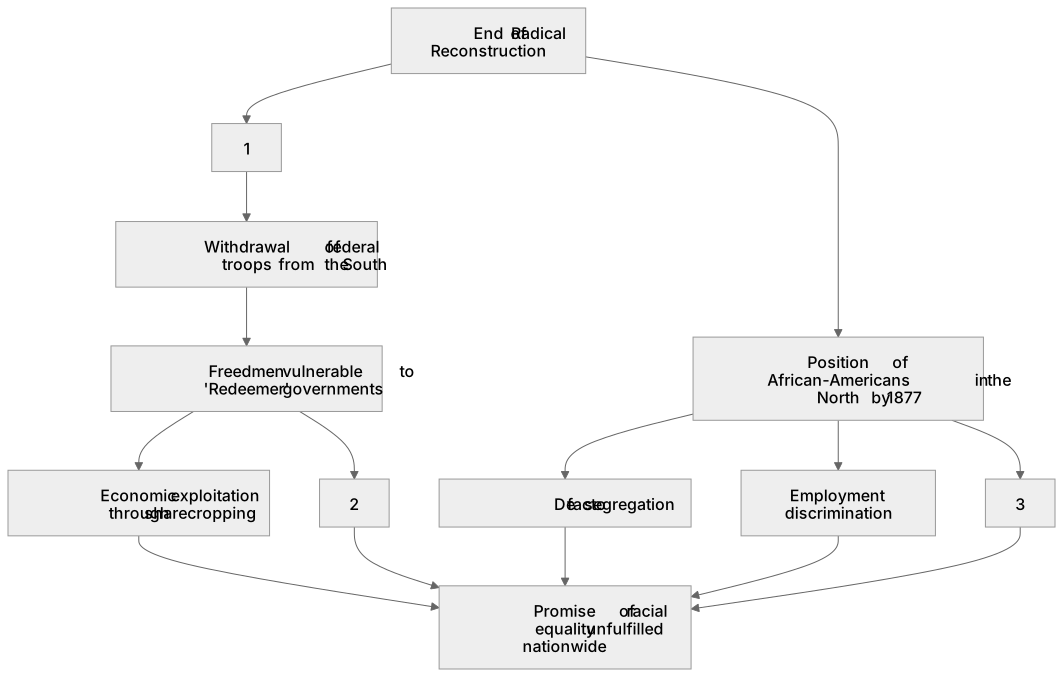
1Box 1
2Box 2
3Box 3
There is more to this lesson
The full lesson goes on to check your understanding and help you earn the marks. Create a free account to carry on, with your progress saved.
A week of Premium from your first lesson · Then the free plan continues · No card, no charge
Test your understanding of 2J America: A Nation Divided, c1845–1877 – Radical Reconstruction, 1867–1877 (A-level only): The end of Radical Reconstruction: the position of African-Americans in North and South by 1877
Active recall beats re-reading. Take an instant quiz now to test what you’ve learned and lock it into long-term memory.
A week of Premium from your first lesson · Then the free plan continues · No card, no charge