AQA · A-Level · History
Course version: 7042 · Version from Sept 2017
A Nation Divided, c1845–1877 – The War, 1861–1865 (A-level only): The…
Full specification wording
2J America: A Nation Divided, c1845–1877 – The War, 1861–1865 (A-level only): The course of the Civil War: military campaigns; the reasons for the final defeat of the Confederacy
The American Civil War's trajectory was defined by pivotal military campaigns and underlying structural disparities.
Checked against the AQA 7042 specification (opens in a new tab) on .
- Point 3 of 4
Study notes
From the checked teaching notes for this specification point.
The idea
The American Civil War's trajectory was defined by pivotal military campaigns and underlying structural disparities. Initially, Confederate forces achieved tactical successes in the Eastern Theatre, notably at Bull Run and Chancellorsville, under Lee's command. However, the Union's Anaconda Plan and victories at Gettysburg and Vicksburg in 1863 marked a decisive turning point, severing Confederate supply lines. The final defeat of the Confederacy stemmed from a combination of factors: the North's overwhelming demographic and industrial superiority, which sustained prolonged attrition warfare under Grant; the devastating impact of Sherman's March to the Sea on Southern infrastructure and morale; and internal Confederate political and economic collapse, including hyperinflation and desertion.
What earns the marks
- Evaluate the significance of key turning points, such as Gettysburg and Vicksburg, in shifting the military balance.
- Analyse the impact of Union military strategy, including the Anaconda Plan and Grant's war of attrition, on Confederate resources.
- Assess the role of Northern industrial capacity, railway networks, and manpower advantages in securing ultimate victory.
- Examine internal Confederate weaknesses, such as states' rights conflicts, economic instability, and the failure of 'King Cotton' diplomacy.
Common mistakes and how to put them right
Attributing Confederate defeat solely to a lack of military skill.
Put it right: Acknowledge that while the South had capable generals like Lee, structural disadvantages in industry and manpower were critical to their defeat.
Treating the Union victory as inevitable from the outset.
Put it right: Emphasise that early Confederate victories and Northern war weariness made the outcome highly contingent until at least 1863 or 1864.
Ignoring the Western Theatre of the war.
Put it right: Ensure analysis includes the vital Union successes in the West, such as gaining control of the Mississippi River at Vicksburg.
Exam tips
- When discussing military campaigns, link tactical outcomes directly to broader strategic and political consequences, such as the Emancipation Proclamation following Antietam.
- Weigh the relative importance of Northern strengths against Southern weaknesses when explaining the final defeat of the Confederacy.
- Avoid narrative storytelling of battles; focus instead on how specific campaigns depleted resources or altered civilian morale.
Try the lesson
The start of the 2J America: A Nation Divided, c1845–1877 – The War, 1861–1865 (A-level only): The course of the Civil War: military campaigns; the reasons for the final defeat of the Confederacy lesson, made from checked teaching notes for this specification point.
Have a go first
Which of the following was a primary underlying reason for the final defeat of the Confederacy in the American Civil War?
Listen
The American Civil War's trajectory was defined by pivotal military campaigns and underlying structural disparities. Initially, Confederate forces achieved tactical successes in the Eastern Theatre, notably at Bull Run and Chancellorsville, under Lee's command. However, the Union's Anaconda Plan and victories at Gettysburg and Vicksburg in 1863 marked a decisive turning point, severing Confederate supply lines. The final defeat of the Confederacy stemmed from a combination of factors: the North's overwhelming demographic and industrial superiority, which sustained prolonged attrition warfare under Grant; the devastating impact of Sherman's March to the Sea on Southern infrastructure and morale; and internal Confederate political and economic collapse, including hyperinflation and desertion. A strong answer earns marks for these points. Evaluate the significance of key turning points, such as Gettysburg and Vicksburg, in shifting the military balance. Analyse the impact of Union military strategy, including the Anaconda Plan and Grant's war of attrition, on Confederate resources. Assess the role of Northern industrial capacity, railway networks, and manpower advantages in securing ultimate victory. Examine internal Confederate weaknesses, such as states' rights conflicts, economic instability, and the failure of 'King Cotton' diplomacy. A common slip: Attributing Confederate defeat solely to a lack of military skill. Instead, Acknowledge that while the South had capable generals like Lee, structural disadvantages in industry and manpower were critical to their defeat. Exam tip: When discussing military campaigns, link tactical outcomes directly to broader strategic and political consequences, such as the Emancipation Proclamation following Antietam.
See it
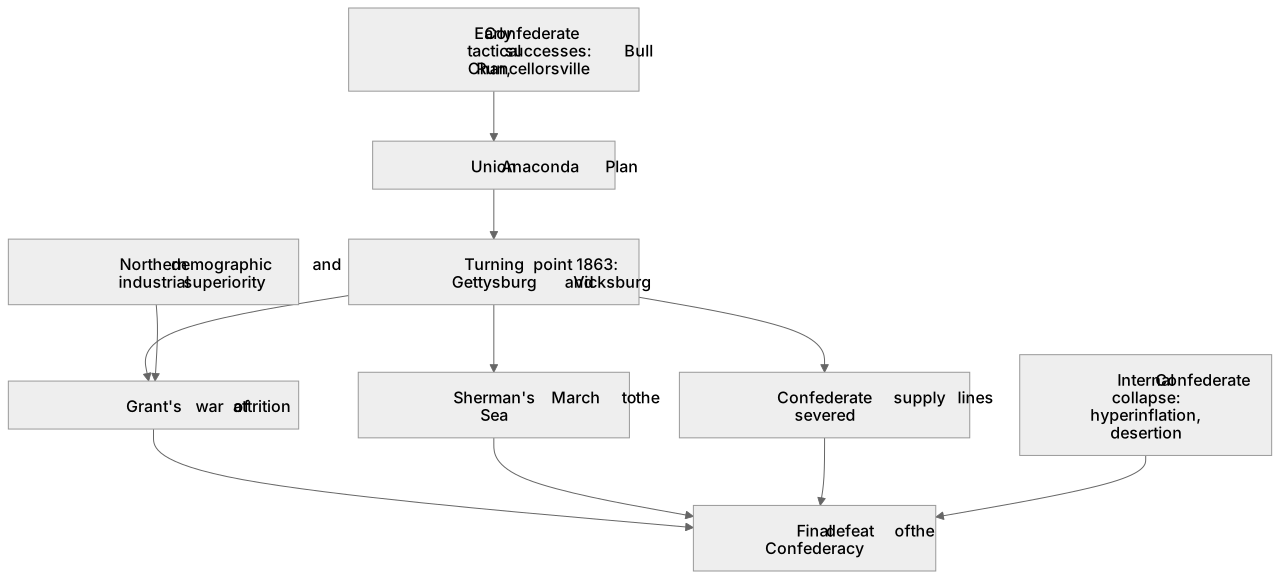
Label the diagram
Some boxes have lost their names. Pick the right name for each number.
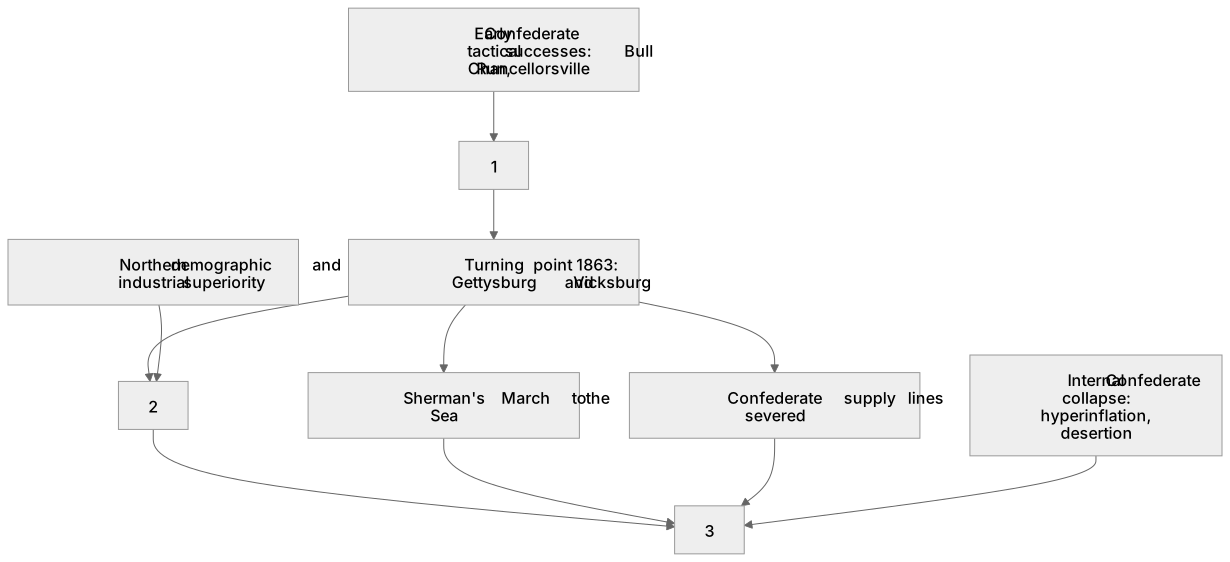
1Box 1
2Box 2
3Box 3
There is more to this lesson
The full lesson goes on to check your understanding and help you earn the marks. Create a free account to carry on, with your progress saved.
A week of Premium from your first lesson · Then the free plan continues · No card, no charge
Test your understanding of 2J America: A Nation Divided, c1845–1877 – The War, 1861–1865 (A-level only): The course of the Civil War: military campaigns; the reasons for the final defeat of the Confederacy
Active recall beats re-reading. Take an instant quiz now to test what you’ve learned and lock it into long-term memory.
A week of Premium from your first lesson · Then the free plan continues · No card, no charge