Pearson Edexcel · A-Level · History
Course version: 9HI0 · Version from Sept 2015
The British experience of warfare, c1790–1918 - 2 The Crimean War,…
Full specification wording
Paper 3, Option 35.2: The British experience of warfare, c1790–1918 - 2 The Crimean War, 1854–56: Facing the Russian threat in the Crimea: the impact of the battles of Alma and Balaclava and the siege of Sebastopol; the role of Lord Raglan.
The Crimean War pitted Britain, France and Turkey against Russia.
Checked against the Pearson Edexcel 9HI0 specification (opens in a new tab) on .
- Point 1 of 3
- 4 key terms
Study notes
From the checked teaching notes for this specification point.
The idea
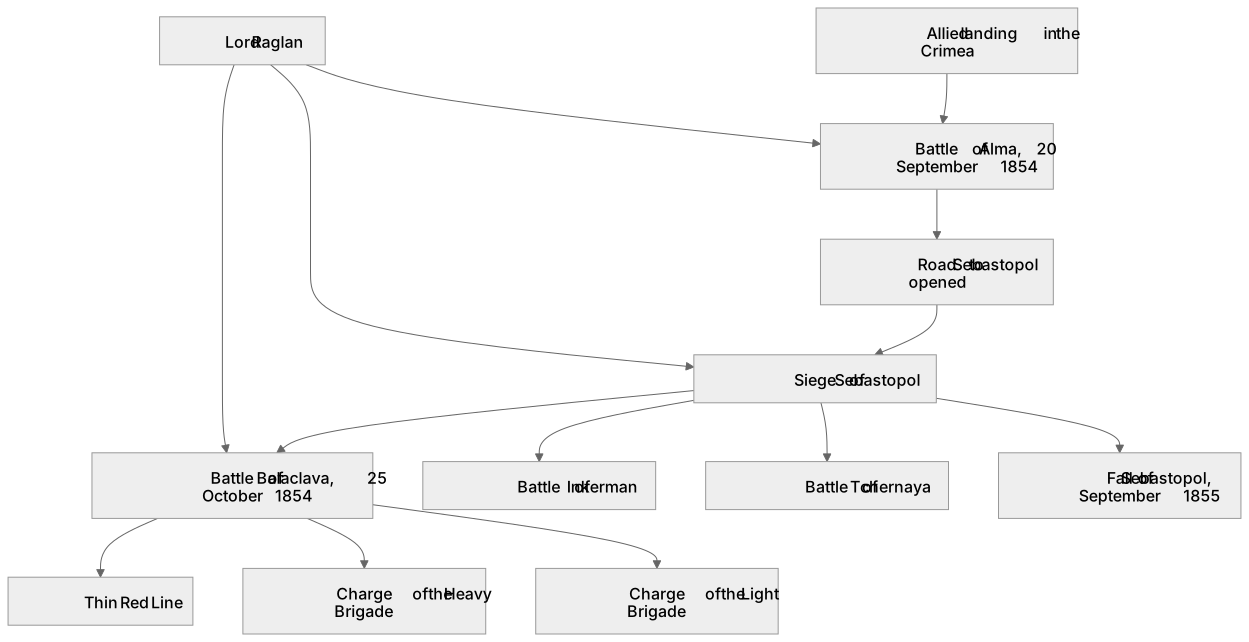
The Crimean War pitted Britain, France and Turkey against Russia. After the Allies landed in September 1854, they marched south to engage Russian forces at the Alma. The battle, fought on 20 September, was a costly frontal assault that nevertheless opened the way to Sebastopol. The siege of Sebastopol became a prolonged trench war, with the Allies bombarding the city while the Russians defended it. The battle of Balaclava on 25 October saw the Thin Red Line and the Charge of the Light Brigade, exposing command failures. Lord Raglan, the British commander, was criticised for unclear orders and for not coordinating effectively with allies. His role is assessed through his decisions at Alma, Balaclava and during the siege, and the impact of these events on the war's outcome.
What earns the marks
- Explain the strategic context: Russia's threat to the Ottoman Empire and the need to protect the route to India, leading to the Allied invasion of the Crimea.
- Discuss the overall impact of these events on the British experience of warfare: the exposure of logistical and medical failures, the changing public perception of war, and the legacy for military reform.
Common mistakes and how to put them right
Confusing the battles of Alma and Balaclava.
Put it right: Clearly distinguish the location, date and nature of each battle.
Overstating the impact of the Charge of the Light Brigade as a decisive military event.
Put it right: Place it in context as a symptom of command failures rather than a turning point.
Attributing the fall of Sebastopol solely to British efforts.
Put it right: Acknowledge the Allied nature of the campaign and the Russian defence.
Ignoring the role of Lord Raglan beyond Balaclava.
Put it right: Cover his overall command, not just the Light Brigade episode.
Exam tips
- Use precise dates and locations to show secure knowledge, e.g. Alma (20 September 1854), Balaclava (25 October 1854), Sebastopol (siege from October 1854 to September 1855).
- When assessing impact, consider short-term military outcomes and longer-term consequences such as public opinion and army reform.
- For questions on Lord Raglan, balance his experience and bravery against his failures in communication and coordination with allies.
- Incorporate contemporary evidence, such as reports by William Howard Russell, to support arguments about impact and perception.
Try the lesson
The start of the Paper 3, Option 35.2: The British experience of warfare, c1790–1918 - 2 The Crimean War, 1854–56: Facing the Russian threat in the Crimea: the impact of the battles of Alma and Balaclava and the siege of Sebastopol; the role of Lord Raglan. lesson, made from checked teaching notes for this specification point.
Have a go first
Which of the following accurately describes a significant consequence of the Battle of the Alma in September 1854?
Listen
The Crimean War pitted Britain, France and Turkey against Russia. After the Allies landed in September 1854, they marched south to engage Russian forces at the Alma. The battle, fought on 20 September, was a costly frontal assault that nevertheless opened the way to Sebastopol. The siege of Sebastopol became a prolonged trench war, with the Allies bombarding the city while the Russians defended it. The battle of Balaclava on 25 October saw the Thin Red Line and the Charge of the Light Brigade, exposing command failures. Lord Raglan, the British commander, was criticised for unclear orders and for not coordinating effectively with allies. His role is assessed through his decisions at Alma, Balaclava and during the siege, and the impact of these events on the war's outcome. A strong answer earns marks for these points. Explain the strategic context: Russia's threat to the Ottoman Empire and the need to protect the route to India, leading to the Allied invasion of the Crimea. Describe the battle of Alma (20 September 1854): the Allied assault on Russian positions on the Alma heights, the role of Raglan in ordering the attack, and the immediate impact of the victory in opening the road to Sebastopol. Analyse the battle of Balaclava (25 October 1854): the Russian attack on the Allied supply base, the Thin Red Line, the Charge of the Heavy Brigade, and the disastrous Charge of the Light Brigade; assess the impact on morale and on perceptions of British command. Evaluate the siege of Sebastopol: the prolonged bombardment, the trench warfare, the battles of Inkerman and Tchernaya, and the eventual fall of the city in September 1855; consider the impact of the siege on the British army and on the war's conclusion. A common slip: Confusing the battles of Alma and Balaclava: Alma was a frontal assault on Russian heights, while Balaclava involved the defence of the Allied base and the famous cavalry charges. Instead, clearly distinguish the location, date and nature of each battle. Exam tip: Use precise dates and locations to show secure knowledge, e.g. Alma (20 September 1854), Balaclava (25 October 1854), Sebastopol (siege from October 1854 to September 1855).
See it
Key words
Say what each word means before you turn the card.
Command and leadership
Try answering aloud or in your head before turning the card.
Military tactics and technology
Try answering aloud or in your head before turning the card.
Allied cooperation and conflict
Try answering aloud or in your head before turning the card.
Impact of war on soldiers and public opinion
Try answering aloud or in your head before turning the card.
See every definition
- Command and leadership
- The role of Lord Raglan, the British commander, who was criticised for unclear orders and for not coordinating effectively with allies.
- Military tactics and technology
- The costly frontal assault at the Alma, the prolonged trench war and bombardment at Sebastopol, and the cavalry charges at Balaclava.
- Allied cooperation and conflict
- Britain, France and Turkey fought together against Russia, and Lord Raglan was criticised for not coordinating effectively with allies.
- Impact of war on soldiers and public opinion
- The exposure of logistical and medical failures, the changing public perception of war, and the legacy for military reform.
Label the diagram
Some boxes have lost their names. Pick the right name for each number.
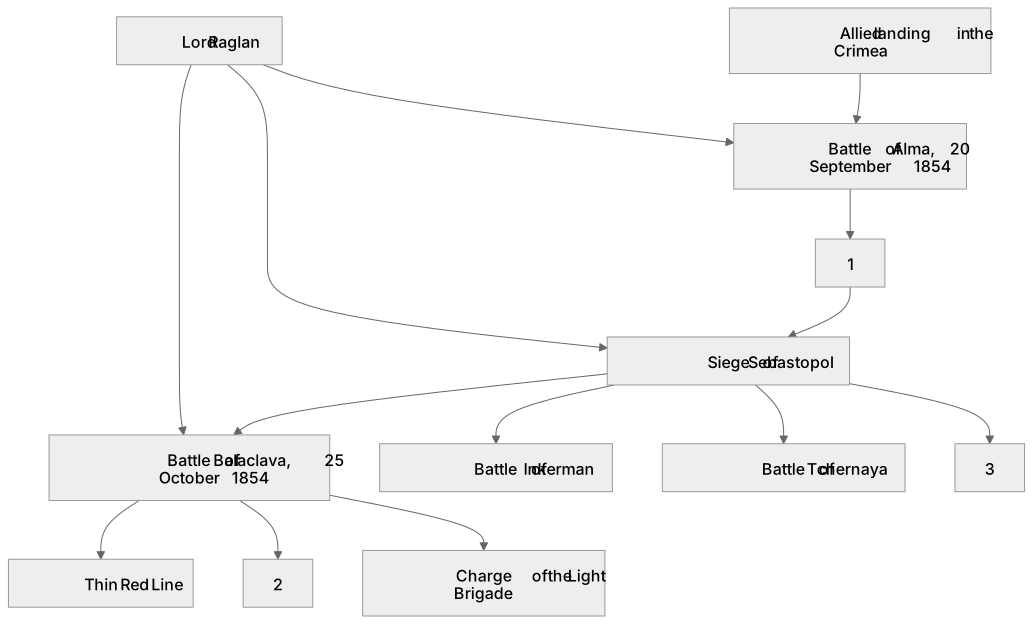
1Box 1
2Box 2
3Box 3
There is more to this lesson
The full lesson goes on to check your understanding and help you earn the marks. Create a free account to carry on, with your progress saved.
A week of Premium from your first lesson · Then the free plan continues · No card, no charge
Test your understanding of Paper 3, Option 35.2: The British experience of warfare, c1790–1918 - 2 The Crimean War, 1854–56: Facing the Russian threat in the Crimea: the impact of the battles of Alma and Balaclava and the siege of Sebastopol; the role of Lord Raglan.
Active recall beats re-reading. Take an instant quiz now to test what you’ve learned and lock it into long-term memory.
A week of Premium from your first lesson · Then the free plan continues · No card, no charge