Pearson Edexcel · GCSE · History
Course version: 1HI0 · Version from Sept 2016
Key topic 3: Nazi control and dictatorship, 1933–39 - 3 Controlling and…
Full specification wording
Option 31: Key topic 3: Nazi control and dictatorship, 1933–39 - 3 Controlling and influencing attitudes: Nazi control of culture and the arts, including art, architecture, literature and film.
The Nazis sought to align all cultural output with their ideology, establishing the Reich Chamber of Culture in 1933.
Checked against the Pearson Edexcel 1HI0 specification (opens in a new tab) on .
- Point 2 of 3
- 3 key terms
Study notes
From the checked teaching notes for this specification point.
The idea
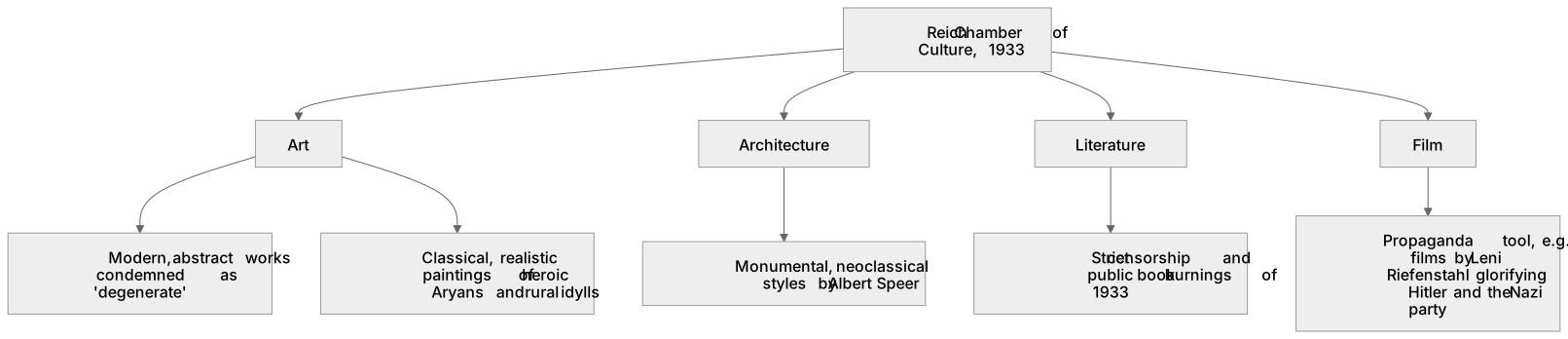
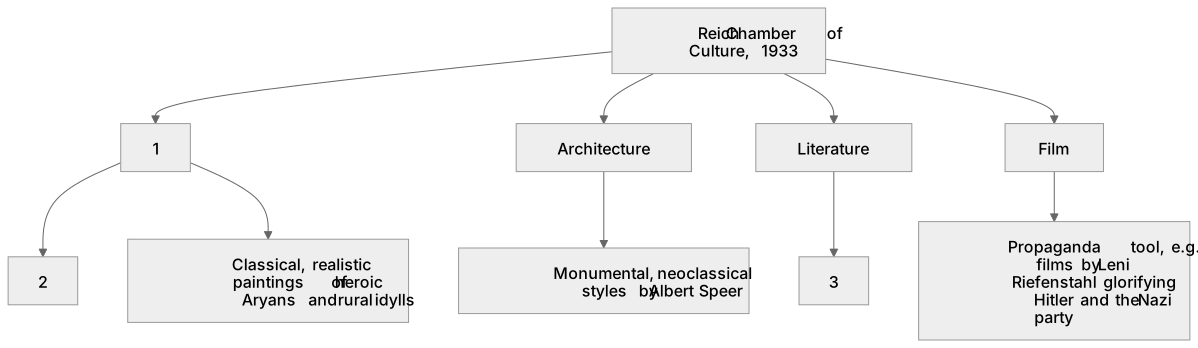
The Nazis sought to align all cultural output with their ideology, establishing the Reich Chamber of Culture in 1933. Art was heavily regulated; modern, abstract works were condemned as 'degenerate' and replaced by classical, realistic paintings depicting heroic Aryans and rural idylls. Architecture favoured monumental, neoclassical styles, designed by Albert Speer, to project the permanence and power of the Third Reich. Literature faced strict censorship, culminating in the public book burnings of 1933, where works by Jewish, communist, or pacifist authors were destroyed. Film was exploited as a powerful propaganda tool, with directors like Leni Riefenstahl creating visually striking movies that glorified Hitler and the Nazi party.
What earns the marks
- Explain the function of the Reich Chamber of Culture in enforcing ideological conformity across all artistic fields.
- Describe the Nazi rejection of modern art in favour of traditional, realistic art that promoted Aryan ideals.
- Identify the use of monumental neoclassical architecture to symbolise the strength and longevity of the regime.
- Detail the censorship of literature, including book burnings, and the use of film for subtle and overt propaganda.
Common mistakes and how to put them right
Assuming all films produced were overt political propaganda.
Put it right: Many were seemingly innocent entertainment films that contained subtle antisemitic or nationalist messaging.
Believing that 'degenerate art' was simply unpopular.
Put it right: It was actively persecuted, and its creators were banned from working or forced into exile.
Overlooking the role of architecture; students often focus on art and film but forget that monumental buildings were a key part of Nazi cultural propaganda.
Exam tips
- Reference the 1933 book burnings as a clear, dramatic example of the Nazi suppression of 'un-German' literature.
- Mention Albert Speer when discussing architecture to show specific knowledge of key figures in Nazi cultural policy.
- Contrast Weimar culture (experimental, modern) with Nazi culture (traditional, controlled) to highlight the dramatic shift in German society.
Try the lesson
The start of the Option 31: Key topic 3: Nazi control and dictatorship, 1933–39 - 3 Controlling and influencing attitudes: Nazi control of culture and the arts, including art, architecture, literature and film. lesson, made from checked teaching notes for this specification point.
Have a go first
How did the Nazi regime control literature in Germany after 1933?
Listen
The Nazis sought to align all cultural output with their ideology, establishing the Reich Chamber of Culture in 1933. Art was heavily regulated; modern, abstract works were condemned as 'degenerate' and replaced by classical, realistic paintings depicting heroic Aryans and rural idylls. Architecture favoured monumental, neoclassical styles, designed by Albert Speer, to project the permanence and power of the Third Reich. Literature faced strict censorship, culminating in the public book burnings of 1933, where works by Jewish, communist, or pacifist authors were destroyed. Film was exploited as a powerful propaganda tool, with directors like Leni Riefenstahl creating visually striking movies that glorified Hitler and the Nazi party. A strong answer earns marks for these points. Explain the function of the Reich Chamber of Culture in enforcing ideological conformity across all artistic fields. Describe the Nazi rejection of modern art in favour of traditional, realistic art that promoted Aryan ideals. Identify the use of monumental neoclassical architecture to symbolise the strength and longevity of the regime. Detail the censorship of literature, including book burnings, and the use of film for subtle and overt propaganda. Exam tip: Reference the 1933 book burnings as a clear, dramatic example of the Nazi suppression of 'un-German' literature.
See it
Key words
Say what each word means before you turn the card.
Reich Chamber of Culture
Try answering aloud or in your head before turning the card.
Degenerate art
Try answering aloud or in your head before turning the card.
Book burnings
Try answering aloud or in your head before turning the card.
See every definition
- Reich Chamber of Culture
- Body established in 1933 to align all cultural output with Nazi ideology.
- Degenerate art
- Modern, abstract works condemned by the Nazis and replaced by classical, realistic paintings.
- Book burnings
- Public destruction in 1933 of works by Jewish, communist or pacifist authors.
Label the diagram
Some boxes have lost their names. Pick the right name for each number.
1Box 1
2Box 2
3Box 3
There is more to this lesson
The full lesson goes on to check your understanding and help you earn the marks. Create a free account to carry on, with your progress saved.
A week of Premium from your first lesson · Then the free plan continues · No card, no charge
Test your understanding of Option 31: Key topic 3: Nazi control and dictatorship, 1933–39 - 3 Controlling and influencing attitudes: Nazi control of culture and the arts, including art, architecture, literature and film.
Active recall beats re-reading. Take an instant quiz now to test what you’ve learned and lock it into long-term memory.
A week of Premium from your first lesson · Then the free plan continues · No card, no charge