Pearson Edexcel · A-Level · Mathematics
Course version: 9MA0 · Version from Mar 2026
Mathematical problem solving: Understand the concept of a mathematical…
Full specification wording
Overarching theme 2: Mathematical problem solving: Understand the concept of a mathematical problem-solving cycle, including specifying the problem, collecting information, processing and representing information and interpreting results, which may identify the need to repeat the cycle.
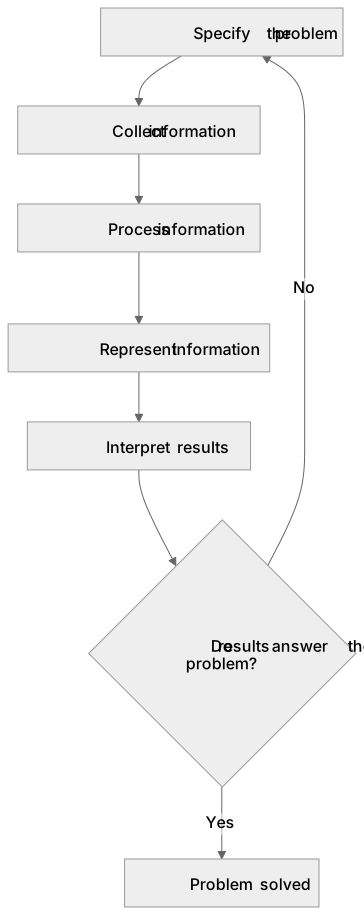
The problem-solving cycle is a structured approach: specify the problem, collect information, process and represent it, then interpret the results.
Checked against the Pearson Edexcel 9MA0 specification (opens in a new tab) on .
- Point 6 of 7
- 4 key terms
Study notes
From the checked teaching notes for this specification point.
The idea
The problem-solving cycle is a structured approach: specify the problem, collect information, process and represent it, then interpret the results. Specifying means defining variables, units and what counts as a solution. Collecting may involve measurements, given data or assumptions. Processing includes calculation, algebra or statistical analysis, while representing means choosing a table, graph, diagram or equation that reveals structure. Interpreting means relating results back to the original context and checking whether they answer the question. If they do not, the cycle repeats: you may refine the model, gather better data or change the method.
For example: Modelling a falling object may begin with constant acceleration, then be revised to include air resistance after comparing predictions with data.
What earns the marks
- Specifies the problem clearly, including variables, units, assumptions and the form of the required solution.
- Collects relevant information from the question, a diagram, a data set or stated assumptions.
- Processes the information using appropriate mathematics and represents it in a helpful form such as a graph, table or equation.
- Interprets results in the original context and checks whether they answer the specified problem.
- Recognises when results are unsatisfactory and describes how the cycle would be repeated with a refined model or method.
Common mistakes and how to put them right
Skipping the specification stage and starting calculations without defining variables or units.
Put it right: State what each symbol represents and the units used.
Presenting processed numbers without interpreting them in context.
Put it right: Explain what the result means for the original problem.
Treating the cycle as strictly linear and never revisiting assumptions.
Put it right: Check results against the problem and refine the model if needed.
Exam tips
- Write down your assumptions and definitions before calculating, so the specification stage is visible.
- Choose a representation that makes the key relationship clear, such as a graph for a trend or a table for repeated values.
- Finish with an interpretation that refers back to the original context and states whether the problem is solved.
Try the lesson
The start of the Overarching theme 2: Mathematical problem solving: Understand the concept of a mathematical problem-solving cycle, including specifying the problem, collecting information, processing and representing information and interpreting results, which may identify the need to repeat the cycle. lesson, made from checked teaching notes for this specification point.
Have a go first
A student is tackling a modelling task and has just finished interpreting the numerical results. The interpretation shows that the model's predictions are far from the observed data. According to the problem-solving cycle, what is the most appropriate next step?
Listen
The problem-solving cycle is a structured approach: specify the problem, collect information, process and represent it, then interpret the results. Specifying means defining variables, units and what counts as a solution. Collecting may involve measurements, given data or assumptions. Processing includes calculation, algebra or statistical analysis, while representing means choosing a table, graph, diagram or equation that reveals structure. Interpreting means relating results back to the original context and checking whether they answer the question. If they do not, the cycle repeats: you may refine the model, gather better data or change the method. For example, modelling a falling object may begin with constant acceleration, then be revised to include air resistance after comparing predictions with data. A strong answer earns marks for these points. Specifies the problem clearly, including variables, units, assumptions and the form of the required solution. Collects relevant information from the question, a diagram, a data set or stated assumptions. Processes the information using appropriate mathematics and represents it in a helpful form such as a graph, table or equation. Interprets results in the original context and checks whether they answer the specified problem. A common slip: Skipping the specification stage and starting calculations without defining variables or units. Instead, state what each symbol represents and the units used. Exam tip: Write down your assumptions and definitions before calculating, so the specification stage is visible.
See it
Key words
Say what each word means before you turn the card.
Problem specification
Try answering aloud or in your head before turning the card.
Information collection and processing
Try answering aloud or in your head before turning the card.
Representation of results
Try answering aloud or in your head before turning the card.
Iterative refinement
Try answering aloud or in your head before turning the card.
See every definition
- Problem specification
- Defining variables, units and what counts as a solution before any calculation begins.
- Information collection and processing
- Gathering measurements, given data or assumptions, then using calculation, algebra or statistical analysis on them.
- Representation of results
- Choosing a table, graph, diagram or equation that reveals structure in the processed information.
- Iterative refinement
- Repeating the cycle by refining the model, gathering better data or changing the method when results are unsatisfactory.
There is more to this lesson
The full lesson goes on to check your understanding and help you earn the marks. Create a free account to carry on, with your progress saved.
A week of Premium from your first lesson · Then the free plan continues · No card, no charge
Test your understanding of Overarching theme 2: Mathematical problem solving: Understand the concept of a mathematical problem-solving cycle, including specifying the problem, collecting information, processing and representing information and interpreting results, which may identify the need to repeat the cycle.
Active recall beats re-reading. Take an instant quiz now to test what you’ve learned and lock it into long-term memory.
A week of Premium from your first lesson · Then the free plan continues · No card, no charge