AQA · A-Level · Music
Appraising music
This topic covers the Western Classical Tradition from 1650 to 1910, focusing on the Baroque solo concerto, Mozart's operas, and Romantic piano music. It is crucial for developing your listening and appraising skills, teaching you to identify musical elements and link them to historical context to earn marks in the listening exam.
- 5 min read
- 3 worked examples
- 4 practice questions
- 6 key terms
Study Notes
Overview
Area of Study 1: The Western Classical Tradition (1650–1910) is a core component of your GCSE Music Appraising exam. It covers art music of the European tradition that is normally notated and intended for public performance. You will be assessed on your ability to listen attentively to unfamiliar excerpts, identify musical elements, and explain how composers use these elements to reflect their purpose, intentions, and the historical context.
This study guide provides the essential knowledge, practical analytical skills, and exam techniques required to succeed.
🎧 Listen to the Revision Podcast:

Key Knowledge & Theory
Core Concepts
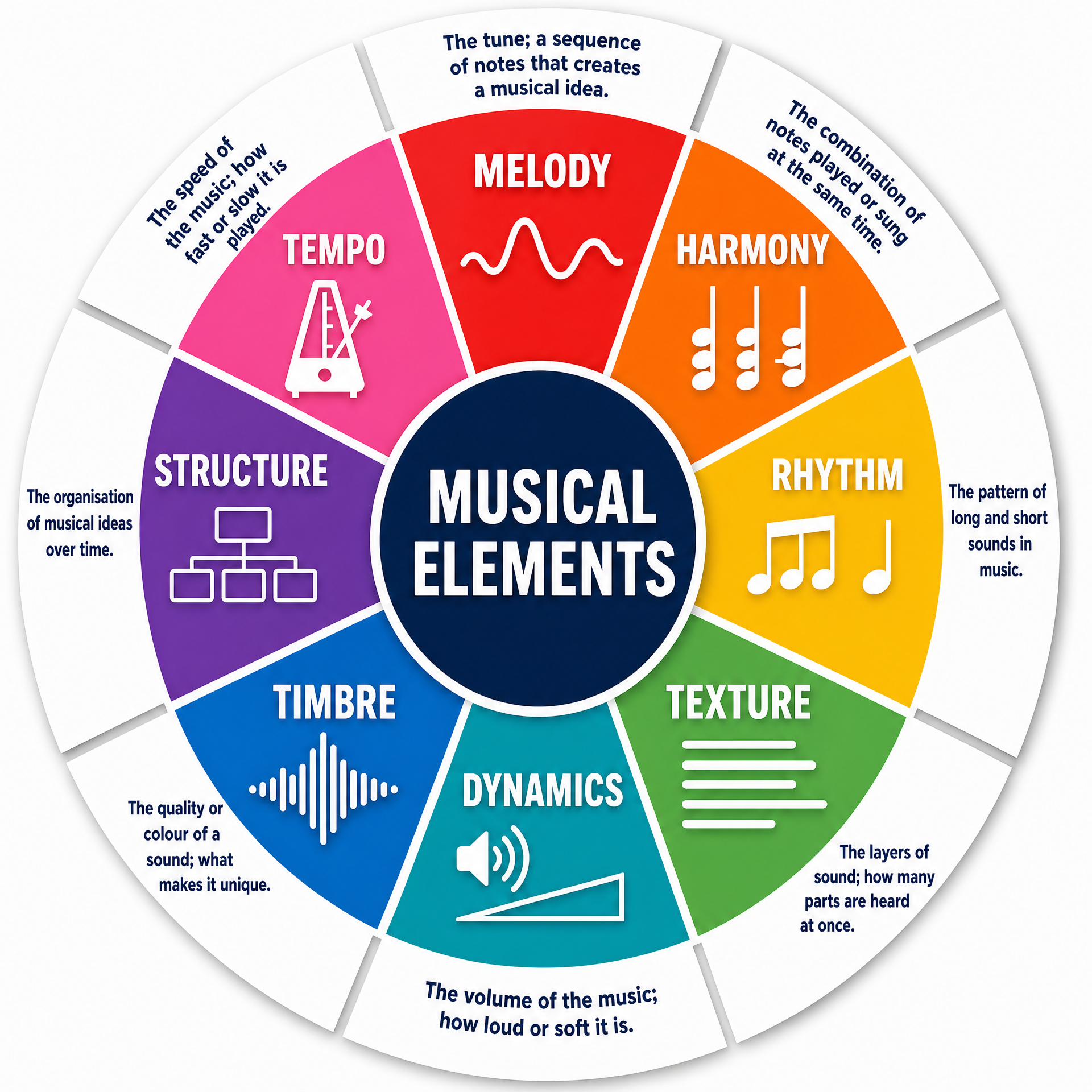
To succeed in appraising, you must master the eight core musical elements. These form your analytical toolkit when listening to unfamiliar music.
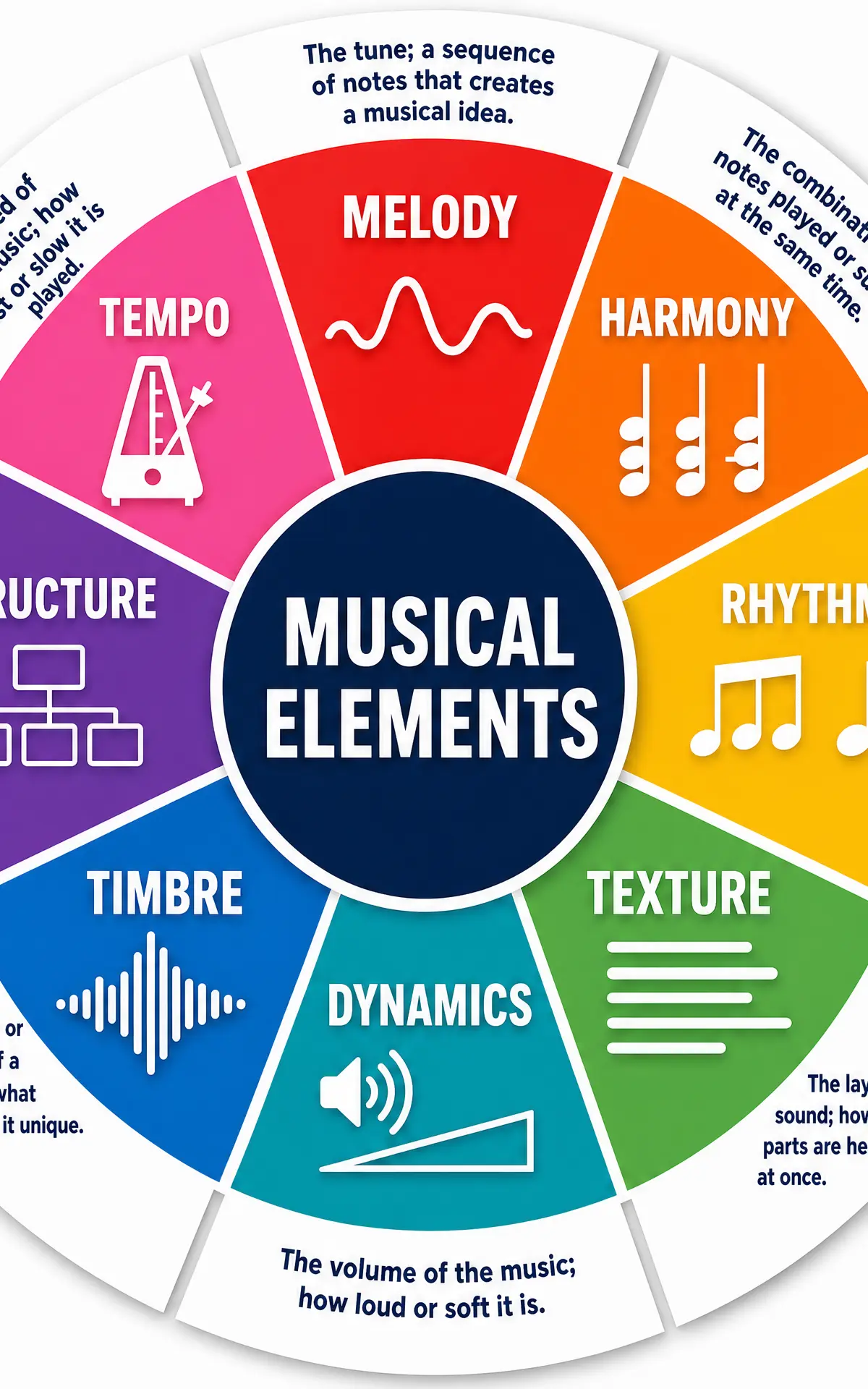
- Melody: The tune. Is it conjunct (stepwise) or disjunct (leaps)? Is it diatonic, chromatic, or highly ornamented with trills?
- Harmony: The chords supporting the melody. Is it major, minor, tonal, or chromatic? Can you identify perfect, imperfect, or interrupted cadences?
- Rhythm: The pattern of note lengths. Is it syncopated, dotted, straight, or swung?
- Texture: How the layers of sound interact. Is it monophonic (single line), homophonic (melody and accompaniment), or polyphonic (interweaving independent lines)?
- Dynamics: The volume. Are they terraced (sudden shifts) or gradual (crescendos/diminuendos)?
- Timbre / Instrumentation: The specific sound quality of instruments. Is it a harpsichord, a string orchestra, or a solo piano?
- Tempo: The speed of the music. Is it Allegro (fast), Andante (walking pace), or does it use rubato (flexible tempo)?
- Structure: The overall plan. Is it Binary (AB), Ternary (ABA), Rondo (ABACA), or Sonata form?
Key Eras and Composers
| Era | Period | Key Composers | Key Characteristics | Relevance to Exam |
|---|---|---|---|---|
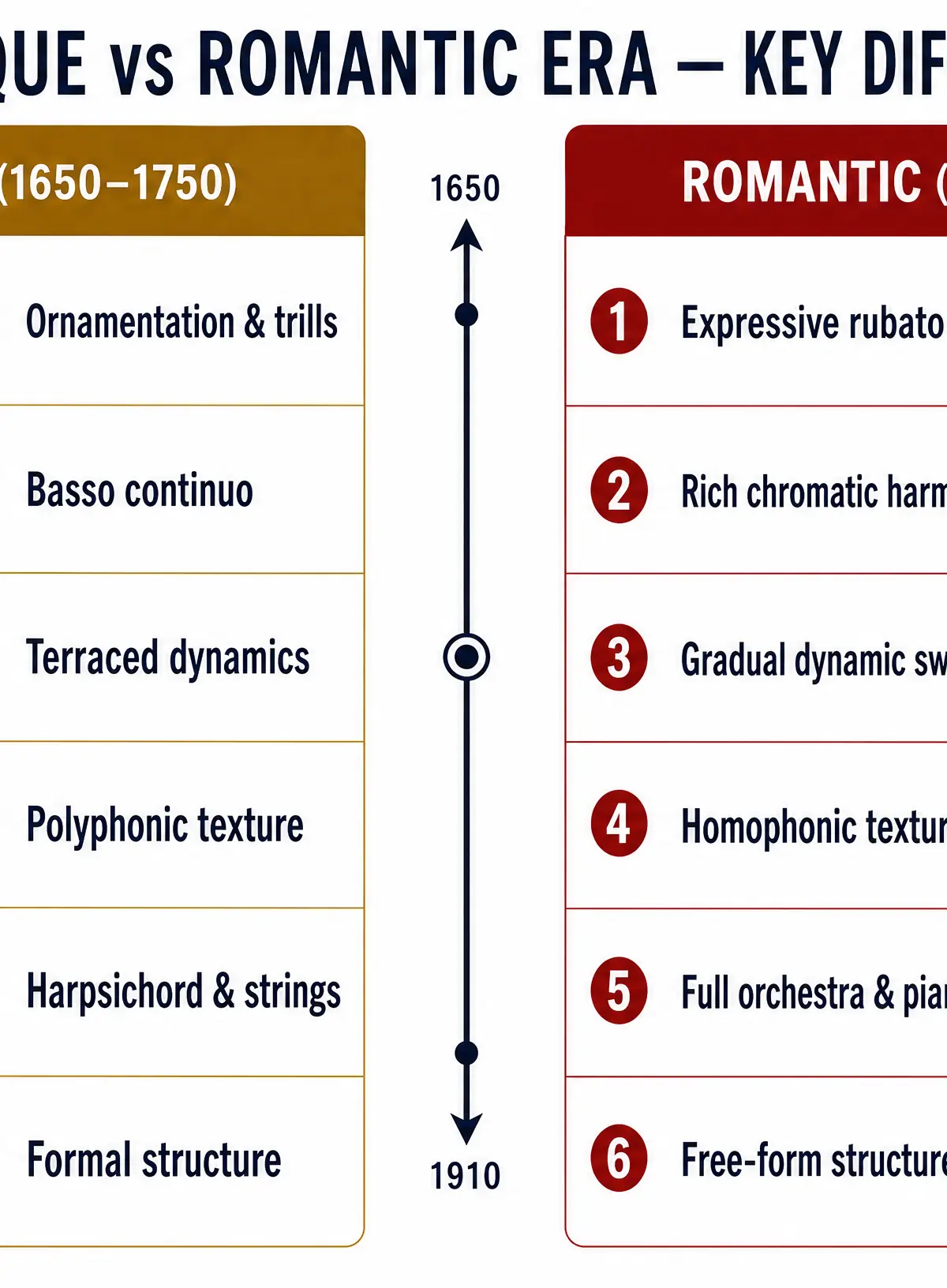
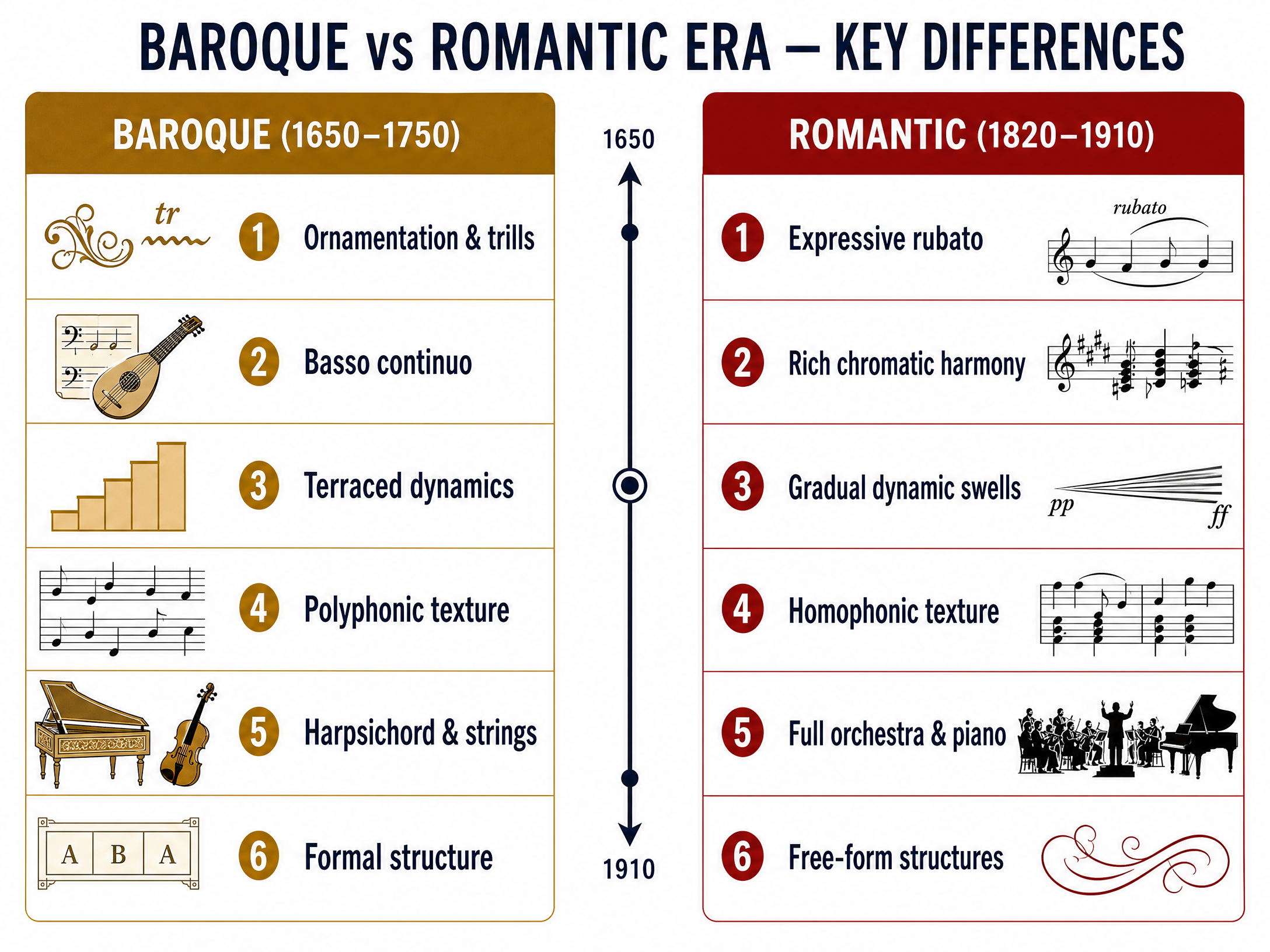
| Baroque | 1650–1750 | Vivaldi, Handel, Bach | Basso continuo, polyphonic textures, terraced dynamics, highly ornamented melodies, harpsichord. | You must be able to identify the Baroque solo concerto and explain how the harpsichord and strings interact. |
| Classical | 1750–1820 | Mozart, Haydn, Beethoven | Clear, balanced phrase structures, functional harmony, homophonic texture, use of the piano and classical orchestra. | Focus on the operas of Mozart: how the music reflects the drama, characters, and text on stage. |
| Romantic | 1820–1910 | Chopin, Brahms, Grieg | Expressive melodies, rich chromatic harmony, rubato, gradual dynamic swells, programme music. | Focus on piano music: how composers express deep personal emotion and national identity (e.g., Grieg's use of folk rhythms). |
Technical Vocabulary
- Basso Continuo: A continuous bass line (usually cello and harpsichord) providing harmonic support in Baroque music.
- Polyphonic: A texture with multiple independent melodic lines occurring simultaneously.
- Homophonic: A texture consisting of a primary melody supported by chordal accompaniment.
- Rubato: 'Robbed time' — taking freedom with the tempo for expressive effect, typical of Romantic piano music.
- Chromaticism: Using notes outside the current key signature to add colour and emotional tension.
Practical Skills
The Analytical Process
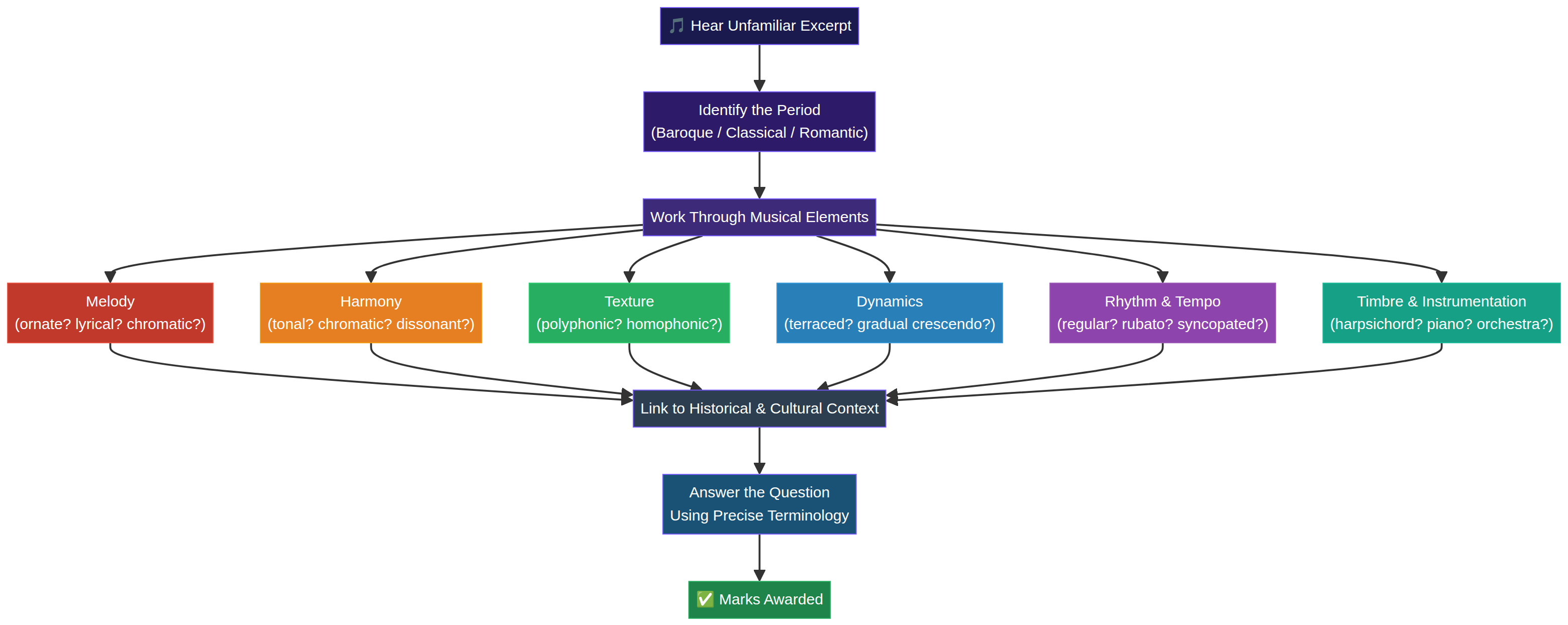
When faced with an unfamiliar excerpt in the exam, follow this systematic process to gather marking points:
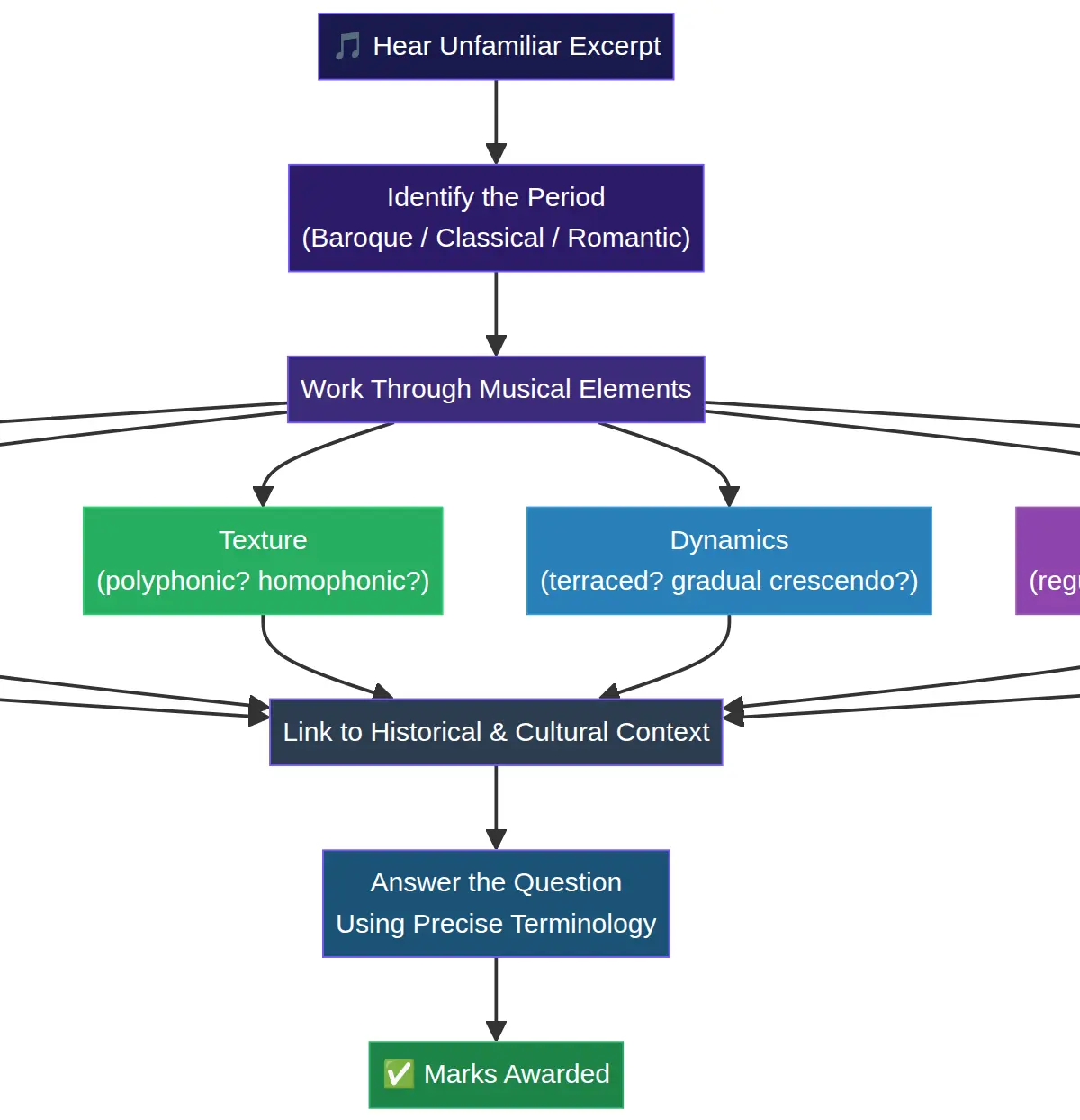
- First Listen: Identify the broad era (Baroque, Classical, Romantic) by listening to the instrumentation (e.g., harpsichord = Baroque) and overall texture.
- Second Listen: Focus on the specific element asked in the question (e.g., Melody). Write down precise observations using subject terminology.
- Third Listen: Check your observations and look for interdependencies (e.g., how a sudden dynamic change emphasizes a chromatic chord).
Staff Notation and Dictation
- Melodic Dictation: Practice writing down short melodies. Focus on the shape first (does it go up or down?) and then fill in the specific intervals.
- Rhythmic Dictation: Tap the pulse with your foot and clap the rhythm with your hands to separate the two before writing.
- Chords: Be able to identify standard chords (I, IV, V, vi) and their inversions in root position, first inversion, and second inversion.
Exam Component
Written Listening Exam Preparation
- The exam requires you to listen attentively and apply your knowledge to unfamiliar music.
- You have digital control over the playback. Use this to your advantage: pause, rewind, and isolate specific sections to confirm your analysis.
- For extended response questions, you must demonstrate sophisticated connections between the music and its historical/cultural context. Do not just list features; explain why they are there.
Visual Resources
3 diagrams and illustrations
Interactive Diagrams
1 interactive diagram to visualise key concepts
Conceptual Flow Outline
The Analytical Process for Appraising Music
Worked Examples
3 worked examples — open one to explore the question and available guidance.
Practice Questions
Test your understanding — click to reveal model answers
Listen to the excerpt. Identify the solo instrument playing the melody. (1 mark)
Hint: Listen to the timbre. Does the sound come from a string being plucked or struck?
Describe the melody in the first four bars of the excerpt. (2 marks)
Hint: Think about the shape of the tune and whether it is simple or decorated.
Explain how the texture of this excerpt is characteristic of the Classical period. (3 marks)
Hint: What is the relationship between the melody and the accompaniment?
Analyse how the composer uses harmony and dynamics to create a sense of drama in this Romantic piano piece. (6 marks)
Hint: Break down your answer into two paragraphs: one for harmony, one for dynamics. Link both to 'drama'.