OCR · GCSE · Music
Communication
This guide provides a comprehensive overview of Communication (1.4) for OCR GCSE Music, focusing on how to convey musical intent and engage an audience. It covers the essential performance techniques and analytical skills needed to achieve top marks in both performance and written exams. Communication is the strand that separates a technically correct performance from a truly musical one, and mastering it is key to reaching the highest mark bands.
- 9 min read
- 3 worked examples
- 4 practice questions
- 8 key terms
Study Notes
Overview
In OCR GCSE Music, 'Communication' is not just a vague concept; it is a specific, assessed component of your performance. It represents the bridge between technical accuracy and musical artistry. While hitting the right notes and rhythms is the foundation (assessed under AO3), communication is about what you do with those notes to convey the piece's style, mood, and character to the listener. Examiners are trained to listen for a 'convincing communication of the musical style,' which means your performance must be both intentional and stylistically appropriate. This guide will equip you with the theoretical knowledge and practical skills to master musical communication.

Key Knowledge & Theory
Core Concepts
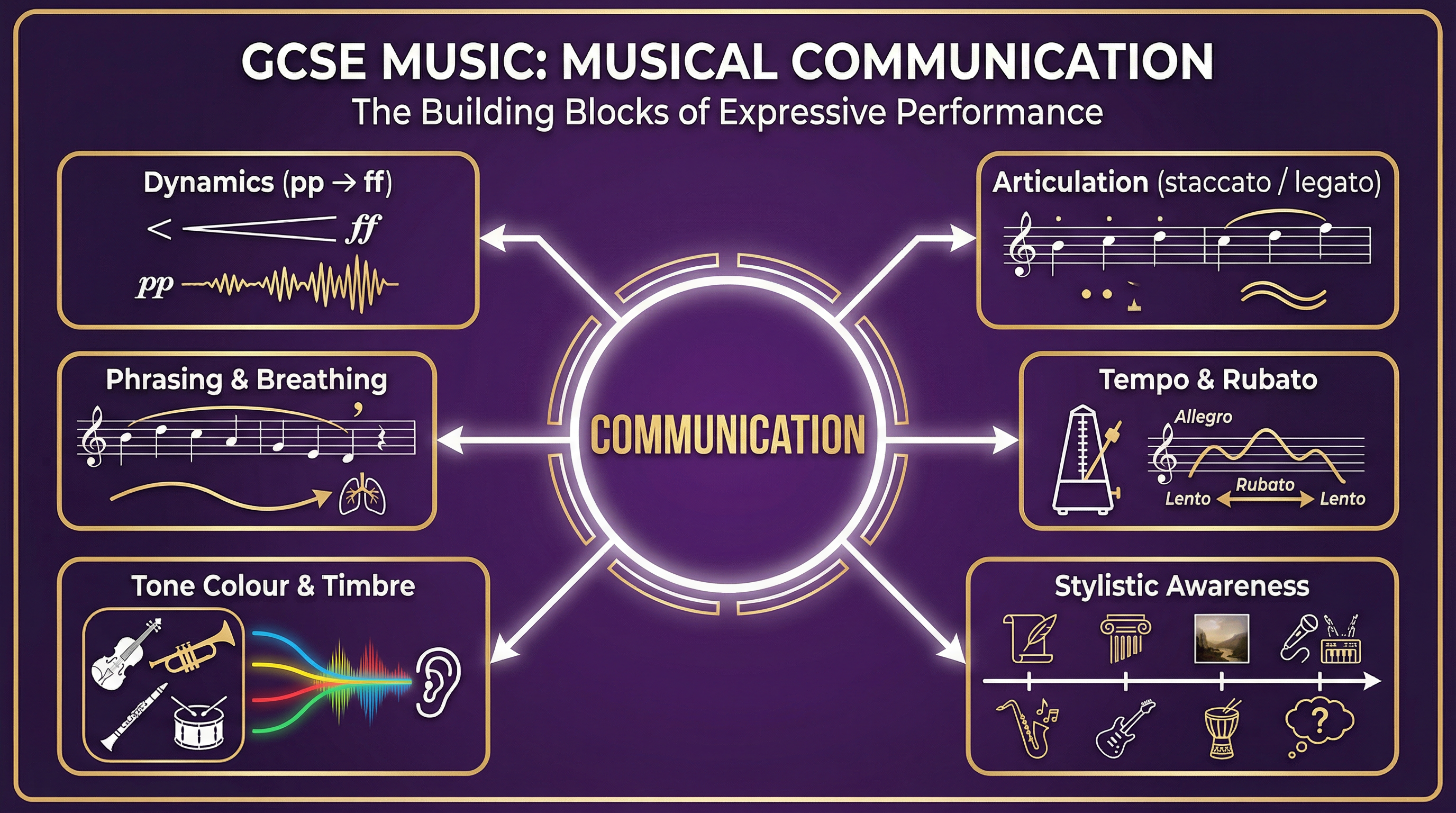
To communicate effectively, you must master a toolkit of expressive devices. These are the fundamental building blocks that transform a technically correct performance into a musically compelling one. Understanding these concepts is crucial for both your own performance and for analysing the work of others in the listening exam.
- Dynamics: The use of volume, from pianissimo (pp) to fortissimo (ff). Effective communication relies on dynamic contrast, including sudden changes (subito piano) and gradual shifts (crescendo, diminuendo). These shape the emotional contour of the music.
- Articulation: The way notes are attacked and released. Key types include staccato (short, detached), legato (smooth, connected), accent (>), and tenuto (-). Articulation defines the character of a musical phrase, making it feel energetic, lyrical, or weighty.
- Phrasing: The shaping of musical sentences. A well-shaped phrase has a clear beginning, a point of arrival (or climax), and a conclusion. It involves subtle changes in dynamics and timing to create a sense of flow and direction.
- Tempo and Rubato: The overall speed of the music and its flexibility. Choosing an appropriate tempo is vital for stylistic accuracy. Rubato, the slight speeding up and slowing down of tempo for expressive purposes, is a key communicative tool, particularly in Romantic music.
- Tone Colour (Timbre): The quality of the sound produced. This can be altered on any instrument or voice to create different moods. For example, a violinist can play sul ponticello (near the bridge) for a harsh, glassy sound, or sul tasto (over the fingerboard) for a warm, gentle tone.
- Stylistic Awareness: This is the overarching concept that governs all others. It is the understanding of the performance conventions associated with a specific genre, composer, or historical period. A performance of a Bach fugue requires different communicative choices than a performance of a Duke Ellington standard.
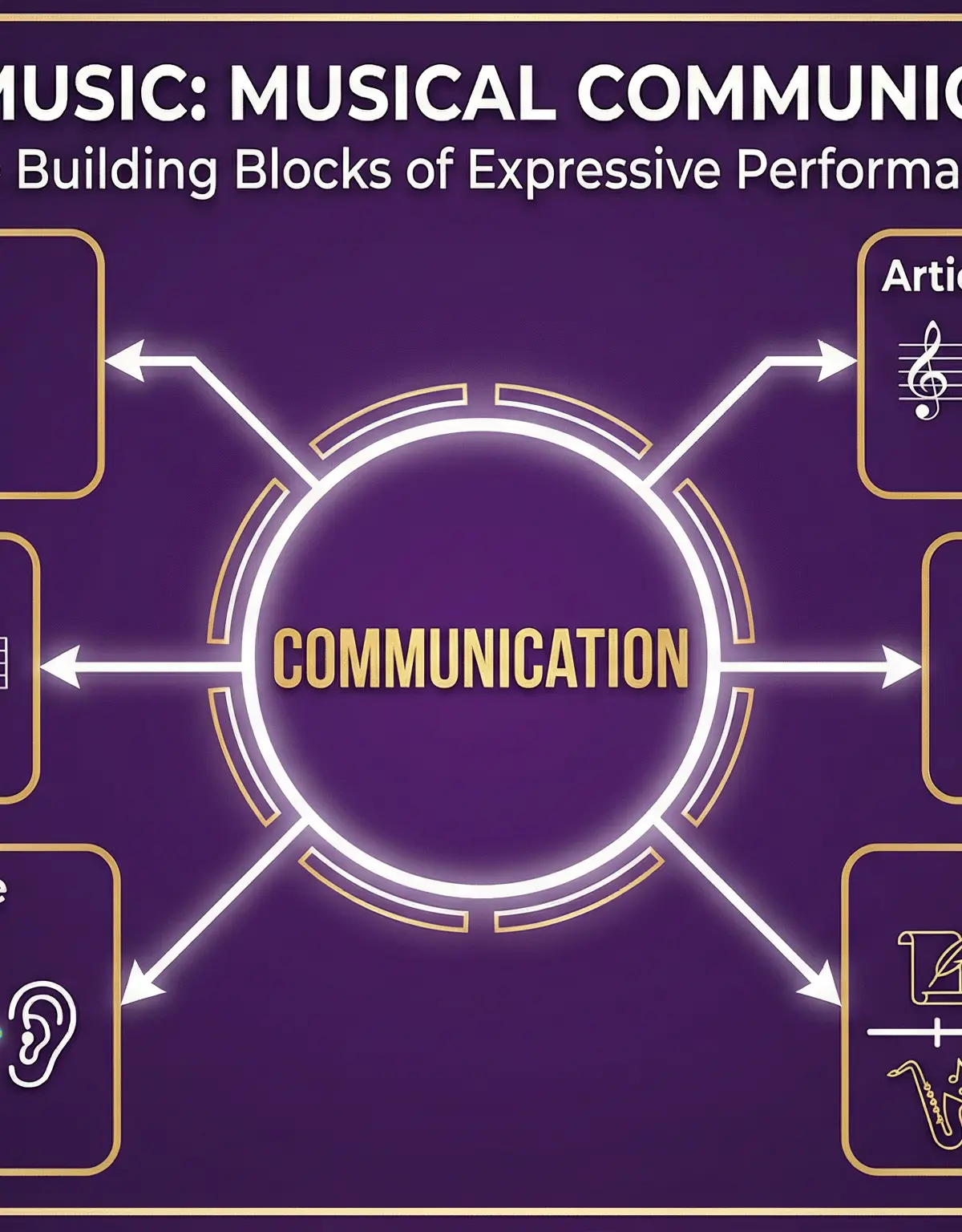
Key Practitioners/Artists/Composers
Understanding how great performers communicate is a vital part of your study. Listening to and analysing their work will inform your own interpretations.
| Name | Period/Style | Key Works | Relevance |
|---|---|---|---|
| Jacqueline du Pre | 20th Century Romantic | Elgar Cello Concerto | A master of intense emotional communication, known for her passionate phrasing and dramatic use of tone colour and rubato. Her performances feel spontaneous yet are built on a deep structural understanding. |
| Glenn Gould | 20th Century Baroque/Classical | Bach: Goldberg Variations | Famed for his highly analytical and unconventional interpretations. His use of crisp, detailed articulation to clarify complex contrapuntal textures is a lesson in intellectual communication. |
| Ella Fitzgerald | 20th Century Jazz | April in Paris | A legendary jazz vocalist whose effortless phrasing, subtle rhythmic variations (swing), and scat singing demonstrate supreme communication within the jazz idiom. She could make a simple melody profound through her control of timbre and timing. |
| Claudio Abbado | 20th/21st Century Orchestral | Beethoven Symphonies | As a conductor, his role was pure communication. He was renowned for his ability to shape orchestral phrasing and dynamics to create performances of incredible clarity, energy, and emotional depth. |
Technical Vocabulary
Using precise terminology is essential for gaining marks in the AO4 written exam. You must be able to identify a device and link it to its communicative effect.
- Affection: The prevailing mood or emotion in a piece of Baroque music (e.g., an affection of joy, rage, or sorrow).
- Cantabile: In a singing style; indicates a lyrical, flowing delivery.
- Dolce: Sweetly.
- Espressivo: Expressively.
- Morendo: Dying away.
- Sforzando (sfz): A sudden, strong accent on a single note or chord.
- Terraced Dynamics: Abrupt shifts from loud to soft (or vice versa), a key feature of Baroque music.
- Vibrato: A rapid, slight fluctuation in pitch used to add warmth and expression to a sustained note.
Practical Skills
Techniques and Processes
- Dynamic Planning: Before performing, go through your score with a pencil and map out your dynamic plan. Mark the loudest and quietest points. Plan your crescendos and diminuendos over specific numbers of bars. This turns a vague intention into a concrete, executable plan.
- Articulation Practice: Practice scales using a variety of articulations. Play a C major scale entirely staccato, then entirely legato, then with accents on every other note. This builds the physical control needed to apply these techniques deliberately in your pieces.
- Phrase Marking: Listen to a recording by a professional and mark the phrases in your score as you hear them. Where do they breathe? Where is the peak of the phrase? Then, try to replicate this shaping in your own playing.
- Metronome and Rubato: Practice with a metronome to establish a solid, appropriate tempo. Then, practice turning the metronome off for short passages to experiment with rubato, always returning to the base tempo. This ensures your rubato is controlled, not chaotic.
Materials and Equipment
Your primary material is your instrument or voice. Its condition is paramount.
- Instrument Maintenance: Ensure your instrument is in optimal condition. For string players, this means fresh strings; for wind players, working pads and reeds; for pianists, a well-maintained and tuned instrument.
- Recording Equipment: For your coursework submission, a high-quality recording is essential. Use a dedicated external microphone rather than your phone's built-in mic. Place it carefully to capture a clear, balanced sound without distortion. Do a test recording and listen back with headphones to check for background noise and to ensure your dynamic contrasts are audible.
Portfolio/Coursework Guidance
Assessment Criteria
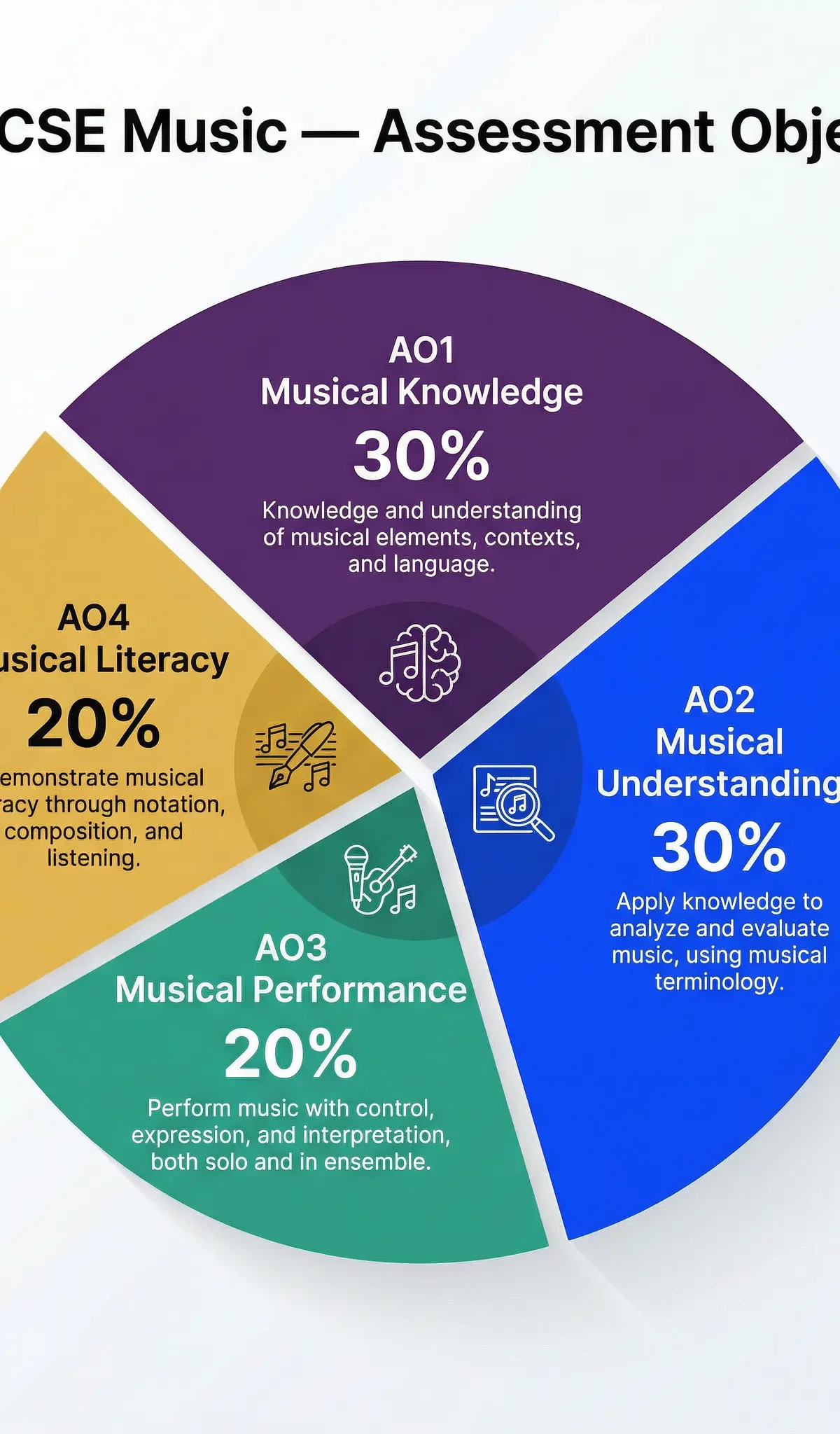
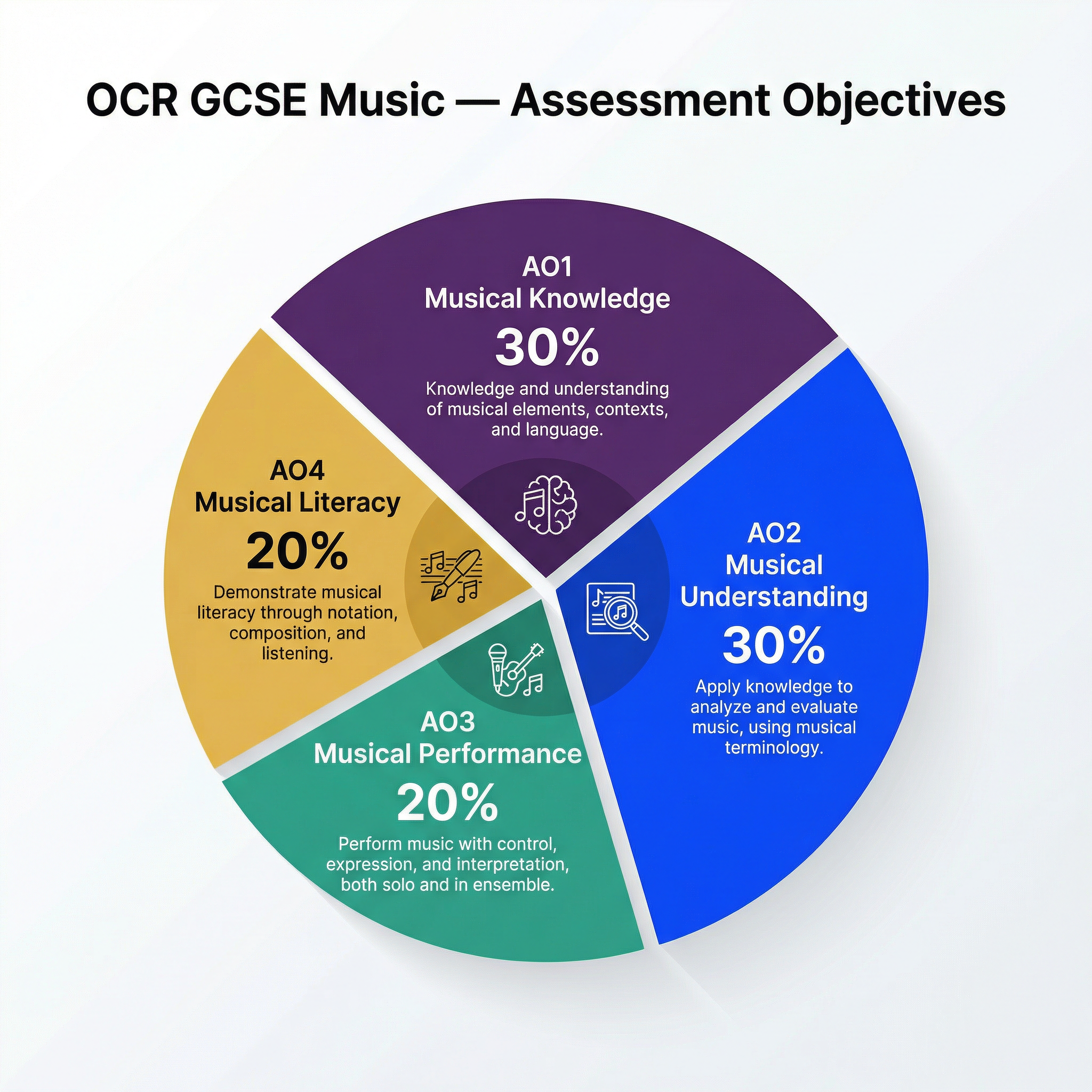
Your performance is assessed against AO3, which covers both technical control and expression. Communication is the key to unlocking the higher mark bands. Examiners are looking for:
- Fluency and Accuracy: The performance must be confident and the notes correct. Hesitation disrupts communication.
- Technical Control: You must demonstrate control over your instrument/voice, including tone, intonation, and articulation.
- Expression and Interpretation: This is where communication lives. Are you using dynamics, phrasing, and articulation to create a stylistically aware and musically convincing performance?
Building a Strong Portfolio
- Repertoire Choice: Choose pieces that are well within your technical ability. This frees up mental capacity to focus on interpretation. Choose repertoire that you genuinely connect with and enjoy; your enthusiasm will be audible.
- Record Everything: Record your practice sessions. It is often surprising to hear the difference between how you think you sound and how you actually sound. Listen back and critically assess your own communication. Is the phrasing clear? Are the dynamics effective?
- Annotated Score: Keep an annotated score where you mark your expressive intentions. This serves as a record of your interpretative decisions and is excellent evidence of your musical understanding.
Exam Component
Written Exam Knowledge (AO4)
In the listening exam, you will be asked to analyse unfamiliar music. Questions on communication will require you to link what you hear (the effect) to the specific musical element causing it (the device). You might be asked to comment on how a performer's interpretation shapes the music, or how a composer uses elements to create a specific mood.
Key Areas for Analysis:
- Melody and Pitch: Is the melody conjunct or disjunct? Is there a wide or narrow range? Is chromaticism used?
- Harmony and Tonality: Is the piece in a major or minor key? Is the harmony consonant or dissonant? Are there specific chord progressions (e.g., cadences) that create effects?
- Rhythm and Metre: What is the time signature? Are the rhythms simple or complex? Is syncopation used?
- Texture: Is the texture thick or thin? Is it monophonic, homophonic, or polyphonic?
- Instrumentation: What instruments are used and how are their timbres employed?
Practical Exam Preparation
For your performance recording, preparation is key.
- Mock Performances: Perform your pieces for friends, family, or your teacher. This simulates the pressure of a real performance and helps you practice maintaining communicative focus under stress.
- Recording Day Plan: On the day you record, warm up thoroughly. Do a sound check with your recording equipment. Play through your pieces once before you hit record for the main take. Perform multiple takes and choose the one that is not only the most accurate but also the most musically communicative.
- Listen Back: Before submitting, listen to your final recording on a good pair of headphones. Does it represent your best work? Is the communication clear and convincing?
Visual Resources
2 diagrams and illustrations
Interactive Diagrams
1 interactive diagram to visualise key concepts
Conceptual Flow Outline
The process of achieving convincing musical communication. It starts with a solid technical foundation, upon which expressive tools are applied through the filter of stylistic awareness, ultimately resulting in audience engagement.
Worked Examples
3 worked examples — open one to explore the question and available guidance.
Practice Questions
Test your understanding — click to reveal model answers
Identify two expressive techniques used by the vocalist in this extract. [Audio clip of a soul singer using vibrato and a melodic glissando]
Hint: Listen for how the singer treats sustained notes and how they move between notes.
Explain how a performer could use dynamics and tempo to create a sense of growing excitement in a piece of music.
Hint: Think about how volume and speed can be manipulated together to build tension and energy.
Compare the communicative approaches in Extract A (a piece of minimalist music) and Extract B (a Romantic piano piece).
Hint: Focus on the differences in how dynamics, phrasing, and rhythm are used to communicate in each style. Remember to identify both similarities and differences.
You are preparing a performance of a song from a musical. Describe three ways you would use your voice to communicate the character's emotions.
Hint: Think beyond just singing the notes. How can tone, articulation, and dynamics tell a story?