OCR · GCSE · Music
Identifying Musical Elements
This study guide provides a comprehensive overview of how to identify and analyse the core elements of music for the OCR GCSE Music exam. Mastering this skill is essential for earning marks in the listening paper, as it forms the foundation for all aural analysis questions across the four Areas of Study.
- 7 min read
- 3 worked examples
- 4 practice questions
- 6 key terms
Study Notes
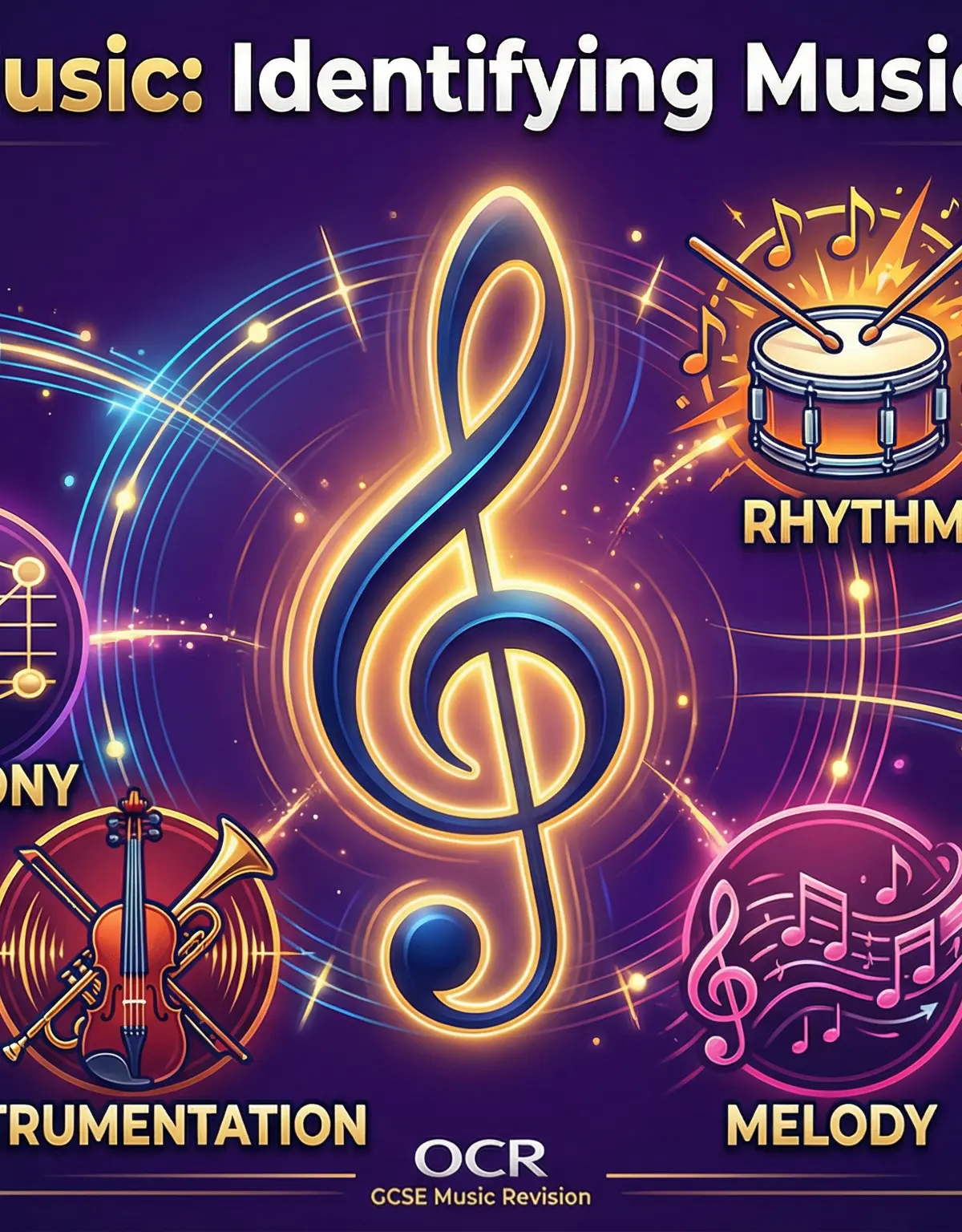
Overview
Welcome to your deep dive into Section 3.1 of the OCR GCSE Music specification: Identifying Musical Elements. This is arguably the most critical skill for your listening and appraising exam. It's not just about knowing what the elements are; it's about being able to hear them in unfamiliar music and, crucially, describe them using precise, technical language that examiners want to see. This guide will equip you with the knowledge and techniques to deconstruct any piece of music thrown at you, from a Baroque concerto to a modern pop track, using the DR P SMITH framework.

Key Knowledge & Theory
Core Concepts
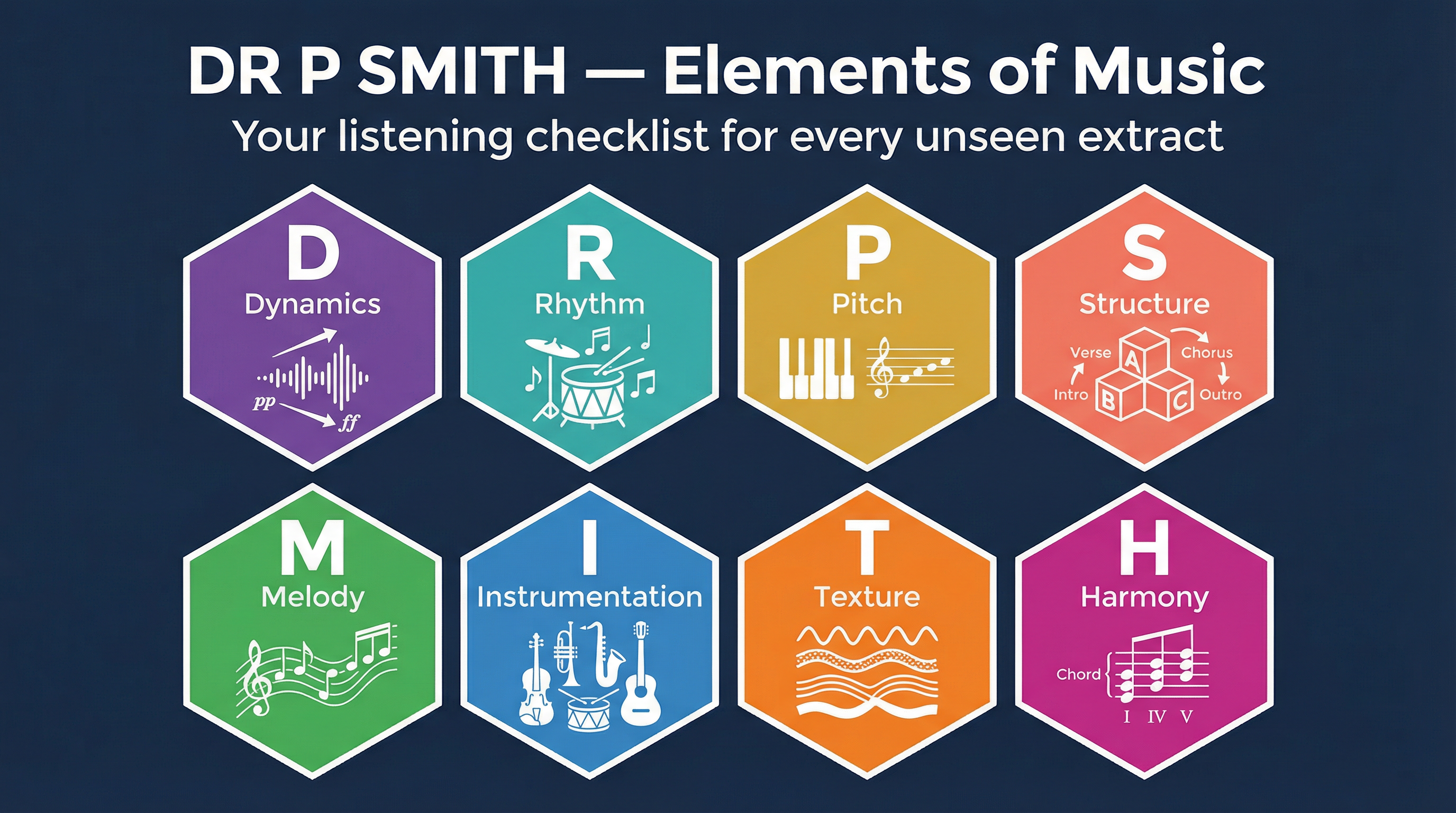
The entire listening exam is built around your ability to analyse music through the lens of the eight core musical elements. These are your analytical toolkit. The DR P SMITH mnemonic is your key to remembering them under pressure.
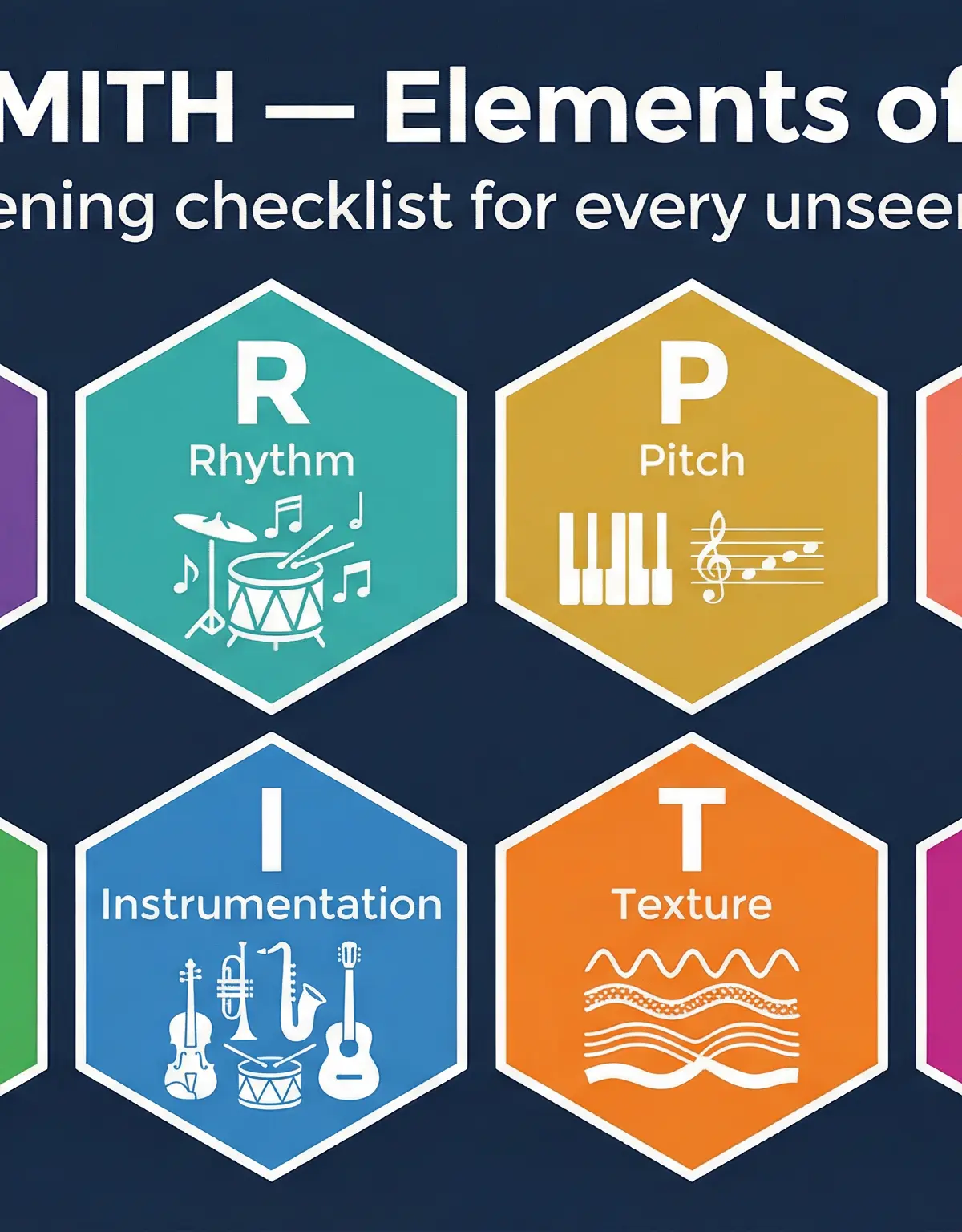
- Dynamics: The volume of the music and how it changes. Marks are awarded for using Italian terms (e.g., crescendo, fortissimo) rather than simple descriptions.
- Rhythm: The patterns of long and short notes. This includes specific features like syncopation, triplets, and dotted rhythms. It is distinct from the beat or pulse.
- Pitch: The highness or lowness of the notes. This covers melody, harmony, and tonality (Major, Minor, Atonal, Modal).
- Structure: The overall plan or layout of the music. Common structures include binary, ternary, verse-chorus, and sonata form.
- Melody: The main tune. You should describe its shape (conjunct/disjunct) and any distinctive features like ornamentation or sequences.
- Instrumentation: The specific instruments and voices used. Crucially, you must also describe the playing techniques (tessitura), such as pizzicato, arco, distortion, or falsetto.
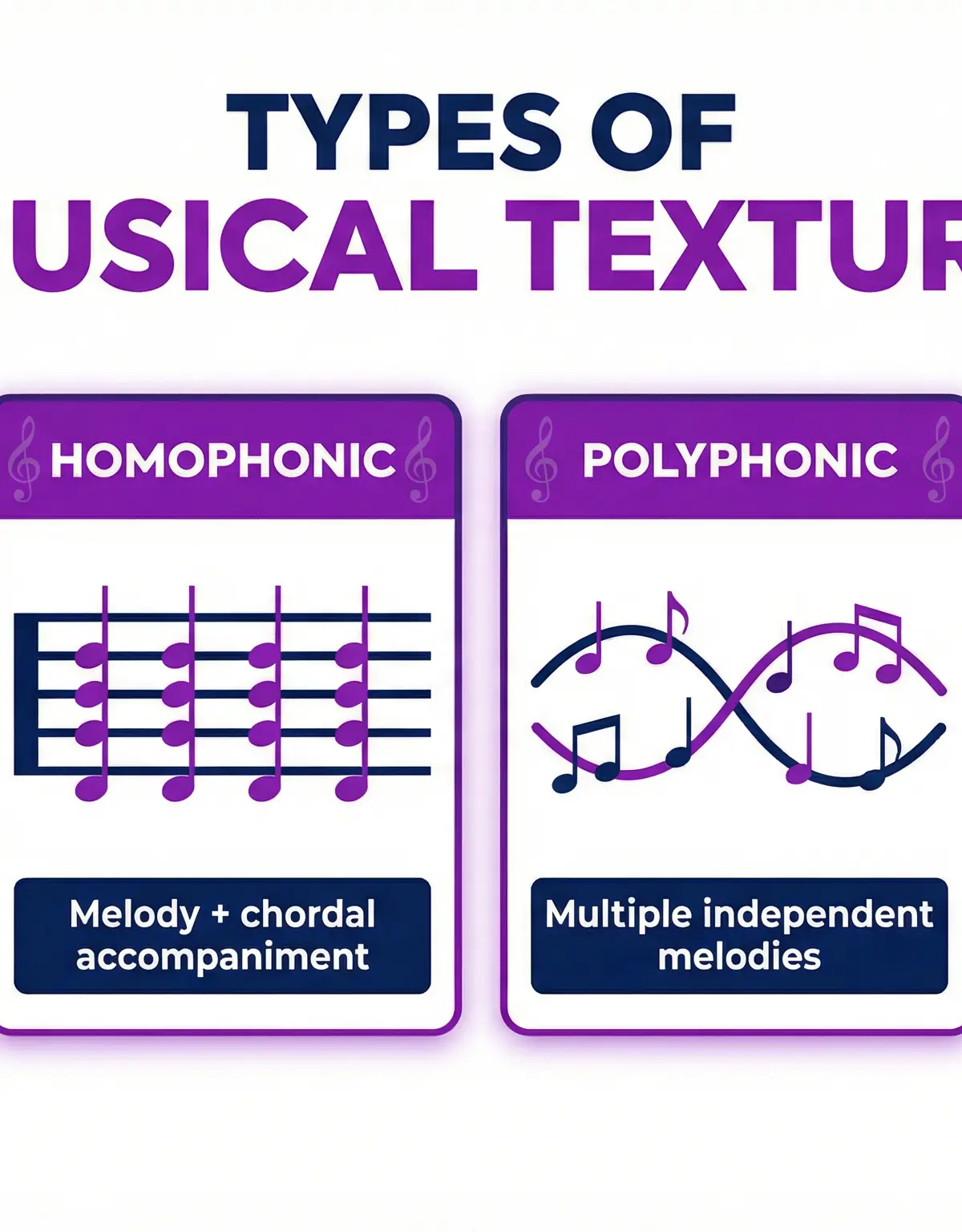
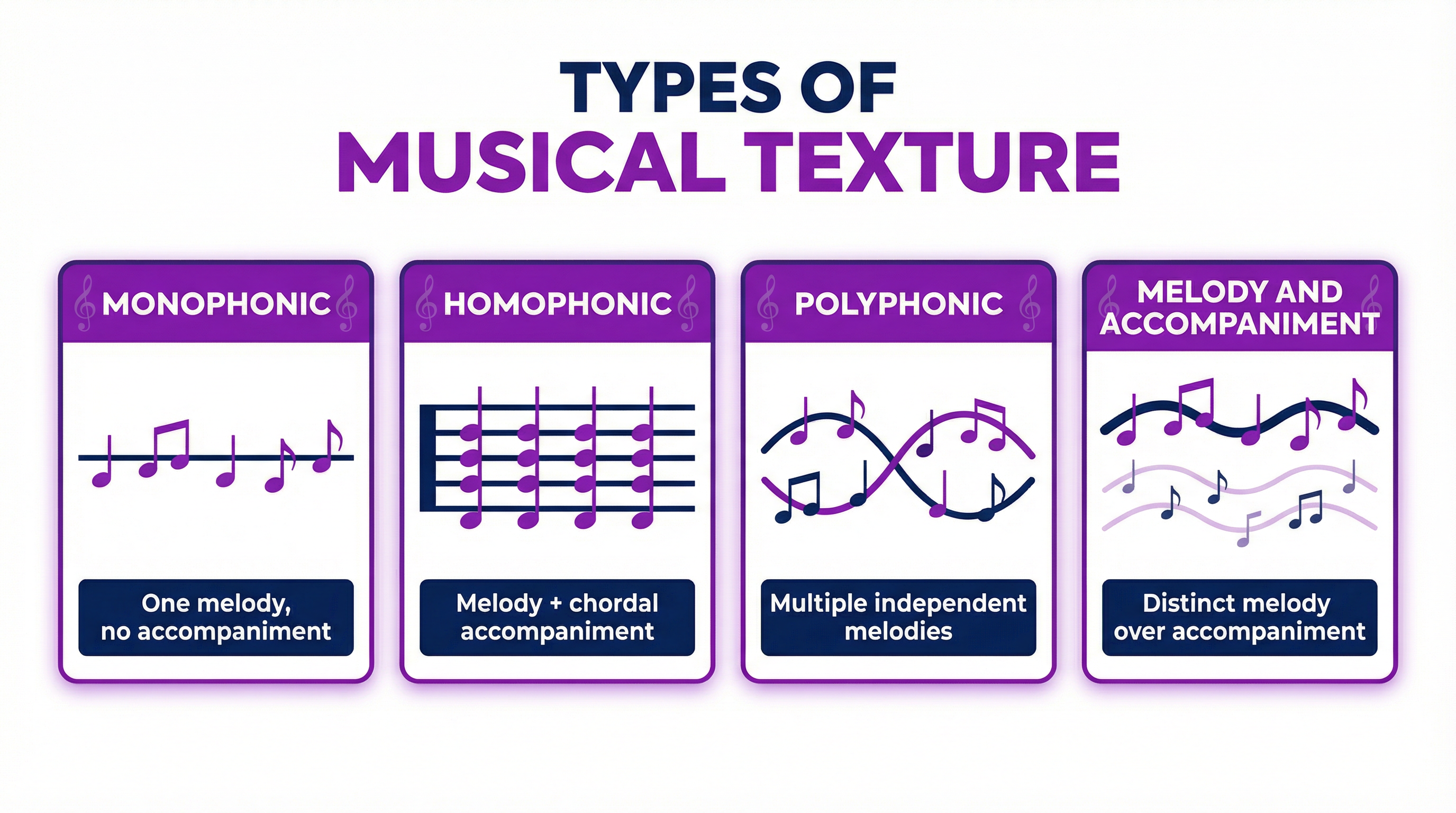
- Texture: How the different layers of sound are combined. The four main types are monophonic, homophonic, polyphonic, and melody and accompaniment.
- Harmony: The chords that support the melody. This includes identifying cadences, pedal notes, drones, and whether the harmony is diatonic or chromatic.
Key Practitioners/Artists/Composers
Understanding how these elements are used in context is vital. While you don't need to know every composer, being familiar with key figures from each Area of Study helps you identify stylistic features.
| Name | Period/Style | Key Works | Relevance |
|---|---|---|---|
| Antonio Vivaldi | Baroque | The Four Seasons | Exemplifies the Baroque concerto, use of terraced dynamics, harpsichord continuo, and clear melodic sequences. |
| John Williams | Film Music | Star Wars, Jurassic Park | Master of the leitmotif, using melody and instrumentation to represent characters and build atmosphere. |
| Queen | Rock (Conventions of Pop) | Bohemian Rhapsody | Demonstrates complex multi-tracked vocal harmonies, adventurous structures, and use of studio effects. |
| Anoushka Shankar | World Music (Indian Classical) | Breathing Underwater | Showcases the sitar, complex rhythmic cycles (tala), and melodic patterns (raga), linking to Rhythms of the World. |
Technical Vocabulary
Using the correct terminology is non-negotiable for achieving high marks. Here is a foundational list:
- Dynamics: pianissimo (pp), piano (p), mezzo piano (mp), mezzo forte (mf), forte (f), fortissimo (ff), crescendo, diminuendo, sforzando.
- Rhythm & Metre: Syncopation, Dotted rhythm, Triplets, Polyrhythm, Cross-rhythm, Hemiola, Time Signature.
- Pitch & Tonality: Major, Minor, Modal, Atonal, Pentatonic Scale, Chromaticism, Diatonic.
- Structure: Binary (AB), Ternary (ABA), Rondo (ABACA), Sonata Form, Strophic (AAA), Through-composed, Verse-Chorus.
- Melody: Conjunct, Disjunct, Sequence, Ornamentation (Trill, Mordent, Appoggiatura), Leitmotif, Hook.
- Instrumentation & Timbre: Arco, Pizzicato, Tremolo, Distortion, Reverb, Wah-wah, Falsetto, Vibrato, a cappella.
- Texture: Monophonic, Homophonic, Polyphonic, Melody and Accompaniment, Unison, Imitation.
- Harmony: Cadence (Perfect, Plagal, Imperfect, Interrupted), Pedal Note, Drone, Diatonic, Chromatic, Consonant, Dissonant.
Practical Skills
Techniques & Processes: Active Listening
The key practical skill for this topic is active listening. You cannot passively let the music play; you must interrogate it.
- First Listen (The Big Picture): Don't write anything. Absorb the overall mood, style, and instrumentation. What Area of Study does it sound like? Is it fast or slow? Vocal or instrumental?
- Second Listen (DR P SMITH Checklist): Use a grid or your rough notes to jot down brief points for each element of DR P SMITH. Use abbreviations. For Dynamics, write 'cresc'. For Rhythm, 'sync'. For Texture, 'poly'.
- Third Listen (Flesh out the Detail): Go back to your notes. Where is the crescendo? In the strings. What instrument plays the syncopated rhythm? The trumpet. Which parts are polyphonic? The vocal harmonies in the chorus. Add the specific detail that turns a point into a mark.
- Fourth Listen (Check and Refine): This is a luxury, but if you have time, use it to check your answers. Did you confuse texture and instrumentation? Did you use the right Italian term? Is your structural map correct?
Exam Component
Written Exam Knowledge
This entire topic is assessed in the Listening and Appraising paper (Component 03). This exam is 1 hour and 30 minutes long and is worth 80 marks, accounting for 40% of your total GCSE.
All questions in this paper rely on your ability to identify musical elements. This includes:
- Section A: Unfamiliar Listening: Questions on short, unseen musical extracts from all four Areas of Study.
- Section B: Comparative Essay: A longer form question where you compare and contrast one of the set works you have studied with an unfamiliar extract. You MUST use your knowledge of musical elements to structure your comparison.
Practical Exam Preparation
While this is a listening skill, you can practice it practically.
- Analyse Your Own Performance Pieces: As you practice your instrument or voice for the performance component, actively analyse the music using DR P SMITH. How do the dynamics change? What is the structure? This embeds the concepts in your long-term memory.
- Compositional Sketching: When working on your composition, use the elements as a creative toolbox. Ask yourself: "How can I make this section more interesting? I could add a syncopated rhythm, change the texture to polyphonic, or build a crescendo." This makes the theory practical and useful.
Visual Resources
2 diagrams and illustrations
Interactive Diagrams
1 interactive diagram to visualise key concepts
Conceptual Flow Outline
A decision flowchart to help identify musical texture during the listening exam.
Worked Examples
3 worked examples — open one to explore the question and available guidance.
Practice Questions
Test your understanding — click to reveal model answers
Listen to the extract. Identify the family of instruments playing the main melody. [1 mark]
Hint: Listen for the timbre (sound quality). Is it metallic, woody, or stringy?
Describe the rhythm of the bassline in this pop song extract. [2 marks]
Hint: Listen for how the rhythm interacts with the main beat. Is it on the beat or off the beat?
Explain how the composer uses instrumentation and texture to create a sense of drama in this film music cue. [4 marks]
Hint: Link specific instrumental techniques and textural changes to the emotional effect.
Listen to the extract from a piece of Baroque music. Identify the keyboard instrument playing the harmony and describe its role. [3 marks]
Hint: The sound is thin and 'jangly'. What is its role in the ensemble?