OCR · GCSE · Music
Melody Writing
This guide provides a comprehensive overview of Melody Writing for OCR GCSE Music, focusing on the core compositional techniques and portfolio strategies required to achieve top marks. It covers everything from motivic development and phrasing to idiomatic writing and exam technique.
- 9 min read
- 3 worked examples
- 4 practice questions
- 6 key terms
Study Notes
Overview
Melody writing is a cornerstone of the OCR GCSE Music course, assessed primarily in Component 02 (the Integrated Portfolio) and Component 03 (the Practical Component). It is the candidate's opportunity to demonstrate creative flair, technical control, and a deep understanding of musical language. A successful melody is not merely a sequence of pitches, but a carefully constructed musical statement with a clear sense of direction, structure, and emotional contour. Examiners are looking for evidence of intentionality—that every note serves a purpose in the larger compositional design. This guide will break down the essential knowledge and practical skills needed to compose melodies that are not only aesthetically pleasing but also structurally sound and worthy of high credit.

Key Knowledge & Theory
Core Concepts
To compose a high-scoring melody, candidates must master several core theoretical concepts. These form the bedrock of melodic construction and are what examiners will be listening for.
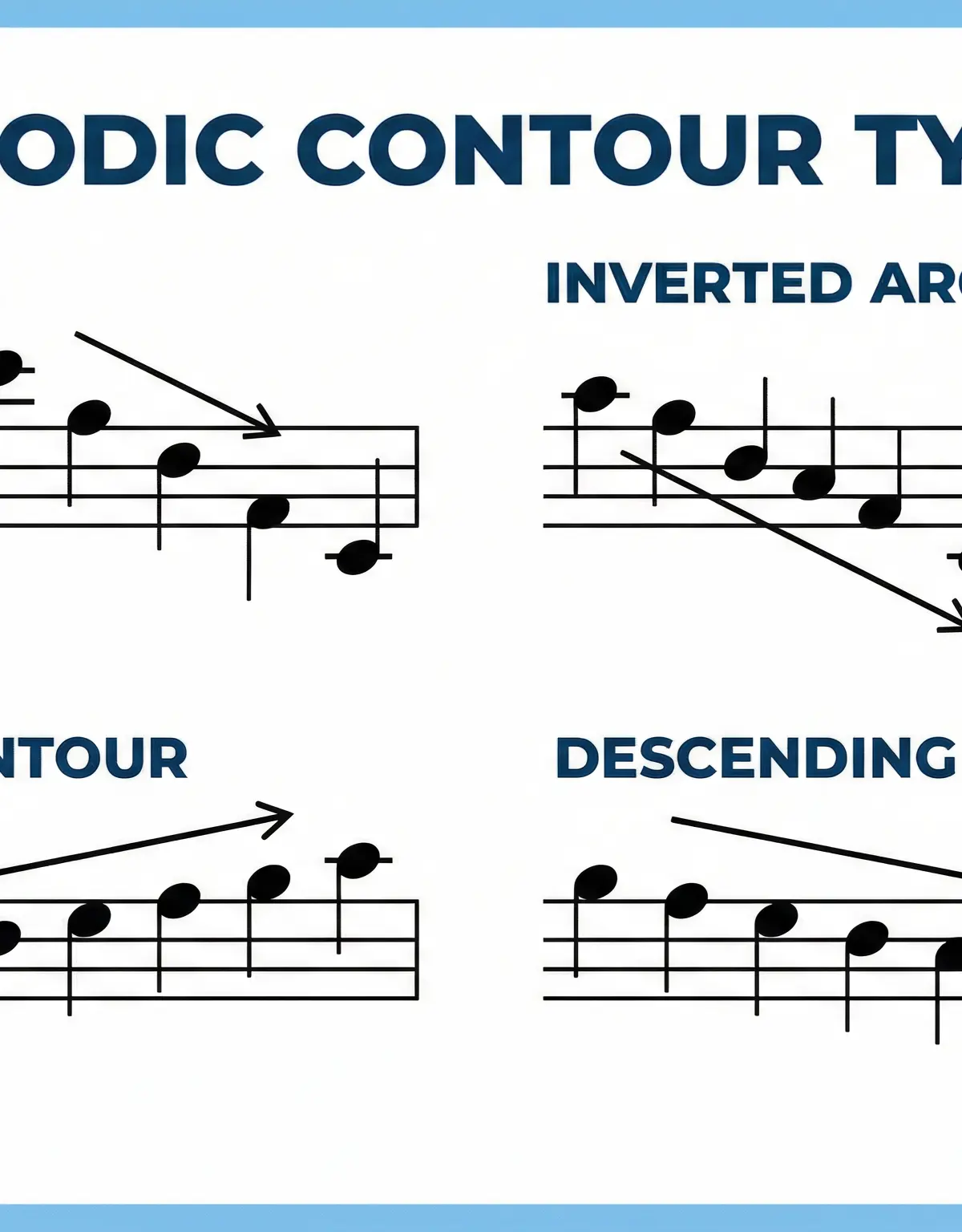
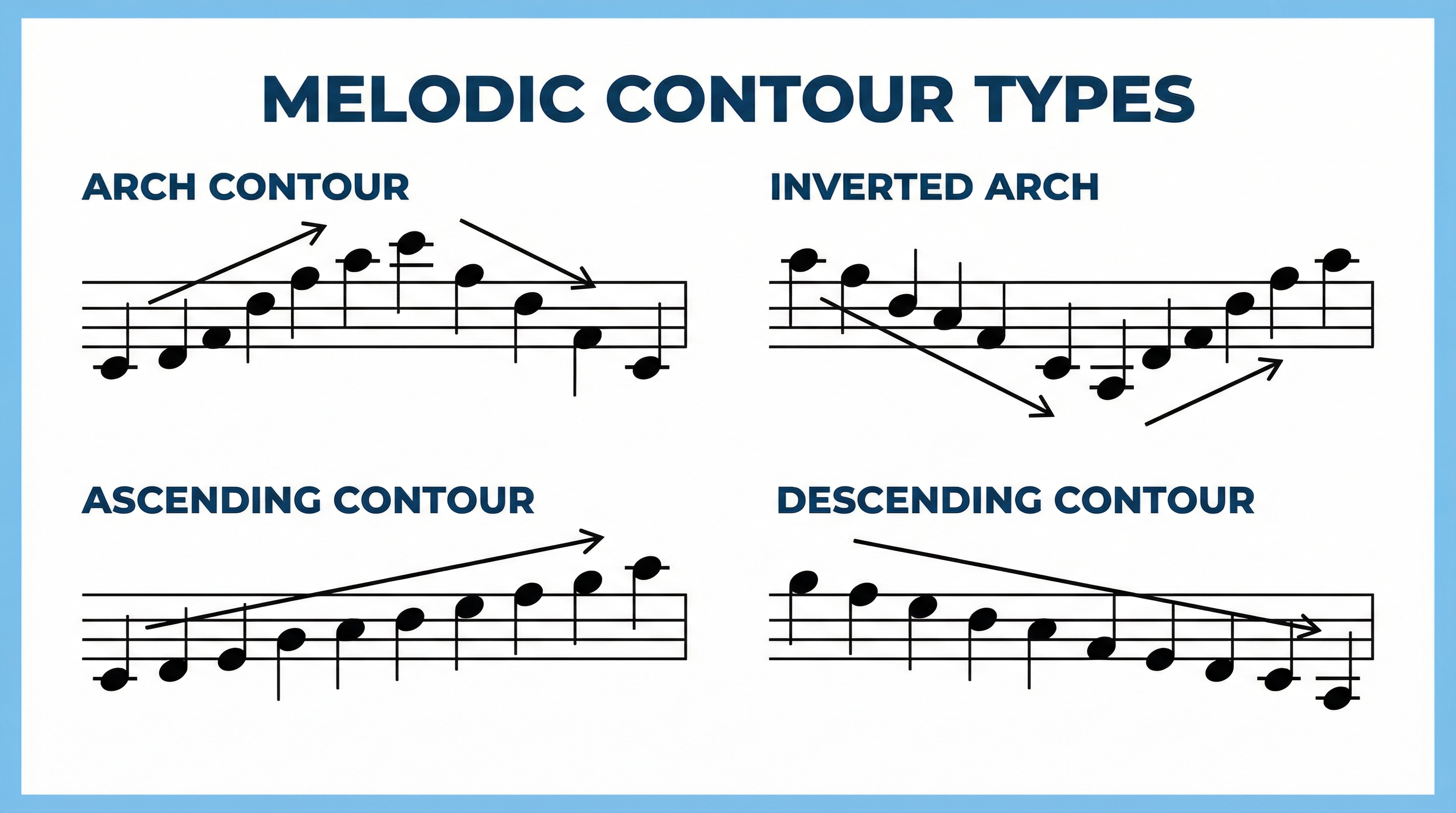
- Contour and Climax: The contour is the shape of the melodic line as it moves up and down. A well-designed melody has a varied and interesting contour that avoids being static. Common shapes include the arch (rising to a peak and then falling) and the inverted arch. The climax is the focal point of the melody, usually the highest pitch, and should be approached with a sense of build-up and purpose. A melody without a clear climax will be awarded fewer marks as it lacks a defined focal point.
-
Phrasing and Structure: Melodies are constructed from phrases, which act as musical sentences. Examiners award credit for the use of balanced phrasing, most commonly antecedent and consequent (or 'question and answer') phrases. A typical structure involves two four-bar phrases, creating a symmetrical and satisfying eight-bar period. This demonstrates an understanding of musical form and balance.
-
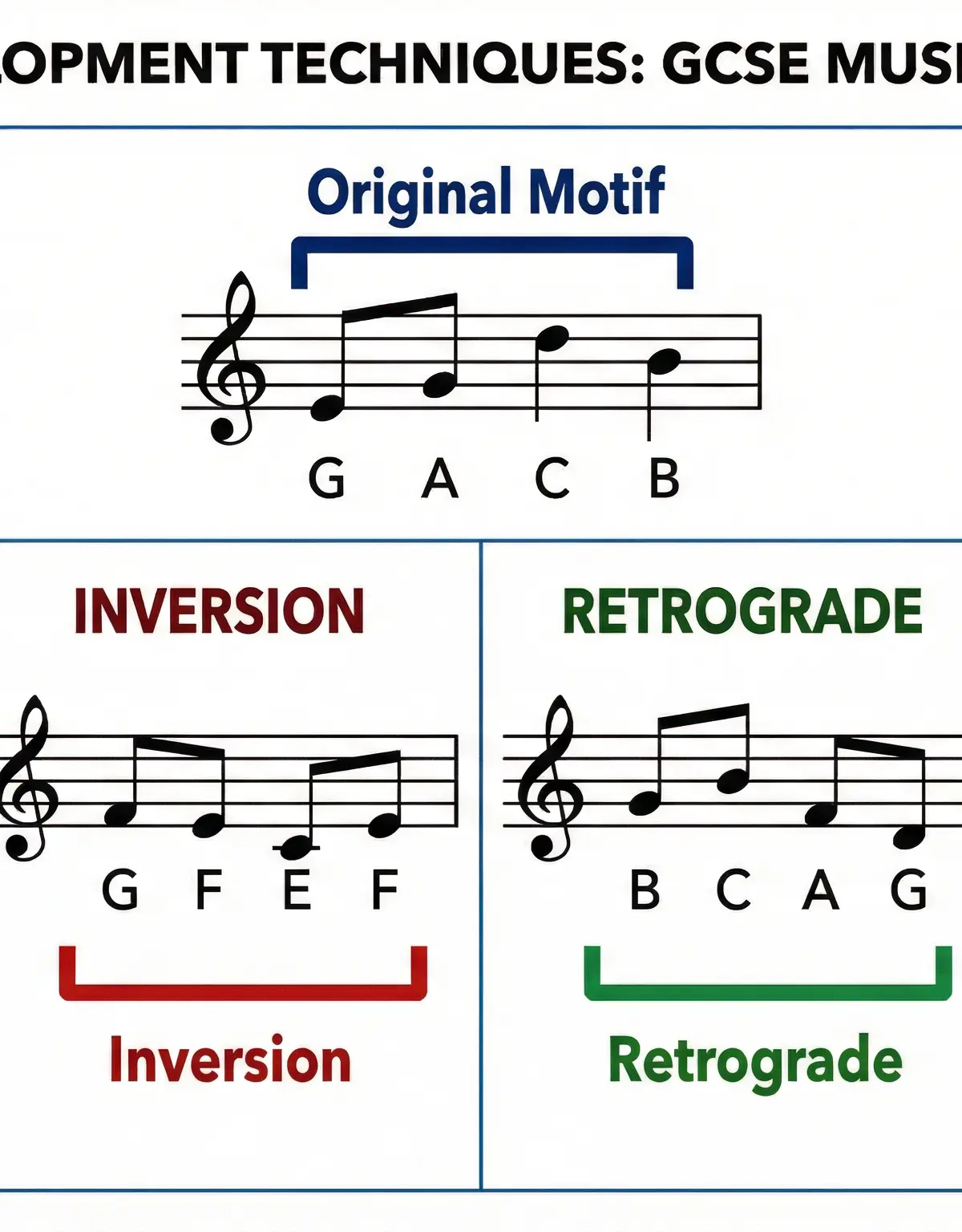
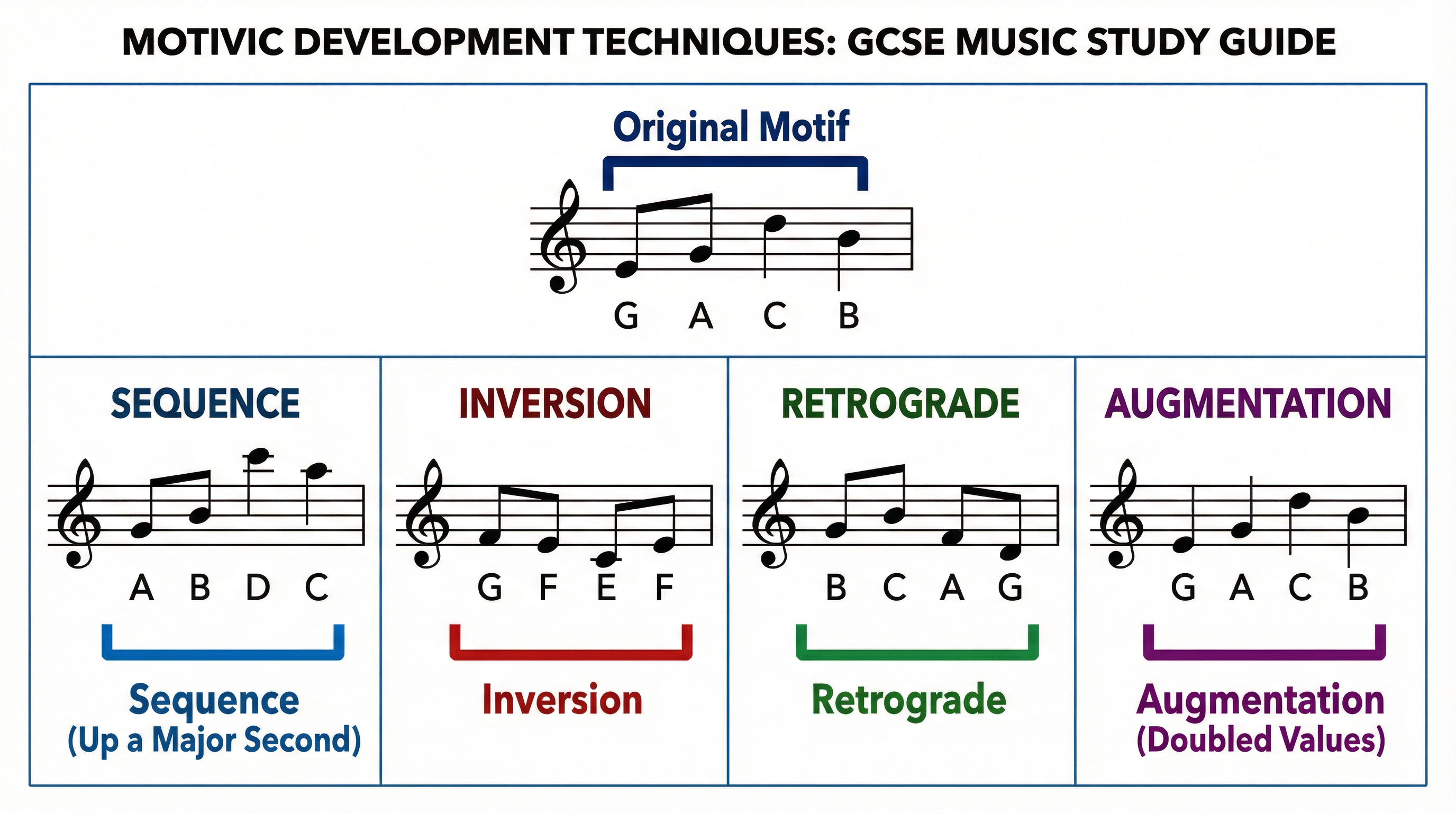
Motivic Development: This is a critical skill for accessing the higher mark bands. A motif is a short, recurring musical idea. Instead of writing a stream of unrelated ideas, candidates should present a core motif and then develop it using specific compositional devices. This creates a sense of unity and sophistication in the composition.
- Harmony and Tonality: While you are writing a single melodic line, it must imply an underlying harmonic progression. This is achieved by using notes from the presumed chords (arpeggiation) and by ensuring the melody gravitates towards key tonal centres. Cadential points (the end of phrases) should be clearly articulated, for example, by resolving a leading note to the tonic. Correct handling of non-harmony notes (like passing notes, appoggiaturas, and suspensions) is essential; they must resolve correctly to avoid unintentional dissonance.
Key Practitioners/Artists/Composers
| Name | Period/Style | Key Works | Relevance |
|---|---|---|---|
| W.A. Mozart | Classical | Eine Kleine Nachtmusik, K. 525 | Master of clear, balanced phrasing and elegant melodic contours. His use of antecedent-consequent phrases is a perfect model for GCSE candidates. |
| J.S. Bach | Baroque | Cello Suite No. 1 in G Major, BWV 1007 | A genius of motivic development and implied harmony in a single melodic line. Analysing the Prelude demonstrates how a simple idea can be sequenced and varied to create a complex, cohesive whole. |
| John Williams | Contemporary Film | Star Wars Main Theme | Exemplifies the power of a strong, memorable motif. Williams uses techniques like sequence and inversion to adapt his themes throughout the film score, demonstrating motivic development in a modern context. |
| The Beatles (Lennon/McCartney) | Pop | 'Yesterday' | A masterclass in creating an asymmetrical yet perfectly balanced melody. The phrasing is natural and follows the lyrical content, and the melodic arch is beautifully controlled. |
Technical Vocabulary
Using subject-specific terminology is non-negotiable. Candidates must use these terms when annotating their scores and in any written commentary.
- Motif: A short, recurring musical fragment.
- Sequence: The immediate restatement of a motif at a higher or lower pitch.
- Inversion: Turning a motif 'upside down'. The melodic intervals are mirrored.
- Retrograde: Playing a motif backwards.
- Augmentation: Lengthening the rhythmic values of a motif (e.g., doubling them).
- Diminution: Shortening the rhythmic values of a motif (e.g., halving them).
- Contour: The shape or outline of the melody.
- Phrase: A short musical unit, often thought of as a musical sentence.
- Antecedent/Consequent: A pair of musical phrases that act as a question and answer.
- Cadence: The end of a phrase, which can be 'perfect', 'plagal', 'imperfect', or 'interrupted'.
- Idiomatic Writing: Writing music that is well-suited to the specific capabilities and limitations of the chosen instrument.
- Tessitura: The most comfortable and commonly used part of an instrument's range.
Practical Skills
Techniques & Processes
- Start with a Motif: Don't try to write an 8-bar melody in one go. Create a simple, memorable 1-2 bar motif. It should have a clear rhythmic and melodic identity.
- Develop the Motif: Apply the devices. Can you sequence it? Invert it? Try creating a contrasting idea derived from the original motif.
- Build your Phrases: Use your developed motifs to construct an antecedent phrase. End it on a note that feels unresolved (e.g., the dominant). Then, construct a consequent phrase that provides a sense of closure, ending on the tonic.
- Check the Contour: Play or sing your full melody. Does it have a clear shape? Where is the climax? Is it effective? Adjust pitches to create a more satisfying arch.
- Refine and Annotate: Review every note. Are there any awkward leaps? Does it imply the harmony you want? Finally, annotate your score clearly, labelling every device you have used. This is where you explicitly claim your marks.
Materials & Equipment
- Manuscript Paper & Pencil: The traditional tools. Allows for quick sketching and erasing. Essential for drafting ideas.
- Notation Software (e.g., Sibelius, Musescore): Highly recommended. Allows for instant playback, which is crucial for checking your melody sounds as you intend. It also makes editing, transposing, and producing a final clean score much easier. Examiners expect a neatly presented score, and software is the best way to achieve this.
- A Musical Instrument: Your primary instrument or a piano/keyboard. You must be able to play your melody to check for idiomatic qualities and overall musicality. Do not compose purely theoretically in your head.
Portfolio/Coursework Guidance
Assessment Criteria
For the Integrated Portfolio (Component 02), your composition is assessed against the 'Core Musical Elements' grid. To score highly in melody, examiners are looking for:
- Band 5 (High Performance): Melodies are imaginative, stylistically assured, and demonstrate fluent and consistent development of motifs. Phrasing is balanced and the melody has a clear sense of direction. The writing is highly idiomatic.
- Band 3 (Sound Achievement): Melodies are generally clear and have some sense of direction. There may be some use of motivic development, but it may not be consistent. Phrasing is present but may be unbalanced.
- Band 1 (Limited): Melodies are simple, often repetitive, and lack a clear sense of direction or development. The writing may be unidiomatic.
Building a Strong Portfolio
- Show Your Working: Don't just submit the final melody. Include sketches, drafts, and mind maps. Show the examiner how you started with a motif and experimented with different developmental techniques. This evidences your creative process.
- Annotate Everything: Your final score should be littered with precise annotations. Use the technical vocabulary. Point out every sequence, inversion, and balanced phrase. This is not optional; it is a direct way to communicate your understanding to the moderator.
- Write a Commentary: Alongside your score, write a short commentary explaining your compositional choices. Why did you choose that contour? How does your melody relate to the harmony? This narrative justifies your decisions and demonstrates a higher level of thinking.
Exam Component
Written Exam Knowledge
While melody writing is primarily practical, knowledge of it is tested in the Component 01 Listening Exam. You will be expected to:
- Identify Melodic Devices: Be able to listen to an unfamiliar extract and identify if a melody is being sequenced, inverted, etc.
- Describe Melodic Character: Use adjectives to describe a melody's contour (e.g., 'angular', 'stepwise', 'arched') and character.
- Analyse Structure: Identify the phrase structure of a given melody.
Practical Exam Preparation
For Component 03, you may have to compose or develop a melody in a timed environment, often in response to a given stimulus. To prepare:
- Practice Timed Composition: Set a timer for 30 minutes and try to compose a balanced 8-bar melody from a given starting motif. This builds speed and fluency.
- Memorise Your Devices: You need to know the definitions of sequence, inversion, etc., by heart so you can apply them quickly under pressure.
- Develop a Workflow: Have a clear process: 1. Analyse stimulus. 2. Create motif. 3. Develop. 4. Structure phrases. 5. Refine. This structured approach prevents panic in an exam setting.
Visual Resources
2 diagrams and illustrations
Interactive Diagrams
1 interactive diagram to visualise key concepts
Conceptual Flow Outline
A practical workflow for composing a melody in an exam or for coursework.
Worked Examples
3 worked examples — open one to explore the question and available guidance.
Practice Questions
Test your understanding — click to reveal model answers
Define the term 'sequence' in the context of melodic development.
Hint: Think about what happens to the motif in terms of both rhythm and pitch.
You are given the motif C-E-G. Compose a four-bar melody for piano in C major that begins with this motif and demonstrates the use of inversion.
Hint: Inversion means flipping the intervals. If the motif goes up a major third then up a minor third, what would the inversion do?
Analyse the opening melody of 'Somewhere Over the Rainbow' (first 8 notes). Describe its contour and the most prominent melodic feature.
Hint: The melody starts with a very distinctive leap. What is it?
Evaluate the effectiveness of the melodic writing in this short excerpt for solo cello. Justify your answer with reference to contour, phrasing, and idiomatic writing. [An audio excerpt is played featuring a poorly constructed melody with no clear shape, awkward leaps, and repetitive phrasing].
Hint: Listen for the problems. Is it engaging? Is it easy to play? Is there a clear structure?