Pearson Edexcel · GCSE · Music
Course version: 1MU0 · Version from Sept 2016
Musical vocabulary - Dynamics and performance matters: The most widely…
Full specification wording
Appendix 3: Musical vocabulary - Dynamics and performance matters: The most widely used part of a vocal or instrumental part’s range
This vocabulary item describes the portion of a voice's or instrument's range where the part most often sits, rather than the full distance from its lowest to its highest note.
- Point 15 of 25
Study notes
From the teaching notes for this specification point.
The idea
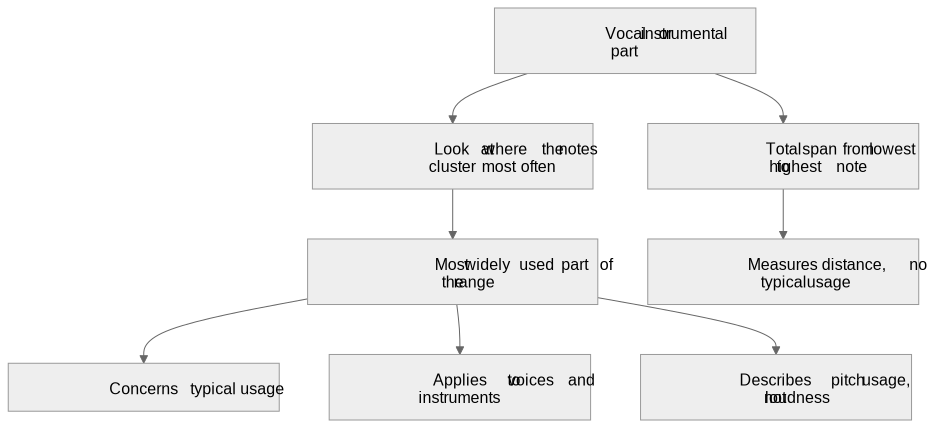
This vocabulary item describes the portion of a voice's or instrument's range where the part most often sits, rather than the full distance from its lowest to its highest note. To apply it, look at where the notes of a part cluster most frequently and identify that central, commonly used band. For example, a singer may have a wide overall range but spend most of a song in a comfortable middle area; that frequently used area is the concept being described. Keep it distinct from the total span between lowest and highest notes, which measures distance rather than typical usage. In a multiple-choice question, choose the option describing the most-used portion of a vocal or instrumental range and reject options about the full lowest-to-highest distance or about volume.
What earns the marks
- Identifies the concept as the portion of a range most frequently used by a voice or instrument.
- Recognises that it concerns typical usage rather than the full distance from lowest to highest note.
- Applies the idea to a vocal or instrumental part by locating where its notes cluster most often.
- Distinguishes the concept from the total span between the lowest and highest notes.
Common mistakes and how to put them right
Confusing this with the full distance between lowest and highest notes.
Put it right: This term concerns the most-used portion, not the total span.
Assuming it applies only to voices.
Put it right: It covers both vocal and instrumental parts.
Treating it as a dynamic marking.
Put it right: It describes pitch usage within a range, not loudness.
Exam tips
- Eliminate options that describe the lowest-to-highest distance, since that is a different term.
- Check that the option mentions both vocal and instrumental parts where relevant.
- If an extract is given, note where the part's pitches cluster most often before choosing.
Try the lesson
The start of the Appendix 3: Musical vocabulary - Dynamics and performance matters: The most widely used part of a vocal or instrumental part’s range lesson, made from teaching notes for this specification point.
Have a go first
What term describes the most widely used part of a vocal or instrumental part's range?
Listen
This vocabulary item describes the portion of a voice's or instrument's range where the part most often sits, rather than the full distance from its lowest to its highest note. To apply it, look at where the notes of a part cluster most frequently and identify that central, commonly used band. For example, a singer may have a wide overall range but spend most of a song in a comfortable middle area; that frequently used area is the concept being described. Keep it distinct from the total span between lowest and highest notes, which measures distance rather than typical usage. In a multiple-choice question, choose the option describing the most-used portion of a vocal or instrumental range and reject options about the full lowest-to-highest distance or about volume. A strong answer earns marks for these points. Identifies the concept as the portion of a range most frequently used by a voice or instrument. Recognises that it concerns typical usage rather than the full distance from lowest to highest note. Applies the idea to a vocal or instrumental part by locating where its notes cluster most often. Distinguishes the concept from the total span between the lowest and highest notes. A common slip: Confusing this with the full distance between lowest and highest notes. Instead, this term concerns the most-used portion, not the total span. Exam tip: Eliminate options that describe the lowest-to-highest distance, since that is a different term.
See it
Label the diagram
Some boxes have lost their names. Pick the right name for each number.
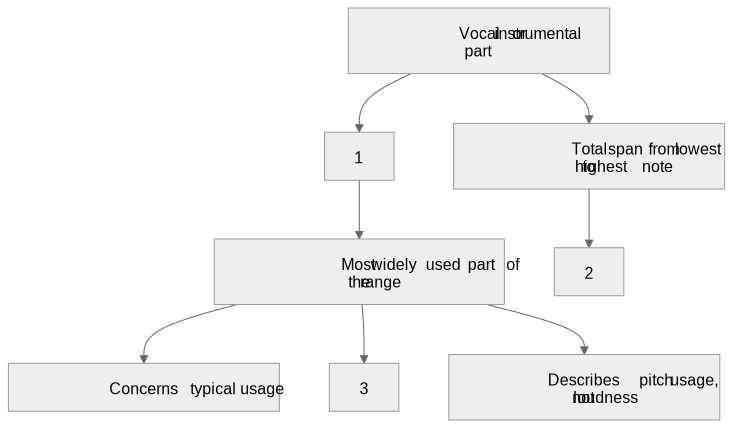
1Box 1
2Box 2
3Box 3
There is more to this lesson
The full lesson goes on to check your understanding and help you earn the marks. Create a free account to carry on, with your progress saved.
A week of Premium from your first lesson · Then the free plan continues · No card, no charge
Test your understanding of Appendix 3: Musical vocabulary - Dynamics and performance matters: The most widely used part of a vocal or instrumental part’s range
Active recall beats re-reading. Take an instant quiz now to test what you’ve learned and lock it into long-term memory.
A week of Premium from your first lesson · Then the free plan continues · No card, no charge