Pearson Edexcel · GCSE · Music
Course version: 1MU0 · Version from Sept 2016
Musical vocabulary - Dynamics and performance matters: Word painting…
Full specification wording
Appendix 3: Musical vocabulary - Dynamics and performance matters: Word painting occurs when a composer deliberately illustrates a word or phrase with a matching musical image (e.g. by having rising notes for ‘ascending’)
Word painting is a deliberate technique in which a composer makes the music mirror the meaning of a word or phrase.
- Point 25 of 25
Study notes
From the teaching notes for this specification point.
The idea
Word painting is a deliberate technique in which a composer makes the music mirror the meaning of a word or phrase. The key idea is intention: the musical image matches the text rather than occurring by chance. A clear example is setting the word 'ascending' to rising notes, so the melodic direction echoes the meaning. Other common devices include a descending line for 'falling', a loud passage for 'shout' or a slow tempo for 'lament'. To answer a multiple-choice question, identify the option where a specific musical feature (pitch direction, dynamics, tempo or texture) is chosen to illustrate a specific word. Reject options describing general expressive mood without a word-to-music match.
What earns the marks
- Defines word painting as a composer deliberately illustrating a word or phrase with matching music.
- Recognises the requirement for a musical image that matches the meaning of the text.
- Applies the concept to an example such as rising notes for 'ascending'.
- Distinguishes deliberate word-to-music matching from general expressive writing.
Common mistakes and how to put them right
Treating any expressive music as word painting.
Put it right: It requires a specific match between a word and a musical image.
Ignoring the element of deliberate intention by the composer.
Confusing word painting with word setting in general.
Put it right: Word painting specifically illustrates meaning.
Exam tips
- Look for the option that names both a word and a matching musical feature.
- Check that the musical image genuinely reflects the word's meaning, such as rising pitch for 'ascending'.
- Reject options that describe mood alone without a word-to-music link.
Try the lesson
The start of the Appendix 3: Musical vocabulary - Dynamics and performance matters: Word painting occurs when a composer deliberately illustrates a word or phrase with a matching musical image (e.g. by having rising notes for ‘ascending’) lesson, made from teaching notes for this specification point.
Have a go first
Which of the following best describes word painting in music?
Listen
Word painting is a deliberate technique in which a composer makes the music mirror the meaning of a word or phrase. The key idea is intention: the musical image matches the text rather than occurring by chance. A clear example is setting the word 'ascending' to rising notes, so the melodic direction echoes the meaning. Other common devices include a descending line for 'falling', a loud passage for 'shout' or a slow tempo for 'lament'. To answer a multiple-choice question, identify the option where a specific musical feature (pitch direction, dynamics, tempo or texture) is chosen to illustrate a specific word. Reject options describing general expressive mood without a word-to-music match. A strong answer earns marks for these points. Defines word painting as a composer deliberately illustrating a word or phrase with matching music. Recognises the requirement for a musical image that matches the meaning of the text. Applies the concept to an example such as rising notes for 'ascending'. Distinguishes deliberate word-to-music matching from general expressive writing. Exam tip: Look for the option that names both a word and a matching musical feature.
See it
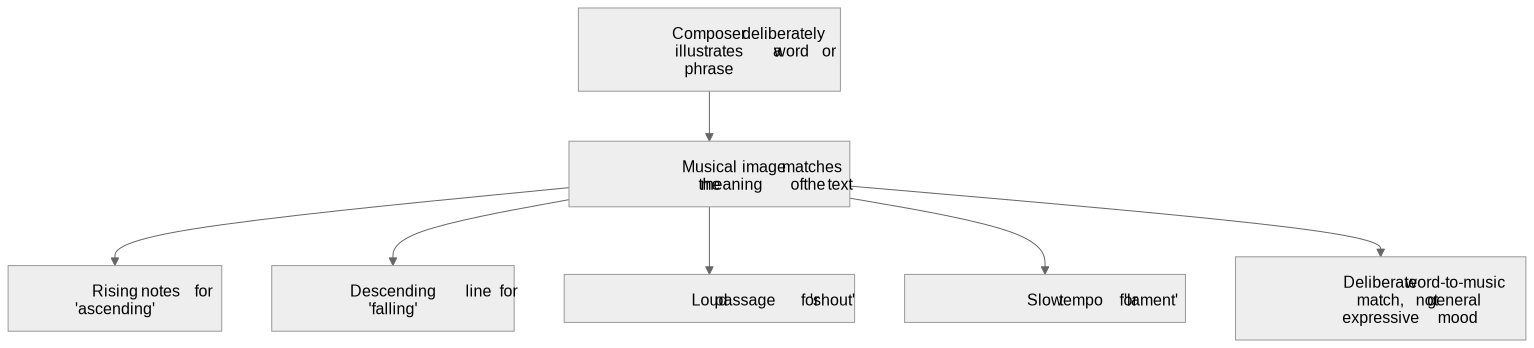
Label the diagram
Some boxes have lost their names. Pick the right name for each number.
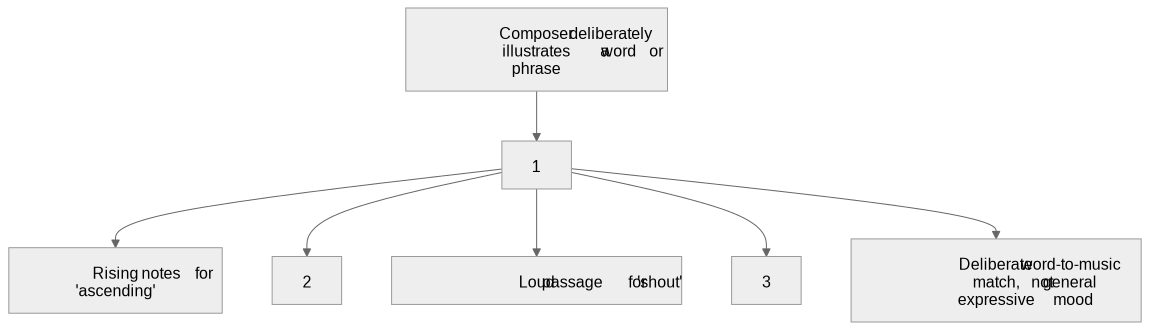
1Box 1
2Box 2
3Box 3
There is more to this lesson
The full lesson goes on to check your understanding and help you earn the marks. Create a free account to carry on, with your progress saved.
A week of Premium from your first lesson · Then the free plan continues · No card, no charge
Test your understanding of Appendix 3: Musical vocabulary - Dynamics and performance matters: Word painting occurs when a composer deliberately illustrates a word or phrase with a matching musical image (e.g. by having rising notes for ‘ascending’)
Active recall beats re-reading. Take an instant quiz now to test what you’ve learned and lock it into long-term memory.
A week of Premium from your first lesson · Then the free plan continues · No card, no charge