Pearson Edexcel · GCSE · Music
Course version: 1MU0 · Version from Sept 2016
Musical vocabulary - Dynamics and performance matters: Words to which a…
Full specification wording
Appendix 3: Musical vocabulary - Dynamics and performance matters: Words to which a song is set (applies to music in Western Classical styles)
In Western Classical vocal music, the words to which a song is set are its text, and the term for this is the setting's words or lyric.
- Point 24 of 25
- 4 key terms
Study notes
From the teaching notes for this specification point.
The idea
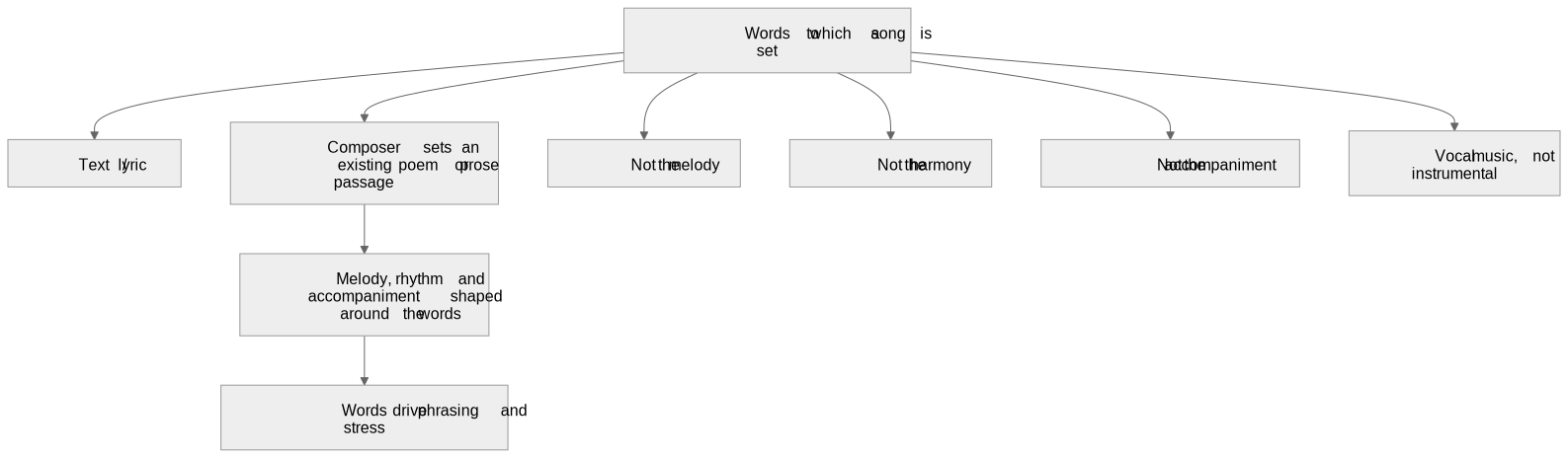
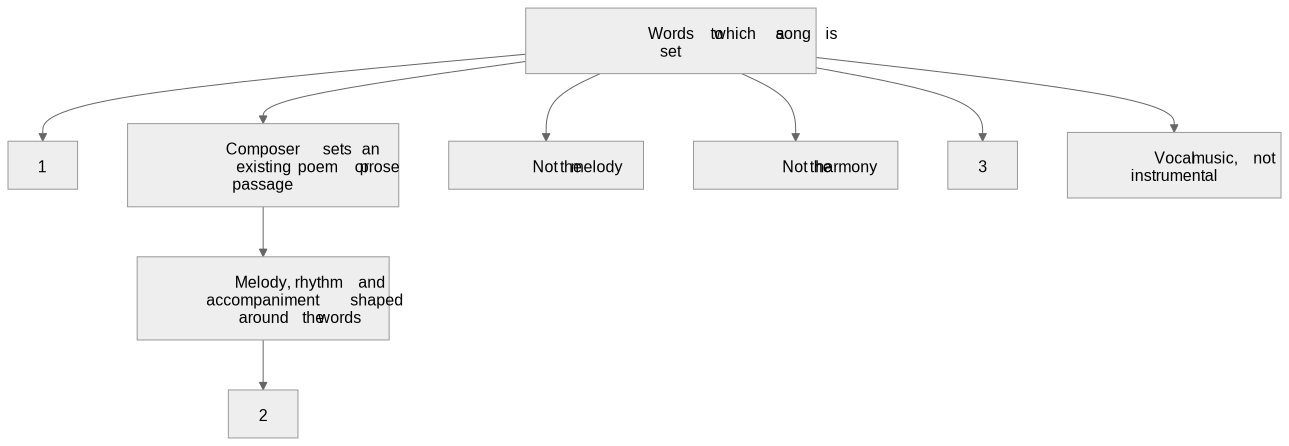
In Western Classical vocal music, the words to which a song is set are its text, and the term for this is the setting's words or lyric. A composer takes an existing poem or prose passage and shapes melody, rhythm and accompaniment around it, so the words drive phrasing and stress. For example, in an art song the singer delivers each line of the poem over a piano accompaniment, and the syllables align with the melodic line. Recognising this vocabulary means identifying that the words are the text being set, not the tune, harmony or instrumentation. In a multiple-choice question, match the definition to the correct term and reject options describing purely instrumental features.
What earns the marks
- Identifies the words to which a song is set as the text/lyric being set to music.
- Recognises that in Western Classical styles a composer sets an existing poem or prose text.
- Distinguishes the words from the melody, harmony, rhythm and accompaniment.
- Applies the term correctly to a vocal example rather than an instrumental one.
Common mistakes and how to put them right
Confusing the words with the melody.
Put it right: The words are the text, while the melody is the tune carrying them.
Assuming the term applies to any instrumental piece.
Put it right: It concerns vocal music where words are set.
Treating accompaniment as the definition.
Put it right: The accompaniment supports the words but is not the words themselves.
Exam tips
- Read the stem carefully to see whether it asks about the words or another musical element.
- Eliminate options that describe instrumental features before choosing.
- Link the definition to a concrete vocal example such as an art song to confirm your choice.
Try the lesson
The start of the Appendix 3: Musical vocabulary - Dynamics and performance matters: Words to which a song is set (applies to music in Western Classical styles) lesson, made from teaching notes for this specification point.
Listen
In Western Classical vocal music, the words to which a song is set are its text, and the term for this is the setting's words or lyric. A composer takes an existing poem or prose passage and shapes melody, rhythm and accompaniment around it, so the words drive phrasing and stress. For example, in an art song the singer delivers each line of the poem over a piano accompaniment, and the syllables align with the melodic line. Recognising this vocabulary means identifying that the words are the text being set, not the tune, harmony or instrumentation. In a multiple-choice question, match the definition to the correct term and reject options describing purely instrumental features. A strong answer earns marks for these points. Identifies the words to which a song is set as the text/lyric being set to music. Recognises that in Western Classical styles a composer sets an existing poem or prose text. Distinguishes the words from the melody, harmony, rhythm and accompaniment. Applies the term correctly to a vocal example rather than an instrumental one. Exam tip: Read the stem carefully to see whether it asks about the words or another musical element.
See it
Key words
Say what each word means before you turn the card.
Text
Try answering aloud or in your head before turning the card.
Melody
Try answering aloud or in your head before turning the card.
Accompaniment
Try answering aloud or in your head before turning the card.
Art song
Try answering aloud or in your head before turning the card.
See every definition
- Text
- The words to which a song is set, applying to music in Western Classical styles.
- Melody
- The tune carrying the words, which the words are distinguished from.
- Accompaniment
- What supports the words but is not the words themselves.
- Art song
- A vocal example in which the singer delivers each line of the poem over a piano accompaniment.
Label the diagram
Some boxes have lost their names. Pick the right name for each number.
1Box 1
2Box 2
3Box 3
There is more to this lesson
The full lesson goes on to check your understanding and help you earn the marks. Create a free account to carry on, with your progress saved.
A week of Premium from your first lesson · Then the free plan continues · No card, no charge
Test your understanding of Appendix 3: Musical vocabulary - Dynamics and performance matters: Words to which a song is set (applies to music in Western Classical styles)
Active recall beats re-reading. Take an instant quiz now to test what you’ve learned and lock it into long-term memory.
A week of Premium from your first lesson · Then the free plan continues · No card, no charge