Pearson Edexcel · GCSE · Music
Course version: 1MU0 · Version from Sept 2016
Appraising - Detailed application of musical elements: the instrumentation…
Full specification wording
Component 3: Appraising - Detailed application of musical elements: the instrumentation is used to good effect, including playing techniques etc associated with a particular instrument or group
Here you judge not just what instruments are playing but how effectively they are used.
- Point 2 of 9
- 2 key terms
Study notes
From the teaching notes for this specification point.
The idea
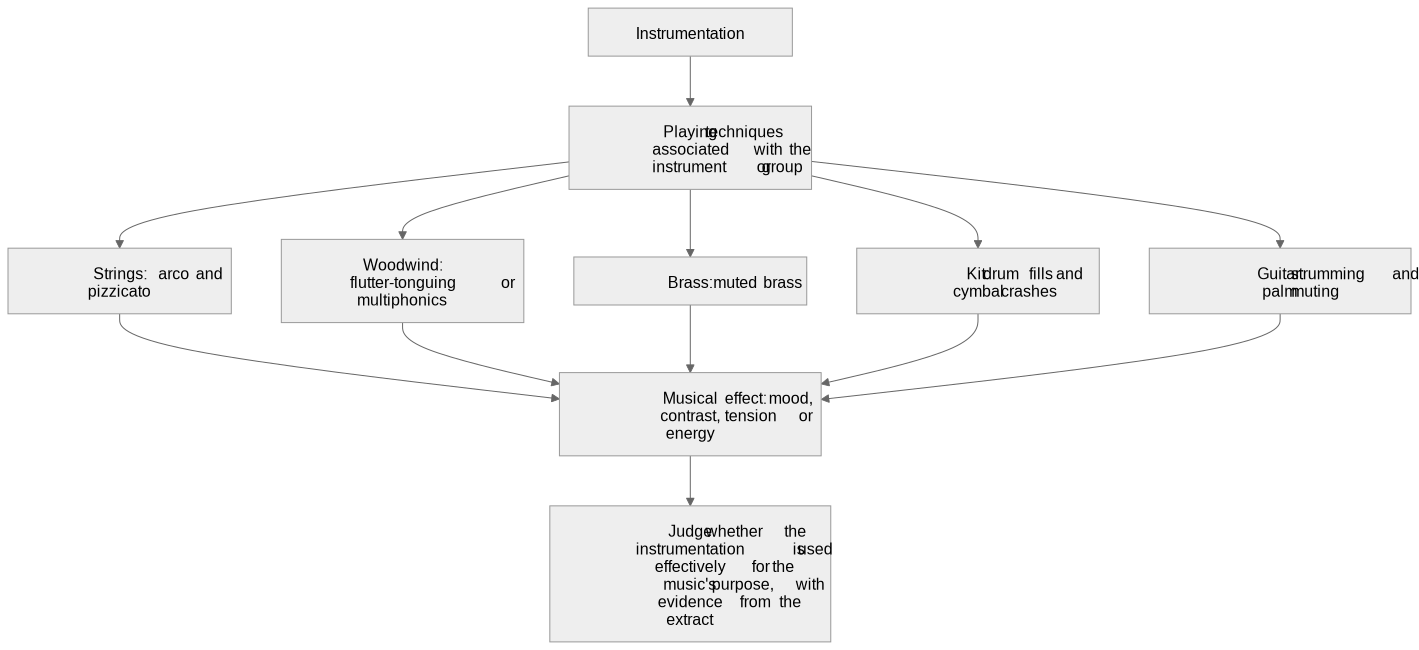
Here you judge not just what instruments are playing but how effectively they are used. Effective use means the instrumentation suits the music's purpose: it creates the intended mood, balances melody and accompaniment, and exploits each instrument's strengths. Link this to playing techniques associated with the instrument or group, such as arco and pizzicato on strings, flutter-tonguing or multiphonics on woodwind, muted brass, drum fills and cymbal crashes in a kit, or strumming and palm muting on guitar. In a multiple-choice question, choose the option that correctly names a technique and explains its effect, and reject options that describe a technique the instrument cannot produce or that misattribute an effect.
What earns the marks
- Identifies a specific playing technique associated with the named instrument or group, such as pizzicato, muted brass or drum fills.
- Explains how the technique or instrumentation creates a musical effect, such as mood, contrast, tension or energy.
- Judges whether the instrumentation is used effectively for the music's purpose, supporting the judgement with evidence from the extract.
- Rejects a distractor that attributes a technique to an instrument that cannot produce it or misdescribes the effect.
Common mistakes and how to put them right
Naming a technique without linking it to an effect.
Put it right: State what the technique does to the sound or mood.
Attributing a technique to the wrong instrument, for example bowing a trumpet.
Put it right: Check which techniques each instrument can actually produce.
Claiming the instrumentation is effective without evidence.
Put it right: Point to a specific moment where the scoring achieves its purpose.
Exam tips
- Match each technique you hear to the instrument that can produce it before selecting an option.
- Ask what effect the scoring creates, such as contrast, mood or energy, and check the option states it.
- Rule out options that describe techniques the named instrument cannot perform.
Try the lesson
The start of the Component 3: Appraising - Detailed application of musical elements: the instrumentation is used to good effect, including playing techniques etc associated with a particular instrument or group lesson, made from teaching notes for this specification point.
Have a go first
In a symphony orchestra, a passage is marked 'con sordino' (with mute). A mute is clipped onto the bridge of each instrument, softening and darkening the tone. Which instrumental group is this technique most clearly associated with?
Listen
Here you judge not just what instruments are playing but how effectively they are used. Effective use means the instrumentation suits the music's purpose: it creates the intended mood, balances melody and accompaniment, and exploits each instrument's strengths. Link this to playing techniques associated with the instrument or group, such as arco and pizzicato on strings, flutter-tonguing or multiphonics on woodwind, muted brass, drum fills and cymbal crashes in a kit, or strumming and palm muting on guitar. In a multiple-choice question, choose the option that correctly names a technique and explains its effect, and reject options that describe a technique the instrument cannot produce or that misattribute an effect. A strong answer earns marks for these points. Identifies a specific playing technique associated with the named instrument or group, such as pizzicato, muted brass or drum fills. Explains how the technique or instrumentation creates a musical effect, such as mood, contrast, tension or energy. Judges whether the instrumentation is used effectively for the music's purpose, supporting the judgement with evidence from the extract. Rejects a distractor that attributes a technique to an instrument that cannot produce it or misdescribes the effect. A common slip: Naming a technique without linking it to an effect. Instead, state what the technique does to the sound or mood. Exam tip: Match each technique you hear to the instrument that can produce it before selecting an option.
See it
Key words
Say what each word means before you turn the card.
Effective scoring and balance
Try answering aloud or in your head before turning the card.
Evaluating musical effect
Try answering aloud or in your head before turning the card.
See every definition
- Effective scoring and balance
- Instrumentation that suits the music's purpose, creates the intended mood, balances melody and accompaniment, and exploits each instrument's strengths.
- Evaluating musical effect
- Judging whether the instrumentation is used effectively for the music's purpose, supporting the judgement with evidence from the extract.
Label the diagram
Some boxes have lost their names. Pick the right name for each number.
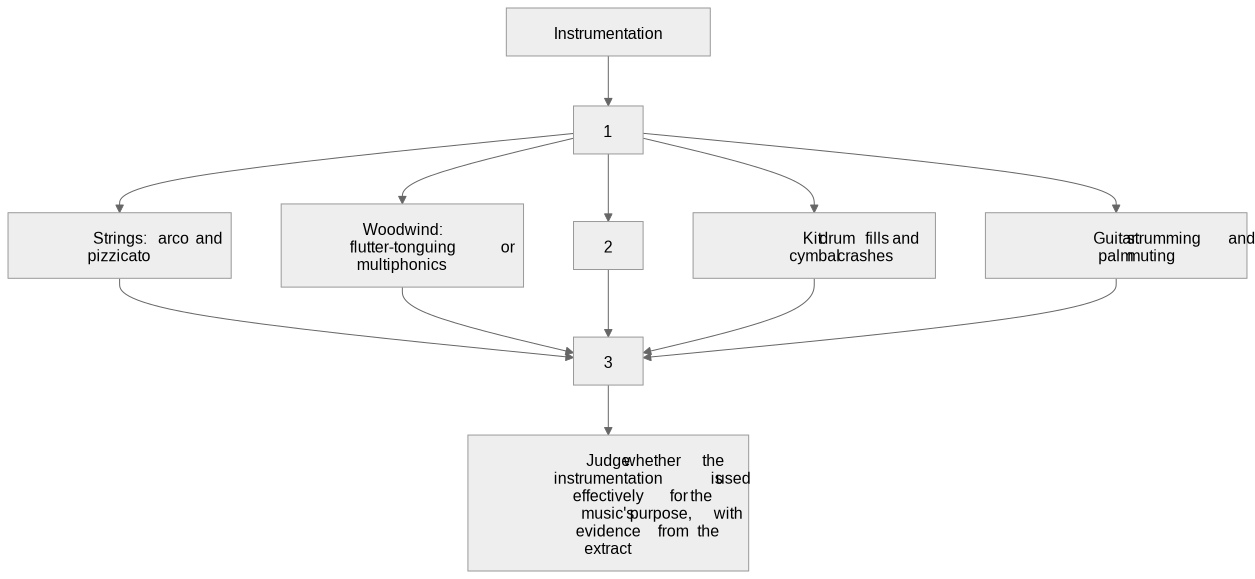
1Box 1
2Box 2
3Box 3
There is more to this lesson
The full lesson goes on to check your understanding and help you earn the marks. Create a free account to carry on, with your progress saved.
A week of Premium from your first lesson · Then the free plan continues · No card, no charge
Test your understanding of Component 3: Appraising - Detailed application of musical elements: the instrumentation is used to good effect, including playing techniques etc associated with a particular instrument or group
Active recall beats re-reading. Take an instant quiz now to test what you’ve learned and lock it into long-term memory.
A week of Premium from your first lesson · Then the free plan continues · No card, no charge