Pearson Edexcel · GCSE · Music
Course version: 1MU0 · Version from Sept 2016
Appraising - Set works: L van Beethoven: 1st Movement from Piano Sonata…
Full specification wording
Component 3: Appraising - Set works: L van Beethoven: 1st Movement from Piano Sonata no. 8 in C minor ‘Pathétique’
This set work is the first movement of Beethoven's Piano Sonata no.
- Point 2 of 8
- 4 key terms
Study notes
From the teaching notes for this specification point.
The idea
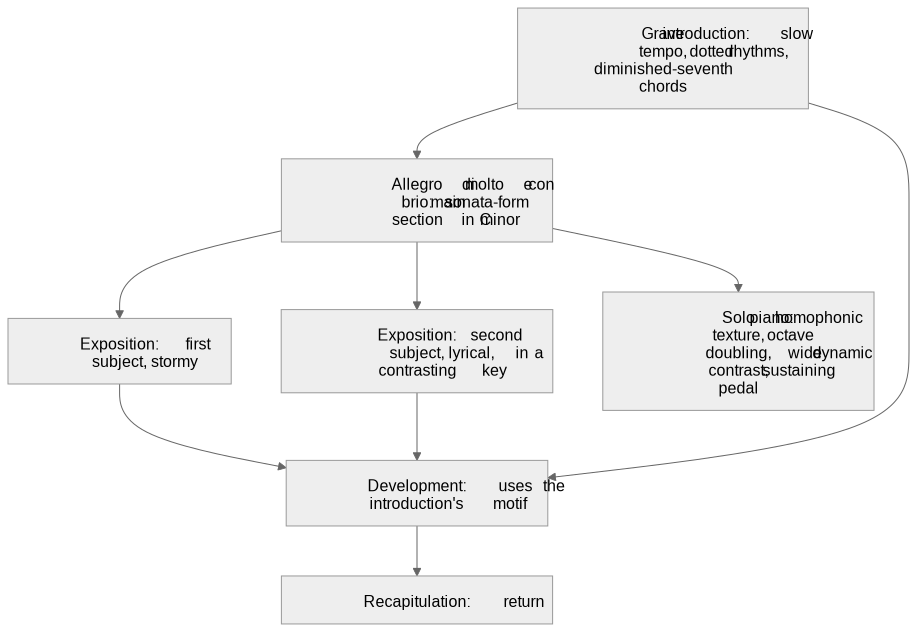
This set work is the first movement of Beethoven's Piano Sonata no. 8 in C minor, the 'Pathétique', a solo piano work of the Classical period. For multiple-choice questions you must recognise its musical features by ear and from short score extracts: the dramatic slow introduction (Grave) with its heavy dotted rhythms and diminished-seventh sonorities, and the turbulent sonata-form Allegro di molto e con brio in C minor. Learn the exposition's first and second subjects, the contrasting key areas, the development's use of the introduction's motif, and the recapitulation's return. Identify texture (homophonic with octave writing), dynamic extremes and sudden contrasts, and the use of the sustaining pedal. Match each feature to the correct term rather than guessing from a single clue.
What earns the marks
- Recognises the Grave introduction by its slow tempo, dotted rhythms and dramatic diminished-seventh chords.
- Identifies the Allegro di molto e con brio as the main sonata-form section in C minor.
- Distinguishes the lyrical second subject, which appears in a contrasting key, from the stormy first subject.
- Links the movement to solo piano writing with homophonic texture, octave doubling and wide dynamic contrast.
- Recognises that the introduction's motif returns within the movement rather than being heard only once.
Common mistakes and how to put them right
Assuming the whole movement stays slow because the Grave opens it.
Put it right: The Grave is an introduction and the main body is a fast Allegro.
Confusing the 'Pathétique' with an orchestral work.
Put it right: It is a piano sonata for solo piano.
Treating every loud passage as the recapitulation.
Put it right: Identify sections by thematic and key structure, not volume alone.
Exam tips
- Listen to the opening twice and note tempo, rhythm and chord colour before choosing an option.
- Eliminate options that name the wrong instrument, genre or period before deciding.
- Use score extracts to confirm texture and dynamic markings rather than relying on memory alone.
Try the lesson
The start of the Component 3: Appraising - Set works: L van Beethoven: 1st Movement from Piano Sonata no. 8 in C minor ‘Pathétique’ lesson, made from teaching notes for this specification point.
Have a go first
Which feature is characteristic of the slow introduction (Grave) to the first movement of Beethoven's 'Pathétique' Sonata?
Listen
This set work is the first movement of Beethoven's Piano Sonata no. 8 in C minor, the 'Pathétique', a solo piano work of the Classical period. For multiple-choice questions you must recognise its musical features by ear and from short score extracts: the dramatic slow introduction (Grave) with its heavy dotted rhythms and diminished-seventh sonorities, and the turbulent sonata-form Allegro di molto e con brio in C minor. Learn the exposition's first and second subjects, the contrasting key areas, the development's use of the introduction's motif, and the recapitulation's return. Identify texture (homophonic with octave writing), dynamic extremes and sudden contrasts, and the use of the sustaining pedal. Match each feature to the correct term rather than guessing from a single clue. A strong answer earns marks for these points. Recognises the Grave introduction by its slow tempo, dotted rhythms and dramatic diminished-seventh chords. Identifies the Allegro di molto e con brio as the main sonata-form section in C minor. Distinguishes the lyrical second subject, which appears in a contrasting key, from the stormy first subject. Links the movement to solo piano writing with homophonic texture, octave doubling and wide dynamic contrast. A common slip: Assuming the whole movement stays slow because the Grave opens it. Instead, the Grave is an introduction and the main body is a fast Allegro. Exam tip: Listen to the opening twice and note tempo, rhythm and chord colour before choosing an option.
See it
Key words
Say what each word means before you turn the card.
Sonata form structure
Try answering aloud or in your head before turning the card.
Classical period style and expression
Try answering aloud or in your head before turning the card.
Solo piano texture and dynamics
Try answering aloud or in your head before turning the card.
Thematic contrast and return
Try answering aloud or in your head before turning the card.
See every definition
- Sonata form structure
- The main section is a fast Allegro di molto e con brio in C minor, with an exposition containing first and second subjects, a development and a recapitulation.
- Classical period style and expression
- A solo piano work of the Classical period with dynamic extremes and sudden contrasts.
- Solo piano texture and dynamics
- Solo piano writing with homophonic texture, octave doubling, wide dynamic contrast and use of the sustaining pedal.
- Thematic contrast and return
- The lyrical second subject appears in a contrasting key, and the introduction's motif returns within the movement rather than being heard only once.
Label the diagram
Some boxes have lost their names. Pick the right name for each number.
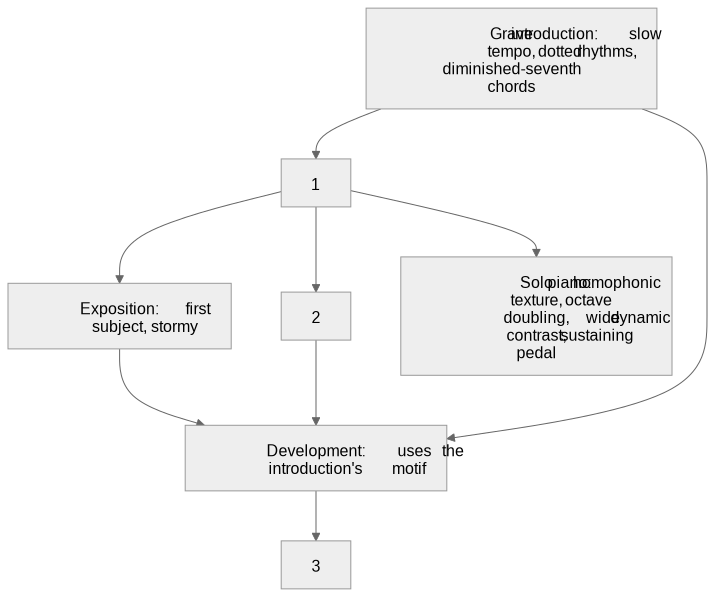
1Box 1
2Box 2
3Box 3
There is more to this lesson
The full lesson goes on to check your understanding and help you earn the marks. Create a free account to carry on, with your progress saved.
A week of Premium from your first lesson · Then the free plan continues · No card, no charge
Test your understanding of Component 3: Appraising - Set works: L van Beethoven: 1st Movement from Piano Sonata no. 8 in C minor ‘Pathétique’
Active recall beats re-reading. Take an instant quiz now to test what you’ve learned and lock it into long-term memory.
A week of Premium from your first lesson · Then the free plan continues · No card, no charge