AQA · A-Level · Physical Education
Course version: 7582 · Version from Sept 2016
Fluid mechanics: Dynamic fluid force.
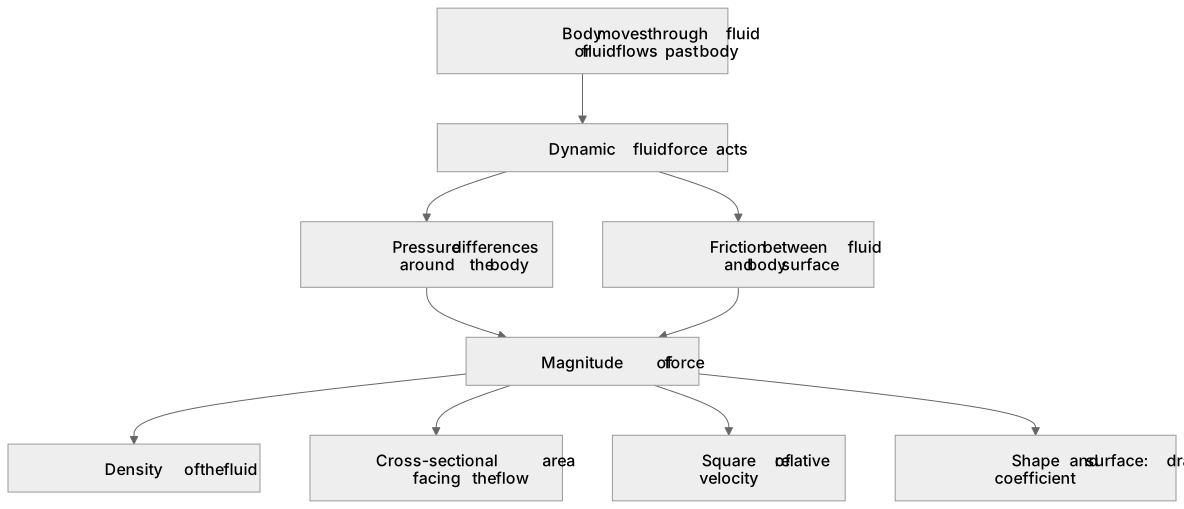
Dynamic fluid force is the force produced when a body moves through a fluid, or when a fluid flows past a body, and it arises from differences in fluid pressure and from friction between the fluid…
Checked against the AQA 7582 specification (opens in a new tab) on .
- Point 1 of 6
- 4 key terms
Study notes
From the checked teaching notes for this specification point.
The idea
Dynamic fluid force is the force produced when a body moves through a fluid, or when a fluid flows past a body, and it arises from differences in fluid pressure and from friction between the fluid and the surface. Its size depends on the density of the fluid, the cross-sectional area of the body facing the flow, the square of the relative velocity, and the shape and surface characteristics summarised by a drag coefficient. A swimmer illustrates this: a streamlined position with arms extended reduces cross-sectional area and drag coefficient, so the dynamic fluid force opposing motion is smaller than when the body is spread out. Because velocity is squared, doubling speed roughly quadruples the force, which is why small changes in technique at high speed matter so much.
What earns the marks
- Dynamic fluid force acts on a body moving through a fluid or on a body in a moving fluid.
- Its magnitude increases with the density of the fluid.
- Its magnitude increases with the cross-sectional area facing the flow.
- Its magnitude increases with the square of the relative velocity between body and fluid.
- Its magnitude depends on the shape and surface of the body, summarised by a drag coefficient.
Common mistakes and how to put them right
Treating velocity as a linear factor.
Put it right: Force depends on velocity squared, so doubling speed roughly quadruples it.
Confusing mass with cross-sectional area.
Put it right: The relevant area is the frontal cross-section presented to the fluid.
Assuming dynamic fluid force acts only on fast-moving objects.
Put it right: It acts whenever there is relative motion between body and fluid, though it is smaller at low speed.
Ignoring the direction of the force.
Put it right: It opposes the relative motion of the body through the fluid.
Exam tips
- Name the fluid and state the direction of relative motion before discussing the force.
- Use the squared relationship with velocity when comparing two speeds, showing the calculation rather than asserting the result.
- Link each technique change to a specific factor, such as reduced frontal area or a lower drag coefficient.
- Apply the idea to a named sporting action so the answer stays contextual rather than purely theoretical.
Try the lesson
The start of the Fluid mechanics: Dynamic fluid force. lesson, made from checked teaching notes for this specification point.
Have a go first
Which statement best explains how dynamic fluid force (lift) is generated by a discus during flight?
Listen
Dynamic fluid force is the force produced when a body moves through a fluid, or when a fluid flows past a body, and it arises from differences in fluid pressure and from friction between the fluid and the surface. Its size depends on the density of the fluid, the cross-sectional area of the body facing the flow, the square of the relative velocity, and the shape and surface characteristics summarised by a drag coefficient. A swimmer illustrates this: a streamlined position with arms extended reduces cross-sectional area and drag coefficient, so the dynamic fluid force opposing motion is smaller than when the body is spread out. Because velocity is squared, doubling speed roughly quadruples the force, which is why small changes in technique at high speed matter so much. A strong answer earns marks for these points. Dynamic fluid force acts on a body moving through a fluid or on a body in a moving fluid. Its magnitude increases with the density of the fluid. Its magnitude increases with the cross-sectional area facing the flow. Its magnitude increases with the square of the relative velocity between body and fluid. A common slip: Treating velocity as a linear factor: the error is assuming doubling speed doubles the force. Instead, force depends on velocity squared, so doubling speed roughly quadruples it. Exam tip: Name the fluid and state the direction of relative motion before discussing the force.
See it
Key words
Say what each word means before you turn the card.
Dynamic fluid force
Try answering aloud or in your head before turning the card.
Sources of fluid force
Try answering aloud or in your head before turning the card.
Factors affecting magnitude
Try answering aloud or in your head before turning the card.
Streamlining
Try answering aloud or in your head before turning the card.
See every definition
- Dynamic fluid force
- The force produced when a body moves through a fluid, or when a fluid flows past a body.
- Sources of fluid force
- It arises from differences in fluid pressure and from friction between the fluid and the surface.
- Factors affecting magnitude
- Its size depends on the density of the fluid, the cross-sectional area facing the flow, the square of the relative velocity, and the shape and surface characteristics summarised by a drag coefficient.
- Streamlining
- A streamlined position with arms extended reduces cross-sectional area and drag coefficient, so the dynamic fluid force opposing motion is smaller than when the body is spread out.
Label the diagram
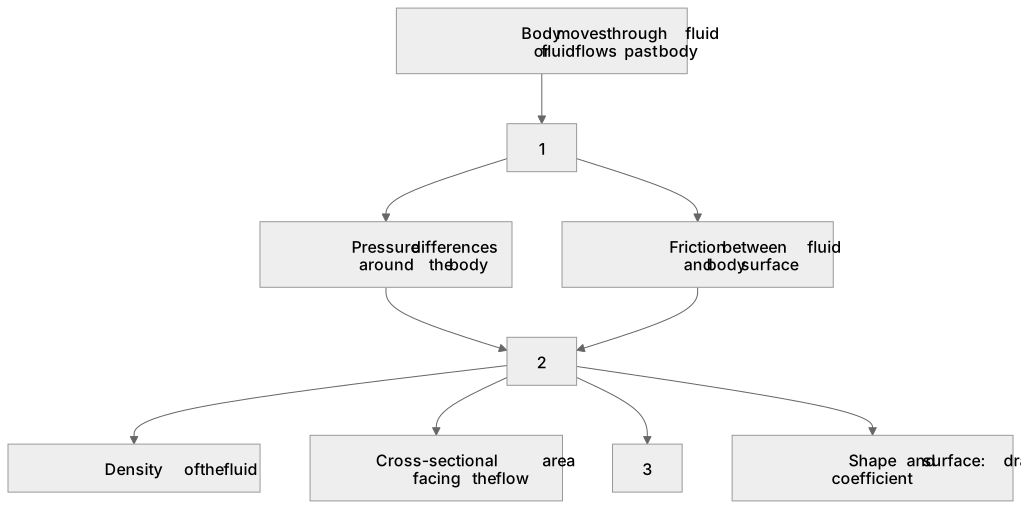
Some boxes have lost their names. Pick the right name for each number.
1Box 1
2Box 2
3Box 3
There is more to this lesson
The full lesson goes on to check your understanding and help you earn the marks. Create a free account to carry on, with your progress saved.
A week of Premium from your first lesson · Then the free plan continues · No card, no charge
Test your understanding of Fluid mechanics: Dynamic fluid force.
Active recall beats re-reading. Take an instant quiz now to test what you’ve learned and lock it into long-term memory.
A week of Premium from your first lesson · Then the free plan continues · No card, no charge