AQA · A-Level · Physical Education
Course version: 7582 · Version from Sept 2016
Hyperbaric chambers, cryotherapy.
Full specification wording
Injury prevention and the rehabilitation of injury: Hyperbaric chambers, cryotherapy.
Hyperbaric chambers and cryotherapy are contrasting rehabilitation methods with different physiological actions.
Checked against the AQA 7582 specification (opens in a new tab) on .
- Point 11 of 12
- 4 key terms
Study notes
From the checked teaching notes for this specification point.
The idea
Hyperbaric chambers and cryotherapy are contrasting rehabilitation methods with different physiological actions. A hyperbaric chamber exposes the body to raised atmospheric pressure with a high oxygen concentration, so more oxygen dissolves in plasma and delivery to hypoxic tissue improves, which can support healing and reduce swelling. Cryotherapy applies cold to tissue, lowering local temperature, metabolic demand and pain, and reducing blood flow, which limits secondary hypoxic damage and swelling in the early stage. Cryotherapy includes whole-body cryotherapy and local ice application. Both methods must be matched to the injury stage and used within safe limits, since oxygen toxicity and cold injury are possible risks.
What earns the marks
- A hyperbaric chamber uses raised atmospheric pressure with high oxygen concentration, increasing dissolved oxygen in plasma and delivery to hypoxic tissue.
- Improved oxygen delivery can support tissue healing and reduce swelling after injury.
- Cryotherapy lowers local tissue temperature, reducing metabolic demand, pain and blood flow.
- Reduced blood flow and metabolic demand limit secondary hypoxic damage and swelling in the early stage of healing.
Common mistakes and how to put them right
Confusing the two methods.
Put it right: Hyperbaric therapy raises pressure and oxygen delivery, while cryotherapy lowers tissue temperature.
Thinking cryotherapy speeds healing by increasing blood flow.
Put it right: Cold reduces local blood flow and metabolic demand, which limits secondary damage rather than directly repairing tissue.
Believing hyperbaric chambers are risk-free.
Put it right: Raised oxygen pressure can cause oxygen toxicity, so exposure is controlled.
Exam tips
- Contrast the two methods directly by naming the physiological variable each changes: pressure and oxygen delivery versus temperature and blood flow.
- Use correct terminology such as dissolved oxygen in plasma, metabolic demand and secondary hypoxic damage.
- Link each method to the healing stage where it is most appropriate rather than listing benefits without context.
Try the lesson
The start of the Injury prevention and the rehabilitation of injury: Hyperbaric chambers, cryotherapy. lesson, made from checked teaching notes for this specification point.
Have a go first
A performer with a swollen ankle sits in a cryotherapy chamber set to a very low air temperature for a few minutes. What is the main physiological effect of this treatment?
Listen
Hyperbaric chambers and cryotherapy are contrasting rehabilitation methods with different physiological actions. A hyperbaric chamber exposes the body to raised atmospheric pressure with a high oxygen concentration, so more oxygen dissolves in plasma and delivery to hypoxic tissue improves, which can support healing and reduce swelling. Cryotherapy applies cold to tissue, lowering local temperature, metabolic demand and pain, and reducing blood flow, which limits secondary hypoxic damage and swelling in the early stage. Cryotherapy includes whole-body cryotherapy and local ice application. Both methods must be matched to the injury stage and used within safe limits, since oxygen toxicity and cold injury are possible risks. A strong answer earns marks for these points. A hyperbaric chamber uses raised atmospheric pressure with high oxygen concentration, increasing dissolved oxygen in plasma and delivery to hypoxic tissue. Improved oxygen delivery can support tissue healing and reduce swelling after injury. Cryotherapy lowers local tissue temperature, reducing metabolic demand, pain and blood flow. Reduced blood flow and metabolic demand limit secondary hypoxic damage and swelling in the early stage of healing. Exam tip: Contrast the two methods directly by naming the physiological variable each changes: pressure and oxygen delivery versus temperature and blood flow.
See it
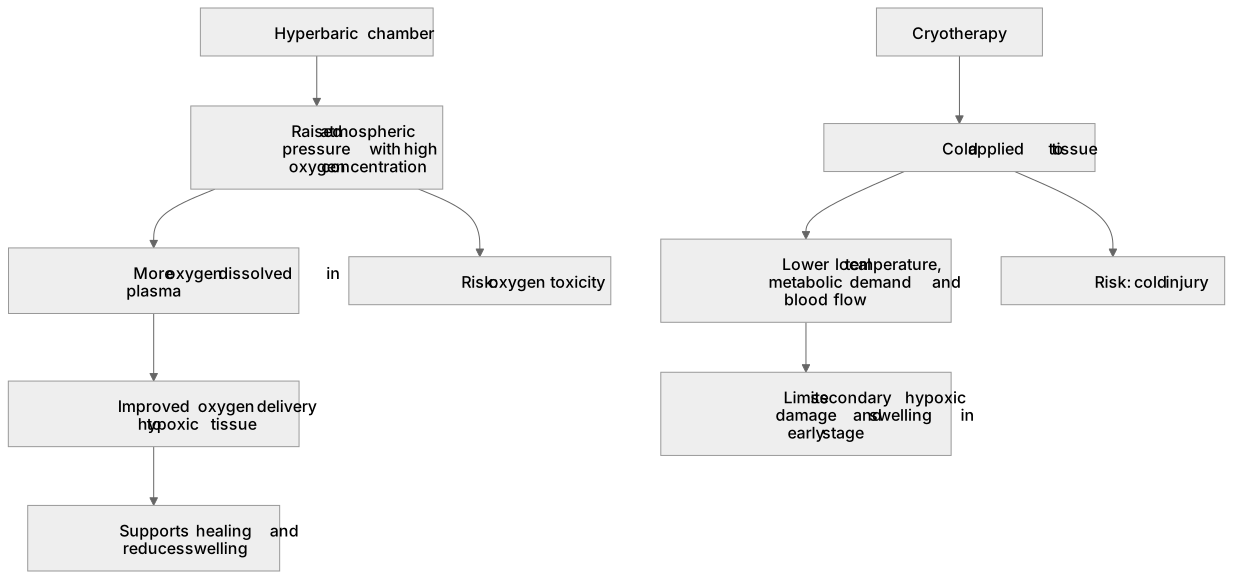
Key words
Say what each word means before you turn the card.
Hyperbaric chamber
Try answering aloud or in your head before turning the card.
Cryotherapy
Try answering aloud or in your head before turning the card.
Oxygen toxicity
Try answering aloud or in your head before turning the card.
Cold injury
Try answering aloud or in your head before turning the card.
See every definition
- Hyperbaric chamber
- Exposes the body to raised atmospheric pressure with a high oxygen concentration, so more oxygen dissolves in plasma and delivery to hypoxic tissue improves.
- Cryotherapy
- Applies cold to tissue, lowering local temperature, metabolic demand and pain, and reducing blood flow to limit secondary hypoxic damage and swelling in the early stage.
- Oxygen toxicity
- A possible risk of hyperbaric therapy, so exposure must be controlled and used within safe limits.
- Cold injury
- A possible risk of cryotherapy, so use must be matched to the injury stage and kept within safe limits.
Label the diagram
Some boxes have lost their names. Pick the right name for each number.
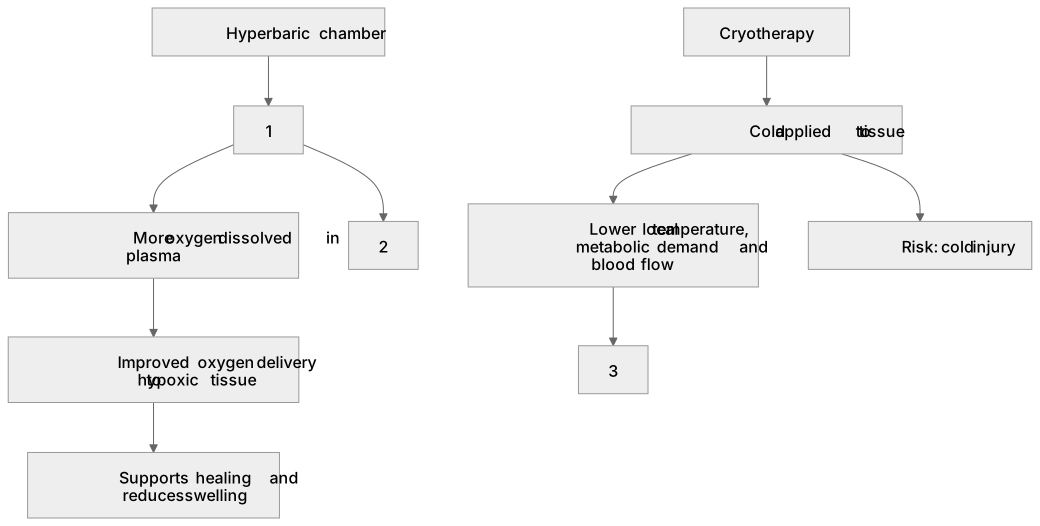
1Box 1
2Box 2
3Box 3
There is more to this lesson
The full lesson goes on to check your understanding and help you earn the marks. Create a free account to carry on, with your progress saved.
A week of Premium from your first lesson · Then the free plan continues · No card, no charge
Test your understanding of Injury prevention and the rehabilitation of injury: Hyperbaric chambers, cryotherapy.
Active recall beats re-reading. Take an instant quiz now to test what you’ve learned and lock it into long-term memory.
A week of Premium from your first lesson · Then the free plan continues · No card, no charge