AQA · A-Level · Physical Education
Course version: 7582 · Version from Sept 2016
Principles of training.
Full specification wording
Preparation and training methods in relation to maintaining physical activity and performance: Principles of training.
Principles of training are the rules a performer applies so that a training programme produces a training effect and remains safe.
Checked against the AQA 7582 specification (opens in a new tab) on .
- Point 7 of 19
- 4 key terms
Study notes
From the checked teaching notes for this specification point.
The idea
Principles of training are the rules a performer applies so that a training programme produces a training effect and remains safe. The core principles are specificity, progressive overload, reversibility, recovery and the FITT principles of frequency, intensity, time and type. Specificity means the programme must match the demands of the activity: a 100 m sprinter trains short, high-intensity efforts, while a marathon runner trains prolonged aerobic work. Progressive overload means gradually increasing the demand so the body adapts; if the demand never rises, improvement stops. Reversibility means that when training stops or drops below the level needed, adaptations are lost. Recovery means allowing rest between sessions so adaptation can occur. FITT describes how to apply overload: how often, how hard, how long and what kind of work.
What earns the marks
- Specificity: training must match the energy systems, muscles, movement patterns and intensity demands of the chosen activity.
- Progressive overload: the training demand must be increased gradually over time so the body continues to adapt.
- Reversibility: adaptations are lost when training stops or falls below the level required to maintain them.
- Recovery: rest periods are needed between sessions so the body can adapt and the performer avoids overtraining.
- FITT: frequency, intensity, time and type are the four variables used to apply progressive overload to a programme.
Common mistakes and how to put them right
Thinking overload means training as hard as possible every session.
Put it right: Overload means a gradual increase in demand, not maximal effort each time.
Confusing specificity with simply choosing a favourite sport.
Put it right: Specificity means matching the training to the precise demands of the activity.
Believing reversibility only happens after a long injury.
Put it right: Adaptations begin to decline whenever training stops or falls below the required level.
Treating recovery as laziness.
Put it right: Recovery is a planned part of training that allows adaptation to take place.
Exam tips
- Link each principle to a named activity and a specific training decision, such as increasing a sprinter's repetitions over weeks.
- Use FITT as a checklist when explaining how overload is applied, naming frequency, intensity, time and type.
- Distinguish clearly between overload, which drives adaptation, and recovery, which allows it to happen.
Try the lesson
The start of the Preparation and training methods in relation to maintaining physical activity and performance: Principles of training. lesson, made from checked teaching notes for this specification point.
Have a go first
A games player wants training to produce changes that carry over into match performance. Which training principle is being applied when the training replicates the movement patterns, energy demands and work-to-rest ratios of the sport?
Listen
Principles of training are the rules a performer applies so that a training programme produces a training effect and remains safe. The core principles are specificity, progressive overload, reversibility, recovery and the FITT principles of frequency, intensity, time and type. Specificity means the programme must match the demands of the activity: a 100 m sprinter trains short, high-intensity efforts, while a marathon runner trains prolonged aerobic work. Progressive overload means gradually increasing the demand so the body adapts; if the demand never rises, improvement stops. Reversibility means that when training stops or drops below the level needed, adaptations are lost. Recovery means allowing rest between sessions so adaptation can occur. FITT describes how to apply overload: how often, how hard, how long and what kind of work. A strong answer earns marks for these points. Specificity: training must match the energy systems, muscles, movement patterns and intensity demands of the chosen activity. Progressive overload: the training demand must be increased gradually over time so the body continues to adapt. Reversibility: adaptations are lost when training stops or falls below the level required to maintain them. Recovery: rest periods are needed between sessions so the body can adapt and the performer avoids overtraining. A common slip: Thinking overload means training as hard as possible every session. Instead, overload means a gradual increase in demand, not maximal effort each time. Exam tip: Link each principle to a named activity and a specific training decision, such as increasing a sprinter's repetitions over weeks.
See it
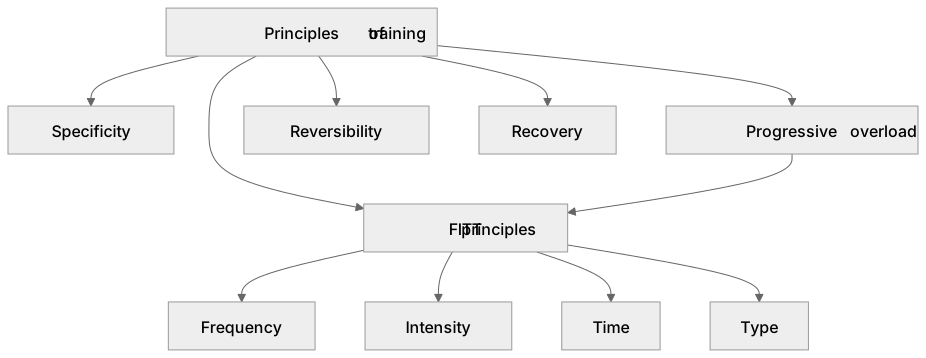
Key words
Say what each word means before you turn the card.
Specificity
Try answering aloud or in your head before turning the card.
Progressive overload
Try answering aloud or in your head before turning the card.
Reversibility
Try answering aloud or in your head before turning the card.
FITT
Try answering aloud or in your head before turning the card.
See every definition
- Specificity
- The programme must match the demands of the activity, such as short, high-intensity efforts for a sprinter or prolonged aerobic work for a marathon runner.
- Progressive overload
- Gradually increasing the demand so the body adapts; if the demand never rises, improvement stops.
- Reversibility
- When training stops or drops below the level needed, adaptations are lost.
- FITT
- The principles of frequency, intensity, time and type, describing how often, how hard, how long and what kind of work.
Label the diagram
Some boxes have lost their names. Pick the right name for each number.
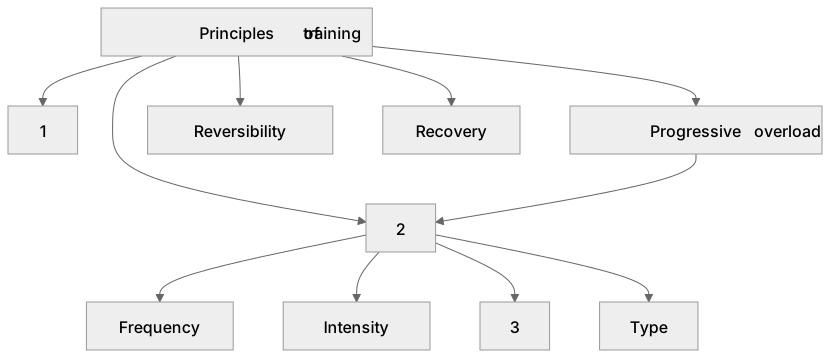
1Box 1
2Box 2
3Box 3
There is more to this lesson
The full lesson goes on to check your understanding and help you earn the marks. Create a free account to carry on, with your progress saved.
A week of Premium from your first lesson · Then the free plan continues · No card, no charge
Test your understanding of Preparation and training methods in relation to maintaining physical activity and performance: Principles of training.
Active recall beats re-reading. Take an instant quiz now to test what you’ve learned and lock it into long-term memory.
A week of Premium from your first lesson · Then the free plan continues · No card, no charge