AQA · A-Level · Physical Education
Course version: 7582 · Version from Sept 2016
Specificity, progressive overload, reversibility, recovery, Frequency…
Full specification wording
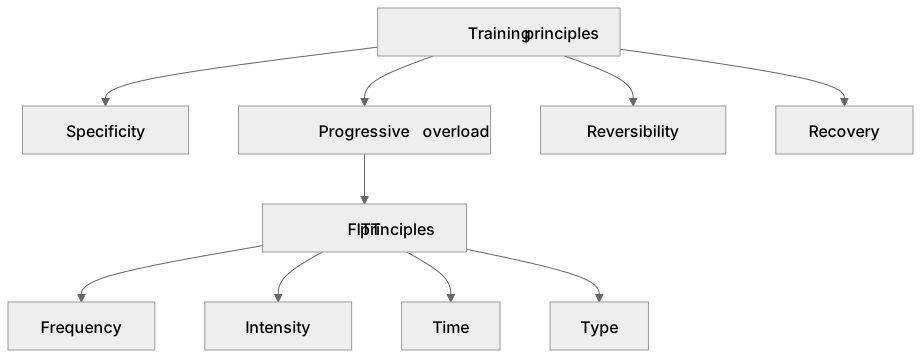
Preparation and training methods in relation to maintaining physical activity and performance: Specificity, progressive overload, reversibility, recovery, Frequency Intensity Time Type of Training (FITT) principles.
This statement lists the principles that govern effective training design.
Checked against the AQA 7582 specification (opens in a new tab) on .
- Point 8 of 19
- 4 key terms
Study notes
From the checked teaching notes for this specification point.
The idea
This statement lists the principles that govern effective training design. Specificity requires training to match the demands of the activity, so a swimmer trains upper-body pulling endurance while a sprinter trains short explosive efforts. Progressive overload requires the demand to increase gradually so the body keeps adapting. Reversibility means adaptations are lost when training stops or falls below the required level. Recovery means planned rest between sessions so adaptation can occur. FITT shows how overload is applied: frequency is how often training occurs, intensity is how hard the work is, time is how long each session lasts, and type is the method used, such as continuous, interval or resistance training.
What earns the marks
- Specificity: the programme must reflect the energy systems, muscle groups, movement patterns and intensities of the target activity.
- Progressive overload: training demand must be increased gradually so the body continues to adapt without excessive stress.
- Reversibility: fitness adaptations decline when training stops or falls below the level needed to maintain them.
- Recovery: planned rest between sessions allows adaptation and reduces the risk of overtraining.
- FITT: frequency, intensity, time and type are the variables used to apply progressive overload in a programme.
Common mistakes and how to put them right
Confusing frequency with intensity.
Put it right: Frequency is how often training occurs, while intensity is how hard the work is.
Assuming any increase in training counts as progressive overload.
Put it right: Overload must be a gradual, planned increase in demand.
Thinking reversibility applies only to complete inactivity.
Put it right: Adaptations decline whenever training falls below the level required to maintain them.
Treating type as unimportant.
Put it right: Type must match the activity through specificity, so the chosen method develops the required fitness component.
Exam tips
- Name the activity and the fitness component first, then explain how each principle shapes the programme.
- Use FITT to structure an answer about applying overload, giving a value or example for each variable.
- Explain reversibility and recovery as opposite pressures: too little training loses fitness, too little rest prevents adaptation.
Try the lesson
The start of the Preparation and training methods in relation to maintaining physical activity and performance: Specificity, progressive overload, reversibility, recovery, Frequency Intensity Time Type of Training (FITT) principles. lesson, made from checked teaching notes for this specification point.
Have a go first
In the FITT principles of training, which component is represented by the number of training sessions completed each week?
Listen
This statement lists the principles that govern effective training design. Specificity requires training to match the demands of the activity, so a swimmer trains upper-body pulling endurance while a sprinter trains short explosive efforts. Progressive overload requires the demand to increase gradually so the body keeps adapting. Reversibility means adaptations are lost when training stops or falls below the required level. Recovery means planned rest between sessions so adaptation can occur. FITT shows how overload is applied: frequency is how often training occurs, intensity is how hard the work is, time is how long each session lasts, and type is the method used, such as continuous, interval or resistance training. A strong answer earns marks for these points. Specificity: the programme must reflect the energy systems, muscle groups, movement patterns and intensities of the target activity. Progressive overload: training demand must be increased gradually so the body continues to adapt without excessive stress. Reversibility: fitness adaptations decline when training stops or falls below the level needed to maintain them. Recovery: planned rest between sessions allows adaptation and reduces the risk of overtraining. A common slip: Confusing frequency with intensity. Instead, frequency is how often training occurs, while intensity is how hard the work is. Exam tip: Name the activity and the fitness component first, then explain how each principle shapes the programme.
See it
Key words
Say what each word means before you turn the card.
Specificity
Try answering aloud or in your head before turning the card.
Progressive overload
Try answering aloud or in your head before turning the card.
Reversibility
Try answering aloud or in your head before turning the card.
Recovery
Try answering aloud or in your head before turning the card.
See every definition
- Specificity
- Training must match the demands of the activity, so the programme reflects the energy systems, muscle groups, movement patterns and intensities of the target activity.
- Progressive overload
- Training demand must be increased gradually so the body continues to adapt without excessive stress.
- Reversibility
- Fitness adaptations decline when training stops or falls below the level needed to maintain them.
- Recovery
- Planned rest between sessions allows adaptation and reduces the risk of overtraining.
Label the diagram
Some boxes have lost their names. Pick the right name for each number.
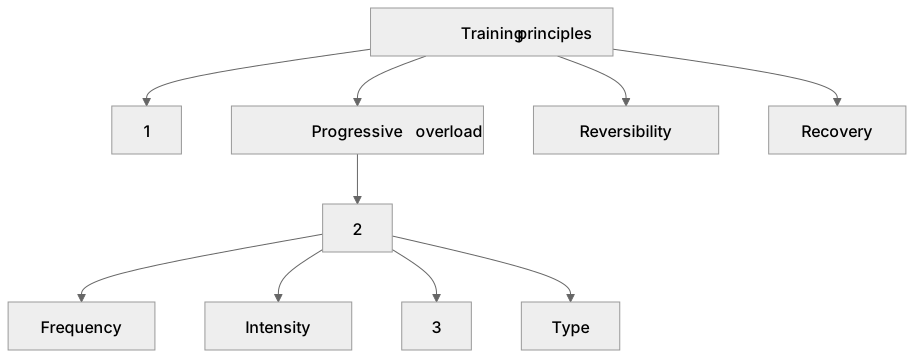
1Box 1
2Box 2
3Box 3
There is more to this lesson
The full lesson goes on to check your understanding and help you earn the marks. Create a free account to carry on, with your progress saved.
A week of Premium from your first lesson · Then the free plan continues · No card, no charge
Test your understanding of Preparation and training methods in relation to maintaining physical activity and performance: Specificity, progressive overload, reversibility, recovery, Frequency Intensity Time Type of Training (FITT) principles.
Active recall beats re-reading. Take an instant quiz now to test what you’ve learned and lock it into long-term memory.
A week of Premium from your first lesson · Then the free plan continues · No card, no charge