AQA · A-Level · Physical Education
Course version: 7582 · Version from Sept 2016
Tapering, peaking.
Full specification wording
Preparation and training methods in relation to maintaining physical activity and performance: Tapering, peaking.
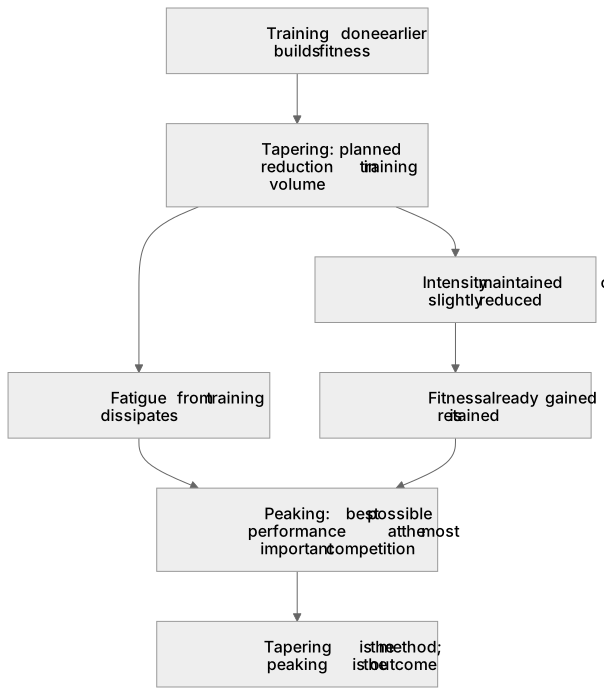
Tapering is the planned reduction of training volume, and often some intensity, in the days or weeks before a key competition so that fatigue from training dissipates while fitness gained is retained.
Checked against the AQA 7582 specification (opens in a new tab) on .
- Point 12 of 19
- 4 key terms
Study notes
From the checked teaching notes for this specification point.
The idea
Tapering is the planned reduction of training volume, and often some intensity, in the days or weeks before a key competition so that fatigue from training dissipates while fitness gained is retained. Peaking is the process of timing that taper so the performer reaches their best possible performance at the most important competition. A swimmer might reduce pool volume over two to three weeks before a championship while keeping short, fast efforts, so they arrive rested but sharp. Tapering is the method; peaking is the outcome it aims to produce. Both depend on the training done earlier, because a taper cannot create fitness that was never built.
What earns the marks
- Tapering is a planned reduction in training volume before a key competition.
- Tapering aims to reduce fatigue while retaining the fitness already gained.
- Intensity may be maintained or slightly reduced during a taper, but volume falls most.
- Peaking is reaching optimal performance at the right time, usually a major competition.
- Peaking is achieved through effective tapering and careful planning of the training year.
- A taper cannot compensate for inadequate training earlier in the preparation phase.
Common mistakes and how to put them right
Thinking tapering means stopping training.
Put it right: Tapering reduces volume while keeping some training stimulus so fitness is retained.
Confusing tapering with peaking.
Put it right: Tapering is the reduction in training, while peaking is the resulting state of optimal readiness.
Believing a longer taper is always better.
Put it right: An excessively long or severe taper can reduce fitness, so the taper must be planned.
Assuming peaking happens by chance.
Put it right: Peaking is planned so the performer is at their best for a target competition.
Exam tips
- Distinguish clearly between the method (tapering) and the outcome (peaking) in your answer.
- Refer to volume and intensity when explaining what changes during a taper.
- Use a specific competition as the target when explaining peaking.
Try the lesson
The start of the Preparation and training methods in relation to maintaining physical activity and performance: Tapering, peaking. lesson, made from checked teaching notes for this specification point.
Have a go first
A swimmer reduces training volume in the final two weeks before a major championship while keeping some high-intensity work. What is this reduction in training load called?
Listen
Tapering is the planned reduction of training volume, and often some intensity, in the days or weeks before a key competition so that fatigue from training dissipates while fitness gained is retained. Peaking is the process of timing that taper so the performer reaches their best possible performance at the most important competition. A swimmer might reduce pool volume over two to three weeks before a championship while keeping short, fast efforts, so they arrive rested but sharp. Tapering is the method; peaking is the outcome it aims to produce. Both depend on the training done earlier, because a taper cannot create fitness that was never built. A strong answer earns marks for these points. Tapering is a planned reduction in training volume before a key competition. Tapering aims to reduce fatigue while retaining the fitness already gained. Intensity may be maintained or slightly reduced during a taper, but volume falls most. Peaking is reaching optimal performance at the right time, usually a major competition. A common slip: Thinking tapering means stopping training. Instead, tapering reduces volume while keeping some training stimulus so fitness is retained. Exam tip: Distinguish clearly between the method (tapering) and the outcome (peaking) in your answer.
See it
Key words
Say what each word means before you turn the card.
Tapering
Try answering aloud or in your head before turning the card.
Peaking
Try answering aloud or in your head before turning the card.
Balance of fatigue reduction and fitness retention
Try answering aloud or in your head before turning the card.
Planning around a target competition
Try answering aloud or in your head before turning the card.
See every definition
- Tapering
- The planned reduction of training volume, and often some intensity, in the days or weeks before a key competition so that fatigue from training dissipates while fitness gained is retained.
- Peaking
- The process of timing the taper so the performer reaches their best possible performance at the most important competition.
- Balance of fatigue reduction and fitness retention
- Aiming to reduce fatigue while retaining the fitness already gained, since a taper cannot create fitness that was never built.
- Planning around a target competition
- Achieved through effective tapering and careful planning of the training year so the performer is at their best for a target competition.
Label the diagram
Some boxes have lost their names. Pick the right name for each number.
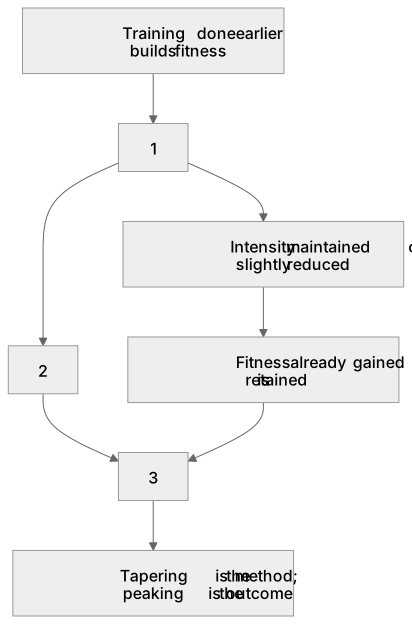
1Box 1
2Box 2
3Box 3
There is more to this lesson
The full lesson goes on to check your understanding and help you earn the marks. Create a free account to carry on, with your progress saved.
A week of Premium from your first lesson · Then the free plan continues · No card, no charge
Test your understanding of Preparation and training methods in relation to maintaining physical activity and performance: Tapering, peaking.
Active recall beats re-reading. Take an instant quiz now to test what you’ve learned and lock it into long-term memory.
A week of Premium from your first lesson · Then the free plan continues · No card, no charge