AQA · A-Level · Physical Education
Course version: 7582 · Version from Sept 2016
Social development theory (Vygotsky).
Full specification wording
Principles and theories of learning and performance: Social development theory (Vygotsky).
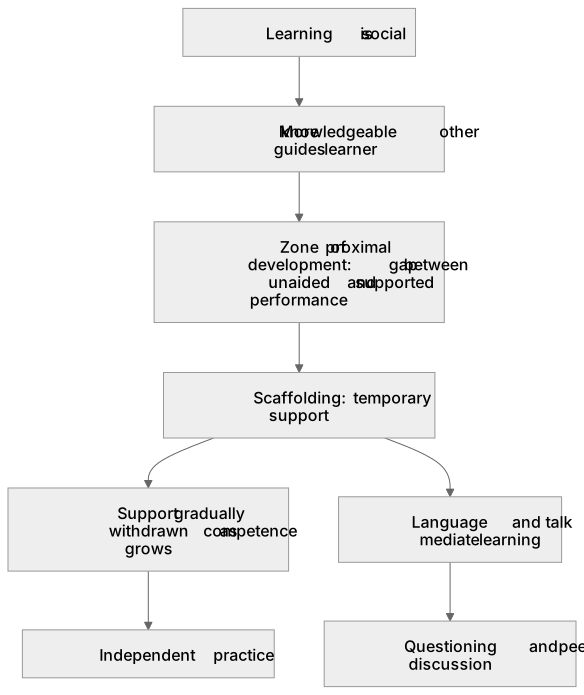
Vygotsky's social development theory holds that learning is a social process: a learner develops skill through interaction with a more knowledgeable other, who guides and supports them.
Checked against the AQA 7582 specification (opens in a new tab) on .
- Point 12 of 12
- 4 key terms
Study notes
From the checked teaching notes for this specification point.
The idea
Vygotsky's social development theory holds that learning is a social process: a learner develops skill through interaction with a more knowledgeable other, who guides and supports them. The gap between what a learner can do alone and what they can do with help is the zone of proximal development (ZPD). Within that zone, scaffolding provides temporary support, such as demonstration, cueing or feedback, which is gradually withdrawn as competence grows. In physical education, a coach might model a badminton overhead clear, then guide the learner through it, then let the learner practise unaided. Language and talk also mediate learning, so questioning and peer discussion matter. The theory therefore explains why guided practice and peer teaching can accelerate skill development.
What earns the marks
- Learning is social: skill develops through interaction with a more knowledgeable other, such as a coach, teacher or more skilled peer.
- The zone of proximal development (ZPD) is the gap between what a learner can do independently and what they can achieve with support.
- Scaffolding is temporary assistance, for example demonstration, verbal cueing, manual guidance or feedback, which is reduced as the learner improves.
- Language and social interaction mediate learning, so questioning, instruction and peer discussion support skill acquisition.
- Applying the theory: a coach models a badminton overhead clear, guides the learner through it, then withdraws support for independent practice.
Common mistakes and how to put them right
Misunderstanding: Vygotsky's theory says learners should always work alone.
Put it right: It says learning is social and is supported by a more knowledgeable other within the ZPD.
Misunderstanding: scaffolding is permanent support.
Put it right: Scaffolding is temporary and is gradually withdrawn as competence increases.
Misunderstanding: the ZPD is the same as a learner's current independent ability.
Put it right: The ZPD is the gap between independent ability and what can be achieved with guidance.
Misunderstanding: Vygotsky's theory is only about physical demonstration.
Put it right: Language, questioning and social interaction also mediate learning.
Exam tips
- Link each term to a practical example: name the skill, the more knowledgeable other and the support given.
- When defining the ZPD, state both boundaries: what the learner can do alone and what they can do with help.
- Use the term scaffolding only for temporary support that is withdrawn, and say how it is withdrawn.
Try the lesson
The start of the Principles and theories of learning and performance: Social development theory (Vygotsky). lesson, made from checked teaching notes for this specification point.
Have a go first
In Vygotsky's social development theory, what name is given to the gap between what a learner can do independently and what the learner can do with support from a more knowledgeable other?
Listen
Vygotsky's social development theory holds that learning is a social process: a learner develops skill through interaction with a more knowledgeable other, who guides and supports them. The gap between what a learner can do alone and what they can do with help is the zone of proximal development (ZPD). Within that zone, scaffolding provides temporary support, such as demonstration, cueing or feedback, which is gradually withdrawn as competence grows. In physical education, a coach might model a badminton overhead clear, then guide the learner through it, then let the learner practise unaided. Language and talk also mediate learning, so questioning and peer discussion matter. The theory therefore explains why guided practice and peer teaching can accelerate skill development. A strong answer earns marks for these points. Learning is social: skill develops through interaction with a more knowledgeable other, such as a coach, teacher or more skilled peer. The zone of proximal development (ZPD) is the gap between what a learner can do independently and what they can achieve with support. Scaffolding is temporary assistance, for example demonstration, verbal cueing, manual guidance or feedback, which is reduced as the learner improves. Language and social interaction mediate learning, so questioning, instruction and peer discussion support skill acquisition. A common slip: Misunderstanding: Vygotsky's theory says learners should always work alone. Instead, it says learning is social and is supported by a more knowledgeable other within the ZPD. Exam tip: Link each term to a practical example: name the skill, the more knowledgeable other and the support given.
See it
Watch it explained
What is the one idea the video explains? Say it in a sentence.
Read the described scene instead
Vygotsky's social development theory holds that learning is a social process. A learner develops skill through interaction with a more knowledgeable other, such as a coach, teacher or more skilled peer. This person guides and supports the learner. The zone of proximal development, or ZPD, is the gap between what a learner can do alone and what they can do with help. It has two boundaries: independent ability and supported achievement. The ZPD is not the same as current independent ability. Within the ZPD, scaffolding provides temporary support. It can include demonstration, verbal cueing, manual guidance or feedback. Scaffolding is gradually withdrawn as competence grows, so it is not permanent support. Connect this to coaching. Pause briefly to think how you would structure a badminton overhead clear. In this example, a coach first models the overhead clear. The coach then guides the learner through it with cues and feedback. Finally, the learner practises unaided as support is withdrawn. Several misconceptions are worth correcting. Vygotsky does not say learners should always work alone; learning is social and supported by a more knowledgeable other. Scaffolding is not permanent; it is temporary and gradually withdrawn. The ZPD is not the learner's current independent ability; it is the gap between that ability and what can be achieved with guidance. The theory is not only about physical demonstration, because language, questioning and peer discussion also mediate learning. In summary, Vygotsky's theory explains learning through social interaction. The more knowledgeable other supports the learner within the ZPD. Scaffolding is temporary and is withdrawn as competence grows. Language and talk mediate learning, so questioning and peer discussion matter. Guided practice and peer teaching can therefore support skill development.
Key words
Say what each word means before you turn the card.
Social interaction in learning
Try answering aloud or in your head before turning the card.
Zone of proximal development
Try answering aloud or in your head before turning the card.
Scaffolding and guided practice
Try answering aloud or in your head before turning the card.
Language as a mediating tool
Try answering aloud or in your head before turning the card.
See every definition
- Social interaction in learning
- Learning is a social process in which a learner develops skill through interaction with a more knowledgeable other, who guides and supports them.
- Zone of proximal development
- The gap between what a learner can do alone and what they can do with help.
- Scaffolding and guided practice
- Temporary support, such as demonstration, cueing or feedback, which is gradually withdrawn as competence grows.
- Language as a mediating tool
- Language and talk mediate learning, so questioning and peer discussion matter.
Label the diagram
Some boxes have lost their names. Pick the right name for each number.
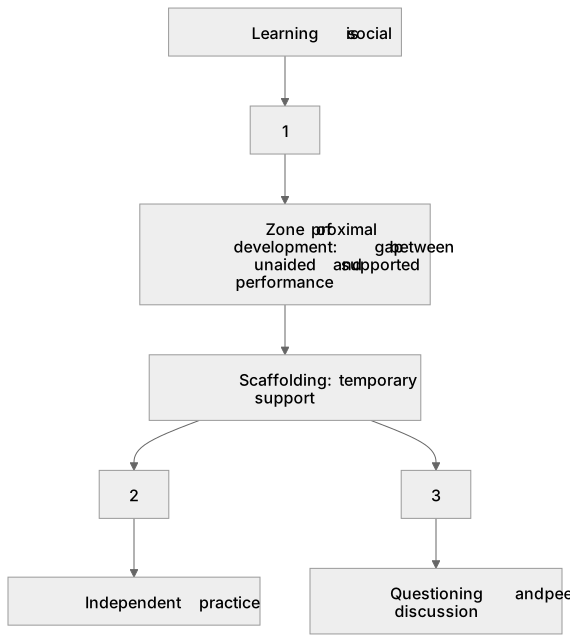
1Box 1
2Box 2
3Box 3
There is more to this lesson
The full lesson goes on to check your understanding and help you earn the marks. Create a free account to carry on, with your progress saved.
A week of Premium from your first lesson · Then the free plan continues · No card, no charge
Test your understanding of Principles and theories of learning and performance: Social development theory (Vygotsky).
Active recall beats re-reading. Take an instant quiz now to test what you’ve learned and lock it into long-term memory.
A week of Premium from your first lesson · Then the free plan continues · No card, no charge