AQA · A-Level · Physical Education
Course version: 7582 · Version from Sept 2016
Characteristics of self-efficacy, self-confidence and self-esteem.
Full specification wording
Self-efficacy and confidence: Characteristics of self-efficacy, self-confidence and self-esteem.
These three constructs are related but distinct, and AQA expects you to separate them by what each one is about.
Checked against the AQA 7582 specification (opens in a new tab) on .
- Point 1 of 6
- 4 key terms
Study notes
From the checked teaching notes for this specification point.
The idea
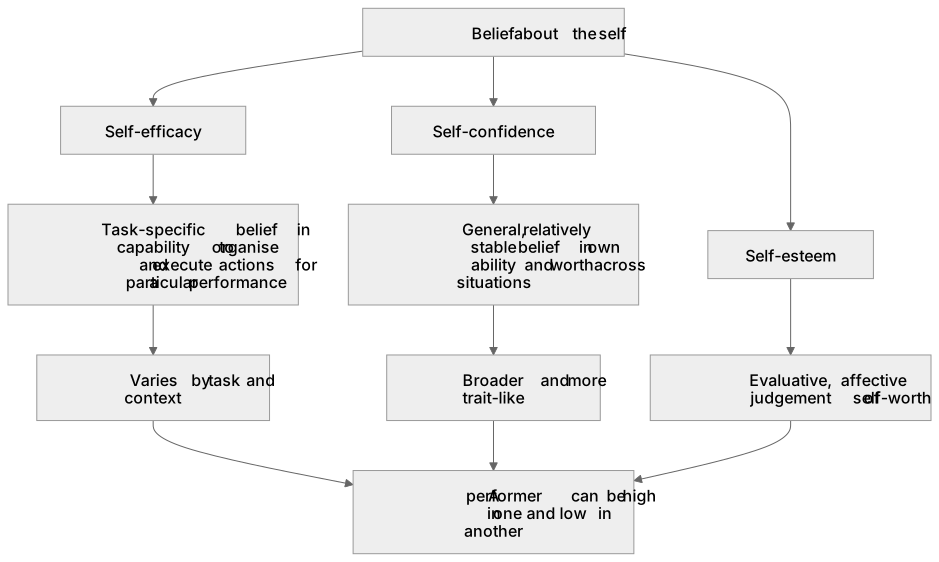
These three constructs are related but distinct, and AQA expects you to separate them by what each one is about. Self-confidence is a general, enduring belief in your own worth and ability across many situations — a netballer who generally expects to do well. Self-efficacy is Bandura's term for a task-specific belief: the same player may feel highly efficacious about shooting but not about marking a tall opponent. Self-esteem is evaluative and affective — how much you like and value yourself, so a performer can be highly efficacious at a skill yet still have low self-esteem. A useful method is to name the target (self, task or global worth), then judge whether the belief is stable or changeable.
What earns the marks
- Self-confidence: a general, relatively stable belief in one's own ability and worth across situations.
- Self-efficacy: a task-specific belief in one's capability to organise and execute the actions needed for a particular performance.
- Self-esteem: an evaluative, affective judgement of self-worth — how positively a person values themselves.
- Self-efficacy varies by task and context, whereas self-confidence is broader and more trait-like.
- A performer can be high in one and low in another, so the three must not be treated as synonyms.
- Sporting example: a footballer confident overall may have low self-efficacy for penalties after repeated misses.
Common mistakes and how to put them right
Treating the three terms as synonyms.
Put it right by stating that self-efficacy is task-specific, self-confidence is general and self-esteem is an evaluation of self-worth.
Assuming high self-efficacy always means high self-esteem.
Put it right by noting that a performer can believe in a specific skill yet still value themselves poorly.
Describing self-confidence as fixed and unchangeable.
Put it right by explaining that all three can be developed through experience, feedback and success.
Exam tips
- Define each term in one precise sentence before applying it to a sporting example.
- Use a single performer across all three terms so the distinctions are visible.
- Check the stem for the words 'task-specific' or 'self-worth' — they usually signal which construct is wanted.
Try the lesson
The start of the Self-efficacy and confidence: Characteristics of self-efficacy, self-confidence and self-esteem. lesson, made from checked teaching notes for this specification point.
Have a go first
Which description best matches self-efficacy in a sporting context?
Listen
These three constructs are related but distinct, and AQA expects you to separate them by what each one is about. Self-confidence is a general, enduring belief in your own worth and ability across many situations — a netballer who generally expects to do well. Self-efficacy is Bandura's term for a task-specific belief: the same player may feel highly efficacious about shooting but not about marking a tall opponent. Self-esteem is evaluative and affective — how much you like and value yourself, so a performer can be highly efficacious at a skill yet still have low self-esteem. A useful method is to name the target (self, task or global worth), then judge whether the belief is stable or changeable. A strong answer earns marks for these points. Self-confidence: a general, relatively stable belief in one's own ability and worth across situations. Self-efficacy: a task-specific belief in one's capability to organise and execute the actions needed for a particular performance. Self-esteem: an evaluative, affective judgement of self-worth — how positively a person values themselves. Self-efficacy varies by task and context, whereas self-confidence is broader and more trait-like. A common slip: Treating the three terms as synonyms. Instead, stating that self-efficacy is task-specific, self-confidence is general and self-esteem is an evaluation of self-worth. Exam tip: Define each term in one precise sentence before applying it to a sporting example.
See it
Key words
Say what each word means before you turn the card.
Self-confidence
Try answering aloud or in your head before turning the card.
Self-efficacy
Try answering aloud or in your head before turning the card.
Self-esteem
Try answering aloud or in your head before turning the card.
Stability and changeability of beliefs
Try answering aloud or in your head before turning the card.
See every definition
- Self-confidence
- A general, relatively stable belief in one's own ability and worth across situations.
- Self-efficacy
- A task-specific belief in one's capability to organise and execute the actions needed for a particular performance.
- Self-esteem
- An evaluative, affective judgement of self-worth — how positively a person values themselves.
- Stability and changeability of beliefs
- All three constructs can be developed through experience, feedback and success, so self-confidence is not fixed and unchangeable.
Label the diagram
Some boxes have lost their names. Pick the right name for each number.
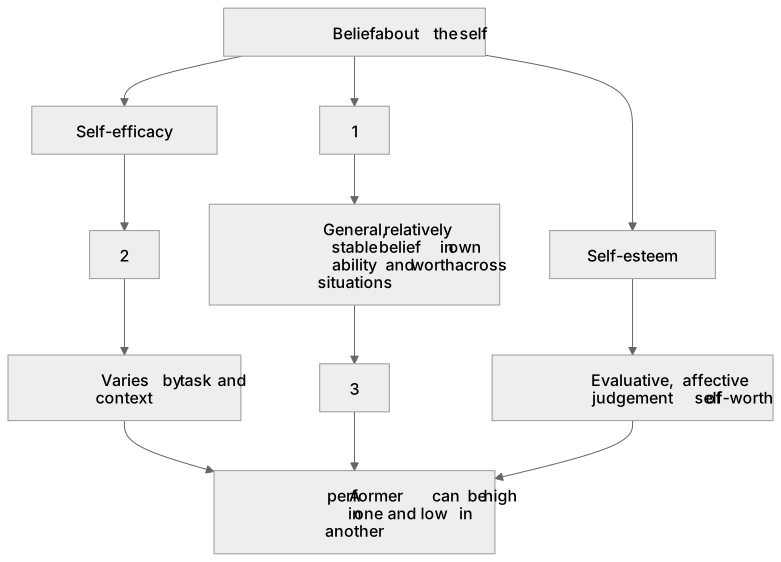
1Box 1
2Box 2
3Box 3
There is more to this lesson
The full lesson goes on to check your understanding and help you earn the marks. Create a free account to carry on, with your progress saved.
A week of Premium from your first lesson · Then the free plan continues · No card, no charge
Test your understanding of Self-efficacy and confidence: Characteristics of self-efficacy, self-confidence and self-esteem.
Active recall beats re-reading. Take an instant quiz now to test what you’ve learned and lock it into long-term memory.
A week of Premium from your first lesson · Then the free plan continues · No card, no charge