AQA · A-Level · Physical Education
Course version: 7582 · Version from Sept 2016
Self-efficacy and confidence: Bandura’s Model of self-efficacy.
Bandura proposed that self-efficacy is built from four sources, and AQA requires them to be named and applied.
Checked against the AQA 7582 specification (opens in a new tab) on .
- Point 2 of 6
- 4 key terms
Study notes
From the checked teaching notes for this specification point.
The idea
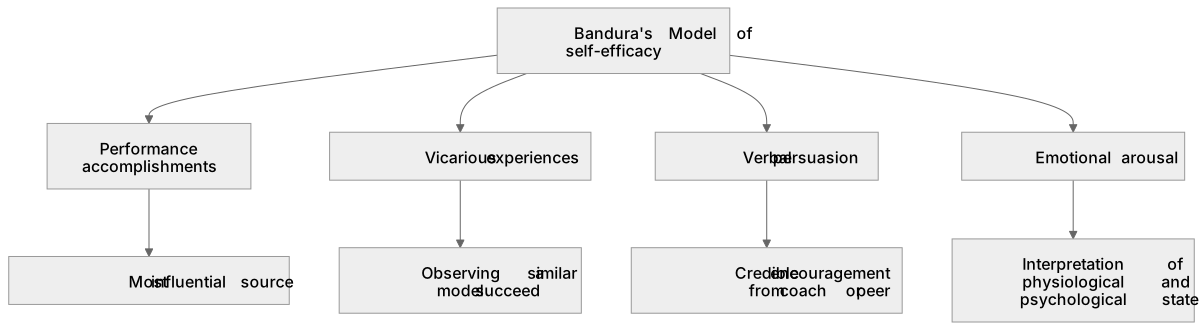
Bandura proposed that self-efficacy is built from four sources, and AQA requires them to be named and applied. The strongest is performance accomplishments — previous success at the task, such as a gymnast landing a vault in training. Vicarious experiences come next: watching a similar performer succeed, which is most powerful when the model is close in ability. Verbal persuasion is encouragement from a coach or peer, effective only if the persuader is credible. Emotional arousal matters too: a raised heart rate can be read as readiness or fear, and that interpretation shapes efficacy. A method is to rank the four sources by strength, then apply each to one performer preparing for a specific skill.
What earns the marks
- Performance accomplishments: previous successful performance of the task is the most influential source of self-efficacy.
- Vicarious experiences: observing a similar model succeed raises the observer's belief that they can succeed too.
- Verbal persuasion: credible encouragement from a coach or significant other can raise self-efficacy, especially when backed by evidence.
- Emotional arousal: the performer's interpretation of their physiological and psychological state (e.g. nerves or mood) influences efficacy beliefs.
- The four sources differ in strength, with performance accomplishments generally the most powerful.
- Application: a basketballer's free-throw efficacy grows from made shots, watching a teammate succeed, coach encouragement and reading arousal as focus.
Common mistakes and how to put them right
Listing 'mastery experiences': correct this by using the exact AQA term 'performance accomplishments'.
Listing 'physiological states': correct this by using the exact AQA term 'emotional arousal'.
Treating verbal persuasion as equally powerful as performance accomplishments.
Put it right by ranking performance accomplishments as generally the strongest source.
Exam tips
- Name the source using exact AQA terminology, then immediately apply it to a named performer and skill.
- Rank the sources by strength when the question asks for the most influential.
- Link emotional arousal to interpretation — nerves can be read as readiness or as threat.
Try the lesson
The start of the Self-efficacy and confidence: Bandura’s Model of self-efficacy. lesson, made from checked teaching notes for this specification point.
Have a go first
In Bandura's model, which term describes a performer's belief in their own capability to organise and execute the actions required to reach a given level of performance?
Listen
Bandura proposed that self-efficacy is built from four sources, and AQA requires them to be named and applied. The strongest is performance accomplishments — previous success at the task, such as a gymnast landing a vault in training. Vicarious experiences come next: watching a similar performer succeed, which is most powerful when the model is close in ability. Verbal persuasion is encouragement from a coach or peer, effective only if the persuader is credible. Emotional arousal matters too: a raised heart rate can be read as readiness or fear, and that interpretation shapes efficacy. A method is to rank the four sources by strength, then apply each to one performer preparing for a specific skill. A strong answer earns marks for these points. Performance accomplishments: previous successful performance of the task is the most influential source of self-efficacy. Vicarious experiences: observing a similar model succeed raises the observer's belief that they can succeed too. Verbal persuasion: credible encouragement from a coach or significant other can raise self-efficacy, especially when backed by evidence. Emotional arousal: the performer's interpretation of their physiological and psychological state (e.g. nerves or mood) influences efficacy beliefs. A common slip: Treating verbal persuasion as equally powerful as performance accomplishments. Instead, ranking performance accomplishments as generally the strongest source. Exam tip: Name the source using exact AQA terminology, then immediately apply it to a named performer and skill.
See it
Key words
Say what each word means before you turn the card.
Performance accomplishments
Try answering aloud or in your head before turning the card.
Vicarious experiences
Try answering aloud or in your head before turning the card.
Verbal persuasion
Try answering aloud or in your head before turning the card.
Emotional arousal
Try answering aloud or in your head before turning the card.
See every definition
- Performance accomplishments
- Previous successful performance of the task is the most influential source of self-efficacy.
- Vicarious experiences
- Observing a similar model succeed raises the observer's belief that they can succeed too.
- Verbal persuasion
- Credible encouragement from a coach or significant other can raise self-efficacy, especially when backed by evidence.
- Emotional arousal
- The performer's interpretation of their physiological and psychological state influences efficacy beliefs.
Label the diagram
Some boxes have lost their names. Pick the right name for each number.
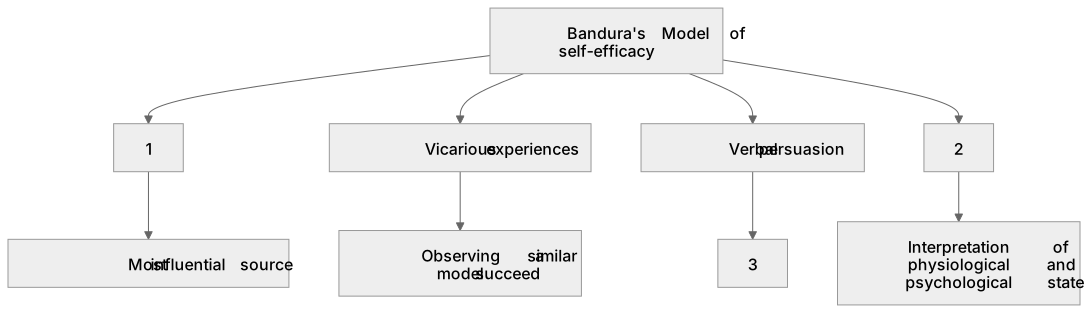
1Box 1
2Box 2
3Box 3
There is more to this lesson
The full lesson goes on to check your understanding and help you earn the marks. Create a free account to carry on, with your progress saved.
A week of Premium from your first lesson · Then the free plan continues · No card, no charge
Test your understanding of Self-efficacy and confidence: Bandura’s Model of self-efficacy.
Active recall beats re-reading. Take an instant quiz now to test what you’ve learned and lock it into long-term memory.
A week of Premium from your first lesson · Then the free plan continues · No card, no charge