AQA · A-Level · Physical Education
Course version: 7582 · Version from Sept 2016
Shoulder and hip (adduction and abduction).
Full specification wording
The musculo-skeletal system and analysis of movement in physical activities: Shoulder and hip (adduction and abduction).
Abduction is movement of a limb away from the midline of the body, and adduction is movement of a limb towards or across the midline.
Checked against the AQA 7582 specification (opens in a new tab) on .
- Point 6 of 10
- 4 key terms
Study notes
From the checked teaching notes for this specification point.
The idea
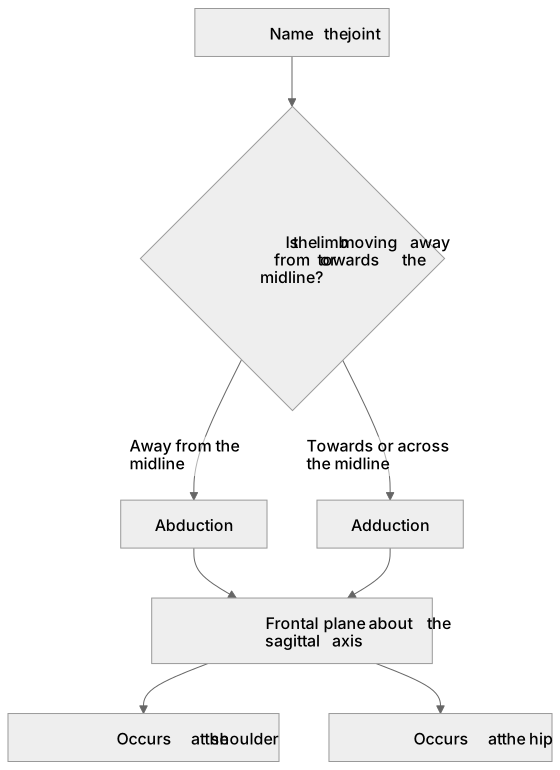
Abduction is movement of a limb away from the midline of the body, and adduction is movement of a limb towards or across the midline. Both occur at the shoulder and at the hip, and both take place in the frontal plane about the sagittal axis. At the shoulder, lifting the arm out sideways to a T shape is abduction, while bringing it back down to the side is adduction. At the hip, stepping the leg out to the side is abduction, while bringing it back towards or across the body is adduction. To analyse a skill, name the joint, decide whether the limb is moving away from or towards the midline, then label the action and link it to the frontal plane and sagittal axis.
What earns the marks
- Abduction is movement of a limb away from the midline of the body.
- Adduction is movement of a limb towards or across the midline of the body.
- In analysis, the joint is named first, then the direction of movement relative to the midline determines whether the action is abduction or adduction.
Common mistakes and how to put them right
Reversing the definitions: abduction moves a limb away from the midline and adduction moves it towards the midline, so raising the arm sideways to a T shape is abduction, not adduction.
Believing abduction and adduction occur only at the shoulder.
Put it right: Both actions also occur at the hip, for example stepping the leg out to the side is hip abduction.
Placing these actions in the wrong plane.
Put it right: Abduction and adduction are frontal-plane movements about the sagittal axis, not sagittal-plane movements about the frontal axis.
Exam tips
- Use the memory link that abduction takes the limb away from the body and adduction adds it back towards the midline.
- For each example, name the joint, state the direction of movement relative to the midline, then give the action, plane and axis in that order.
- Check both the shoulder and the hip when revising, since a question may ask about either joint or ask you to compare the two.
Try the lesson
The start of the The musculo-skeletal system and analysis of movement in physical activities: Shoulder and hip (adduction and abduction). lesson, made from checked teaching notes for this specification point.
Have a go first
During the downward phase of a star jump, a performer brings their arms from a wide sideways position back down to the sides of their body. What is this movement at the shoulder joint called?
Listen
Abduction is movement of a limb away from the midline of the body, and adduction is movement of a limb towards or across the midline. Both occur at the shoulder and at the hip, and both take place in the frontal plane about the sagittal axis. At the shoulder, lifting the arm out sideways to a T shape is abduction, while bringing it back down to the side is adduction. At the hip, stepping the leg out to the side is abduction, while bringing it back towards or across the body is adduction. To analyse a skill, name the joint, decide whether the limb is moving away from or towards the midline, then label the action and link it to the frontal plane and sagittal axis. A strong answer earns marks for these points. Abduction is movement of a limb away from the midline of the body. Adduction is movement of a limb towards or across the midline of the body. In analysis, the joint is named first, then the direction of movement relative to the midline determines whether the action is abduction or adduction. Exam tip: Use the memory link that abduction takes the limb away from the body and adduction adds it back towards the midline.
See it
Key words
Say what each word means before you turn the card.
Abduction
Try answering aloud or in your head before turning the card.
Adduction
Try answering aloud or in your head before turning the card.
Frontal plane and sagittal axis
Try answering aloud or in your head before turning the card.
Movement analysis
Try answering aloud or in your head before turning the card.
See every definition
- Abduction
- Movement of a limb away from the midline of the body, such as lifting the arm out sideways to a T shape at the shoulder.
- Adduction
- Movement of a limb towards or across the midline of the body, such as bringing the arm back down to the side at the shoulder.
- Frontal plane and sagittal axis
- The context in which abduction and adduction take place, as these actions are frontal-plane movements about the sagittal axis.
- Movement analysis
- Naming the joint, deciding whether the limb moves away from or towards the midline, then labelling the action and linking it to the frontal plane and sagittal axis.
There is more to this lesson
The full lesson goes on to check your understanding and help you earn the marks. Create a free account to carry on, with your progress saved.
A week of Premium from your first lesson · Then the free plan continues · No card, no charge
Test your understanding of The musculo-skeletal system and analysis of movement in physical activities: Shoulder and hip (adduction and abduction).
Active recall beats re-reading. Take an instant quiz now to test what you’ve learned and lock it into long-term memory.
A week of Premium from your first lesson · Then the free plan continues · No card, no charge