AQA · GCSE · Physics
Course version: 8463 · Version from Sept 2016
Adverse road conditions include wet or icy conditions. Poor condition of…
Full specification wording
Factors affecting braking distance 1: Adverse road conditions include wet or icy conditions. Poor condition of the vehicle is limited to the vehicle's brakes or tyres.
Adverse road conditions include wet or icy conditions, which reduce friction between the tyres and the road.
Checked against the AQA 8463 specification (opens in a new tab) on .
- Point 2 of 3
- 3 key terms
Study notes
From the checked teaching notes for this specification point.
The idea
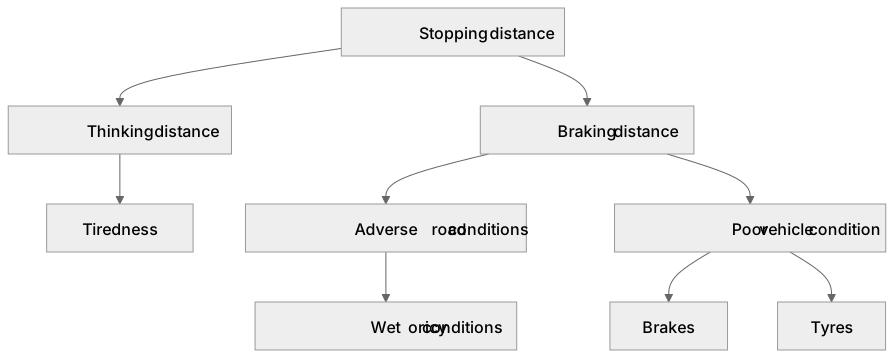
Adverse road conditions include wet or icy conditions, which reduce friction between the tyres and the road. For the purpose of this specification, poor vehicle condition is strictly limited to the vehicle's brakes or tyres. This distinction matters in exam questions: driving on a wet road and a tired driver both lengthen stopping distance, but for different reasons. Worn tyres cannot channel water away, so the tyre rides on a film of water and friction drops; worn pads cannot press on the disc as firmly, so braking force falls. Both leave the driver's reaction time untouched. Questions often give one factor of each kind and ask which distance it changes. Fitting new brakes or tyres shortens the braking distance.
What earns the marks
- Selecting wet or icy conditions as an adverse road factor.
- Selecting worn brakes or worn tyres as a vehicle factor.
- Rejecting new brakes or new tyres, which shorten the braking distance.
- Stating that tiredness changes the thinking distance while a wet road changes the braking distance.
Common mistakes and how to put them right
Ticking 'fitting new tyres' as something that increases the stopping distance.
Assuming poor vehicle condition includes factors other than brakes and tyres, when the specification limits it to these two.
Listing fog as a factor affecting braking distance, when it affects what the driver can see (thinking distance) rather than the grip of the tyres.
Exam tips
- In tick-two questions, eliminate the options that would shorten the distance before choosing.
- Remember that for this specification, poor vehicle condition is limited to brakes and tyres.
- If asked to explain how worn tyres affect stopping distance, specify that they increase braking distance but do not affect thinking distance.
Try the lesson
The start of the Factors affecting braking distance 1: Adverse road conditions include wet or icy conditions. Poor condition of the vehicle is limited to the vehicle's brakes or tyres. lesson, made from checked teaching notes for this specification point.
Have a go first
Which of these is an adverse road condition that increases braking distance?
Listen
Adverse road conditions include wet or icy conditions, which reduce friction between the tyres and the road. For the purpose of this specification, poor vehicle condition is strictly limited to the vehicle's brakes or tyres. This distinction matters in exam questions: driving on a wet road and a tired driver both lengthen stopping distance, but for different reasons. Worn tyres cannot channel water away, so the tyre rides on a film of water and friction drops; worn pads cannot press on the disc as firmly, so braking force falls. Both leave the driver's reaction time untouched. Questions often give one factor of each kind and ask which distance it changes. Fitting new brakes or tyres shortens the braking distance. A strong answer earns marks for these points. selecting wet or icy conditions as an adverse road factor. selecting worn brakes or worn tyres as a vehicle factor. rejecting new brakes or new tyres, which shorten the braking distance. stating that tiredness changes the thinking distance while a wet road changes the braking distance. Exam tip: In tick-two questions, eliminate the options that would shorten the distance before choosing.
See it
Key words
Say what each word means before you turn the card.
wet and icy conditions
Try answering aloud or in your head before turning the card.
worn tyres
Try answering aloud or in your head before turning the card.
worn brakes
Try answering aloud or in your head before turning the card.
See every definition
- wet and icy conditions
- Adverse road conditions that reduce friction between the tyres and the road.
- worn tyres
- Tyres that cannot channel water away, so the tyre rides on a film of water and friction drops.
- worn brakes
- Brakes whose worn pads cannot press on the disc as firmly, so braking force falls.
Label the diagram
Some boxes have lost their names. Pick the right name for each number.
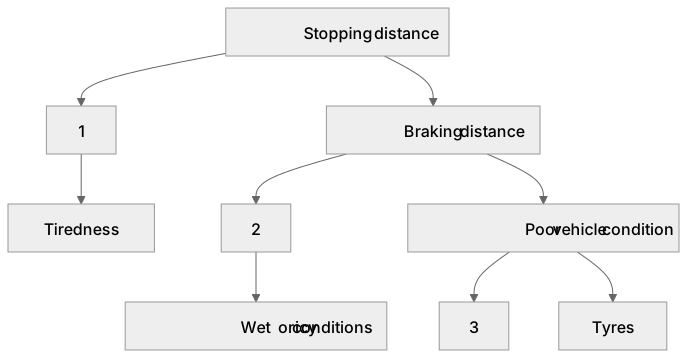
1Box 1
2Box 2
3Box 3
There is more to this lesson
The full lesson goes on to check your understanding and help you earn the marks. Create a free account to carry on, with your progress saved.
A week of Premium from your first lesson · Then the free plan continues · No card, no charge
Test your understanding of Factors affecting braking distance 1: Adverse road conditions include wet or icy conditions. Poor condition of the vehicle is limited to the vehicle's brakes or tyres.
Active recall beats re-reading. Take an instant quiz now to test what you’ve learned and lock it into long-term memory.
A week of Premium from your first lesson · Then the free plan continues · No card, no charge