AQA · GCSE · Physics
Course version: 8463 · Version from Sept 2016
Students should be able to: describe the main energy sources available…
Full specification wording
National and global energy resources: Students should be able to: describe the main energy sources available distinguish between energy resources that are renewable and energy resources that are non-renewable compare ways that different energy resources are used, the uses to include transport, electricity generation and heating understand why some energy resources are more reliable than others describe the environmental impact arising from the use of different energy resources explain patterns and trends in the use of energy resources.
This objective pulls the whole topic together.
Checked against the AQA 8463 specification (opens in a new tab) on .
- Point 4 of 5
- 4 key terms
Study notes
From the checked teaching notes for this specification point.
The idea
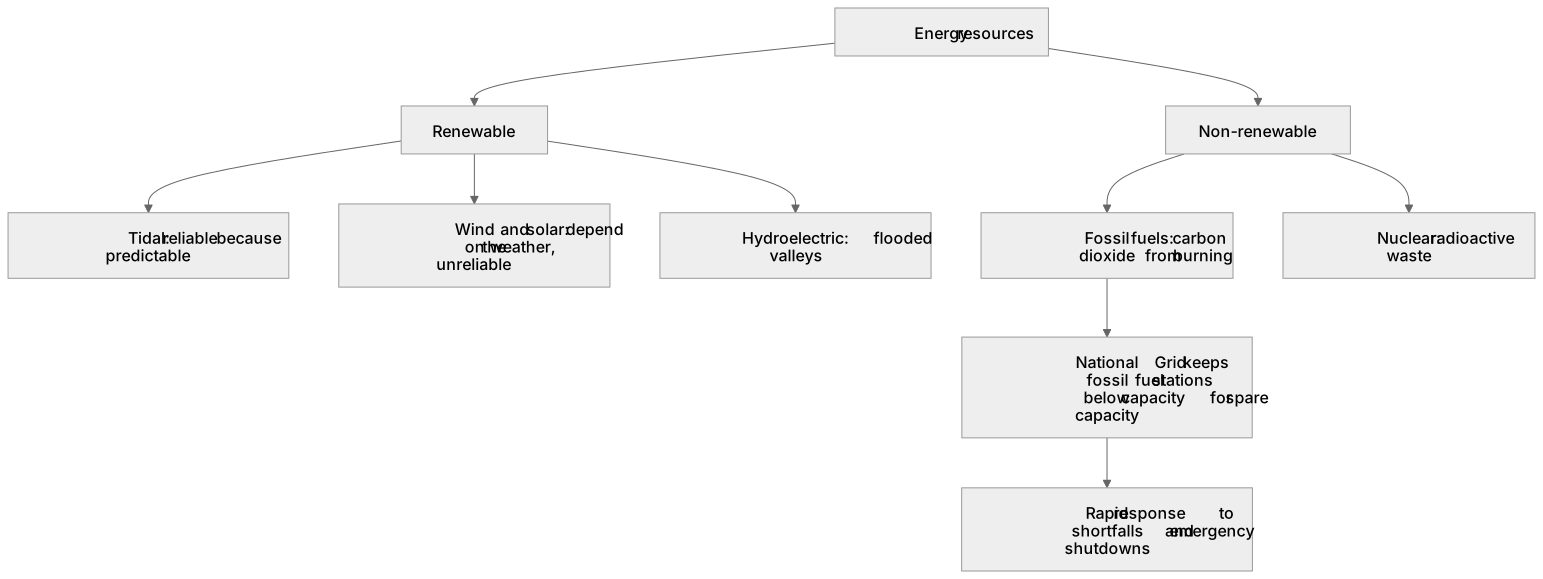
This objective pulls the whole topic together. You need to name the resources, sort them into renewable and non-renewable, and compare them across transport, electricity generation and heating. Reliability is a separate axis: fossil fuel and nuclear stations generate on demand, and tidal power is reliable because it is predictable. However, wind and solar depend on the weather and are unreliable. This is why the National Grid keeps fossil fuel stations running below capacity to provide spare capacity for rapid response to shortfalls and emergency shutdowns. Environmental impact is a third axis: carbon dioxide from burning, radioactive waste from nuclear, flooded valleys from hydroelectricity, and visual impact from wind. Trends follow from these: coal falling, gas and renewables rising as costs drop and targets tighten.
What earns the marks
- Naming the resources being compared and classifying them correctly as renewable or non-renewable.
- A reliability point, such as tidal power being reliable because it is predictable.
- A named environmental impact tied to a specific resource, such as carbon dioxide from fossil fuels.
- Describing a trend in use with a reason, such as falling coal use to cut greenhouse gas emissions.
Common mistakes and how to put them right
Treating all renewables as unreliable, when tidal and hydroelectric generation are reliable.
Describing environmental impact only as pollution without naming the pollutant or the specific effect.
Explaining spare capacity as a way to conserve fuel rather than as a rapid response to shortfalls and shutdowns.
Giving a trend without a reason, which scores no explanation mark.
Exam tips
- Build long answers along three axes: reliability, environmental impact and cost or practicality.
- For spare capacity, the accepted reasons include rapid response to sudden demand increases and covering emergency shutdowns, not conserving fuel.
- Quote figures from any graph or table you are given; comparisons with numbers reach the higher level.
Try the lesson
The start of the National and global energy resources: Students should be able to: describe the main energy sources available distinguish between energy resources that are renewable and energy resources that are non-renewable compare ways that different energy resources are used, the uses to include transport, electricity generation and heating understand why some energy resources are more reliable than others describe the environmental impact arising from the use of different energy resources explain patterns and trends in the use of energy resources. lesson, made from checked teaching notes for this specification point.
Have a go first
Which of the following energy resources is renewable?
Listen
This objective pulls the whole topic together. You need to name the resources, sort them into renewable and non-renewable, and compare them across transport, electricity generation and heating. Reliability is a separate axis: fossil fuel and nuclear stations generate on demand, and tidal power is reliable because it is predictable. However, wind and solar depend on the weather and are unreliable. This is why the National Grid keeps fossil fuel stations running below capacity to provide spare capacity for rapid response to shortfalls and emergency shutdowns. Environmental impact is a third axis: carbon dioxide from burning, radioactive waste from nuclear, flooded valleys from hydroelectricity, and visual impact from wind. Trends follow from these: coal falling, gas and renewables rising as costs drop and targets tighten. A strong answer earns marks for these points. naming the resources being compared and classifying them correctly as renewable or non-renewable. a reliability point, such as tidal power being reliable because it is predictable. a named environmental impact tied to a specific resource, such as carbon dioxide from fossil fuels. describing a trend in use with a reason, such as falling coal use to cut greenhouse gas emissions. Exam tip: Build long answers along three axes: reliability, environmental impact and cost or practicality.
See it
Key words
Say what each word means before you turn the card.
reliability
Try answering aloud or in your head before turning the card.
environmental impact
Try answering aloud or in your head before turning the card.
patterns and trends
Try answering aloud or in your head before turning the card.
comparing resources
Try answering aloud or in your head before turning the card.
See every definition
- reliability
- Some energy resources are more reliable than others because they do not depend on the weather, and tidal power is reliable because it is predictable.
- environmental impact
- This arises from the use of different energy resources, such as carbon dioxide from burning, radioactive waste from nuclear, flooded valleys from hydroelectricity and visual impact from wind.
- patterns and trends
- These can be described in the use of energy resources, such as coal falling and gas and renewables rising as costs drop and targets tighten.
- comparing resources
- This means naming the resources being compared and classifying them correctly as renewable or non-renewable, and comparing ways they are used for transport, electricity generation and heating.
Label the diagram
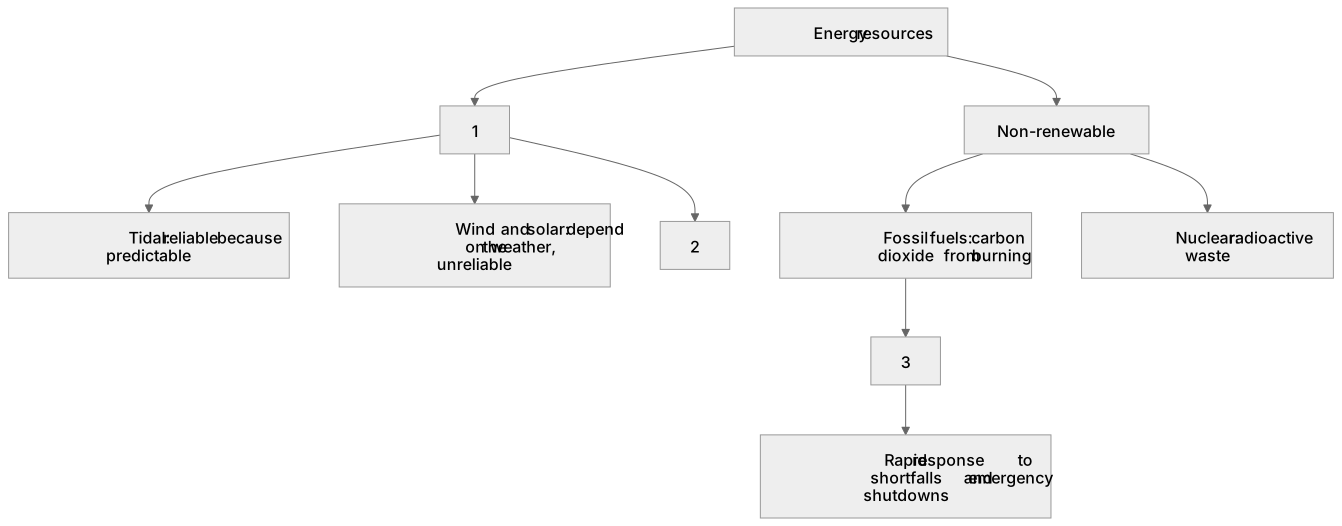
Some boxes have lost their names. Pick the right name for each number.
1Box 1
2Box 2
3Box 3
There is more to this lesson
The full lesson goes on to check your understanding and help you earn the marks. Create a free account to carry on, with your progress saved.
A week of Premium from your first lesson · Then the free plan continues · No card, no charge
Test your understanding of National and global energy resources: Students should be able to: describe the main energy sources available distinguish between energy resources that are renewable and energy resources that are non-renewable compare ways that different energy resources are used, the uses to include transport, electricity generation and heating understand why some energy resources are more reliable than others describe the environmental impact arising from the use of different energy resources explain patterns and trends in the use of energy resources.
Active recall beats re-reading. Take an instant quiz now to test what you’ve learned and lock it into long-term memory.
A week of Premium from your first lesson · Then the free plan continues · No card, no charge