AQA · GCSE · Physics
Course version: 8463 · Version from Sept 2016
The explosion of a massive star (supernova) distributes the elements…
Full specification wording
The life cycle of a star: The explosion of a massive star (supernova) distributes the elements throughout the universe.
A supernova is the explosion that ends the life of a massive star, and it does two jobs at once.
Checked against the AQA 8463 specification (opens in a new tab) on .
- Point 4 of 5
- 3 key terms
Study notes
From the checked teaching notes for this specification point.
The idea
A supernova is the explosion that ends the life of a massive star, and it does two jobs at once. It creates the elements heavier than iron in the extreme temperatures and pressures of the explosion, and it throws all of the star's elements outwards into space at enormous speed. Those scattered elements mix into the clouds of dust and gas between the stars, so the next nebula to collapse begins with heavy elements in it rather than pure hydrogen. That is the evidence that our own Sun is a later generation star: the solar system contains rocky planets and iron cores, which could not have come from the original hydrogen alone. The core left behind becomes a neutron star, or a black hole.
What earns the marks
- The supernova being the explosion of a massive star.
- The elements being thrown outwards into space.
- Those elements becoming part of the clouds from which new stars and planets form.
- Using the presence of heavy elements in the solar system as evidence of an earlier supernova.
Common mistakes and how to put them right
Saying a supernova destroys the elements rather than distributing them.
Attributing a supernova to a star like the Sun.
Claiming that the heavy elements in the Earth were made by the Sun.
Forgetting that something is left behind, either a neutron star or a black hole.
Exam tips
- Answer where did the Earth's heavy elements come from with a supernova, not with the Sun.
- Link the explosion to the next generation of stars, because that is what distributes means here.
- Name what remains after the explosion if the question asks about the fate of the star.
Try the lesson
The start of the The life cycle of a star: The explosion of a massive star (supernova) distributes the elements throughout the universe. lesson, made from checked teaching notes for this specification point.
Have a go first
What is the explosion of a massive star called?
Listen
A supernova is the explosion that ends the life of a massive star, and it does two jobs at once. It creates the elements heavier than iron in the extreme temperatures and pressures of the explosion, and it throws all of the star's elements outwards into space at enormous speed. Those scattered elements mix into the clouds of dust and gas between the stars, so the next nebula to collapse begins with heavy elements in it rather than pure hydrogen. That is the evidence that our own Sun is a later generation star: the solar system contains rocky planets and iron cores, which could not have come from the original hydrogen alone. The core left behind becomes a neutron star, or a black hole. A strong answer earns marks for these points. the supernova being the explosion of a massive star. the elements being thrown outwards into space. those elements becoming part of the clouds from which new stars and planets form. using the presence of heavy elements in the solar system as evidence of an earlier supernova. Exam tip: Answer where did the Earth's heavy elements come from with a supernova, not with the Sun.
See it
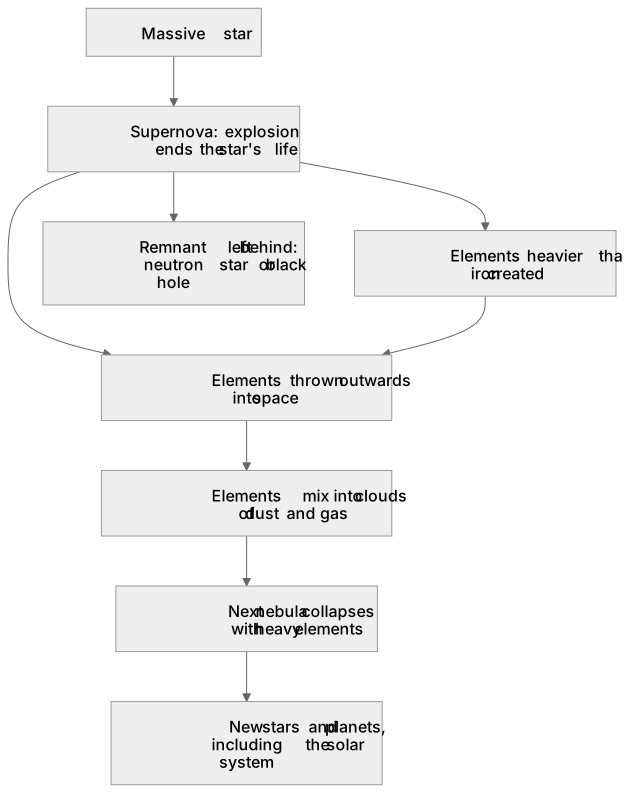
Key words
Say what each word means before you turn the card.
supernova
Try answering aloud or in your head before turning the card.
distribution of the elements
Try answering aloud or in your head before turning the card.
neutron star or black hole
Try answering aloud or in your head before turning the card.
See every definition
- supernova
- The explosion of a massive star that ends its life and distributes the elements throughout the universe.
- distribution of the elements
- The throwing of all of a star's elements outwards into space, so they mix into the clouds of dust and gas between the stars.
- neutron star or black hole
- What the core left behind by a supernova becomes.
Label the diagram
Some boxes have lost their names. Pick the right name for each number.
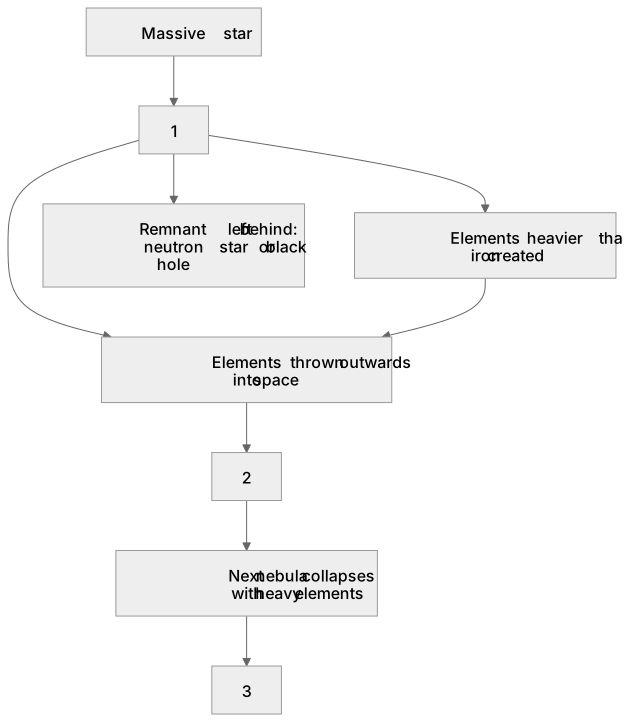
1Box 1
2Box 2
3Box 3
There is more to this lesson
The full lesson goes on to check your understanding and help you earn the marks. Create a free account to carry on, with your progress saved.
A week of Premium from your first lesson · Then the free plan continues · No card, no charge
Test your understanding of The life cycle of a star: The explosion of a massive star (supernova) distributes the elements throughout the universe.
Active recall beats re-reading. Take an instant quiz now to test what you’ve learned and lock it into long-term memory.
A week of Premium from your first lesson · Then the free plan continues · No card, no charge