OCR · GCSE · Physics
Course version: J249 · Version from Sept 2018
Describe the main energy sources available for use on Earth, compare the…
Full specification wording
Powering Earth: describe the main energy sources available for use on Earth, compare the ways in which they are used and distinguish between renewable and non-renewable sources (to include: fossil fuels, nuclear fuel, biofuel, wind, hydroelectricity, tides and the Sun)
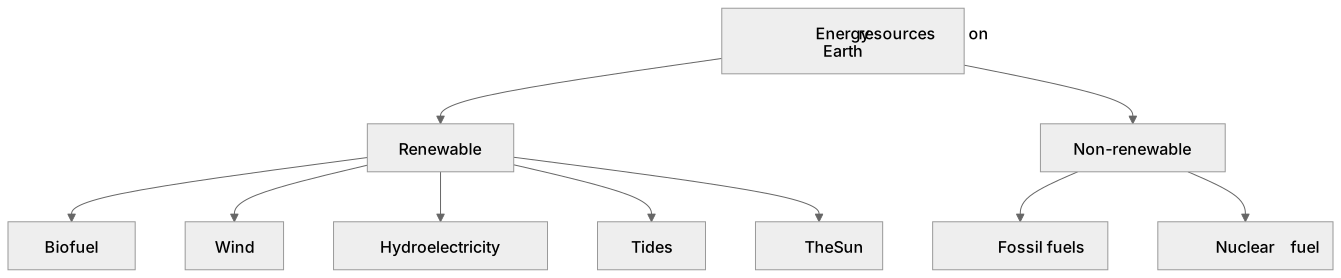
Earth's main energy resources are fossil fuels (coal, oil, gas), nuclear fuel, biofuel, wind, hydroelectricity, tides and the Sun.
Checked against the OCR J249 specification (opens in a new tab) on .
- Point 2 of 9
- 4 key terms
Study notes
From the checked teaching notes for this specification point.
The idea
Earth's main energy resources are fossil fuels (coal, oil, gas), nuclear fuel, biofuel, wind, hydroelectricity, tides and the Sun. Each is used in a particular way: fossil and nuclear fuels heat water to make steam that drives turbines; wind turns turbine blades directly; falling water in a hydroelectric scheme spins turbines; tidal schemes use the rise and fall of the sea; the Sun supplies direct heating, daylight and electricity through solar cells; biofuel is burned or fermented. Renewable resources (biofuel, wind, hydroelectricity, tides, the Sun) are replenished naturally, while fossil and nuclear fuels are non-renewable because their supplies are finite. A multiple-choice question tests whether you can match each resource to its use and classify it correctly.
What earns the marks
- Selects the option that names a renewable resource from the list of fossil fuels, nuclear fuel, biofuel, wind, hydroelectricity, tides and the Sun.
- Identifies the option describing how a named resource is used, such as wind turning turbine blades to generate electricity.
- Distinguishes renewable from non-renewable by rejecting the option that classes a fossil fuel as renewable.
- Chooses the option that correctly pairs a non-renewable fuel with its finite supply, such as nuclear fuel.
- Rejects the option that confuses the Sun's role with burning fuel, keeping solar heating and solar cells distinct.
Common mistakes and how to put them right
Classes nuclear fuel as renewable because it does not burn.
Put it right: Recognise that nuclear fuel is finite and therefore non-renewable.
Treats biofuel as non-renewable because it is burned.
Put it right: Recognise that biofuel is replenished by growing crops and is renewable.
Confuses hydroelectricity with tidal power.
Put it right: Keep falling river water and the rise and fall of the sea as separate resources.
Assumes the Sun is used only for heating.
Put it right: It also provides daylight and electricity via solar cells.
Exam tips
- Read every option before choosing, because several may name real resources but only one answers the question asked.
- Check the classification word in the question (renewable or non-renewable) before matching a resource to it.
- Eliminate options that mix a resource with the wrong use, such as saying tides heat water to make steam.
Try the lesson
The start of the Powering Earth: describe the main energy sources available for use on Earth, compare the ways in which they are used and distinguish between renewable and non-renewable sources (to include: fossil fuels, nuclear fuel, biofuel, wind, hydroelectricity, tides and the Sun) lesson, made from checked teaching notes for this specification point.
Have a go first
Which of these energy sources is non-renewable?
Listen
Earth's main energy resources are fossil fuels (coal, oil, gas), nuclear fuel, biofuel, wind, hydroelectricity, tides and the Sun. Each is used in a particular way: fossil and nuclear fuels heat water to make steam that drives turbines; wind turns turbine blades directly; falling water in a hydroelectric scheme spins turbines; tidal schemes use the rise and fall of the sea; the Sun supplies direct heating, daylight and electricity through solar cells; biofuel is burned or fermented. Renewable resources (biofuel, wind, hydroelectricity, tides, the Sun) are replenished naturally, while fossil and nuclear fuels are non-renewable because their supplies are finite. A multiple-choice question tests whether you can match each resource to its use and classify it correctly. A strong answer earns marks for these points. Selects the option that names a renewable resource from the list of fossil fuels, nuclear fuel, biofuel, wind, hydroelectricity, tides and the Sun. Identifies the option describing how a named resource is used, such as wind turning turbine blades to generate electricity. Distinguishes renewable from non-renewable by rejecting the option that classes a fossil fuel as renewable. Chooses the option that correctly pairs a non-renewable fuel with its finite supply, such as nuclear fuel. Exam tip: Read every option before choosing, because several may name real resources but only one answers the question asked.
See it
Key words
Say what each word means before you turn the card.
Renewable resources
Try answering aloud or in your head before turning the card.
Non-renewable fuels
Try answering aloud or in your head before turning the card.
Fossil fuels
Try answering aloud or in your head before turning the card.
Hydroelectricity
Try answering aloud or in your head before turning the card.
See every definition
- Renewable resources
- Resources such as biofuel, wind, hydroelectricity, tides and the Sun that are replenished naturally.
- Non-renewable fuels
- Fossil fuels and nuclear fuel, which are non-renewable because their supplies are finite.
- Fossil fuels
- Coal, oil and gas, which heat water to make steam that drives turbines.
- Hydroelectricity
- A resource in which falling water in a hydroelectric scheme spins turbines.
Label the diagram
Some boxes have lost their names. Pick the right name for each number.
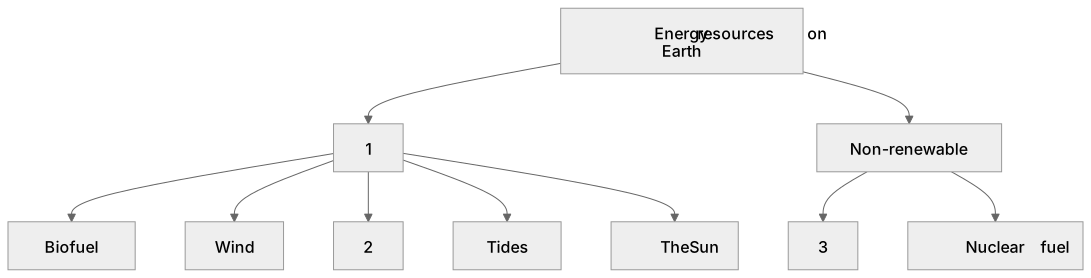
1Box 1
2Box 2
3Box 3
There is more to this lesson
The full lesson goes on to check your understanding and help you earn the marks. Create a free account to carry on, with your progress saved.
A week of Premium from your first lesson · Then the free plan continues · No card, no charge
Test your understanding of Powering Earth: describe the main energy sources available for use on Earth, compare the ways in which they are used and distinguish between renewable and non-renewable sources (to include: fossil fuels, nuclear fuel, biofuel, wind, hydroelectricity, tides and the Sun)
Active recall beats re-reading. Take an instant quiz now to test what you’ve learned and lock it into long-term memory.
A week of Premium from your first lesson · Then the free plan continues · No card, no charge