AQA · A-Level · Psychology
Course version: 7182-2025 · Exams from 2027
Biopsychology: The function of the endocrine system: glands and hormones.
The endocrine system is the slow chemical partner to the nervous system: glands secrete hormones straight into the bloodstream, so the signal reaches every cell but only cells with matching…
Checked against the AQA 7182-2025 specification (opens in a new tab) on .
- Point 3 of 6
- 4 key terms
Study notes
From the checked teaching notes for this specification point.
The idea
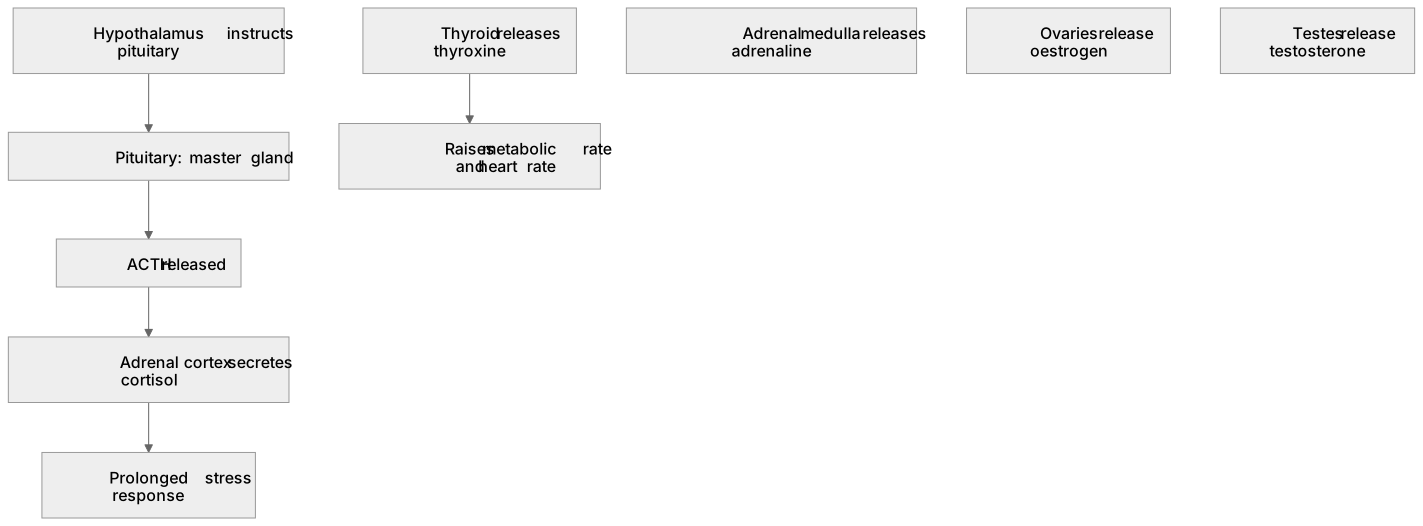
The endocrine system is the slow chemical partner to the nervous system: glands secrete hormones straight into the bloodstream, so the signal reaches every cell but only cells with matching receptors respond. It is slower to act than neural transmission but its effects are widespread and long lasting. The pituitary is the master gland, itself instructed by the hypothalamus; it releases ACTH, which drives the adrenal cortex to secrete cortisol during prolonged stress. The thyroid releases thyroxine, raising metabolic rate and heart rate; the adrenal medulla releases adrenaline; the ovaries release oestrogen and the testes testosterone. Evaluation is available here: the evidence linking testosterone to aggression in humans is largely correlational, and explaining behaviour by hormone level alone is reductionist, ignoring cognition and social context.
What earns the marks
- Hormones defined as chemical messengers secreted by glands directly into the bloodstream.
- Only target cells carrying the right receptors respond, which is why a bloodstream signal has selective effects.
- Contrast with the nervous system: slower onset, but widespread and longer lasting effects.
- Pituitary named as the master gland, controlled by the hypothalamus, releasing hormones that direct other glands.
- At least two further gland/hormone pairs with a function, e.g. thyroid and thyroxine raising metabolic rate, adrenal medulla and adrenaline.
- Evaluation: correlational human evidence on hormones and behaviour, and the charge of biological reductionism.
Common mistakes and how to put them right
Saying hormones travel along neurons or through the nervous system.
Put it right: They travel in the blood.
Confusing the adrenal cortex with the adrenal medulla, and so pairing cortisol with fight or flight instead of with prolonged stress.
Listing glands without hormones, or hormones without effects.
Put it right: A bare list of gland names attracts almost no credit.
Calling the hypothalamus a gland of the endocrine system only, and losing the point that it links the nervous and endocrine systems.
Exam tips
- Answer gland questions as a triplet every time: gland, hormone, effect on the body. Three elements, one sentence.
- If the question asks you to compare the endocrine and nervous systems, structure it by speed, route of travel and duration rather than writing two separate descriptions.
- Scenario stems usually describe a bodily change; name the gland and hormone that produced it and avoid generic stress essays.
Try the lesson
The start of the Biopsychology: The function of the endocrine system: glands and hormones. lesson, made from checked teaching notes for this specification point.
Have a go first
Which gland is often referred to as the 'master gland' because it releases hormones that control other glands in the endocrine system?
Listen
The endocrine system is the slow chemical partner to the nervous system: glands secrete hormones straight into the bloodstream, so the signal reaches every cell but only cells with matching receptors respond. It is slower to act than neural transmission but its effects are widespread and long lasting. The pituitary is the master gland, itself instructed by the hypothalamus; it releases ACTH, which drives the adrenal cortex to secrete cortisol during prolonged stress. The thyroid releases thyroxine, raising metabolic rate and heart rate; the adrenal medulla releases adrenaline; the ovaries release oestrogen and the testes testosterone. Evaluation is available here: the evidence linking testosterone to aggression in humans is largely correlational, and explaining behaviour by hormone level alone is reductionist, ignoring cognition and social context. A strong answer earns marks for these points. Hormones defined as chemical messengers secreted by glands directly into the bloodstream. Only target cells carrying the right receptors respond, which is why a bloodstream signal has selective effects. Contrast with the nervous system: slower onset, but widespread and longer lasting effects. Pituitary named as the master gland, controlled by the hypothalamus, releasing hormones that direct other glands. Exam tip: Answer gland questions as a triplet every time: gland, hormone, effect on the body. Three elements, one sentence.
See it
Key words
Say what each word means before you turn the card.
Hormones
Try answering aloud or in your head before turning the card.
Target cells
Try answering aloud or in your head before turning the card.
Pituitary
Try answering aloud or in your head before turning the card.
Reductionism
Try answering aloud or in your head before turning the card.
See every definition
- Hormones
- Chemical messengers secreted by glands directly into the bloodstream.
- Target cells
- Cells carrying the right receptors, which is why a bloodstream signal has selective effects.
- Pituitary
- The master gland, itself instructed by the hypothalamus, releasing hormones that direct other glands.
- Reductionism
- Explaining behaviour by hormone level alone, ignoring cognition and social context.
Label the diagram
Some boxes have lost their names. Pick the right name for each number.
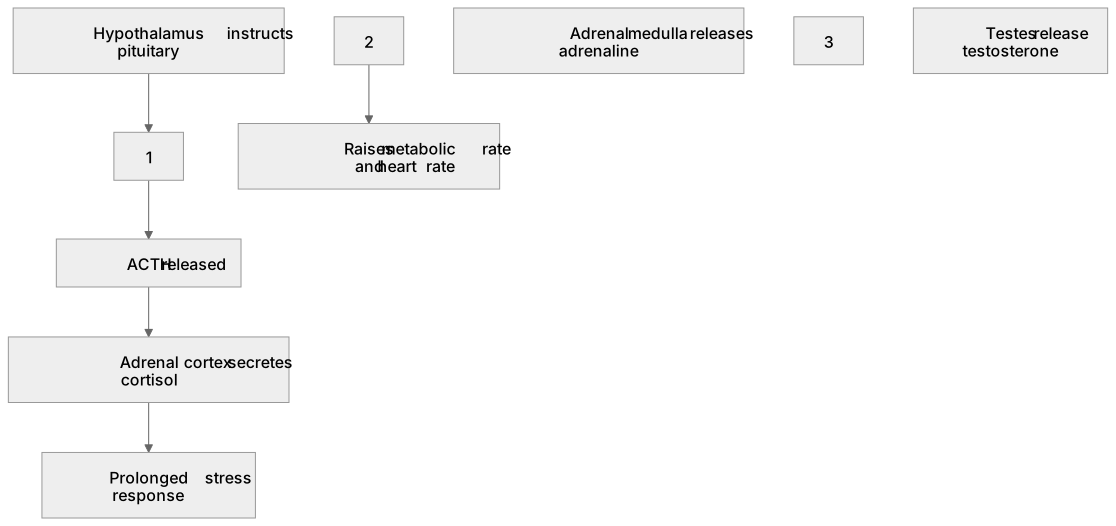
1Box 1
2Box 2
3Box 3
There is more to this lesson
The full lesson goes on to check your understanding and help you earn the marks. Create a free account to carry on, with your progress saved.
A week of Premium from your first lesson · Then the free plan continues · No card, no charge
Test your understanding of Biopsychology: The function of the endocrine system: glands and hormones.
Active recall beats re-reading. Take an instant quiz now to test what you’ve learned and lock it into long-term memory.
A week of Premium from your first lesson · Then the free plan continues · No card, no charge